
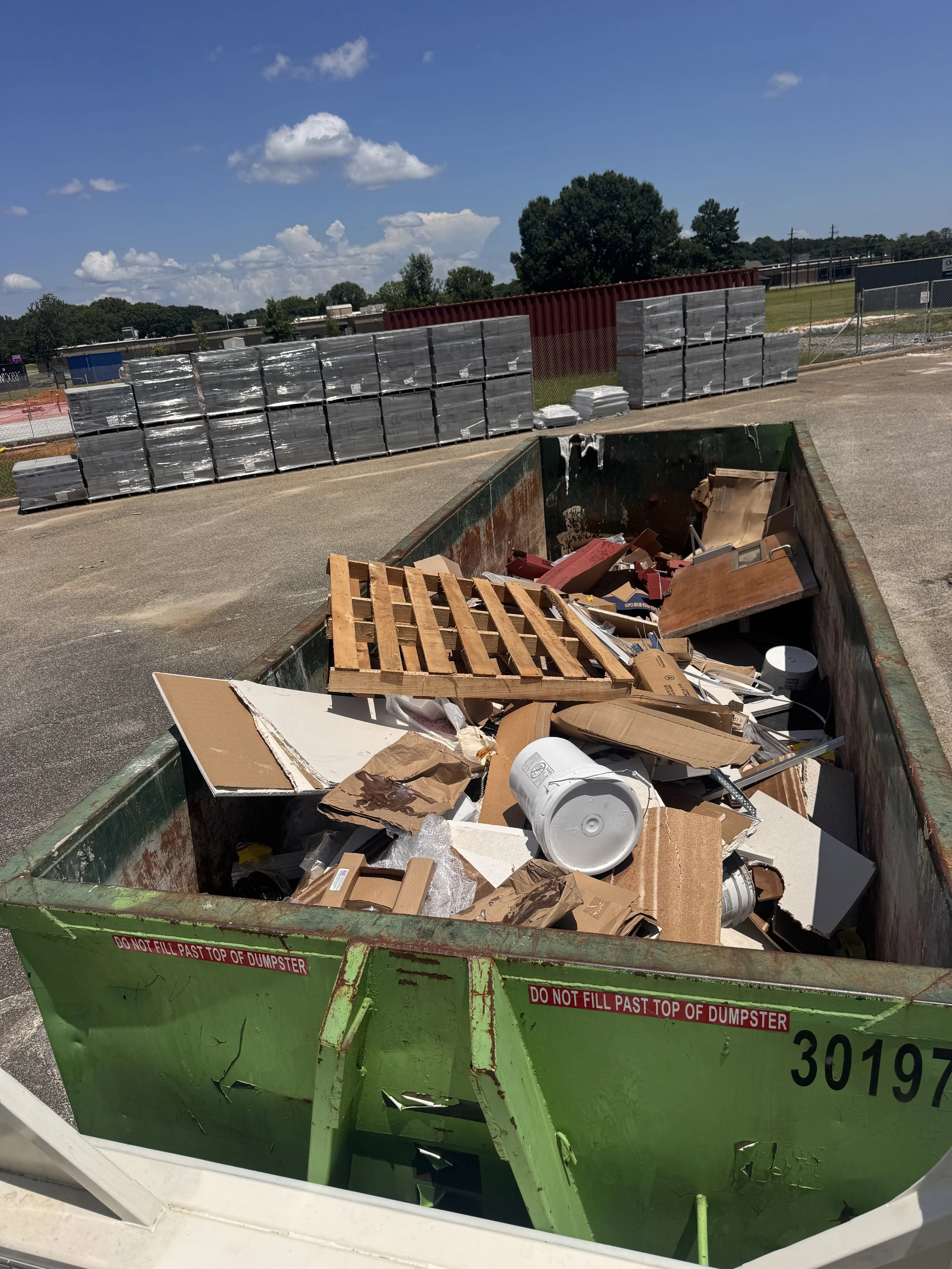
For Hauling Companies
Keep the Account. We Bring You More.
We compact the containers you already haul, and we send you the hauling on accounts we land — the account stays with whoever brought it.
- Macon, GA based
- Monday – Friday, 7am – 5pm
- Commercial & Industrial Accounts
- Fully Self-contained Mobile Unit
Two Arrangements
Every account we touch runs one of two ways, and the difference is just who brought it.
The customer, the container and the invoice are yours. We compact at the wholesale rate, you retail it on your own bill, and the spread is yours. We monitor the containers and flag them before they overflow — and we deal with you, not your customer.
When we land the account, it runs in reverse: we hold the customer and the billing, and the affiliate closest to the job runs the pulls and invoices us per trip. No lead fees in either direction — this website exists to catch the dumpster demand in this market, and we don't haul, so every account we land runs on an affiliate's truck.
Twenty minutes tells you whether it fits your book.
Talk Through the Arrangement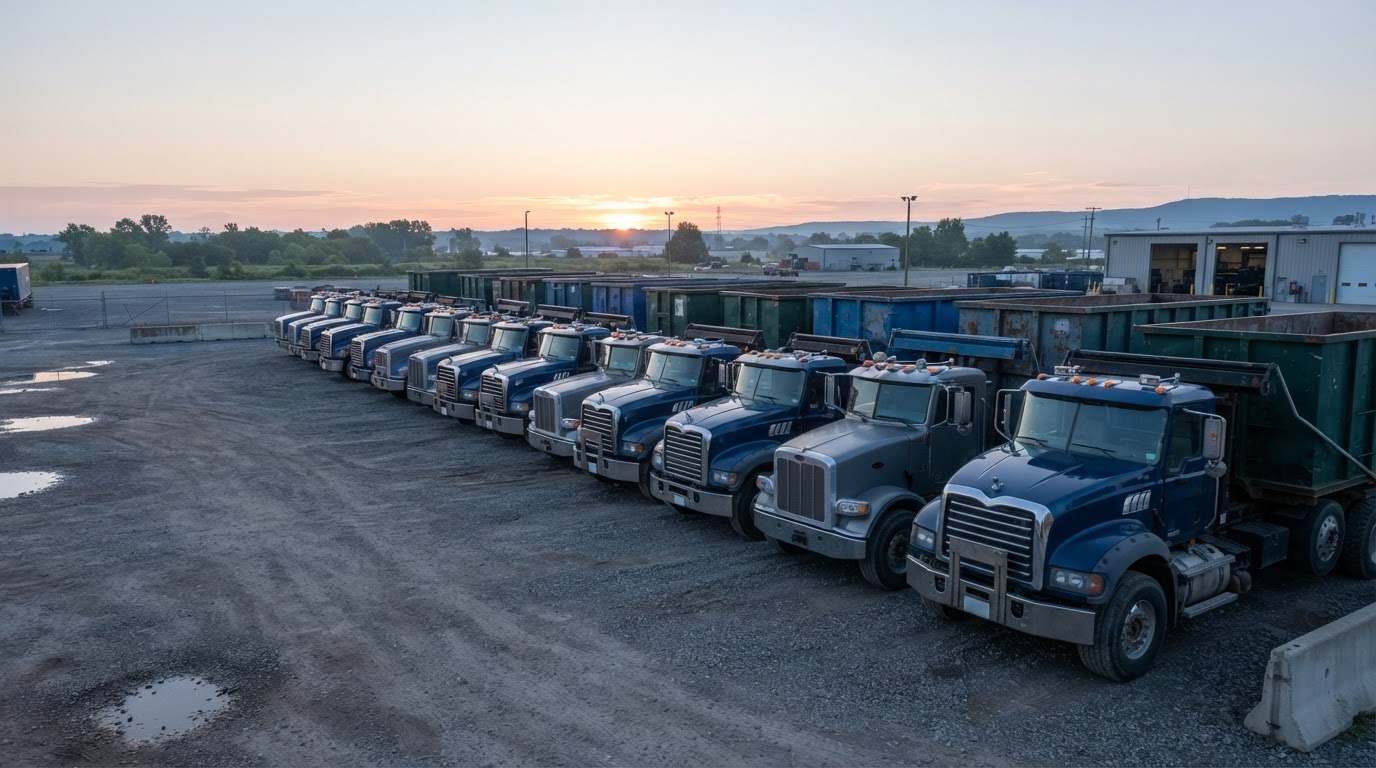
The Fleet Math
1–2 crushes
between pulls, set by your material
1 unit
self-contained, no installation on site
$0
lead fees in either direction
What It Does to the Route
Fewer swaps per account
Two container-loads of loose waste leave in one trip on typical mixed material; cardboard-heavy accounts push three.
More customers per container
The same steel now carries an account it could not have carried before.
Better density on the trips you keep
The pulls you still run are close to a full legal payload instead of mostly air.
Fewer dry runs
You stop rolling on containers that turned out not to be ready.
Per-account efficiency is really route capacity: every crush is a billable service on a container you were already going to service. The truck roll you already made now carries a second line item — and the trips you drop free up the slots to go serve somebody new.
Bid Bigger Accounts
Take On Larger Accounts
Compaction lets you service bigger waste streams without adding trucks to your fleet.
Stretch Fleet Capacity
Fewer trips per container frees up trucks and drivers for other accounts.
Win Work You Passed On
Accounts that once tied up your fleet become feasible with on-site compaction.
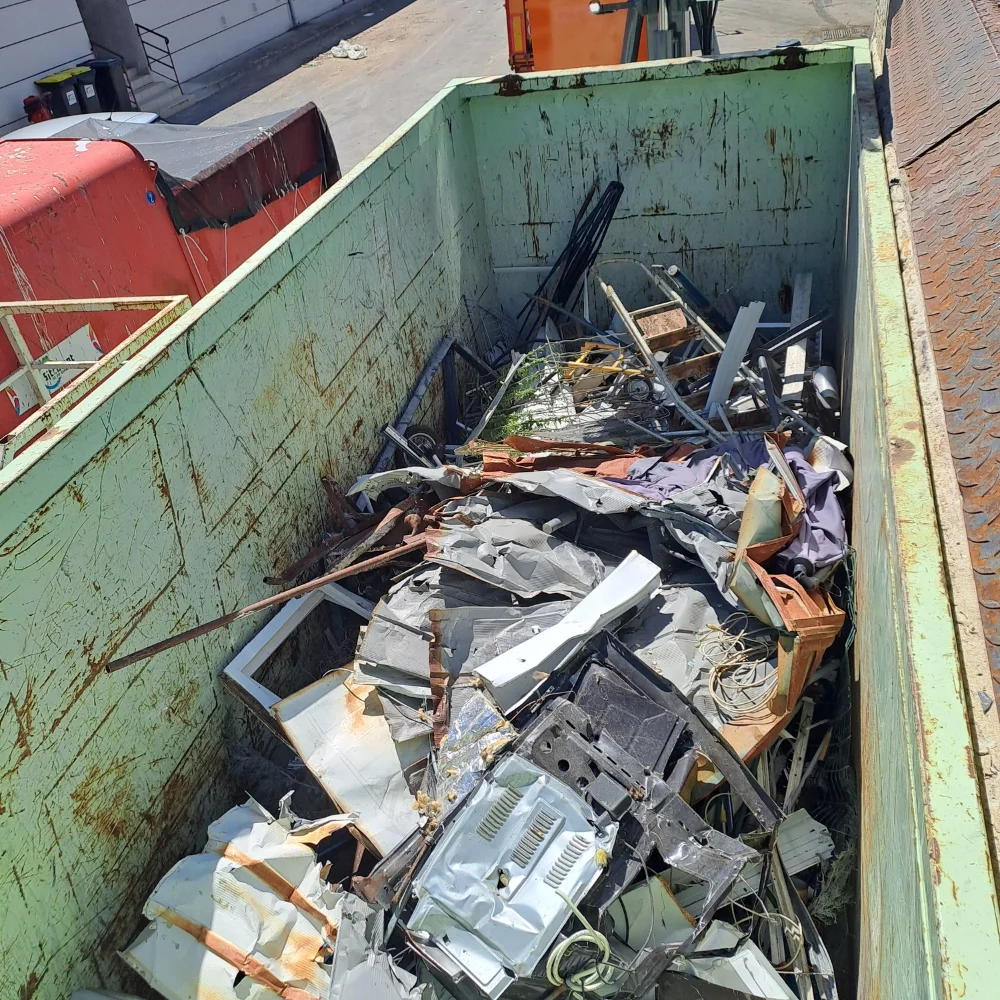
Your Compacted Accounts Become Your Best Routes
A compacted container leaves full, and that is a different asset than the one you are hauling today. The pull that used to move two or three tons of mostly air now moves eight to twelve tons of actual waste. Revenue per mile on that trip goes up and you did not touch a rate to do it.
It also changes how you bid. You can price against a competitor who is still quoting three pulls where you only need one, and you are not giving up margin to win it. Rates are indicative and are set per market and per account, but the structure holds everywhere: density is the cheapest leverage in hauling and almost nobody is using it.
Model it on your own fleet.
Run Your NumbersHow the Affiliate Arrangement Works
The hauler affiliate arrangement is a simple four-step process built around your containers and your schedule — no exclusivity contract, no lead fees, and no claim on your account.
- 1
We Talk It Through
A short conversation about your book, your route and the accounts that fill fastest. Twenty minutes tells both of us whether it fits.
- 2
You Set Your Retail
You decide what compaction sells for on your invoice. We quote you a wholesale rate, and the spread between the two is yours.
- 3
We Compact On Site
Our self-contained unit meets the container at your customer's facility. About ten minutes on the box, no equipment from you, nothing staged at your yard.
- 4
You Bill, You Keep the Margin
Your customer pays you exactly as they always have, on your invoice, under your name.
Two Ways the Arrangement Pays You
| How it works | What you keep | |
|---|---|---|
| Hauls we dispatch to you | We hold the account and the customer pays us $300 a trip. You invoice us $250. | $250 a trip on work you never had to go sell. |
| Compaction on your own accounts | You retail compaction at around $200 a crush. We invoice you $125. | $75 per crush, on a truck roll you were already making. |
Run it on one cardboard-heavy account — the strong end of the range. A container you pull twelve times a month becomes four pulls and eight crushes. You trade eight truck rolls for six hundred dollars a month in compaction margin and eight route slots you can go fill with somebody else. That is the trade, stated plainly, and our calculator will run it against your own numbers instead of ours.
Rates are indicative and are set per market and per account — they move by location and sometimes by customer. Treat the figures above as the shape of the arrangement rather than a price list.
Run Your Numbers
Use our calculator to model how on-site compaction changes trips, truck hours and the number of containers your fleet can cover — with your own rates, not ours.
Open the Hauler CalculatorOpens our calculator on a full page.
See the Customer Savings Calculator your customers useFrequently Asked Questions
See It Run
Watch Compaction in Action
See the full process from start to finish
Let's Talk Through the Arrangement
Twenty minutes tells you whether it fits your book. One container tells you the rest.