
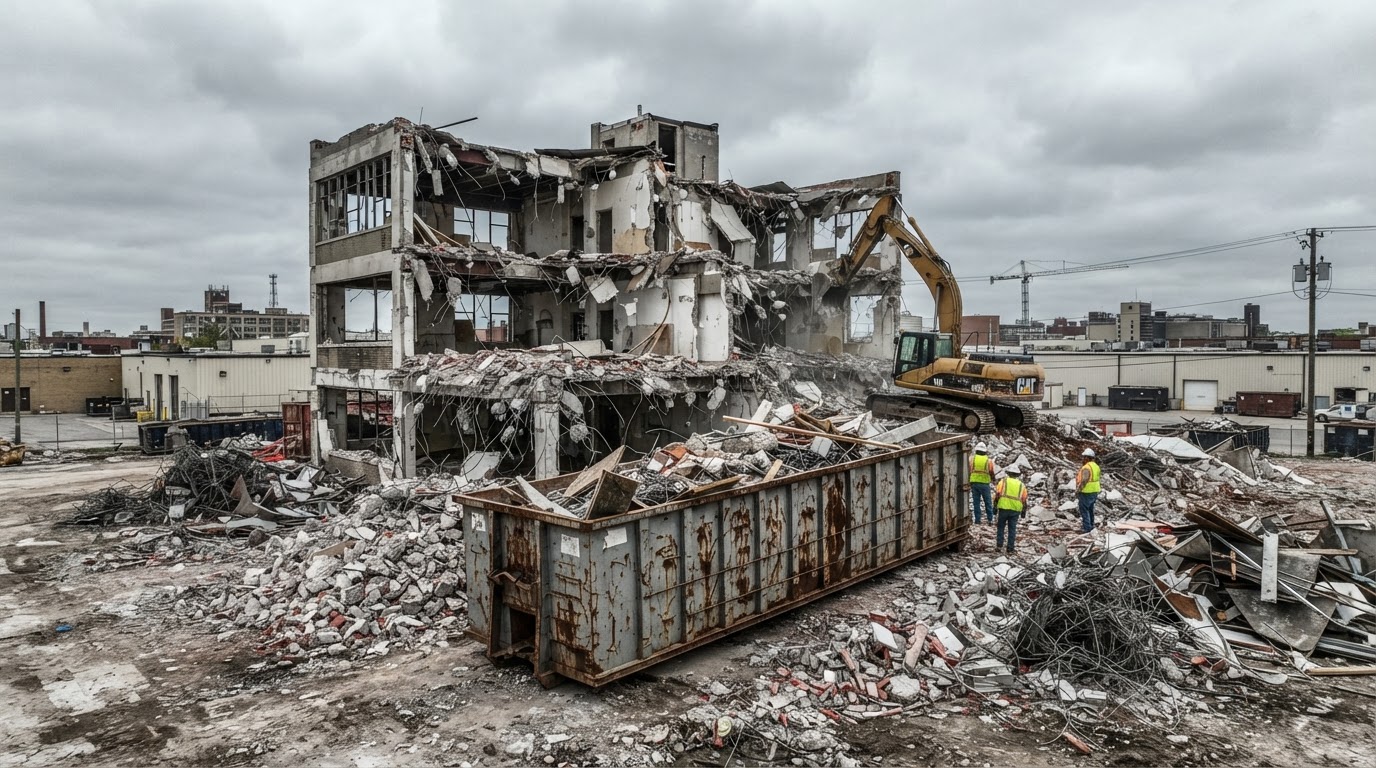
Demolition & Concrete Dumpster Rental — Macon, GA
Demolition & Concrete Dumpster Rental in Macon, GA
Max Compacx provides demolition dumpster rental in Macon, GA for teardown work, concrete removal, and storm cleanup — heavy debris jobs where the container gets sized for what the material weighs, not for how much space it takes up. On a demolition job, the box fills by weight long before it fills by volume. Get that wrong and you pay for trips that leave half a container behind.
We work with demolition contractors, excavation crews, industrial plants clearing out old equipment lines, and property managers dealing with damaged structures across Macon and Middle Georgia. This page covers what those jobs actually need, including the parts where our own service is the wrong answer.
- Macon, GA based
- Monday – Friday, 7am – 5pm
- Commercial & industrial only
- Sized for weight, not volume
The Real Cost
Why Demolition Dumpster Rental in Macon, GA Is a Weight Problem First
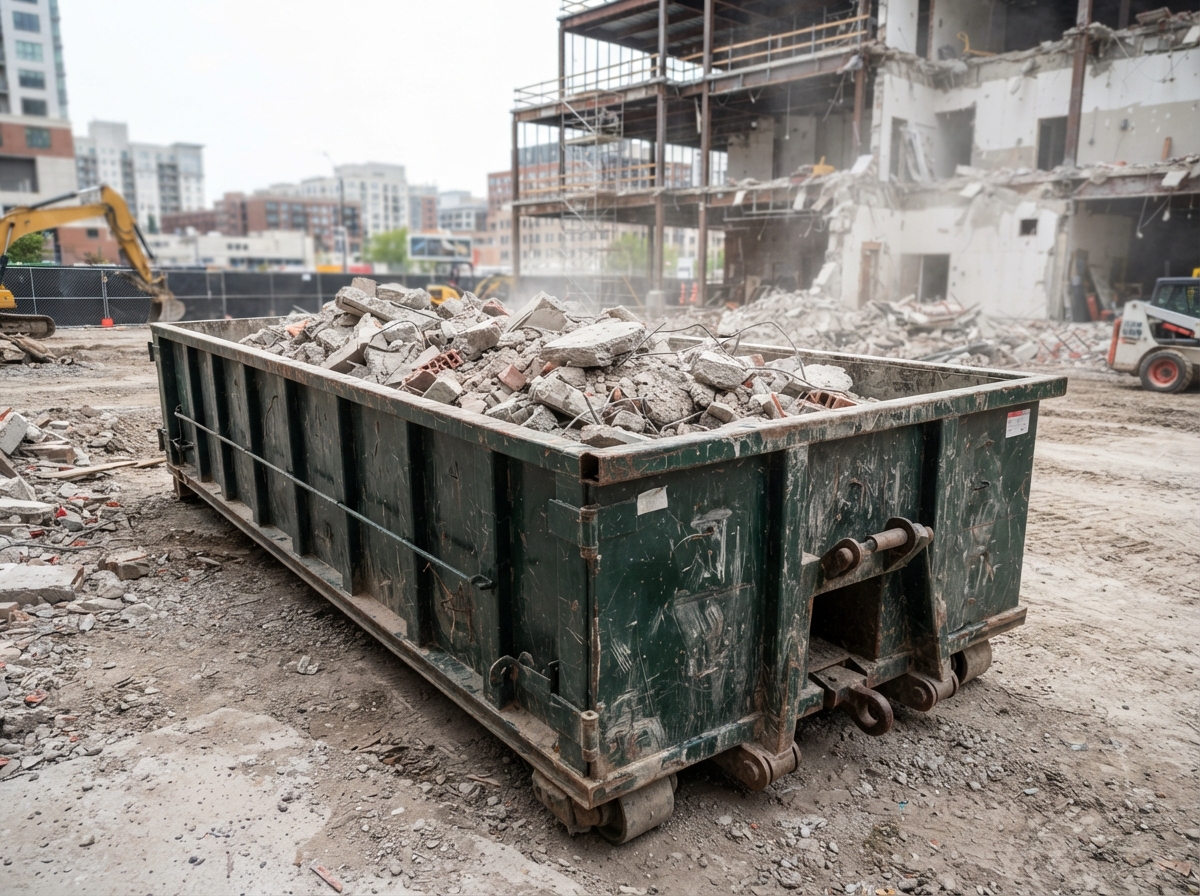
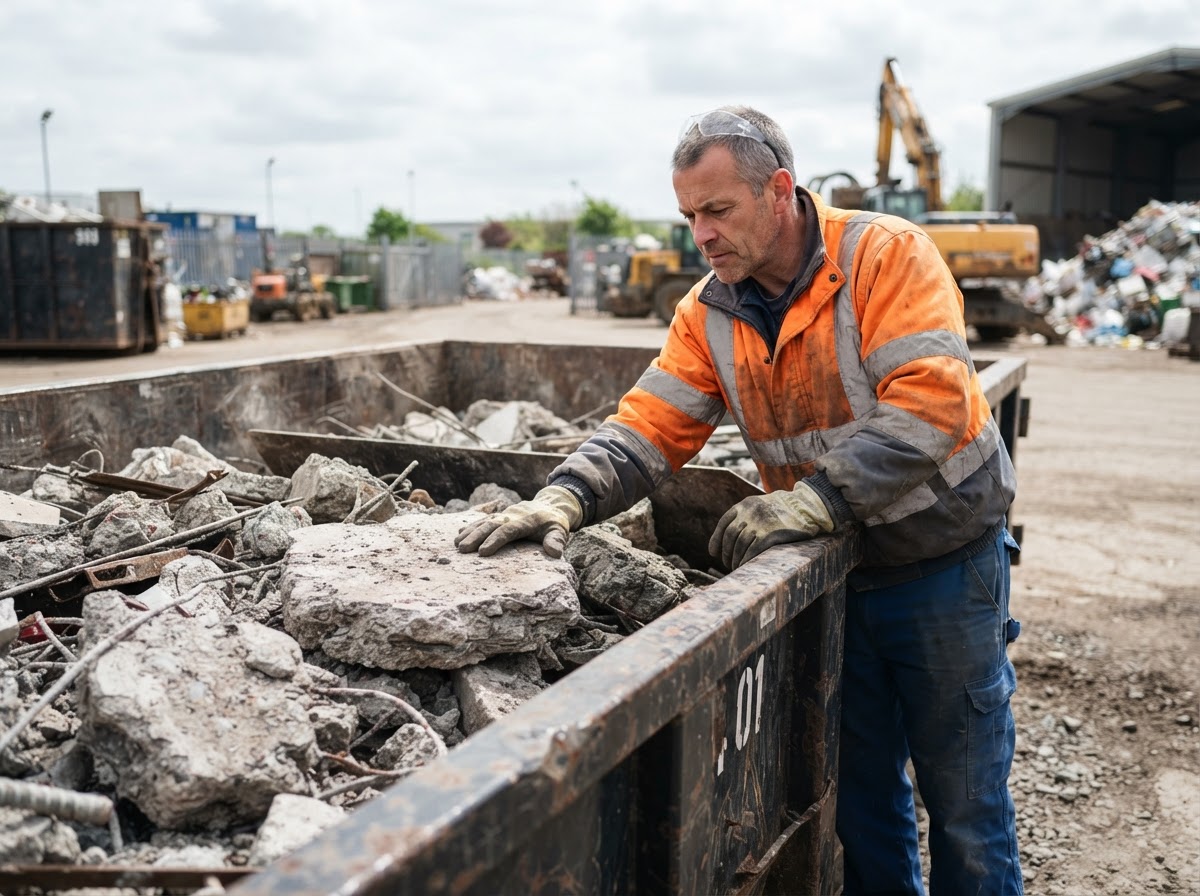
Most container advice starts with cubic yards. Demolition does not work that way. Broken concrete, brick, block, plaster, tile, and dimensional lumber carry real density, and the load hits a legal payload ceiling with room still showing at the top of the box. The truck can only carry what the road allows, and that limit does not care how much space is left.
That is why demo crews so often end up with a container that looks wrong. A 40-yard box arrives, the crew fills it a third of the way with masonry, and the driver refuses it as overweight. Or a 20-yard shows up for a full interior strip-out with bulky, light material, and the site burns three swaps in a week on a container that was never going to keep up.
The material mix decides everything. A single demolition job usually produces two different waste streams at two different times: the heavy fraction — concrete, masonry, tile, fixtures, structural material — and the light, bulky fraction that comes with it, which is drywall, insulation, ceiling grid, packaging, cabinetry, and framing scrap. Those two streams want different containers, or at least different loading discipline in the same one.
Trip-versus-weight math is where the money on a demolition job hides. Every pull is a truck, a driver, road time on I-75 or I-16, a scale ticket, and a disposal charge. On light waste the goal is to get more material into each trip. On heavy debris the goal is to make sure every trip leaves at full legal payload instead of half of it, and to be straight about the fact that on genuinely dense material there is no clever way around the weight.
Wrong Container?
Signs the Container on Your Job Site Is Wrong
Most demolition crews feel the problem before they name it. A few signals come up repeatedly on Macon and Bibb County job sites:
A load got refused as overweight.
The clearest sign the container is oversized for the material going into it.
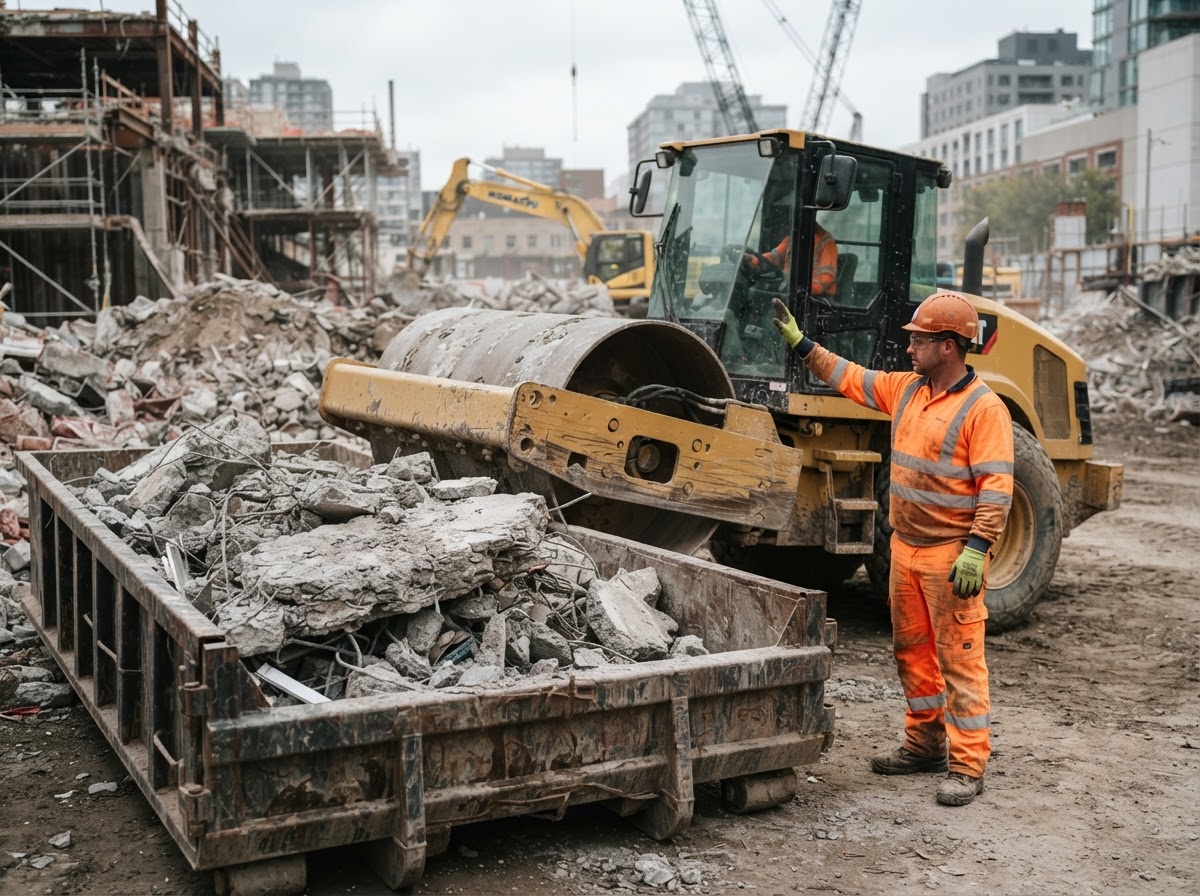
The container leaves visibly half full.
You are paying for a trip that carried a fraction of what it could have.
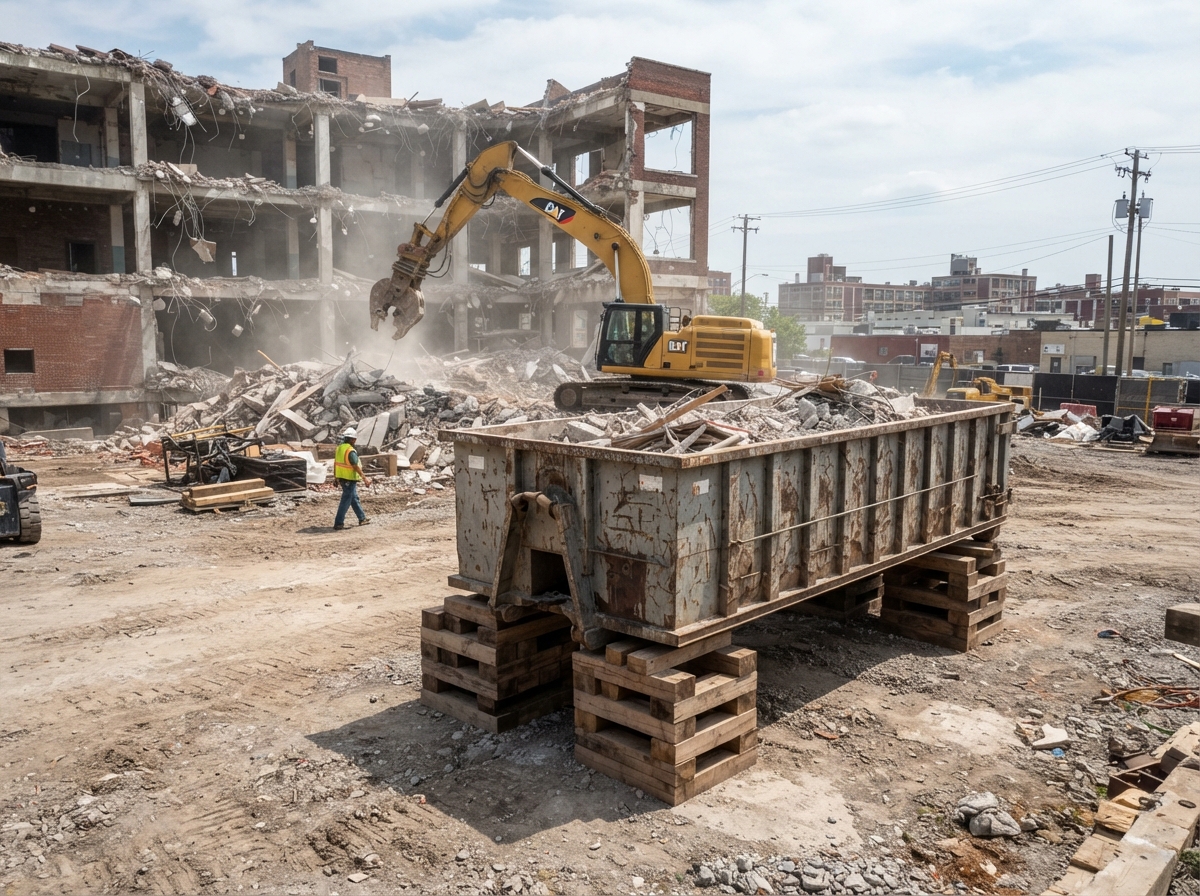
Swaps are dictating the schedule.
If the machine stops because the box is full and the next one has not arrived, the container plan is behind the work.

Debris is being staged on the ground.
Material stacked beside the box gets handled twice, and on a demo site double handling is real labor.
The debris mix changed mid-job.
A container set for interior strip-out material is the wrong box once slab breakout starts.
Nobody asked what the debris was made of.
If the container was quoted on cubic yards alone, the sizing was a guess.
Any one of these is worth a phone call. Several at once usually means the size, the swap cadence, or both need to change before the next phase starts.
Jobs We Supply
Demolition and Concrete Jobs We Supply Containers For
Four job types cover most of what comes through Macon and Bibb County. Each one behaves differently in a container, and the schedule should reflect that.
Tenant fit-outs, office gut jobs, retail conversions, restaurant strip-outs, and plant reconfigurations. The stream is mixed and mostly bulky — drywall, ceiling tile and grid, framing, doors, casework, flooring, old fixtures — with a heavy fraction from tile, mortar bed, and any masonry that comes down with it. This is the demolition job type that benefits most from on-site compaction, because most of what fills the box is air trapped in bulky material.
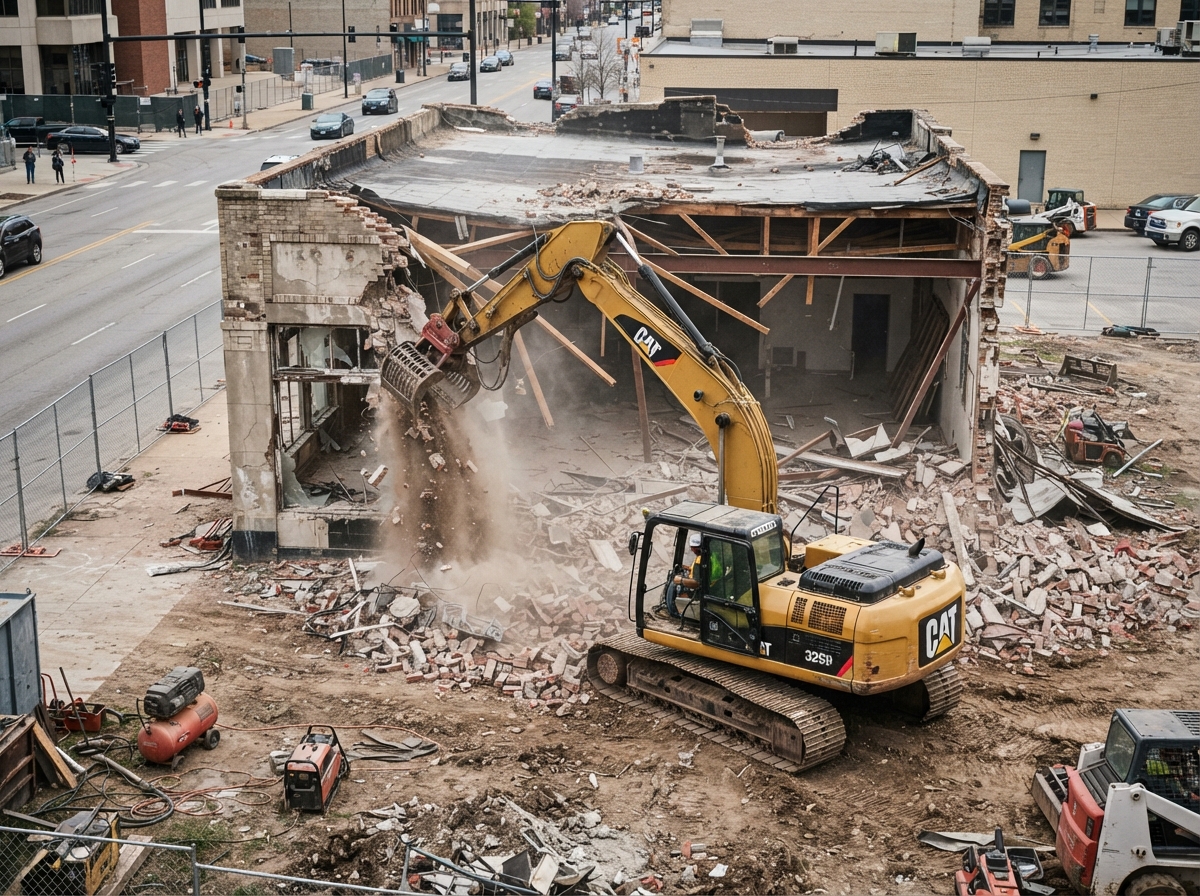
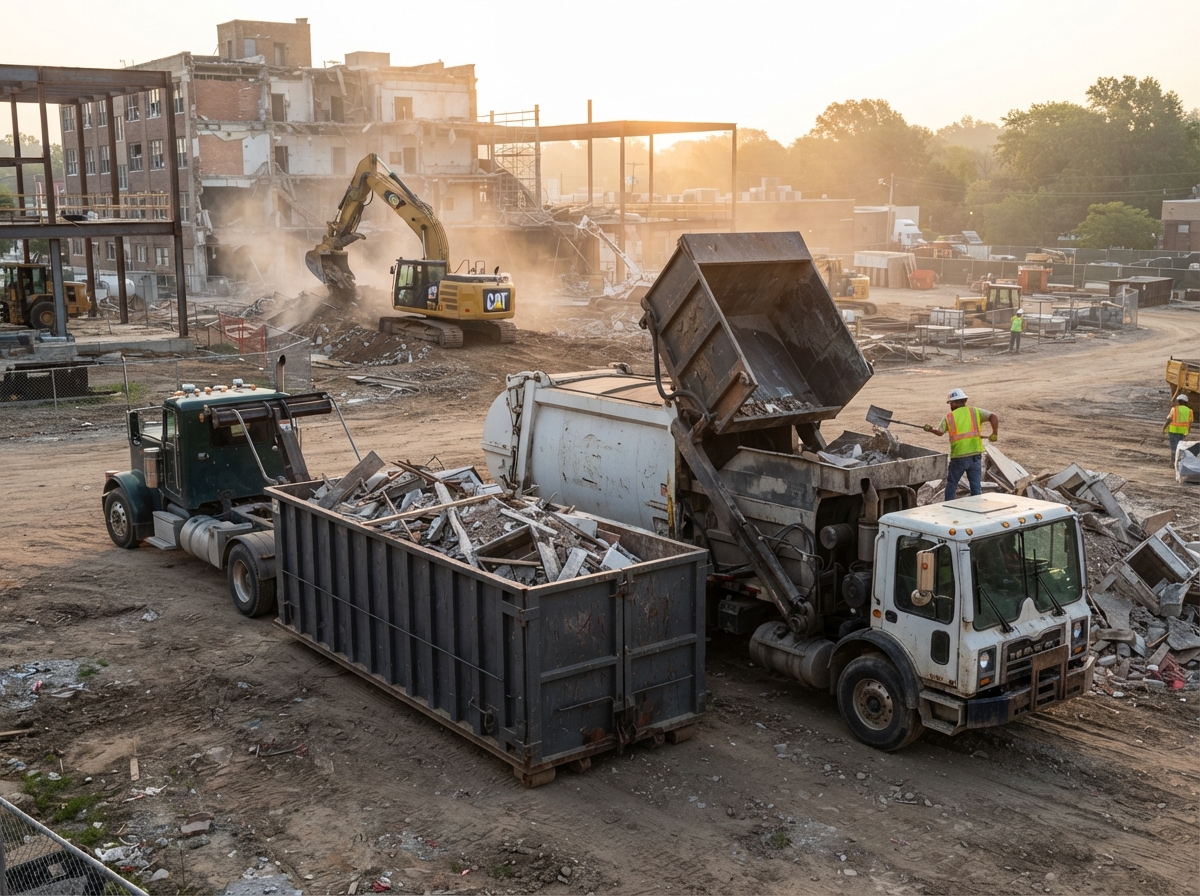
Full or partial building demolition, outbuilding removal, and the takedown of aging industrial structures around Macon's older commercial corridors. Volume comes fast, in waves, and it is heavier than most crews plan for. Teardown work usually runs on swaps rather than a fixed schedule — a container leaves full and another is set in the same spot so the machine never waits.
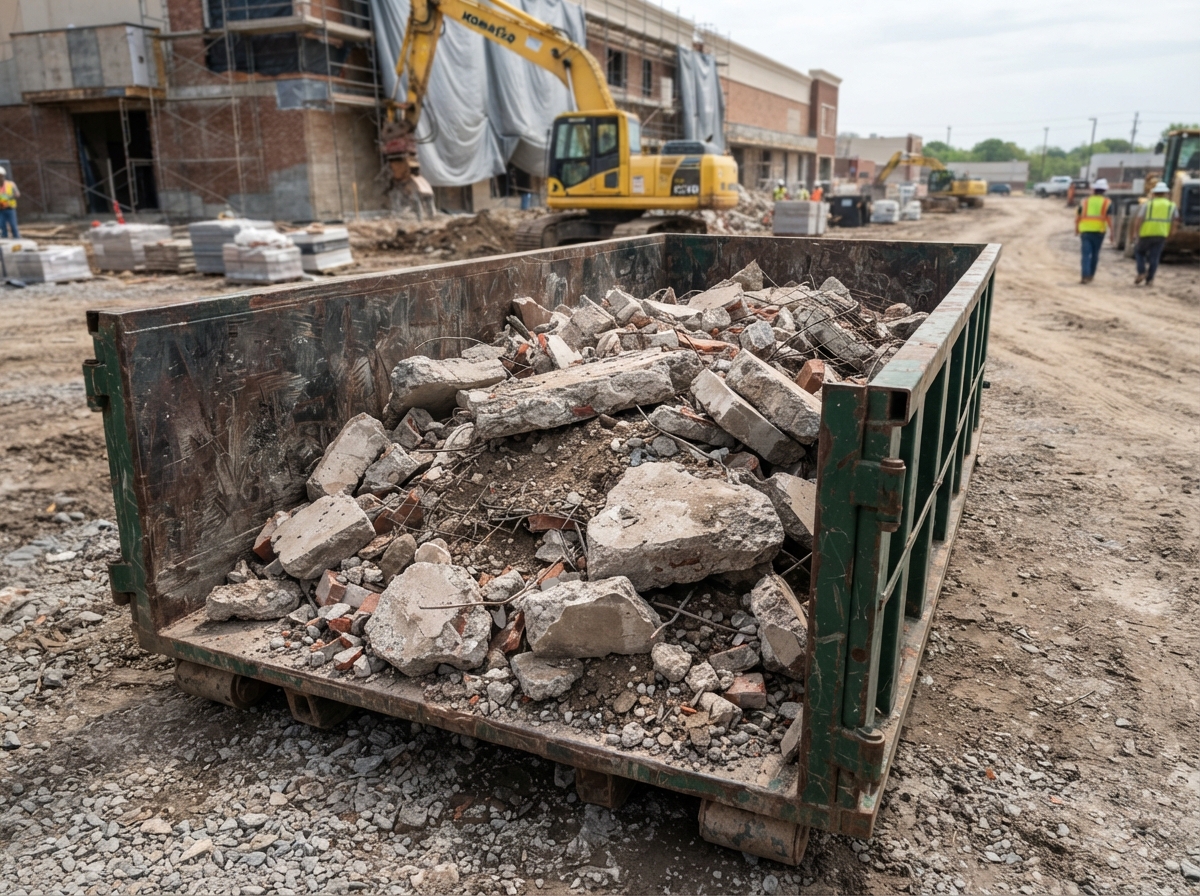
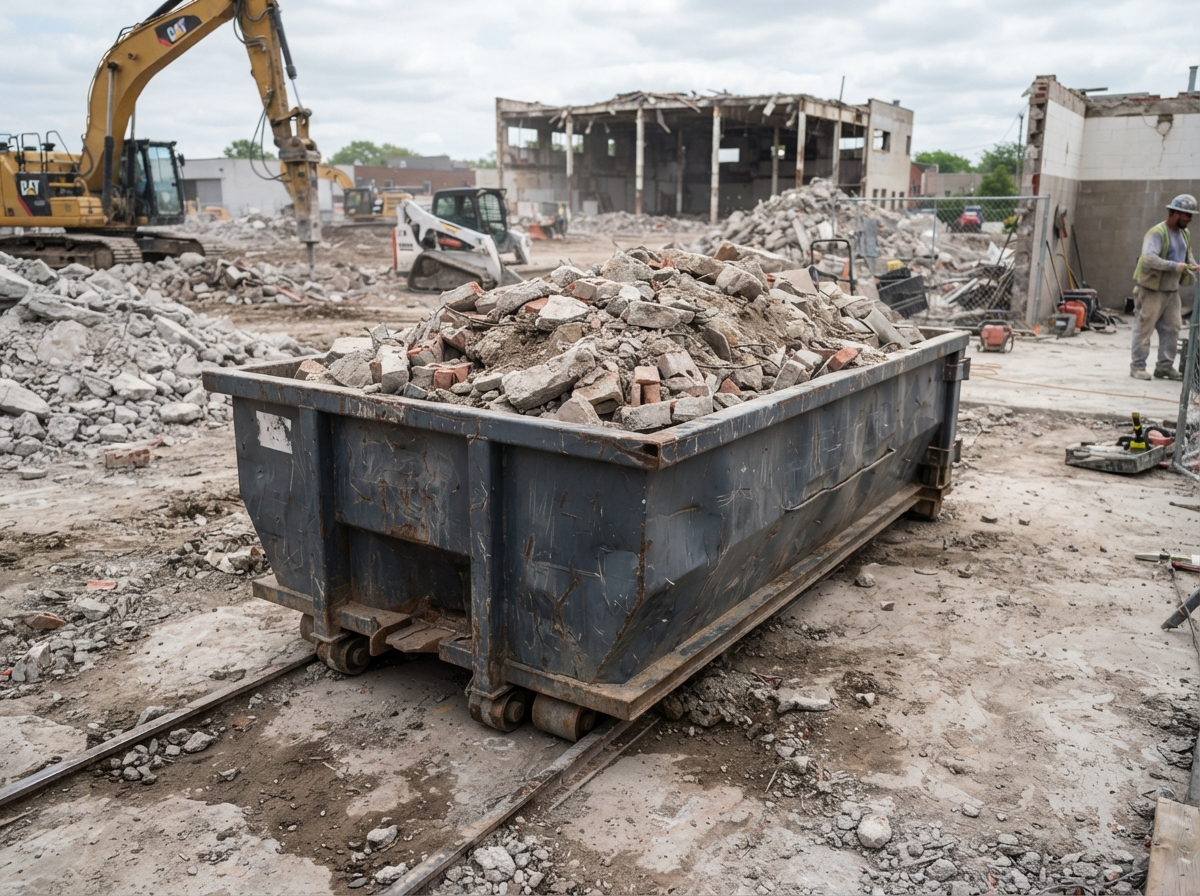
Slab breakout, footing removal, sidewalk and curb replacement, loading dock demolition, and block or brick wall removal. This is the densest material on any site and the one where sizing goes wrong most often. Tell us before the container is set that the load will be concrete or masonry — it changes both the size we bring and where the material is routed, and it needs to be confirmed against what the receiving hauler will accept.
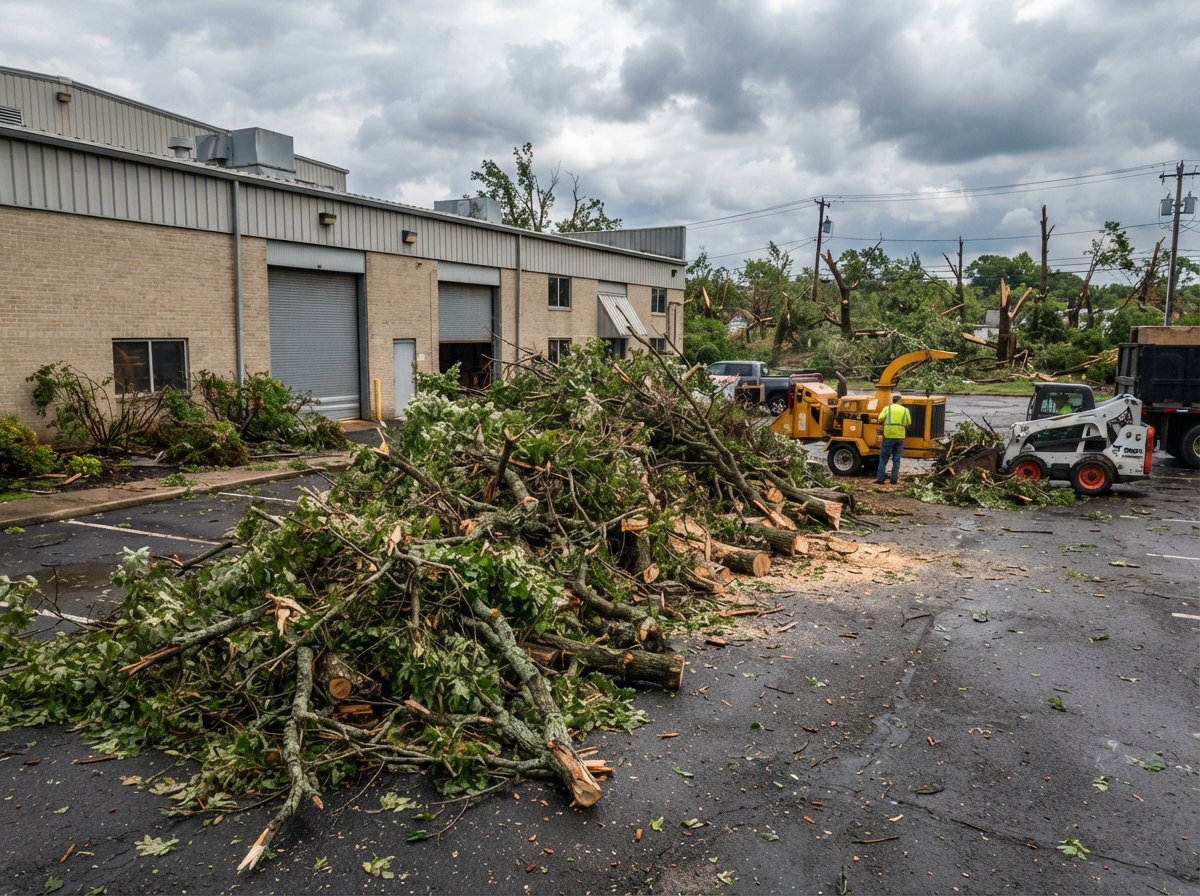
Middle Georgia gets weather that puts limbs, downed trees, roof material, fencing, and structural debris on the ground at commercial properties with no notice. Storm cleanup is a volume problem more than a weight problem when it is mostly woody debris, and a weight problem the moment wet material and structural debris enter the mix.
Weight Limits
Heavy Debris Weight Limits: What Actually Ends a Load
A container has two ceilings. One is volume — the physical space inside the box. The other is weight, set by what the truck is legally permitted to carry on the road. Whichever ceiling you reach first ends the load, and on demolition debris it is almost always weight.
For scale: a loose commercial load of ordinary mixed waste often weighs somewhere around two to three tons when the container looks full. A properly compacted load of compressible material can approach eight to twelve tons — roughly 95% of legal DOT payload. Demolition debris starts near the top of that range without any help. Concrete, brick, block, and tile can reach the payload limit with a container that is visibly nowhere close to full.
That single fact drives most of the sizing advice on this page. A 40-yard container is rated well over fifteen tons of static load, so the box itself is not the constraint — the road is. Filling a 40-yard box with masonry produces a container that cannot legally leave your site.
| Dense material fills by weight. | Concrete, masonry, tile, mortar, dirt-bearing debris. | Plan smaller containers and more of them. |
| Bulky material fills by volume. | Drywall, ceiling grid, framing scrap, insulation, cabinetry, packaging. | Plan larger containers, and this is where compaction earns its place. |
| Mixed demolition debris sits in the middle | and is the one worth a conversation before delivery, because the ratio of heavy to bulky decides the size. | |
Get the material right and the sizing follows from it. That is the whole of the sizing conversation on a demolition job.
Sizing
Sizing a Demolition Debris Container
Three sizes cover Middle Georgia demolition work. The full breakdown — dimensions, footprints, and material matching — lives on the dumpster sizes page; here is how each one behaves on a demo site.
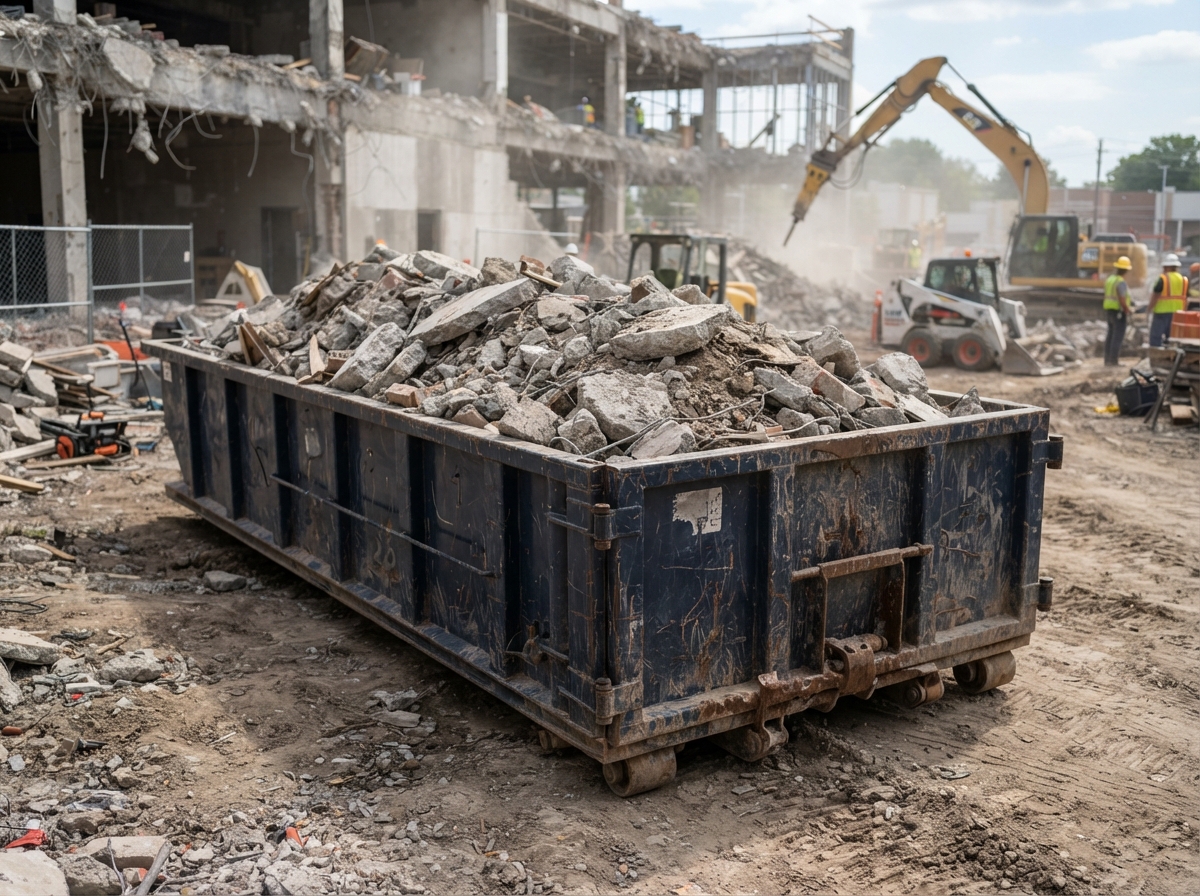
The right container for concrete, brick, block, tile, and mortar. It is the smallest of the three, and on heavy debris that is the point: the load reaches legal payload before the box is full, so paying for more space buys nothing. It also fits into tight demolition footprints where equipment is working and a larger box has nowhere to sit.
See 20-yard details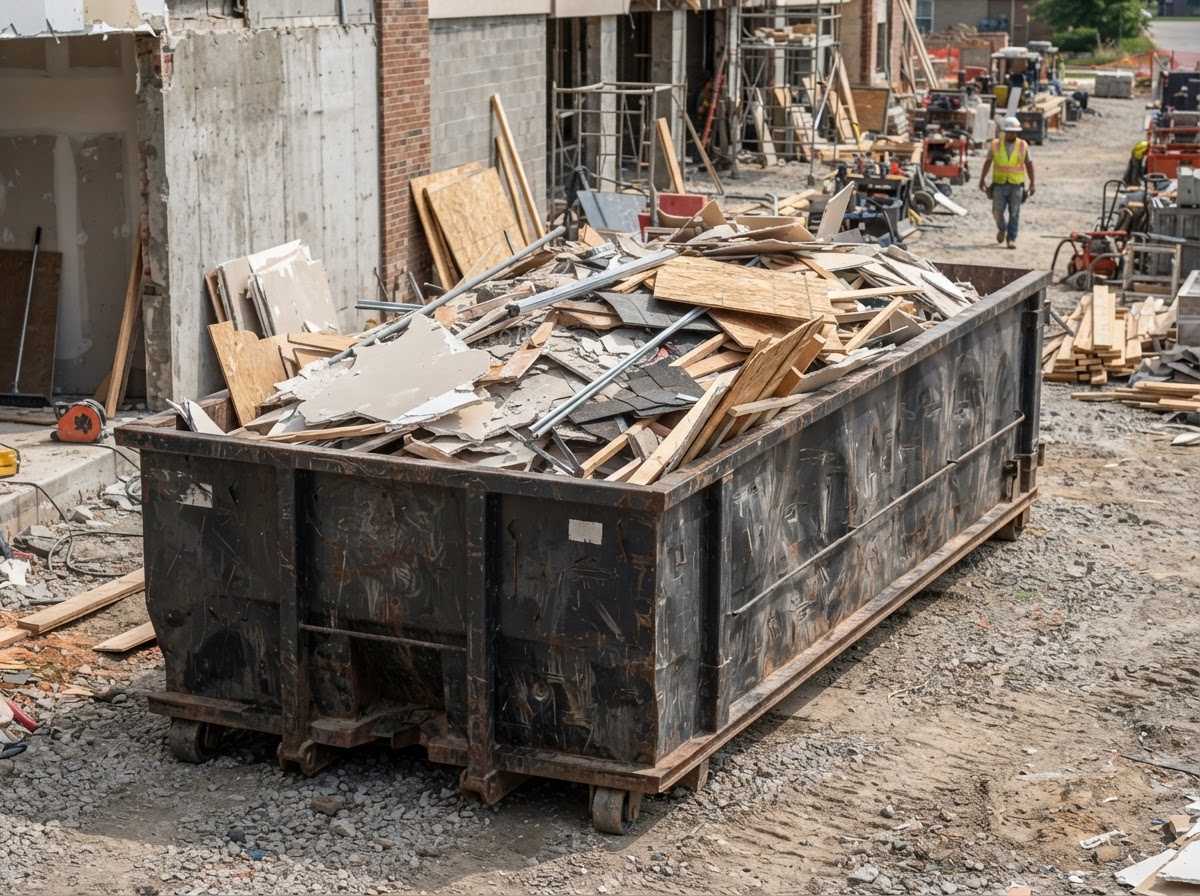
The middle ground, and the most common choice for interior demolition and mixed teardown streams. Enough capacity for bulky material without inviting a crew to fill it with masonry it should not be loading. Most demolition accounts that call about a container start here.
See 30-yard details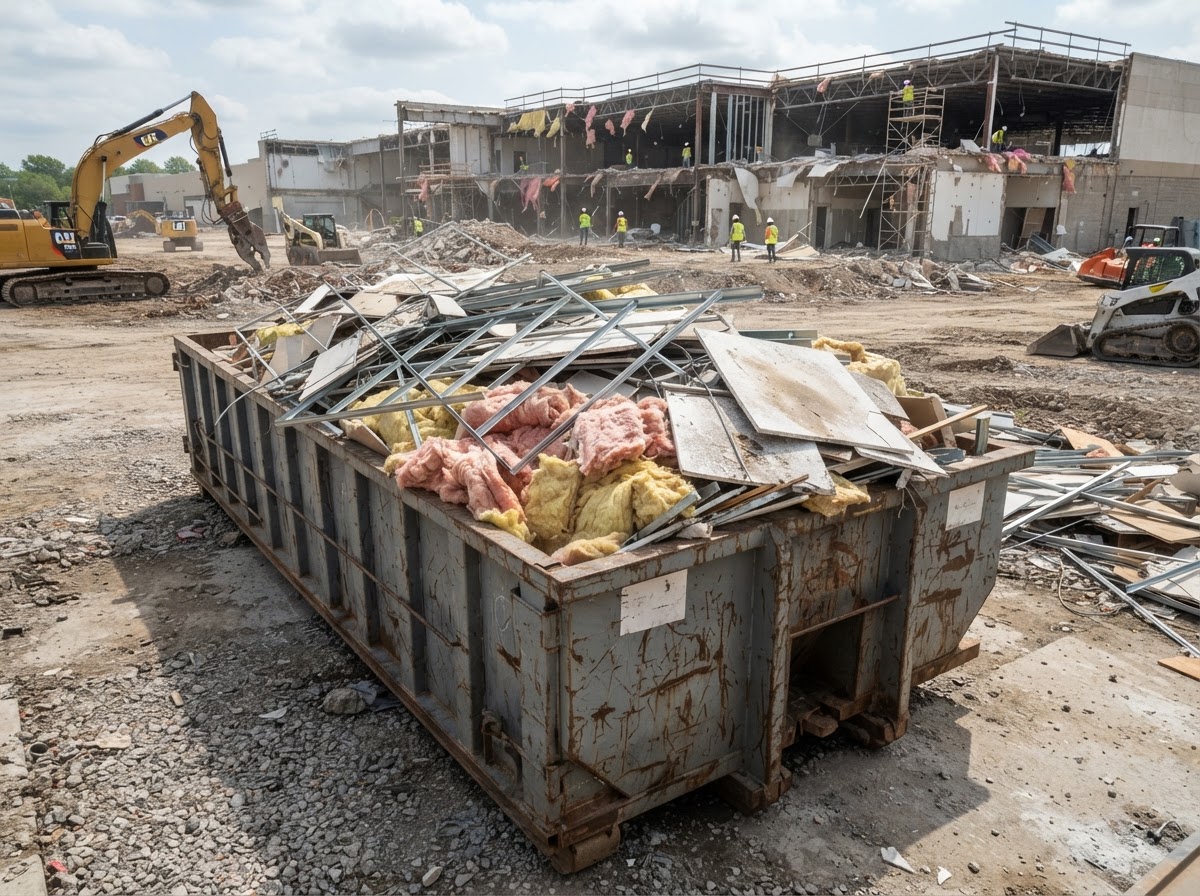
The 40-yard container is built for volume rather than for weight. It suits interior strip-outs, woody storm debris, and light structural material where the box will fill with air long before it approaches payload. It is the wrong container for a concrete job, and we will say so rather than deliver it.
See 40-yard detailsDescribe the material and the job phase and we will size it. Guessing large on heavy debris produces a container that cannot legally be hauled; guessing small on bulky debris produces swap after swap.
Loading Discipline
Loading a Heavy Debris Container Without Wasting the Trip
Loading discipline changes the economics of a demolition container more than most crews expect.
Keep the heavy fraction separated where the job allows.
Running concrete and masonry into a dedicated container and bulky material into another means each one hits its own ceiling correctly. One reaches payload, the other reaches volume, and neither trip is wasted.
Load flat and load level.
Broken concrete stacked in one corner puts the weight where the truck does not want it and leaves the rest of the box empty. Spreading material across the floor of the container uses the payload allowance evenly.
Break down what breaks down.
Framing, casework, ceiling grid, and cabinetry stacked whole leave enormous voids. On a bulky stream that is exactly the air that compaction removes later, but a crew that flattens material as it goes gets more into every load from the start.
Nothing above the rails.
A container loaded over the top rail cannot be tarped and cannot legally travel, and it turns a scheduled pull into a return trip.
Say what is in it before the pull.
If a container that was supposed to be interior debris ended up with a slab in it, tell us. It changes the truck, the routing, and whether the load can be taken at all.
The Honest Part
What We Won't Compact, and What We Won't Take
This is the part of the page most worth reading, because it is the part most container companies leave out.
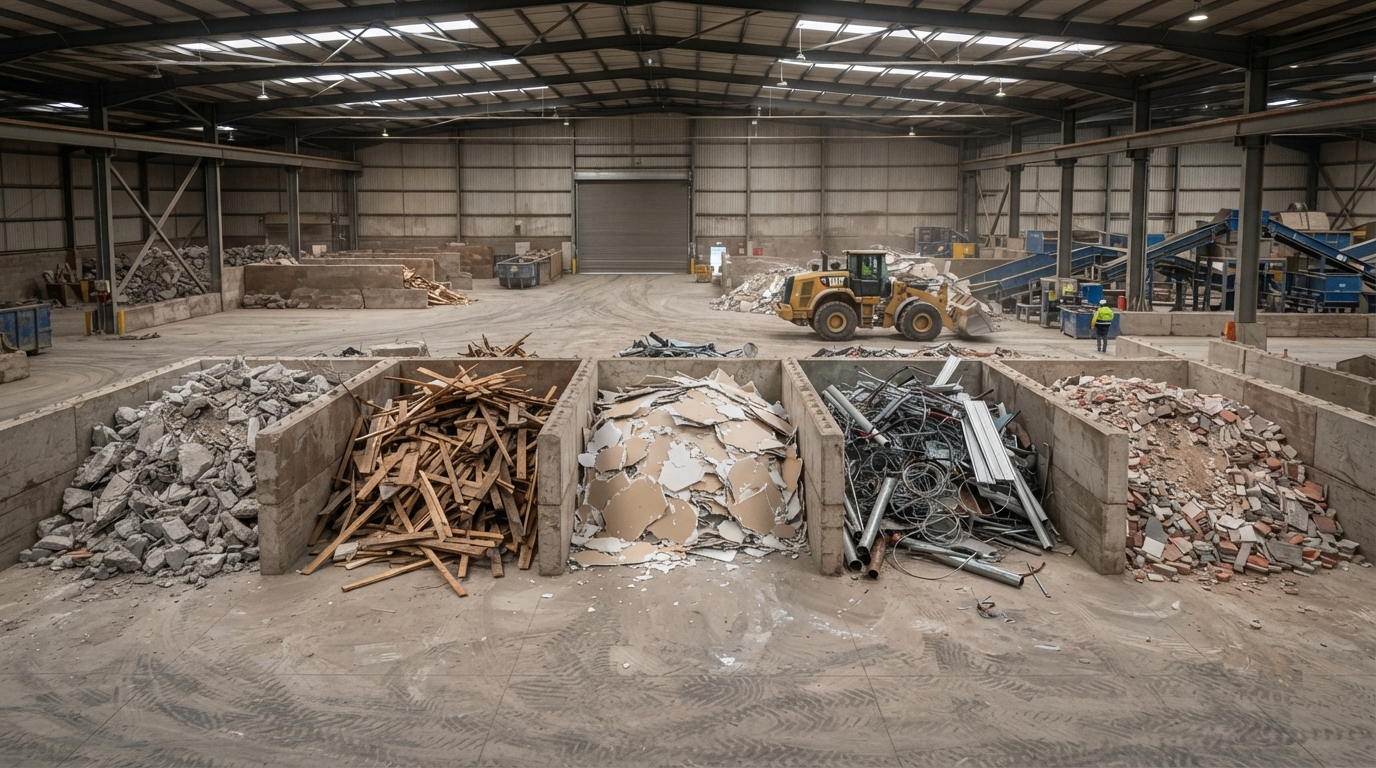
Compaction is weakest on demolition debris. Volume reduction from on-site compaction runs up to 70%, and it is entirely material-dependent. Here is where every stream sits:
| Material stream | Typical volume reduction |
|---|---|
| Cardboard, packaging, recyclables | 60–70% |
| Compost and organics | 50–60% |
| C&D debris, wood and pallets, mixed metals | 40–50% |
C&D debris sits at the bottom of that table. It is the least compressible material we handle, because demolition waste already carries far less trapped air than packaging does, and what compression is available gets cut short by the weight ceiling. On a demolition container, compaction can help, but it will not transform the job.
Dense material often should not be compacted at all. A container of broken concrete, masonry rubble, or any pure heavy load has essentially no air in it to remove, and it reaches legal payload before volume ever becomes the constraint. Compacting it accomplishes nothing you can measure. When a load is genuinely dense, Max Compacx will tell you to skip the compaction visit and simply haul it, because there is nothing there for a compaction visit to do.
What we do not take at all.
Dirt, soil, aggregate, and other dense no-air material. Liquids of any kind. Hazardous or regulated waste. Sealed drums and pressurized vessels — nothing under pressure goes into a container that may be worked. And anything the receiving hauler will not accept, which is why the material conversation happens before delivery rather than at the scale.
Concrete needs to be declared.
Clean concrete and masonry loads are handled as a container-and-haul job rather than a compaction job, and where the material is routed depends on the receiving facility. Tell us it is concrete when you call and the container gets sized, scheduled, and routed correctly from the start instead of becoming a problem at the pull.
The reason to be this direct is simple: on heavy debris, the demo tells the truth. Ten minutes on your own material shows exactly how much room comes back, and on some demolition streams the honest answer is "not much." We would rather you see that before an agreement than after one.
Where It Helps
Where Compaction Helps on Demolition Dumpster Rental in Macon, GA
With the limits stated plainly, here is where on-site compaction does earn its place on a demolition job.
It works on the mixed and bulky fraction. Interior demolition, strip-outs, tenant turnovers, and storm cleanup all produce material full of trapped air — drywall, ceiling grid, framing scrap, insulation, packaging, cabinetry, woody debris. A mobile compaction unit comes to the container in place, works the load, and opens the top back up so the same box keeps taking material. Nothing gets moved, nothing gets transferred, and the container never leaves the pad until it is genuinely full.
Plan around roughly 2:1 on mixed waste — about twice as much material before the box has to leave — with one or two compaction visits between pulls. On demolition streams specifically, expect the lower end of that, because the heavy fraction is doing none of the compressing.
The one savings illustration we use comes from a mixed-waste container, not a demolition load, and we point that out on purpose: a site running twelve haul-offs a month dropped to four, moving monthly haul-off spend from about $3,600 to about $2,800 — roughly $800 a month, about 22% — and 96 fewer truck trips over a year. A demolition container will not reproduce those numbers. What it can do is turn some of the swaps on a long teardown into fuller loads, and on a job running weeks that is worth measuring.
Two ways to start. Keep the container and hauler you already use and have Max Compacx compact what is on your pad — nothing about your current arrangement changes. Or we provide the container and the compaction together as one service. The free on-site demo takes about ten minutes and happens on material you already have.
Storm Cleanup
Storm Debris Cleanup for Macon Commercial Properties
Middle Georgia storm seasons put commercial properties in cleanup mode with no warning, and storm debris arrives as a mixed stream: limbs and downed trees, torn roofing and fencing, damaged signage, soaked insulation, and structural material from whatever came apart.
Storm work has its own rhythm. Volume shows up all at once, access is often compromised, and the property usually needs to reopen faster than a normal project timeline allows. Woody debris is bulky and compresses reasonably well, so a larger container plus compaction visits can keep a cleanup running on fewer trips. Wet material and structural debris pull the load toward the weight ceiling quickly, which is why a storm container gets sized after somebody describes what is actually on the ground.
We schedule storm cleanup containers around site access and reopening, not around a fixed route. Tell us what the property is dealing with and what has to be clear first.
Delivery & Access
Delivery and Placement on a Demolition Site
Max Compacx runs from a Hawkinsville Rd base in Macon, which puts Bibb County and the I-75 and I-16 corridors within an easy run for demolition delivery. A demo site has placement constraints an ordinary commercial lot does not.
Surface. A container loaded with masonry is one of the heaviest things that will sit on your site. Concrete pads and compacted gravel handle it. Asphalt can mark under sustained load in Georgia summer heat, and soft ground after a wet stretch is a genuine risk for a loaded truck. If marking is a concern, tell us and we will bring boards.
Access and clearance. A roll-off truck needs roughly sixty feet of straight-line approach to set and retrieve a container, plus overhead clearance free of power lines, low canopies, and awnings. On an active demolition site the approach lane changes as the work progresses, so it is worth confirming access before every swap rather than assuming the first placement still works.
Position relative to the machine. The container should sit where the excavator or loader can reach it without repositioning and without swinging over anything that matters. Doors should face the work. Moving material twice is the most common avoidable cost on a demolition job.
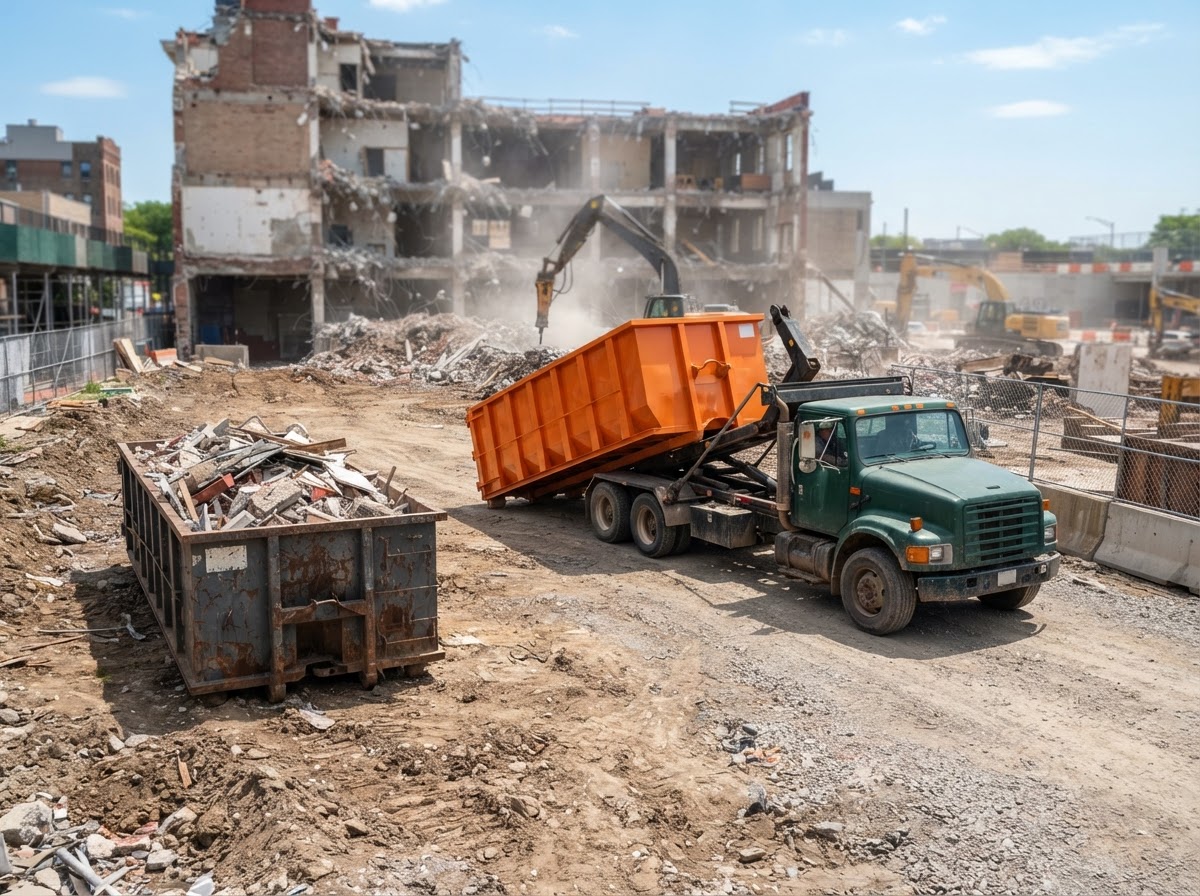
Swaps on a live site. Teardown work runs on swaps — a full container leaves, an empty one takes its place, and the crew keeps working. Those get scheduled ahead against the phase plan so the machine is never waiting on a box.
The Process
How the Service Runs, Start to Finish
You describe the job.
Demolition type, what the debris is made of, the rough phase timeline, and what the site looks like. Material composition is the part that matters most.
We size it honestly.
Heavy loads get smaller containers, bulky loads get larger ones, and if compaction will not help your stream we say so at this stage.
Free on-site demo, if it applies.
About ten minutes, on material you already have, on your property. On a bulky stream you see how much room comes back. On a dense one you see that it does not, which is equally useful.
Delivery and placement.
The container is set where the machine can reach it, oriented to the work, on a surface that will hold it loaded.
You load it.
Heavy material spread flat, nothing above the rails, heavy and bulky fractions separated where the job allows.
Compaction visits where they make sense.
A mobile unit works the load in place on mixed and bulky containers, typically once or twice between pulls.
Pull or swap.
The container leaves when it hits its real ceiling — payload on heavy debris, volume on bulky debris — and is returned empty or replaced.
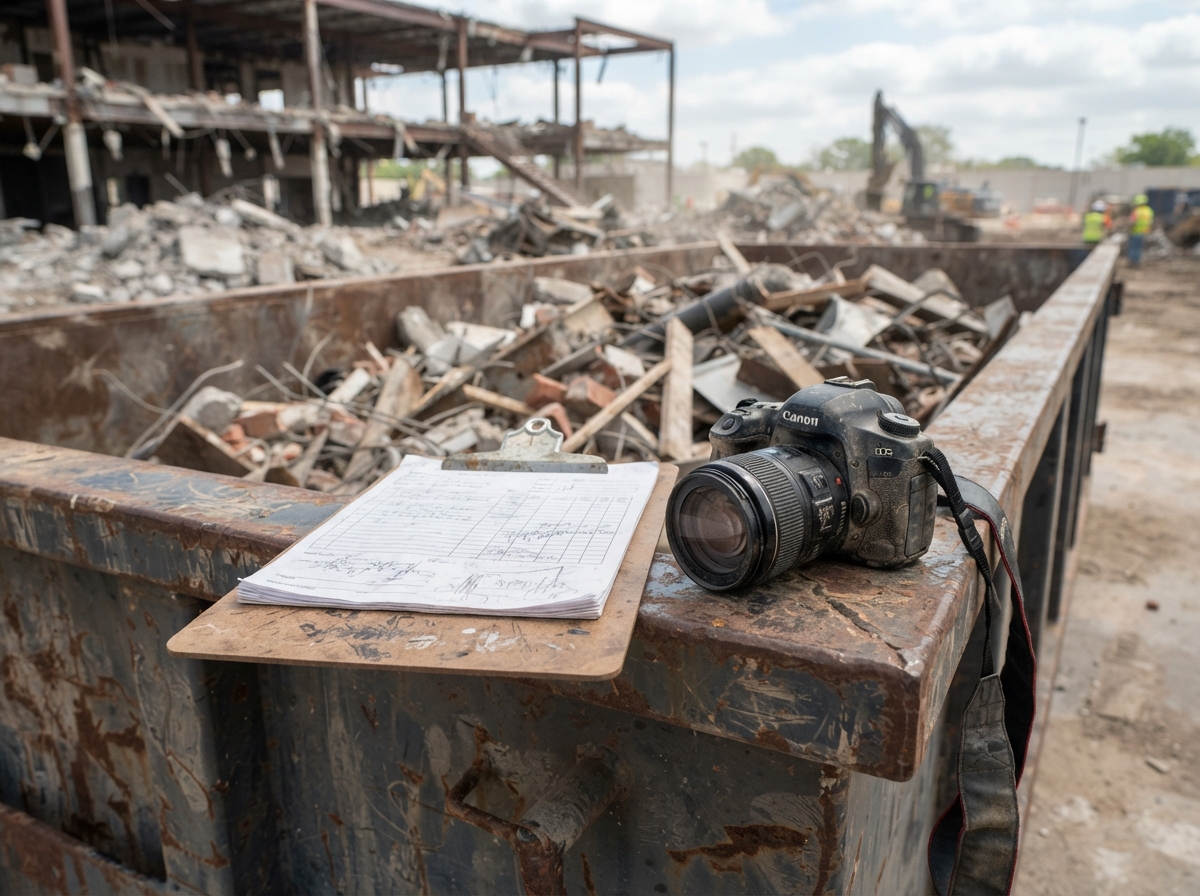
Every compaction visit includes a before-and-after inspection with photo documentation. The compaction drum is narrower than the container, so it works the load without contacting the walls, there is no hydraulic downforce driving against the box, and safeguard wheels and end guards keep the unit off the container structure. Our operators run a zero-touch policy on your equipment — that matters most when the container being worked belongs to your existing hauler rather than to us.
Why Max Compacx
Why Macon Demolition Crews Choose Max Compacx
We size for weight, not for the biggest box we can rent you.
A 20-yard container on a concrete job is the correct answer, and it is the smaller sale.
We tell you when compaction will not help.
C&D debris sits at the bottom of the reduction range, and dense loads should often skip compaction entirely. Max Compacx says that before an agreement rather than after one.
You do not have to change haulers.
If you already have a container and a hauler you are satisfied with, keep both and we compact what is on your pad. That is the easiest way for most demolition accounts to start.
Swap scheduling that keeps the machine moving.
Container timing gets set against the phase plan, so the crew is not standing around waiting on a truck.
Local, commercial, and industrial only.
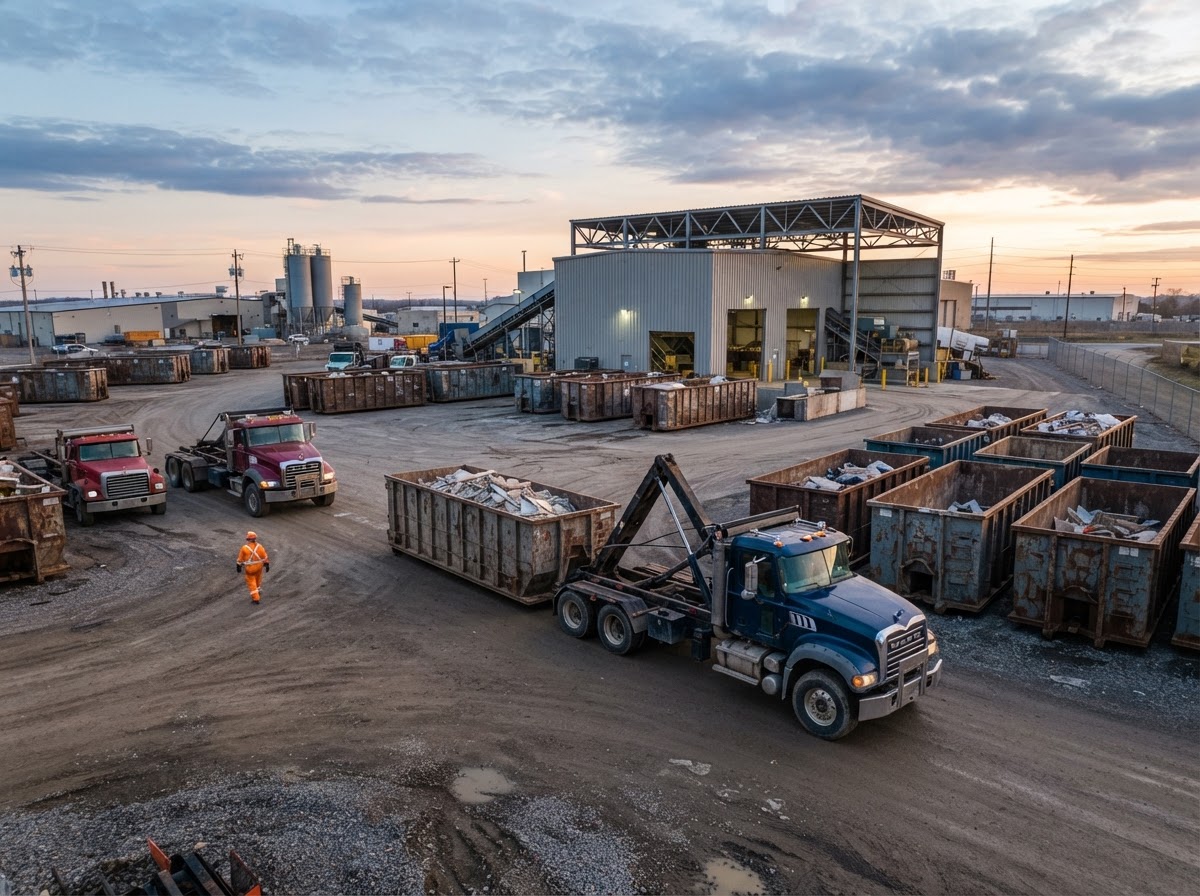
Max Compacx works with businesses across Macon and Middle Georgia. Not a national call center routing your teardown to whoever answers.
Documented handling on every visit.
Before-and-after inspection and photographs, on your equipment or ours.

Service Area
Service Area: Macon, Bibb County and Middle Georgia
Max Compacx delivers demolition and concrete containers and provides on-site compaction across Macon and Middle Georgia, working from a Hawkinsville Rd base with quick access to the I-75 and I-16 corridors. Regularly served communities include Macon, Byron, Gray, Forsyth, Perry, Lizella, and Centerville, along with the surrounding Bibb County commercial and industrial corridors.
If your job site sits outside the communities listed, ask. Coverage depends on the route and the schedule, and it is a short conversation to find out.
Max Compacx
5900 Hawkinsville Rd, Macon, GA 31216
Monday – Friday, 7am – 5pm
Demolition & Concrete Dumpster Rental in Macon, GA: Common Questions
Related Services
Roll-Off Dumpster Rental
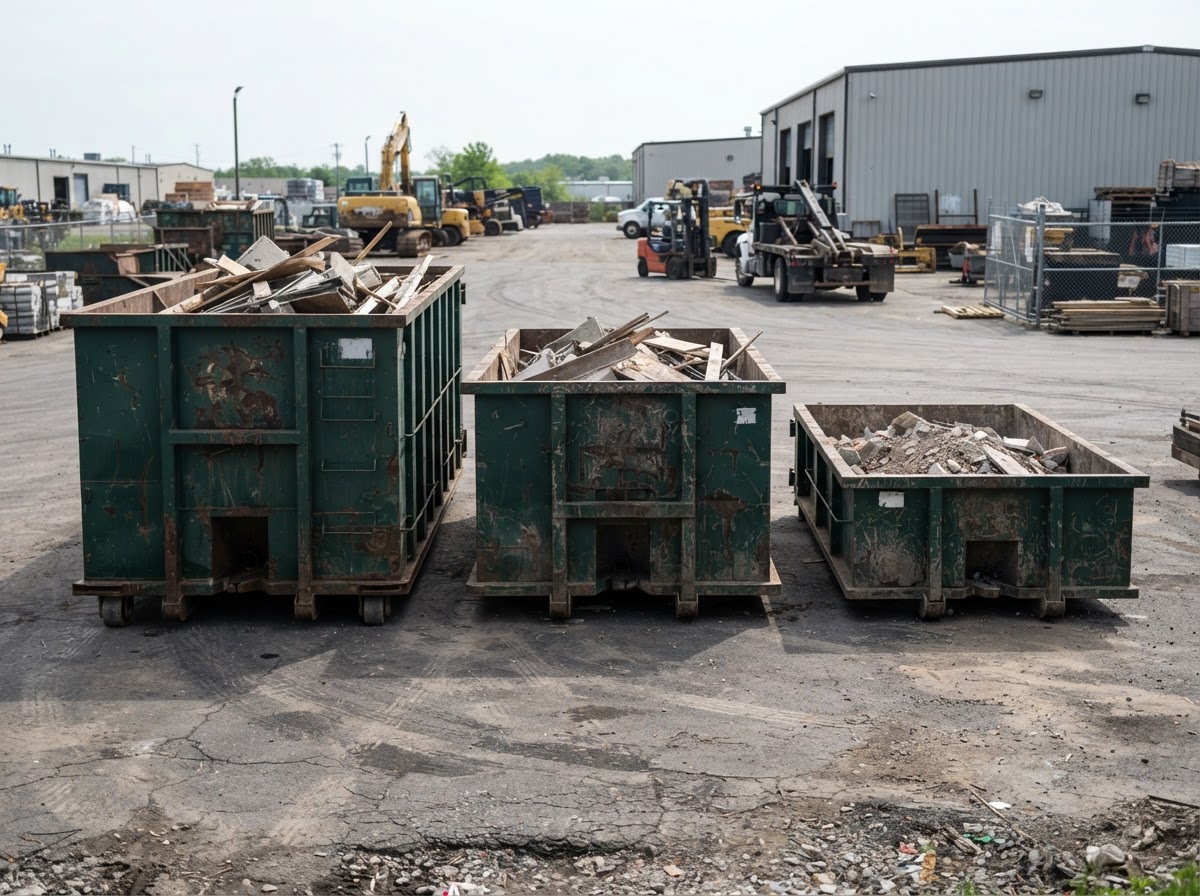
how commercial container service works, from delivery through pull.
Construction Dumpster Rental
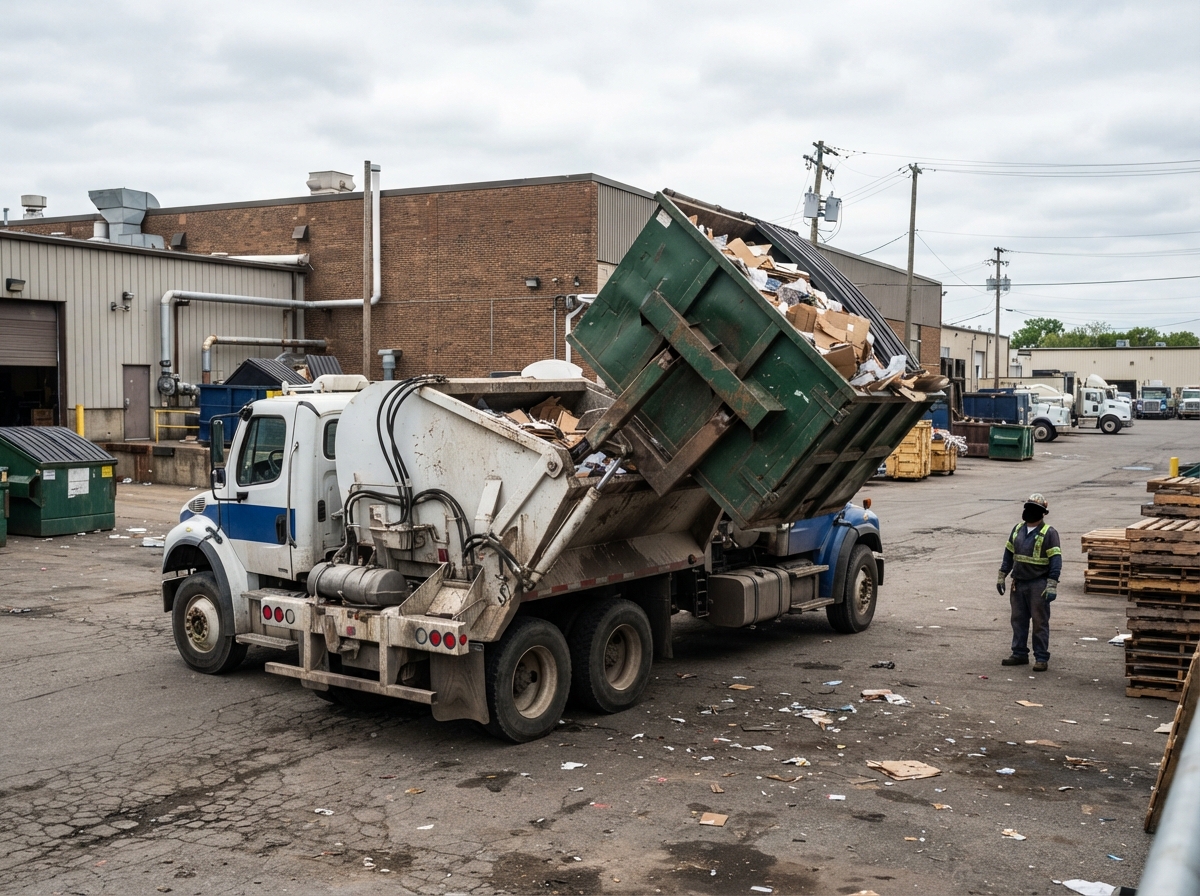
containers and swap cadence for active build, renovation, and fit-out jobsites.
Dumpster Sizes: 20, 30 and 40 Yard
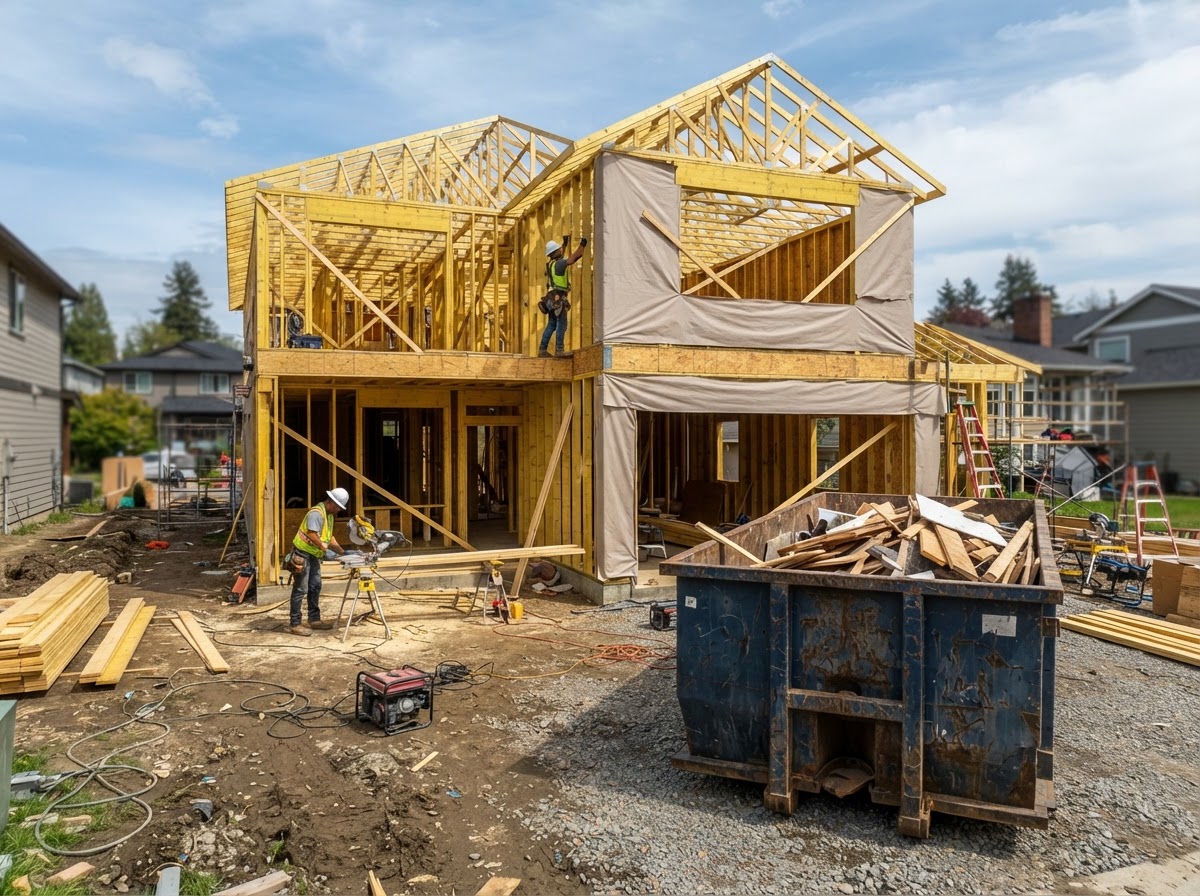
dimensions, footprints, and how to match a size to your material.
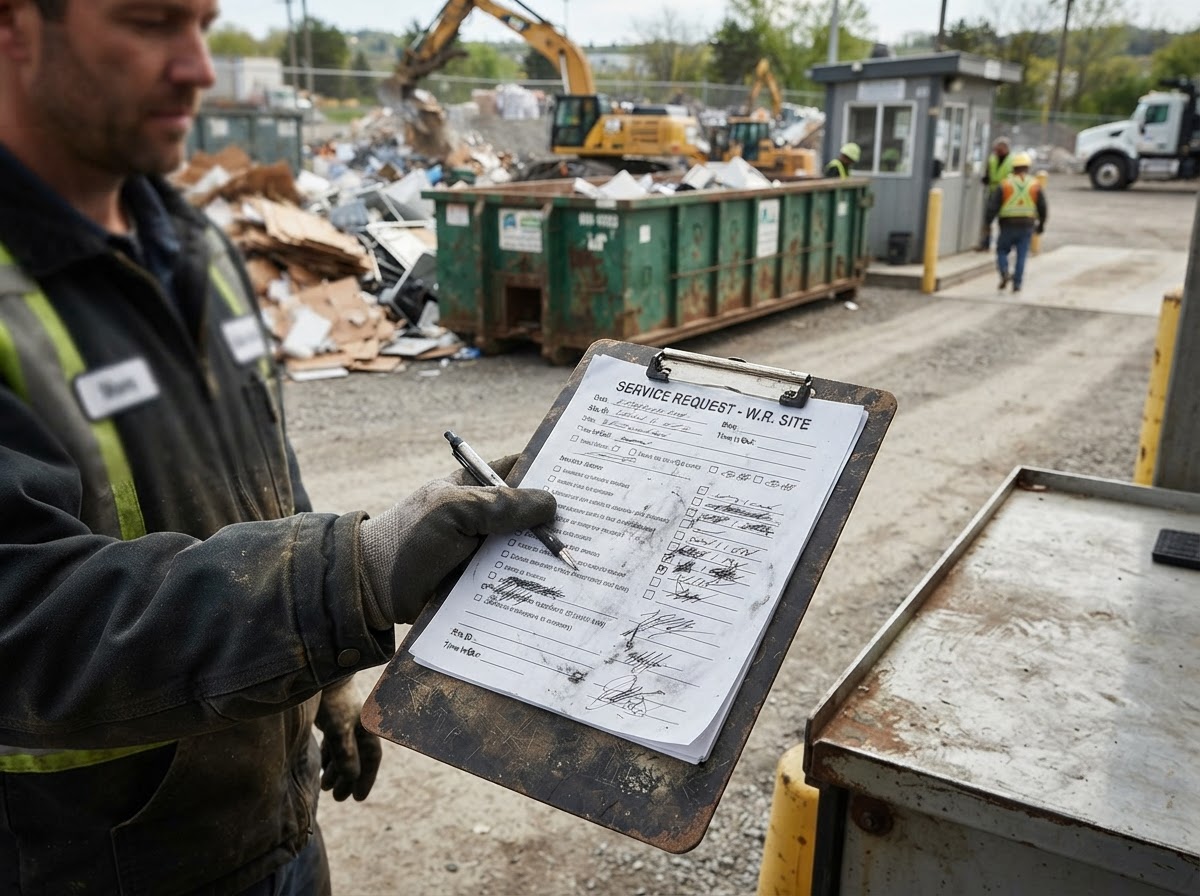
On-Site Waste Compaction
how the mobile unit works a container in place, and which streams actually benefit.
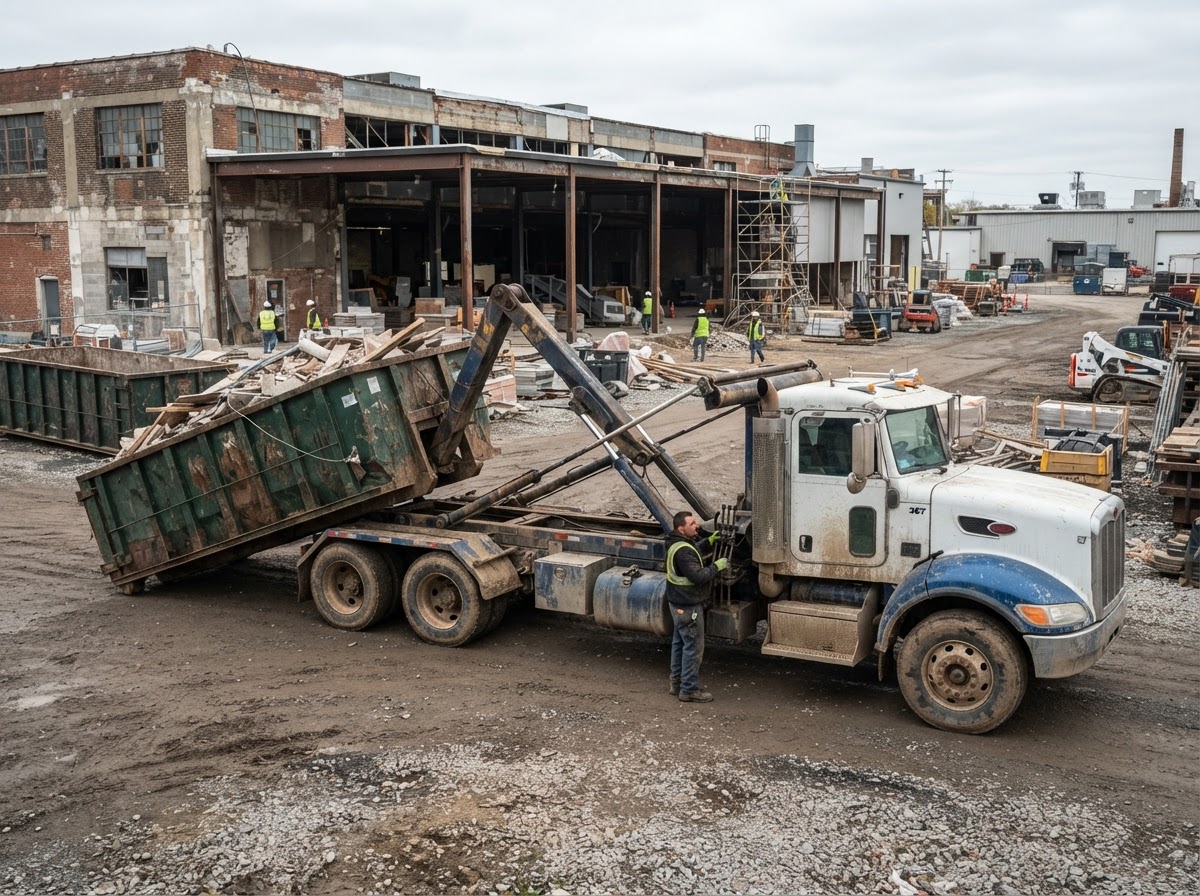
Request Service
send job details and get a container sized and scheduled.
Start Your Demolition & Concrete Dumpster Rental in Macon, GA
Tell us what you are tearing down and what the debris is made of. We will size the container for the weight, set the swaps against your phase plan, and tell you honestly whether compaction changes anything on your material. The on-site demo is free and takes about ten minutes.
Max Compacx
5900 Hawkinsville Rd, Macon, GA 31216
Monday – Friday, 7am – 5pm