
Industrial Dumpster Rental — Macon, GA
Industrial Dumpster Rental in Macon, GA
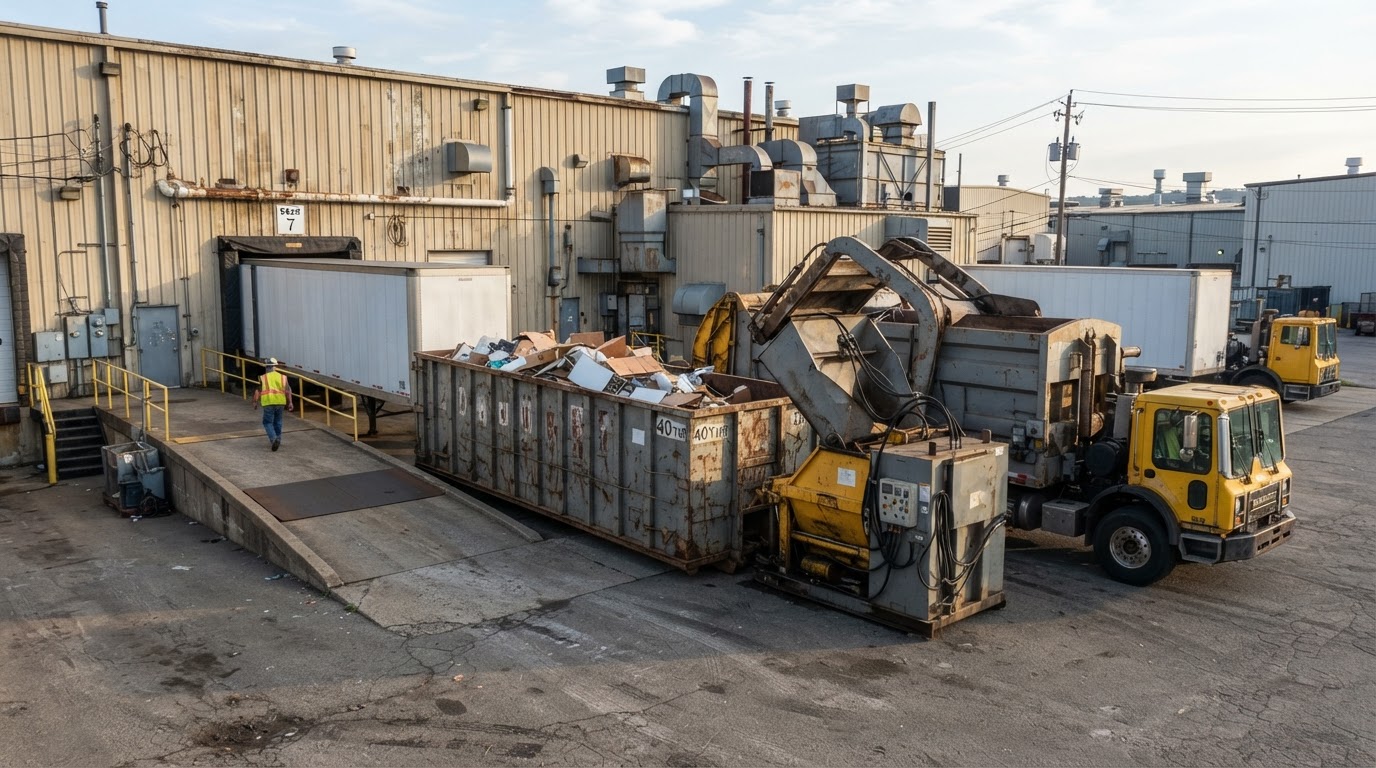
Max Compacx provides industrial dumpster rental in Macon, GA for manufacturers, warehouses, and distribution operations: 20, 30 and 40 yard roll-off containers on a standing schedule, compacted on site so each container holds far more before a truck has to come get it. Industrial waste is not a project. The line runs, the trailers unload, and the container fills again whether anyone is watching it or not.
That is what makes this different from jobsite waste. On a standing stream, the container is not the recurring cost. The trips are.
- Macon, GA based
- Monday – Friday, 7am – 5pm
- Plants, warehouses & distribution
- Standing schedule, not on-call
The Real Cost Driver
Why Industrial Dumpster Rental in Macon, GA Is Really a Trip-Count Problem
A plant or distribution center does not have a waste event. It has a waste rate. Packaging comes in on every inbound trailer, pallet wrap comes off every load, cartons get broken down at every station, and production throws off offcuts and rejects at whatever pace the line is running. Nothing about that stops for a slow month.
Because the rate is steady, the container schedule becomes a fixed subscription. Two pulls a week, three, five — whatever number got set when the account opened tends to stay set for years. That number, multiplied across fifty-two weeks, is the entire annual waste budget. The container size barely moves it. The disposal weight moves it some. The trip count moves it most.
And the trips are mostly moving air. Industrial waste is the lightest, bulkiest material any hauler carries. A gaylord that gets tipped in whole, a bale of stretch film, a stack of cartons that nobody flattened, foam corner blocks, dunnage — all of it takes up enormous room and weighs almost nothing. A container that looks full from the dock is frequently carrying a fraction of what the truck is legally allowed to haul away. The truck leaves at volume capacity and nowhere near weight capacity, which means the operation paid for a full trip to move a mostly empty box.
There is an operations cost sitting behind the money cost. When the container is full and the truck is not due until tomorrow, material starts stacking on the dock. Somebody moves it twice. A trailer bay gets used for storage. On a bad week, a forklift driver spends part of a shift managing waste instead of moving product.
Compaction reduces how often that truck has to come out. It does not eliminate the trips — the material still has to leave the property and go somewhere. What changes is how many of those trips the plant pays for in a year.
Who We Serve
Industrial and Manufacturing Operations We Serve
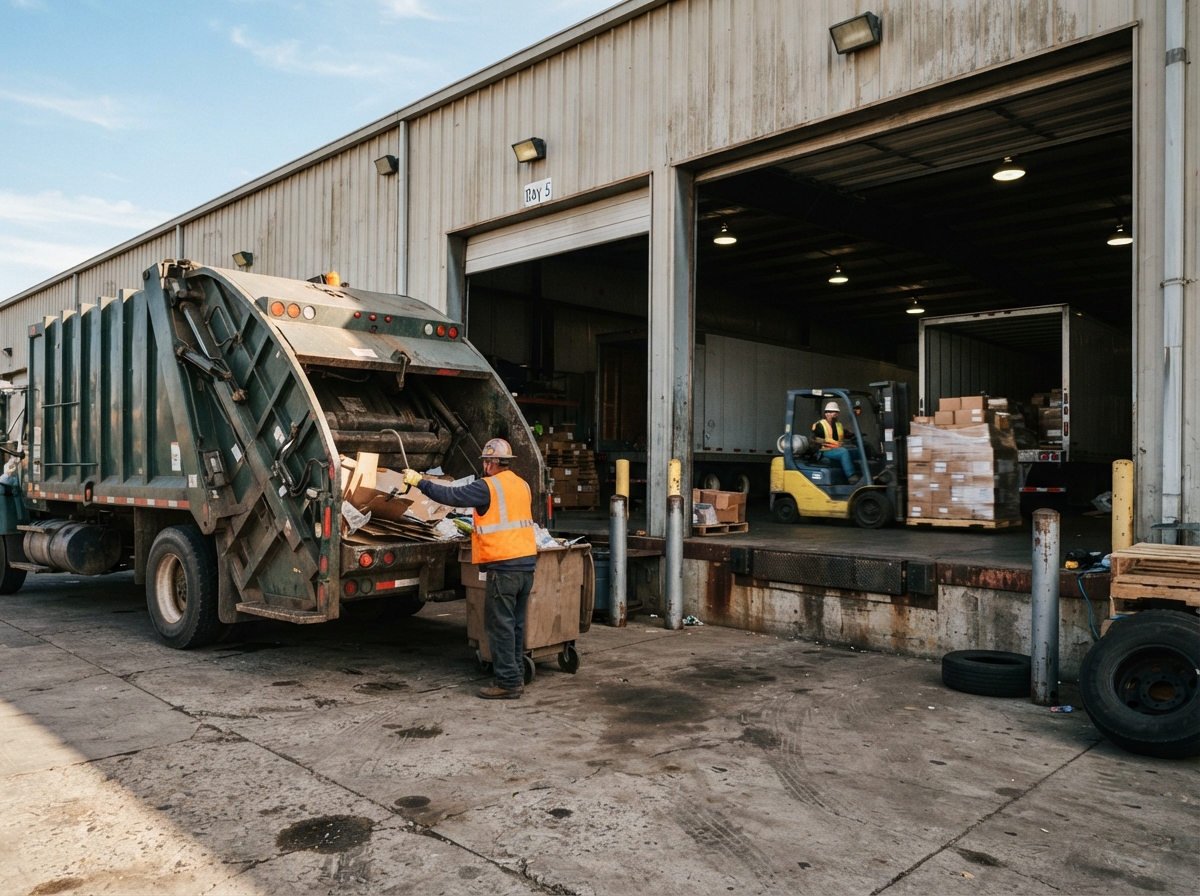
Max Compacx serves commercial and industrial accounts across Macon, Bibb County, and the Middle Georgia corridors along I-75 and I-16. The operations differ; the waste behavior is remarkably consistent, which is that volume is high, continuous, and mostly packaging.
Manufacturing plants
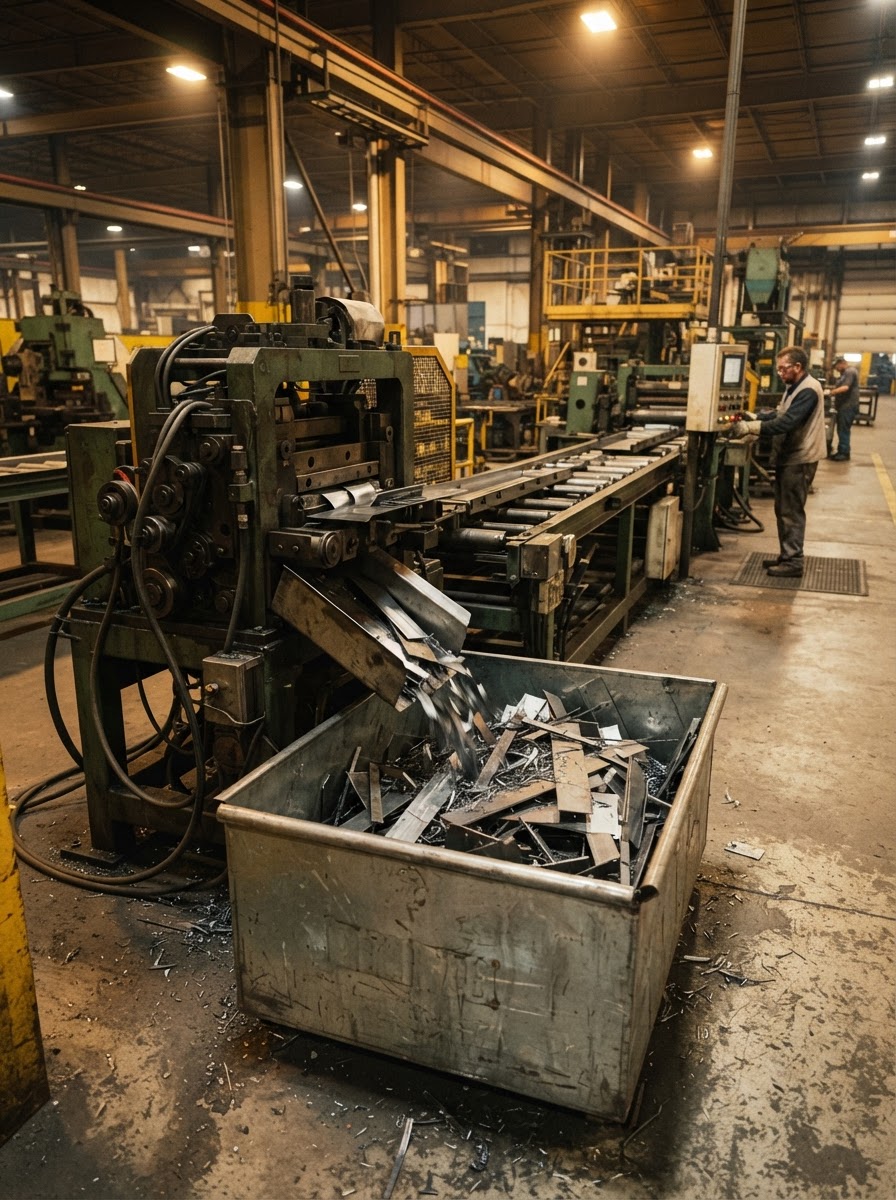
Production offcuts, rejects, packaging from inbound components, and shipping material on the outbound side. Volume tracks the production schedule, which means it is predictable in a way most waste is not.
Warehouses and distribution centers
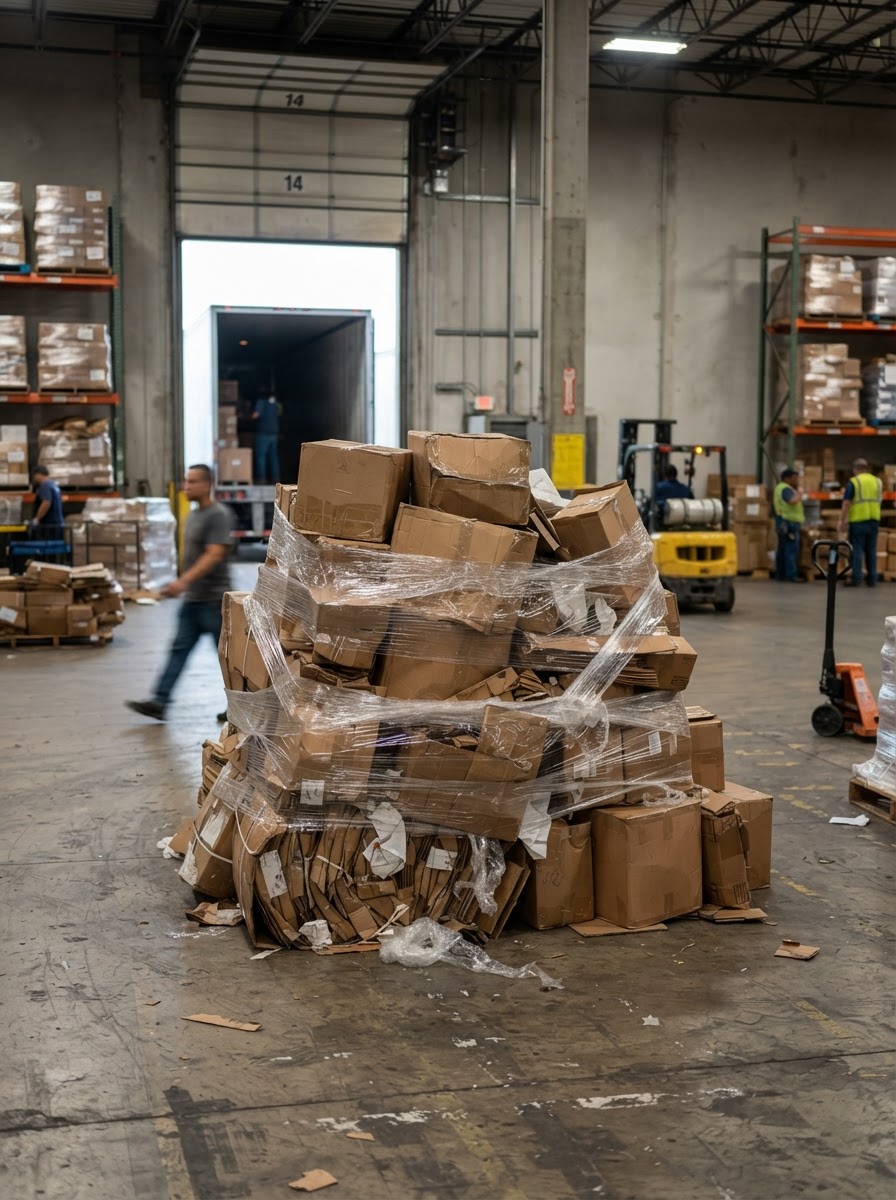
The highest packaging ratio of any facility type. Stretch film, cartons, banding, dunnage, and damaged pallets arrive with every inbound load and leave with nothing.
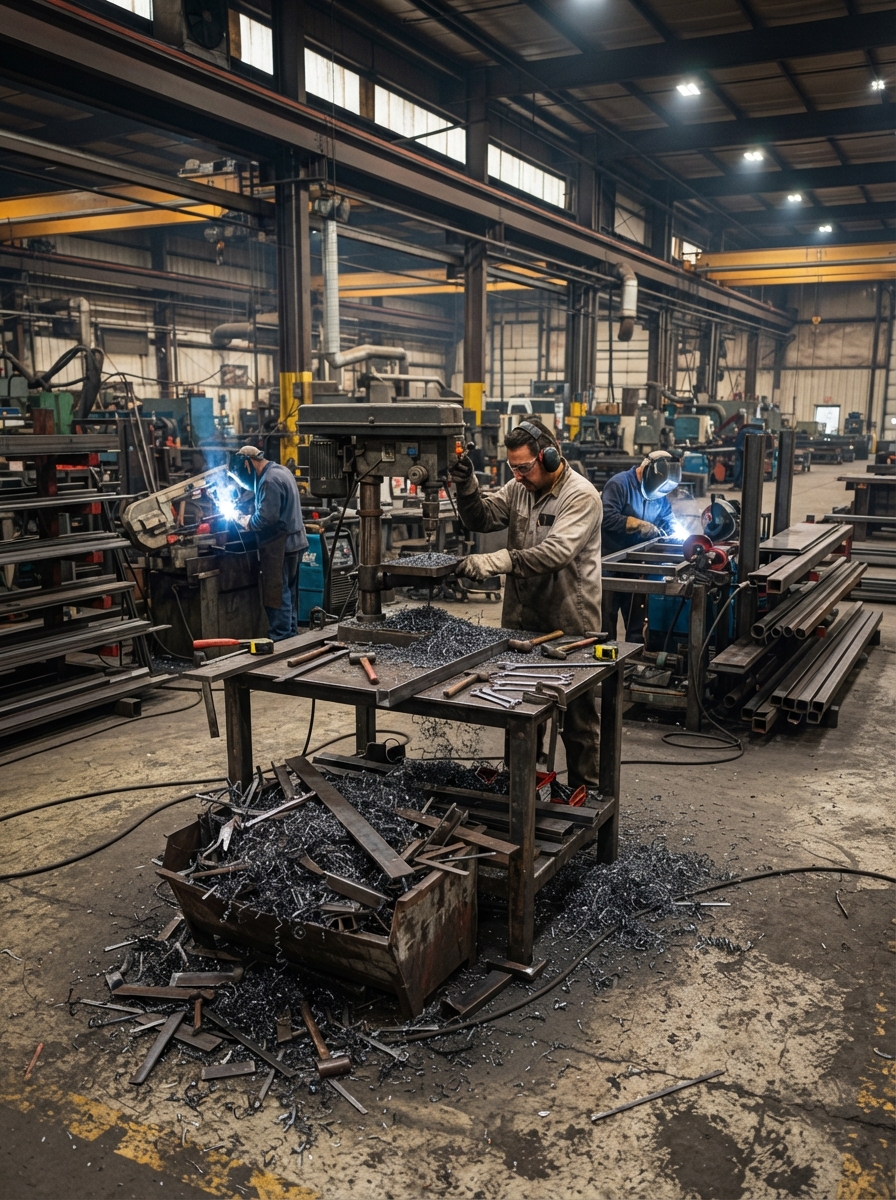
Third-party logistics and fulfillment operations
Repackaging and kitting work generates carton waste at a rate that surprises people the first time they measure it.
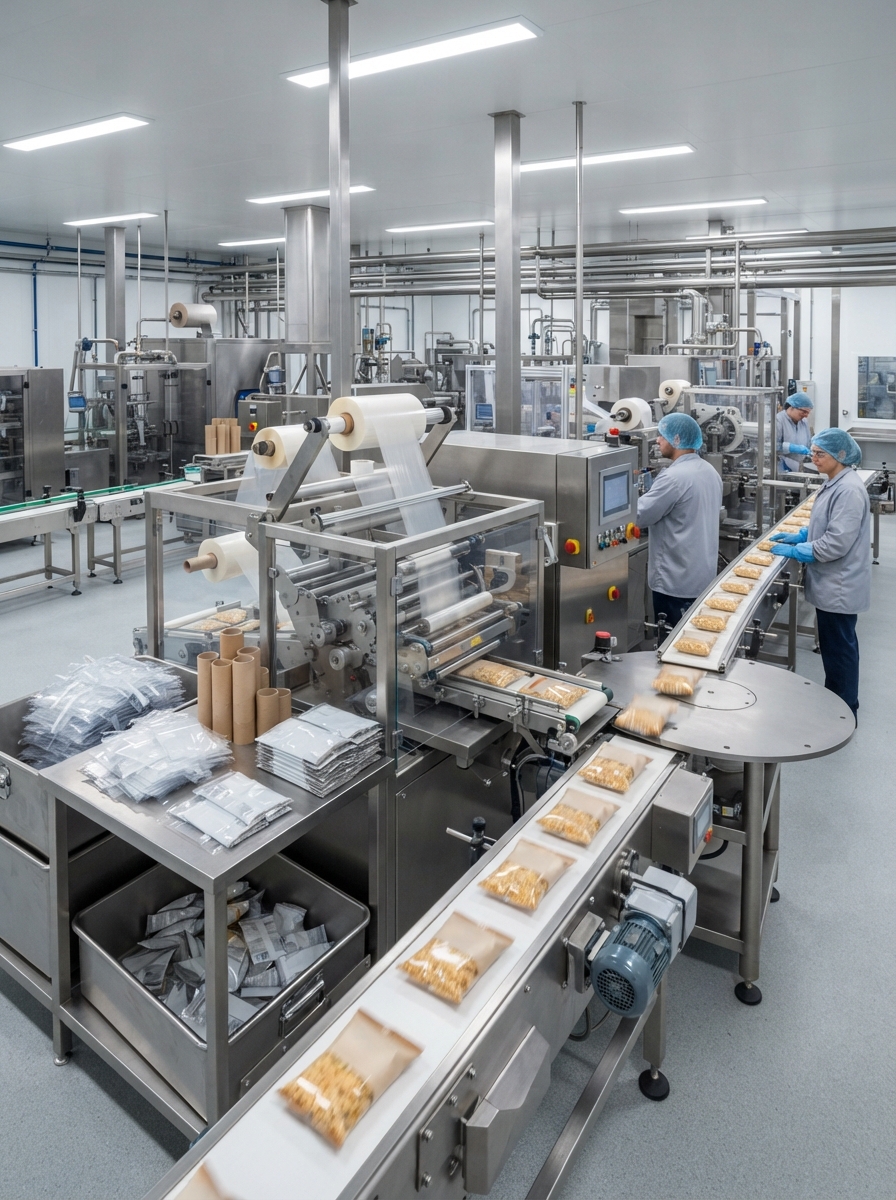
Food and beverage production
Case packaging, corrugate, film, and non-regulated production waste, usually on a facility with strict housekeeping standards and a tight service window.
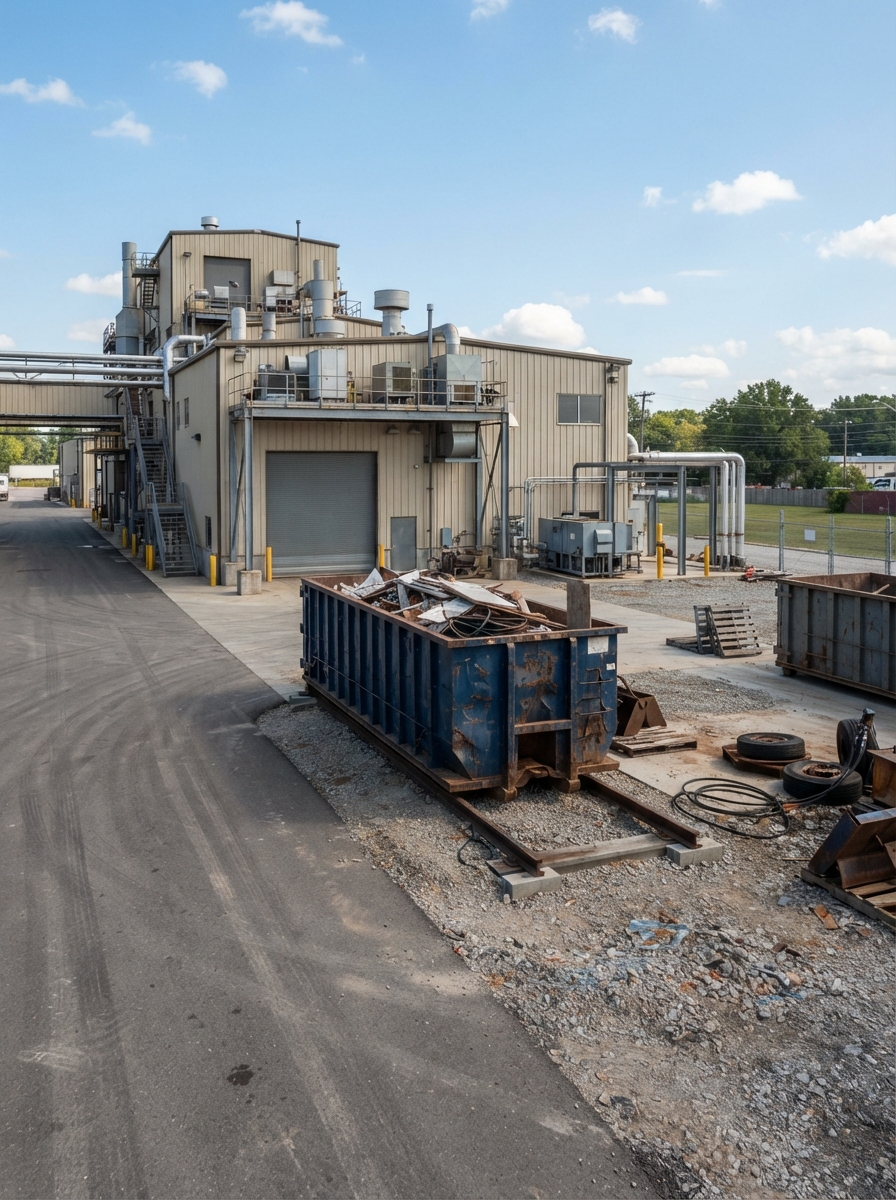
Assembly and light industrial shops
Steady mixed streams of packaging, wood, and light metal scrap, at a volume that sits between commercial and heavy industrial.
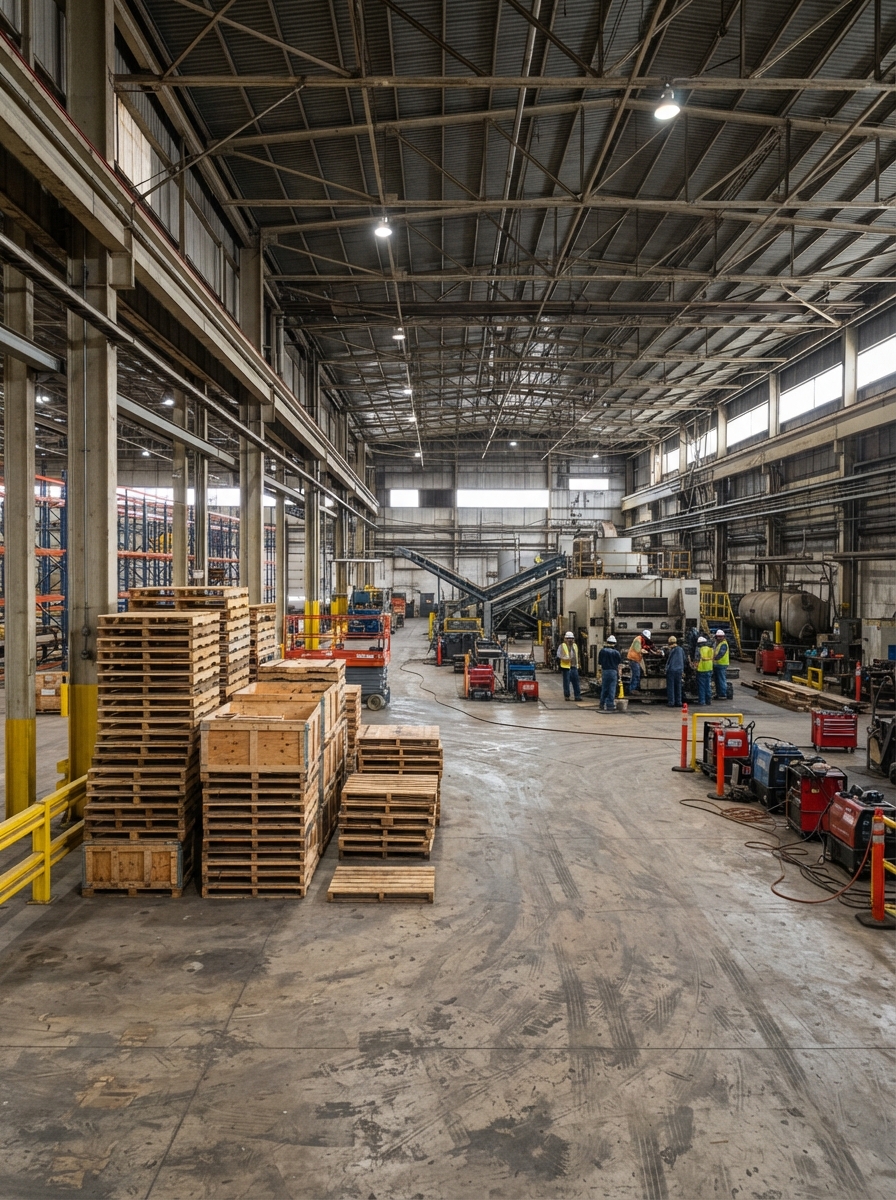
Printing, converting, and paper handling operations
Paper and board waste that compresses better than almost anything else on this list.
Industrial and equipment service facilities
Crating, pallets, and packaging from parts and equipment shipments, alongside general shop cleanup.
Commercial and industrial accounts only. We do not provide residential service.
Get a QuoteHow the Account Runs
Standing Service, Not On-Call: How Long-Term Industrial Accounts Run
Max Compacx sets industrial accounts up as a standing schedule rather than a series of one-off calls. That is the correct model when the waste stream never actually stops, and it changes what you have to manage.
A scheduled cadence
Containers get serviced on set days that fit the facility's rhythm — receiving-heavy days, shift changes, end-of-week cleanup — instead of on a call placed once someone notices the box is full. Nobody at the plant has to own the job of watching the container.
Compaction visits between pulls
On most industrial accounts the mobile compaction unit comes out once or twice between hauls. That is the mechanism that turns a fixed schedule into a shorter one: the box gets worked, the top opens up, and the pull that would have happened Thursday is not needed until the following week.
Adjustment when the plant changes
A seasonal surge, a new line, a big receiving push, a facility reorganization — the cadence moves with it. Long-term does not mean locked. It means the schedule is set in advance rather than improvised.
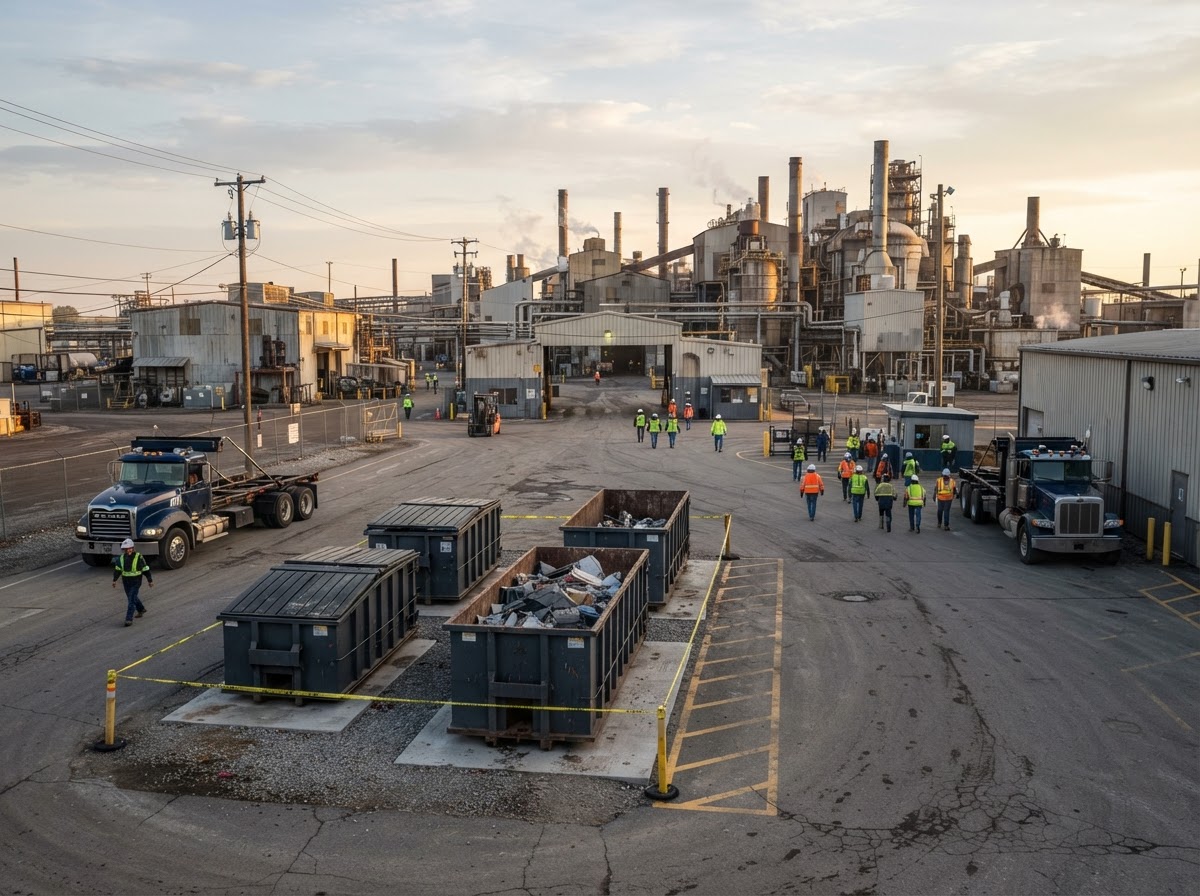
Long-term container placement
The container stays on site. It is a fixture of the dock area, not something delivered and retrieved, so placement, pad condition, and truck approach are worth getting right once at the start.
One account across multiple buildings
Operations running more than one facility in Macon and Middle Georgia work from a single account and a single number rather than a separate arrangement per address.
Some accounts want the whole thing — container plus compaction plus scheduling. Others keep the hauler they already have and add compaction to it. Both are normal, and the second one is usually the easier place to start.
Talk Through the ArrangementWhere the Economics Change
On-Site Compaction: Where Industrial Waste Economics Actually Change
This is the reason to read this page rather than any other container listing in Middle Georgia. A mobile compaction unit comes to your container where it sits on the dock pad, works the load in place, and leaves. The container never moves. The dock never closes. The visit takes about ten minutes.
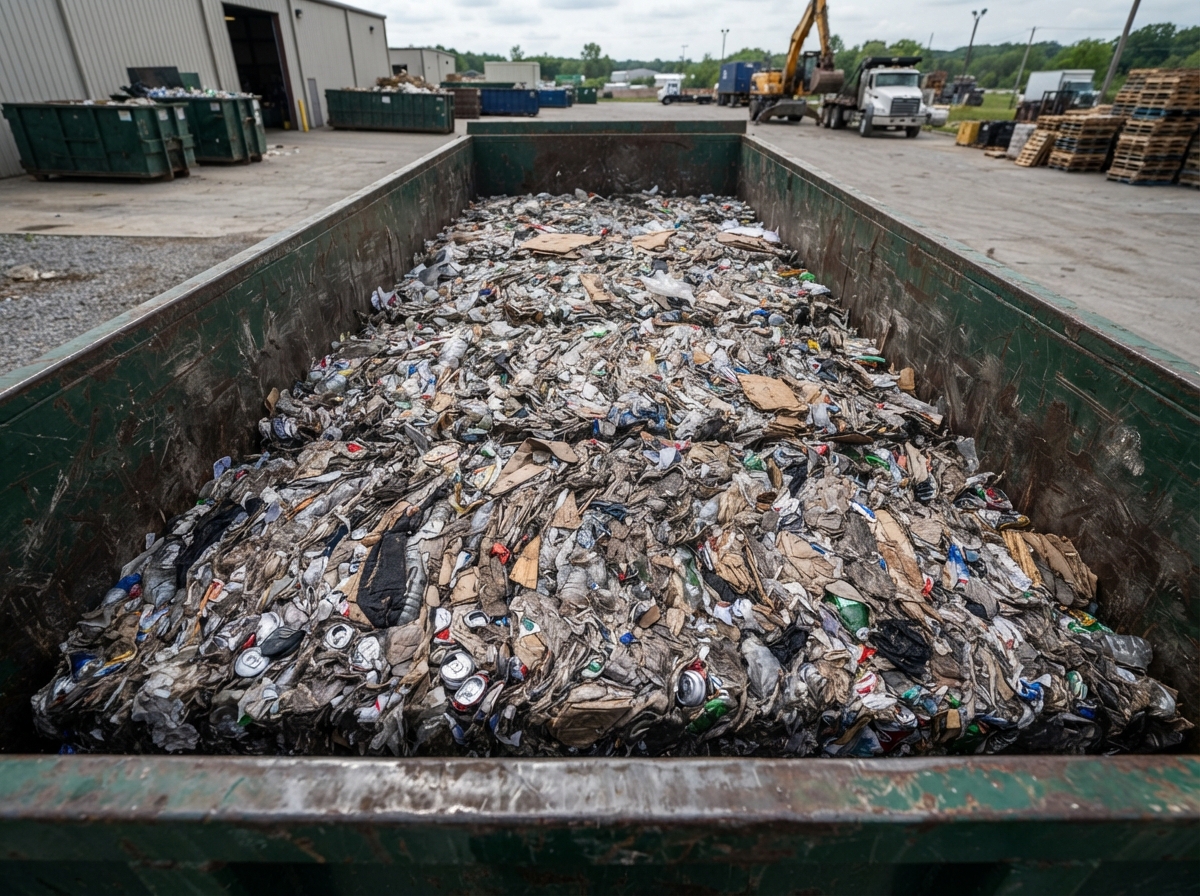
Volume reduction runs up to 70%, and it is entirely material-dependent:
| Material stream | Typical volume reduction |
|---|---|
| Cardboard, packaging, recyclables | 60–70% |
| Compost and organics | 50–60% |
| C&D debris, wood and pallets, mixed metals | 40–50% |
Read the table from the top, because that top row is the industrial row. Packaging, corrugate, film, and paper — the material that dominates nearly every plant and warehouse stream in Macon — sits at the highest reduction range on the list. That is not a coincidence. Those materials are almost entirely air, and air is the only thing compaction removes.
In practical planning terms: figure roughly 2:1 on a mixed industrial stream, approaching 3:1 where the load is cardboard-heavy, with one or two compaction visits between pulls. A facility that receives heavily and ships in cartons tends to land toward the better end of that range. A facility whose waste is dense — metal turnings, castings, dense scrap — lands at the bottom of it, and we will tell you that before you sign anything.
The weight side matters just as much on industrial work. A loose commercial load often runs about two to three tons. A compacted load can reach eight to twelve tons, which is close to the legal DOT payload ceiling at roughly 95% of what the truck is permitted to carry. That is the whole idea: instead of sending a truck out to move air, you send it out full.
What the Savings Look Like on One Container
Here is the single illustration we use, drawn from a real service pattern on one container with a mixed commercial stream. The account was running twelve haul-offs a month. With compaction on the same container, that dropped to four. Monthly haul-off spend went from about $3,600 to about $2,800 — roughly $800 a month, about a 22% reduction — and 96 fewer truck trips over the course of a year.
Your numbers will differ. They depend on your material mix, your current pull frequency, and what your hauler charges you, and none of those three are the same from one plant to the next. A facility running a heavy corrugate stream may do better than the example. A facility with dense waste or only one pull a month has fewer trips available to remove and will do worse. The way to find out is to run your own pull history against your own material rather than trusting an example from someone else's dock. Open the Waste/Hauler Calculator
Two Ways to Start
Keep your existing container and your existing hauler and have Max Compacx compact what is already sitting on your dock. Nothing about your current arrangement changes, your disposal contract stays exactly where it is, and the only thing that moves is how often the truck needs to come.
Or Max Compacx provides the container and the compaction together as one standing service.
The on-site demo is free, takes about ten minutes, and runs on a container you already have with the material already in it. You watch the load get worked and see how much room comes back before anything is agreed to.
Material Guide
Industrial Materials: What Compacts Well and What We Cannot Take
Being specific about the stream before the container goes out prevents a rejected load and a wasted trip.
Compacts well
Corrugated cardboard and cartons · pallet wrap, stretch film, and shrink wrap · foam, dunnage, and void fill · paper, board, and converting waste · poly strapping and banding · broken-down pallets and crating · light production offcuts and packaging-heavy mixed waste.
Compacts poorly
Dense metal scrap, castings, and turnings · dense rubber · anything already baled · material that is mostly weight and no air. These streams still haul fine. They just do not gain much from being worked, and there is no point paying for a compaction visit that returns almost nothing.
Not accepted
Liquids of any kind · dirt, soil, aggregate, and other dense no-air material · hazardous or regulated waste · sealed drums and pressurized vessels · anything the receiving hauler will not accept.
Two of those come up constantly at industrial facilities, so they are worth stating plainly. Anything regulated — solvents, oils, chemical waste, regulated process residues — belongs with a licensed disposal vendor set up for it, not in a general roll-off container. And sealed drums and pressurized vessels are a hard safety exclusion. Nothing under pressure goes into a container that a compaction unit is going to work.
Mixed loads are normal and we plan for them. If a specific material is in question, describe the stream before delivery. A short description is usually enough for a straight answer, and it is a much cheaper conversation than a rejected load.
Dock Operations
Working Around the Dock Instead of Interrupting It
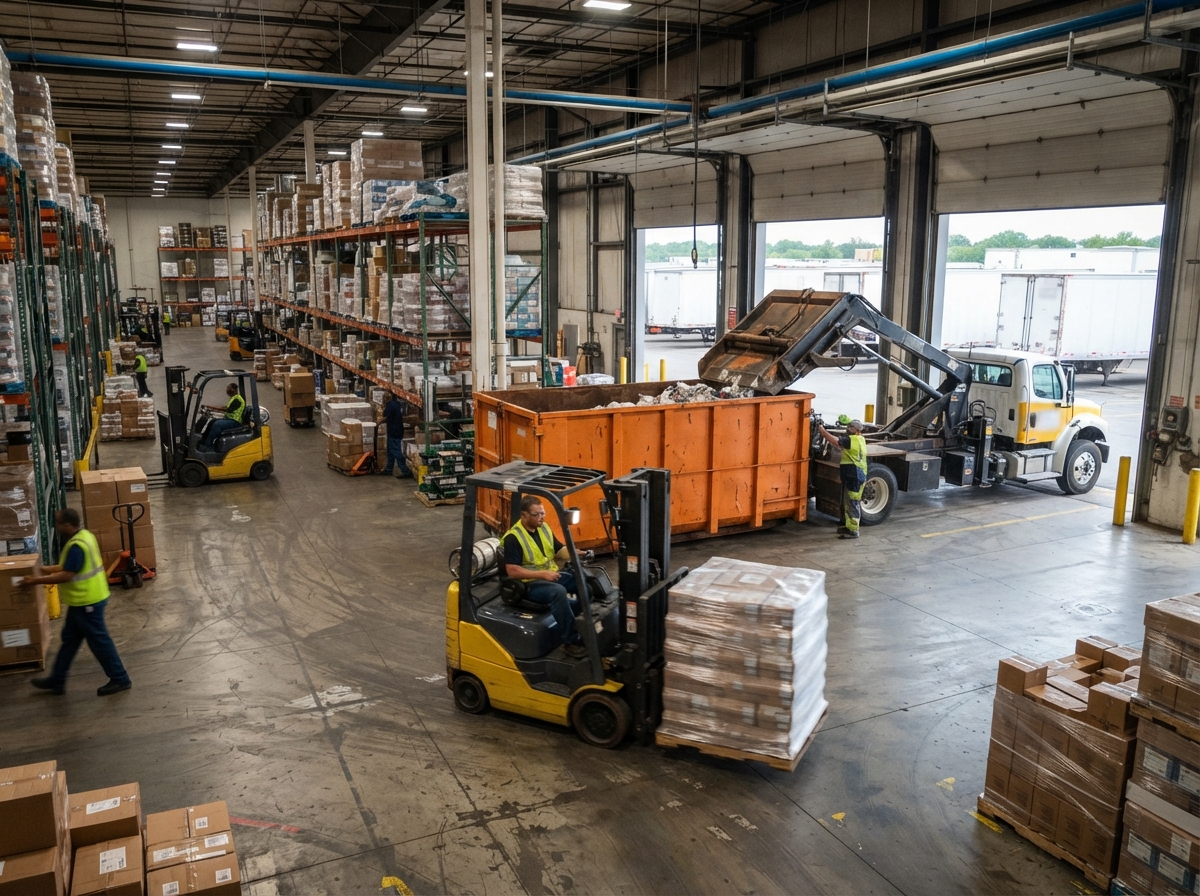
Max Compacx schedules service around dock operations, because a plant that has to stop is a plant that will not keep the arrangement. A compaction visit is short and self-contained. The unit arrives, works the container in place, documents the load, and pulls out — usually inside ten minutes, and without a forklift driver, a dock lead, or a line operator changing anything about what they were doing.
The container never moves
Compaction happens where the box sits. There is no repositioning, no truck maneuvering in the dock apron, and no window where the container is unavailable to the floor.
Service inside your window
Between shifts, before receiving opens, after the last outbound, or during a known slow block — tell us the window and the visits get scheduled inside it.
No dock door tied up
The work happens at the container, on the pad, outside the building envelope.
Facility rules respected
PPE requirements, check-in procedures, badge or escort protocols, and posted traffic patterns are part of the account setup, not something to be negotiated at the gate on the first visit.
Every visit includes a before-and-after inspection with photo documentation, so there is a record of the container's condition on both ends. The compaction drum is narrower than the container, which means the load gets worked without the drum contacting the container walls. There is no hydraulic downforce driving against the box, and safeguard wheels and end guards keep the unit off the container structure. Our operators run a zero-touch policy on your equipment — nothing at your facility gets handled that does not need to be.
That last point matters most on the arrangement where the container belongs to your hauler. It is their asset, it stays their asset, and it goes back the way it came.
Container Sizing
Container Sizes for a Continuous Waste Stream
Three sizes cover nearly all industrial work in Middle Georgia. On a standing stream the sizing logic is different from a jobsite, because you are not sizing for a total quantity of debris. You are sizing for a rate. Full dimensions and footprints are on the dumpster sizes page.
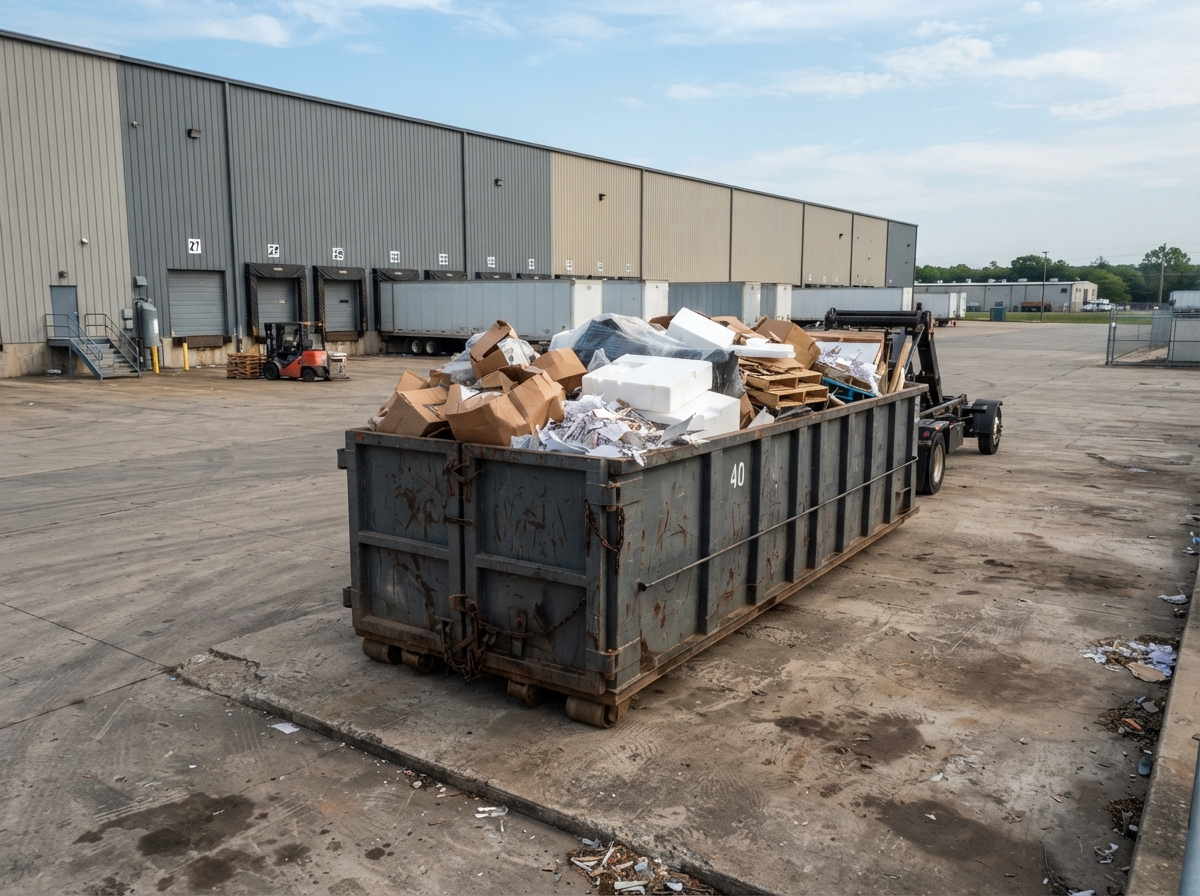
The workhorse for industrial and warehouse accounts, and the right default for a packaging-heavy stream. Light, bulky material fills volume long before it fills weight, so the largest box is the one that buys the most time between pulls — and it is also where compaction returns the most, because there is the most air in the load to remove. A 40-yard container is rated well over fifteen tons of static load. See 40-yard details
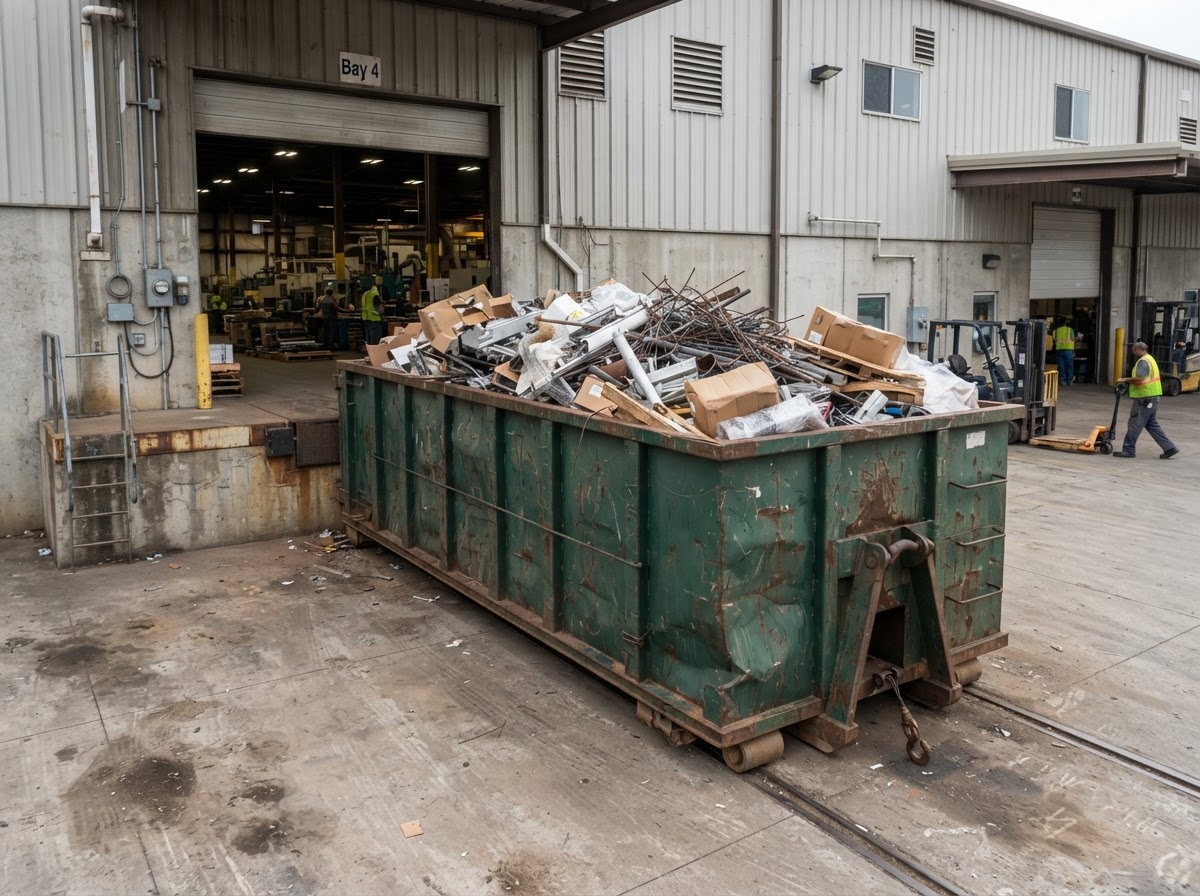
A good fit for mid-volume plants, facilities with a mixed stream that includes some heavier material, and accounts that prefer a mid-size box. It is also common as a second container on an account that separates a stream. Container dimensions vary, and lower yardage does not guarantee a smaller ground footprint — confirm the actual length, width, height and delivery clearance for your dock. See 30-yard details
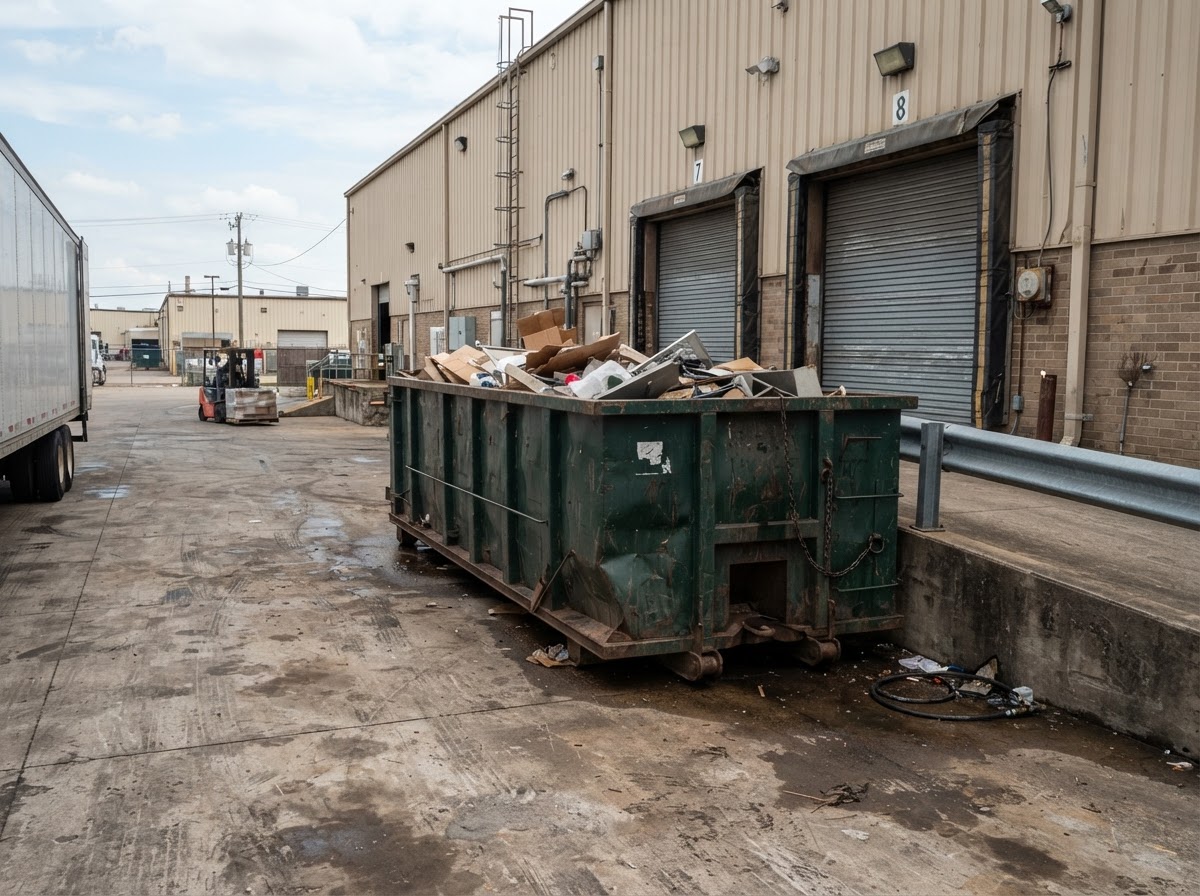
For denser streams where the load will reach its weight limit before it fills the box. Smaller shops with steady but modest volume often run a 20 on a scheduled cadence rather than a larger container that sits half-used. Container dimensions vary, and lower yardage does not guarantee a smaller ground footprint — confirm the actual length, width, height and delivery clearance for your dock. See 20-yard details
The practical approach is to size for the fill rate and then set the cadence against it, rather than picking a size and finding out what the schedule has to be. Tell us your current pull frequency and roughly what the container holds when it goes, and both numbers can be set from real behavior instead of an estimate.
Account Setup
How an Industrial Account Gets Set Up
Max Compacx runs the same sequence on every industrial and warehouse account.
You describe the operation
Facility type, what the waste stream is made of, your current pull frequency, and where a container can sit. That is enough to size the box and propose a starting cadence.
Free on-site demo
About ten minutes, on the container already on your dock with the material already in it. You see the result on your own waste rather than taking our word for it.
Placement and access confirmed
Pad surface, truck approach, overhead clearance, and the traffic pattern around the dock get walked before anything is scheduled.
The schedule gets set
Compaction visits and pulls are laid out on specific days that fit your shifts and your receiving pattern.
The floor keeps working
No change to how anyone loads the container. Breaking down cartons still helps, and it helps more than most people expect.
Compaction visits
The mobile unit comes to the container in place, typically once or twice between pulls, more during heavy receiving stretches.
The pull
The container gets hauled when it is genuinely full by weight or by volume, then returned or swapped so the dock is never without a box.
The cadence gets reviewed
After the first few weeks the real fill rate is visible, and the schedule gets adjusted to match it instead of to the original estimate.
Project Waste
When the Waste Is a Project Instead of a Stream
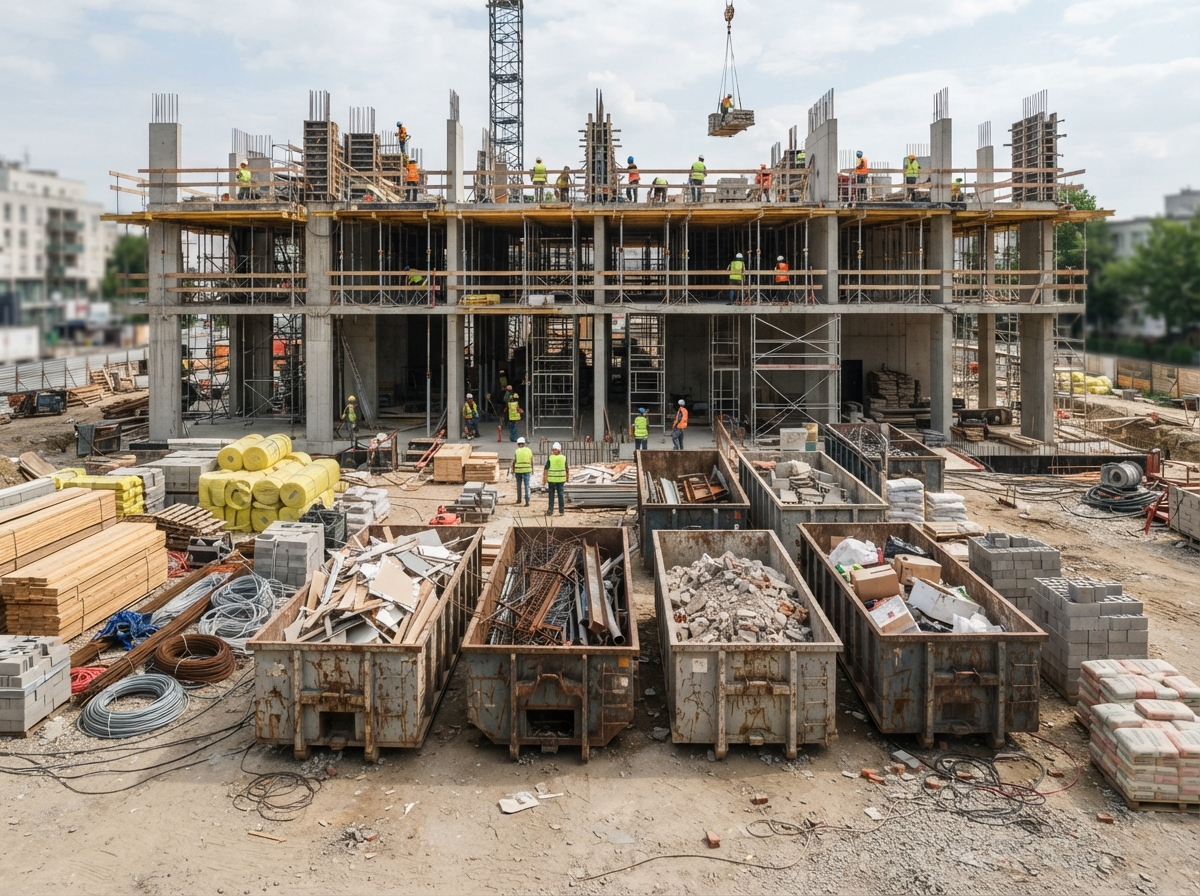
Plant expansions, line installations, racking projects, and facility buildouts generate a different kind of waste: a large temporary volume with a start date and an end date. That work gets sized and scheduled differently from a standing container, because the volume arrives in phases and then stops.
If that is what you are pricing, work from the construction dumpster rental page instead. It covers phase-based sizing, swap planning on an active jobsite, and how the container schedule changes as the work moves.
Plenty of facilities run both at once — a standing industrial container on the dock and a project container out where the work is happening. Those get planned as one account rather than two relationships.
Why Max Compacx
Why Middle Georgia Plants and Warehouses Work With Max Compacx
Compaction is the service, not an add-on
For suitable industrial waste streams, compaction creates more usable capacity between haul-offs. The result depends on the material and service schedule.
You do not have to change haulers
If your disposal relationship is already negotiated and working, keep it. We compact the container that is already on your pad. For most industrial accounts that is the simplest way to start and it touches nothing you have already agreed to.
Service that fits the shift, not a route sheet
Visits get scheduled around receiving, shipping, and shift changes. Waste service should be something the floor never has to think about.
Straight answers about fit
Dense waste does not compress much. A facility with one pull a month does not have enough trips to remove for the math to matter. We say so before you commit rather than after, and the free demo exists precisely so the claim gets tested on your material.
Documented handling
Before-and-after inspection with photo documentation on every visit, on your equipment or ours.
One account, multiple facilities
Operations with more than one building in Macon and Middle Georgia run through a single account.
Service Area
Service Area: Macon, Bibb County and Middle Georgia
Max Compacx serves industrial and warehouse accounts across Macon and Middle Georgia, working from a Hawkinsville Rd base near the airport area with direct access to the I-75 and I-16 corridors where most of the region's manufacturing and distribution operations sit. Regularly served communities include Macon, Byron, Gray, Forsyth, Perry, Lizella, and Centerville, along with the surrounding Bibb County industrial and commercial corridors.
If your facility sits outside the communities listed, ask. Coverage depends on the route and the schedule, and it takes about five minutes to find out.
Max Compacx
5900 Hawkinsville Rd, Macon, GA 31216
478-722-3852
office@MaxCompacx.com
Monday – Friday, 7am – 5pm
FAQ
Industrial Dumpster Rental in Macon, GA: Common Questions
The service model, not the steel. An industrial account runs on a standing schedule against a continuous waste stream, with the container living on the dock pad permanently and compaction visits worked in between pulls. A standard commercial container is usually sized for a single volume and hauled when someone calls. Industrial dumpster rental in Macon, GA is built around a fill rate rather than a one-time quantity.
Yes. Long term dumpster rental in Macon is the normal arrangement for plants and warehouses, because the waste stream is permanent. The container stays in place indefinitely and gets serviced on a set cadence rather than delivered and retrieved. If the facility's volume changes with a season or a new line, the schedule changes with it.
Monthly dumpster service runs on a scheduled cadence set in advance, with compaction visits and pulls on specific days that fit your shifts. That is the point of a standing account: nobody at the plant has to notice the container is full and place a call. The cadence gets reviewed after the first few weeks once the real fill rate is visible, and it can be adjusted any time the operation changes.
For most packaging-heavy operations, a 40-yard is the right manufacturing waste container, because light bulky material fills volume long before it reaches weight. A 30-yard fits mid-volume facilities or docks that cannot accommodate a 40. A 20-yard suits denser streams. Size for the fill rate, then set the service cadence against it — the size breakdown has dimensions and footprints if you need to check the pad first. Container dimensions vary, and lower yardage does not guarantee a smaller ground footprint, so confirm the actual length, width, height and delivery clearance.
Yes. Warehouse dumpster service gets scheduled inside whatever window works — between shifts, before receiving opens, or after the last outbound. The compaction visit takes about ten minutes, happens at the container without moving it, and does not occupy a dock door. Facility check-in procedures and PPE requirements are set up as part of the account rather than sorted out at the gate.
Yes, on most industrial streams, though how much depends entirely on your material. Packaging, corrugate, and film compress in the 60–70% range, so a packaging-dominated stream sees the largest drop in trips. Dense waste in the 40–50% range sees less. It reduces haul-offs; it never eliminates them, since the material still has to leave the property.
Cardboard and cartons, pallet wrap and stretch film, foam and dunnage, paper and converting waste, poly banding, and broken-down pallets and crating. Those streams carry the most empty space, which is what puts them in the 60–70% band. Dense metal scrap, castings, turnings, and anything already baled gain very little, and we would rather say so than sell visits that do not return anything.
Liquids of any kind, dirt and soil and aggregate, hazardous or regulated waste, sealed drums and pressurized vessels, and anything the receiving hauler will not accept. Regulated process waste needs a licensed disposal vendor set up for it. Sealed and pressurized containers are a safety exclusion, since nothing under pressure goes into a box that is going to be worked.
Yes. It is the most common way industrial accounts begin. A mobile unit comes to the container in place, works the load, and leaves — the box never moves, the equipment stays your hauler's, and your existing disposal arrangement is untouched. All that changes is how often it needs to be emptied.
Compaction creates room for more material, but weight limits still apply. Confirm the applicable container, truck and service limits with the servicing hauler, and plan collection before those limits are reached.
No. The work happens outside at the container, which stays exactly where it is. No dock door is tied up, no forklift is needed, and no operator has to be pulled off a task. The visit runs about ten minutes and our operators do not handle your equipment.
Yes. Coverage runs across Macon and Middle Georgia, including Byron, Gray, Forsyth, Perry, Lizella, and Centerville, plus the Bibb County industrial corridors along I-75 and I-16. If a facility sits outside those communities, ask — it depends on the route and the schedule.
Send the details through the request form or call and describe the operation: facility type, what the waste is made of, your current pull frequency, and where a container can sit. That is enough to size the container, propose a cadence, and give you a straight read on whether compaction changes anything on your particular stream. The on-site demo settles it in about ten minutes.
Related Services
Related Services
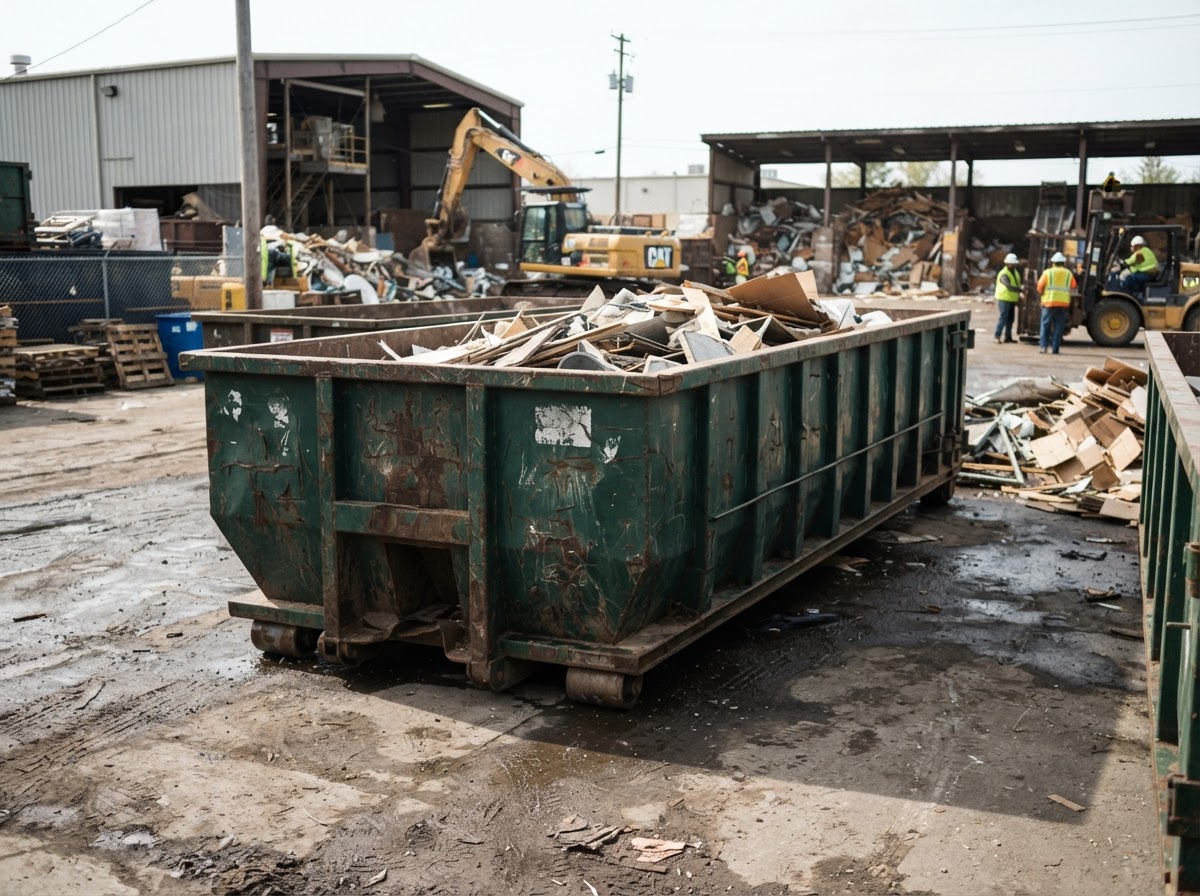
Roll-Off Dumpster Rental
The container service itself: how delivery, compaction, and pulls work on a commercial account.
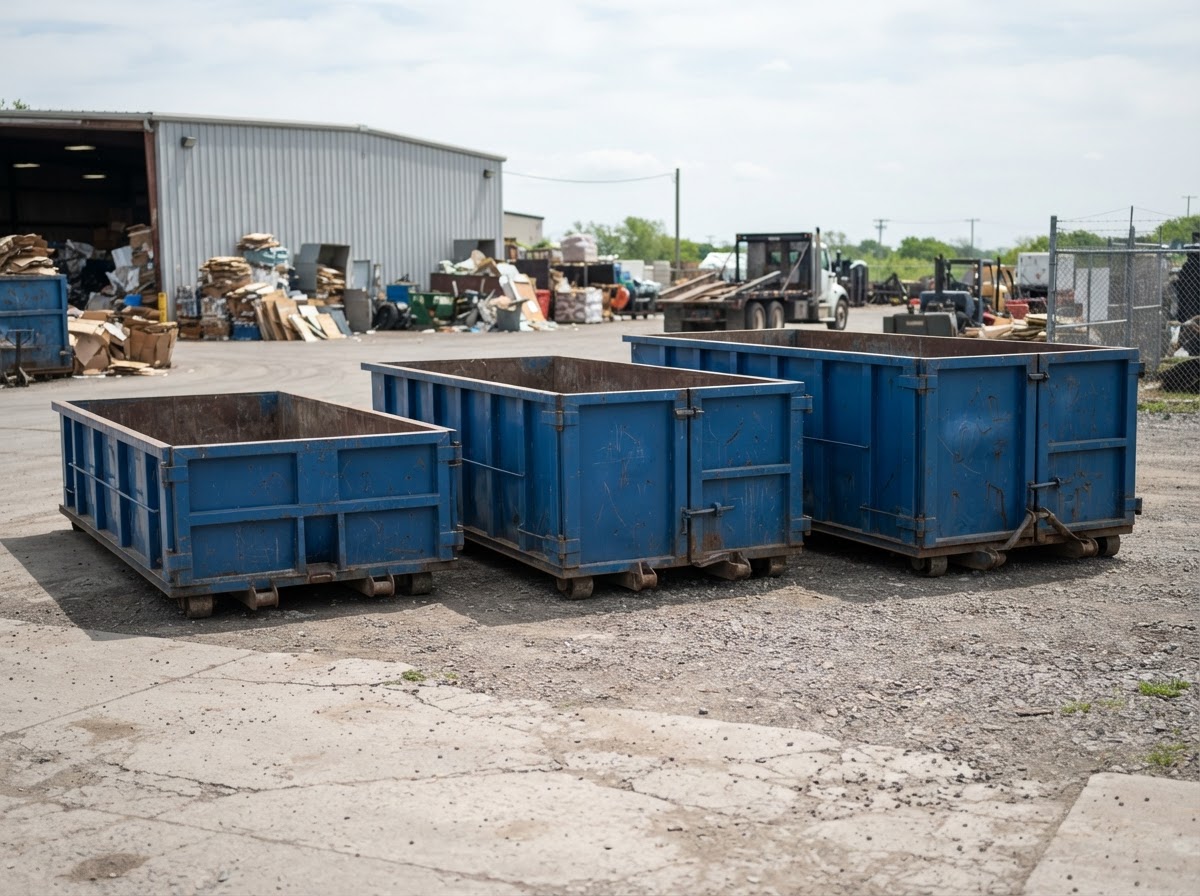
Dumpster Sizes: 20, 30 and 40 Yard
Dimensions, footprints, weight considerations, and matching a size to your material.
Construction Dumpster Rental
Plant expansions, buildouts, and project work where volume arrives in phases and then ends.
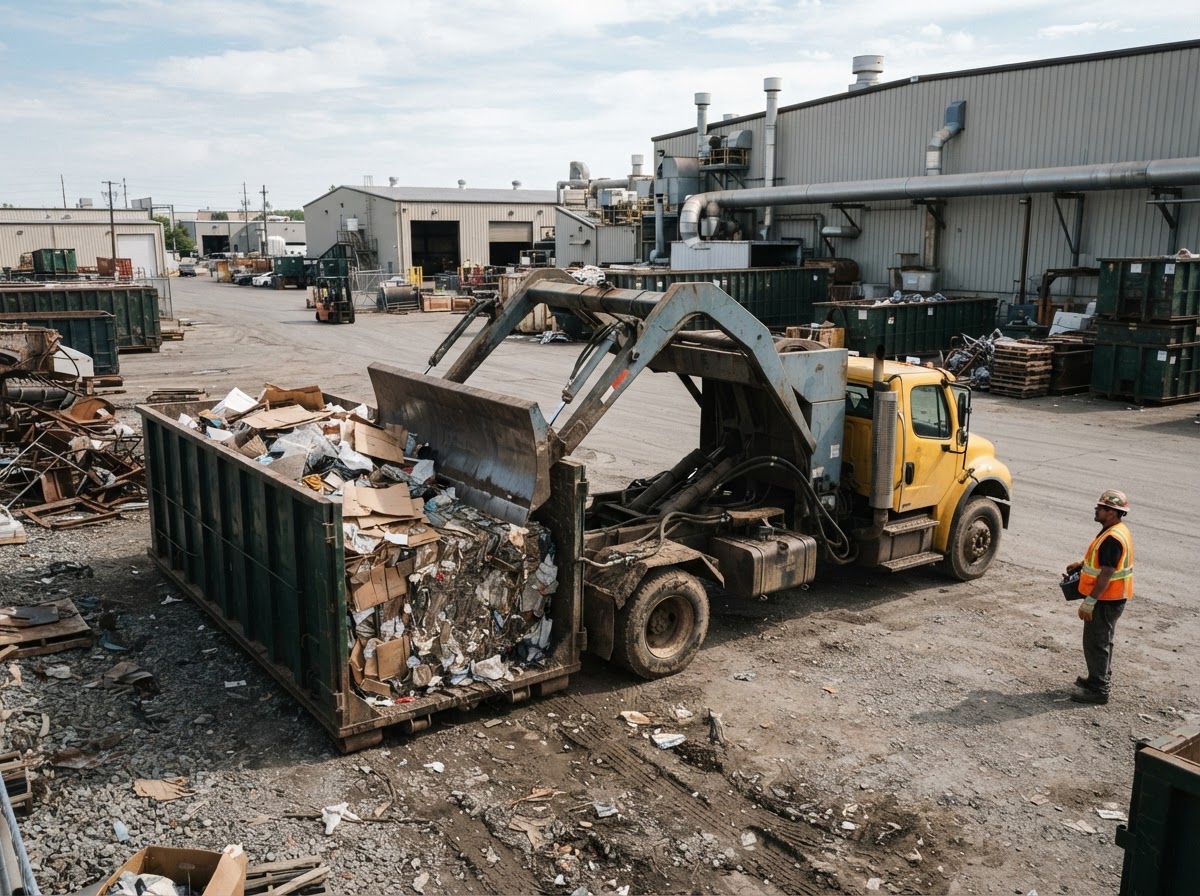
On-Site Waste Compaction
How the mobile unit works a container in place and which material streams gain the most.
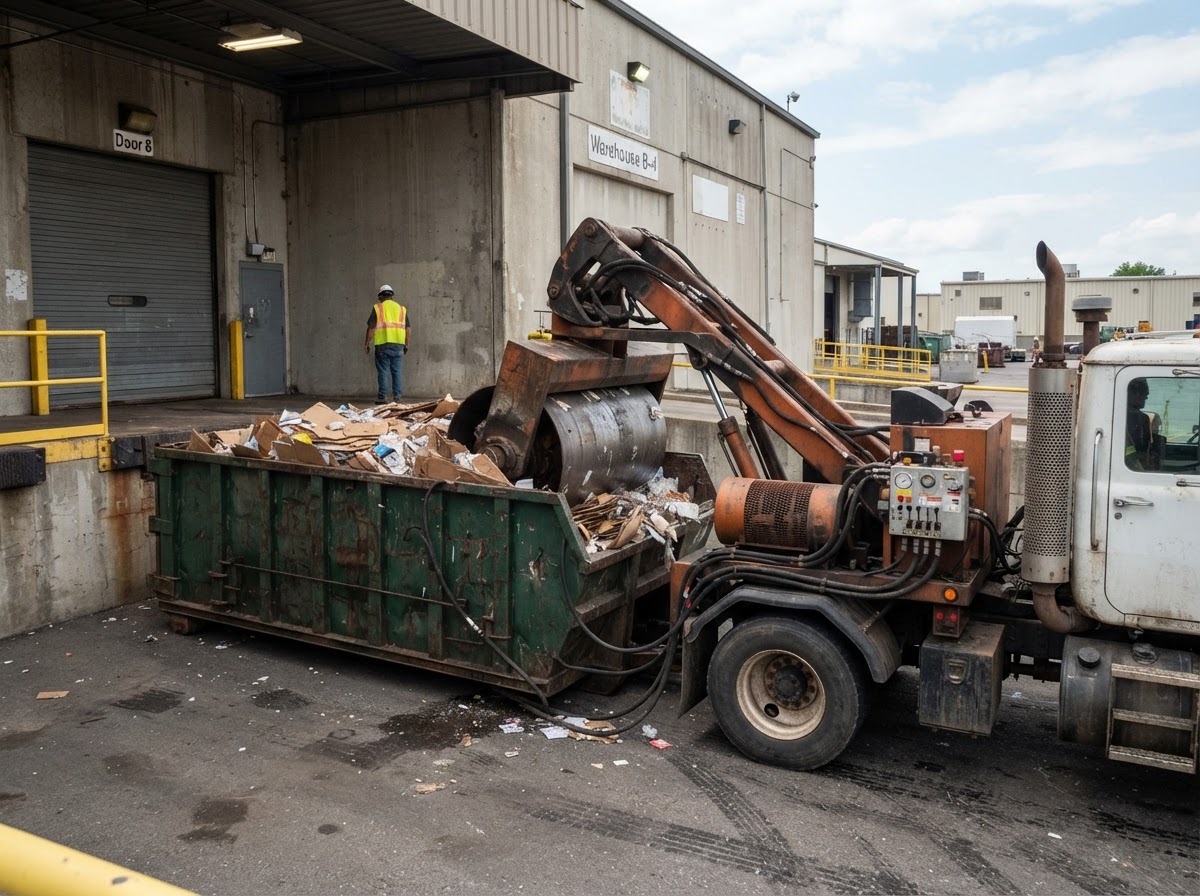
Start Your Industrial Dumpster Rental in Macon, GA
Tell us what the facility produces, how often the container gets hauled today, and where it sits. We will size it, propose a standing schedule around your shifts, and give you an honest read on whether compaction changes your trip count on this particular stream. The on-site demo is free and takes about ten minutes.
Max Compacx
5900 Hawkinsville Rd, Macon, GA 31216
478-722-3852
office@MaxCompacx.com
Monday – Friday, 7am – 5pm