
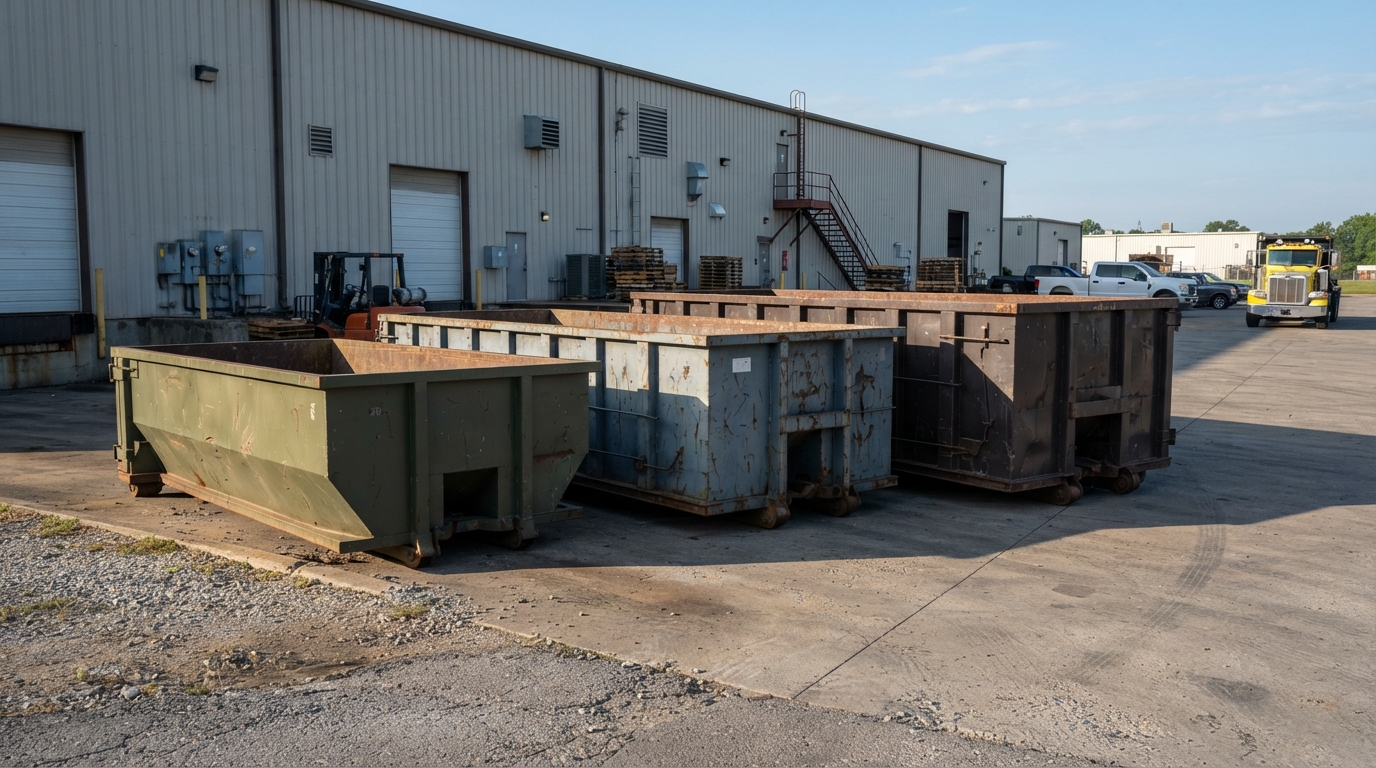
Dumpster Sizes — Macon, GA
Dumpster Sizes: 20, 30 & 40 Yard Roll-Off Rentals in Macon, GA
Most commercial accounts in Middle Georgia land on one of three roll-off containers, and the middle one wins more often than not — a 30 yard dumpster rental in Macon, GA handles the majority of ongoing business waste streams without swallowing half a loading dock. A 20-yard is the right call for tight lots and heavy material. A 40-yard is built for bulky, lightweight volume like cardboard, packaging, and pallets. Below are the dimensions, the materials each size is actually built for, and the one factor that changes the whole calculation: on-site compaction can let a smaller container do a larger container's work.
- Macon, GA based
- Monday – Friday, 7am – 5pm
- Commercial & Industrial Accounts
- 20, 30 and 40 yard containers
The Real Decision
Why Size Is the Decision That Sets Your Waste Bill
Container size looks like a volume question. It is really a trip question. Every time a truck rolls to your property, hooks a container, drives it to the landfill or transfer station, dumps it, and brings it back, you pay for that round trip whether the box left full or half empty. The trip is the cost, not the box.
That is why the wrong size hurts in two directions. Too small, and you are paying for extra pulls on material that was mostly air. Too large, and you are handling a container that eats dock space, blocks a lane, or sits half full for weeks while your service schedule keeps running. Neither problem shows up as a line item labeled "wrong size." It shows up as a haul-off count that feels higher than the amount of waste your operation actually produces.
Max Compacx sizes containers around three things: the footprint you have available, the density of what you are throwing away, and how fast the container fills between pulls. Get those three right and the size takes care of itself. Get them wrong and no amount of scheduling fixes it.
There is one more variable most size guides leave out entirely. A roll-off holds whatever volume it holds, but loose waste is mostly empty space — boxes that never got broken down, pallets stacked at angles, film and packaging that traps air. Compacting that material on-site changes what a given size can hold, which is why the size conversation and the compaction conversation belong on the same page.
Warning Signs
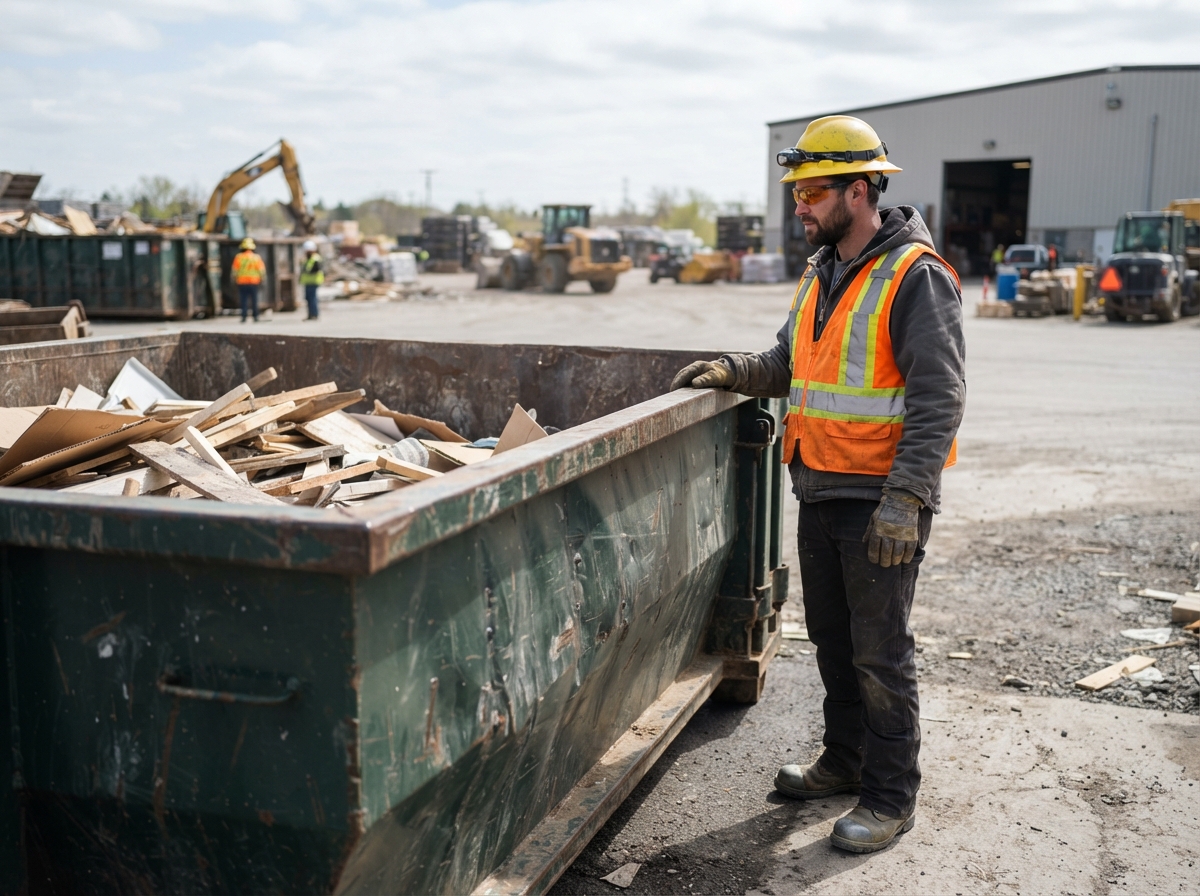
How to Tell You Are in the Wrong Size
You usually do not need a study to know the size is off. A few patterns give it away:
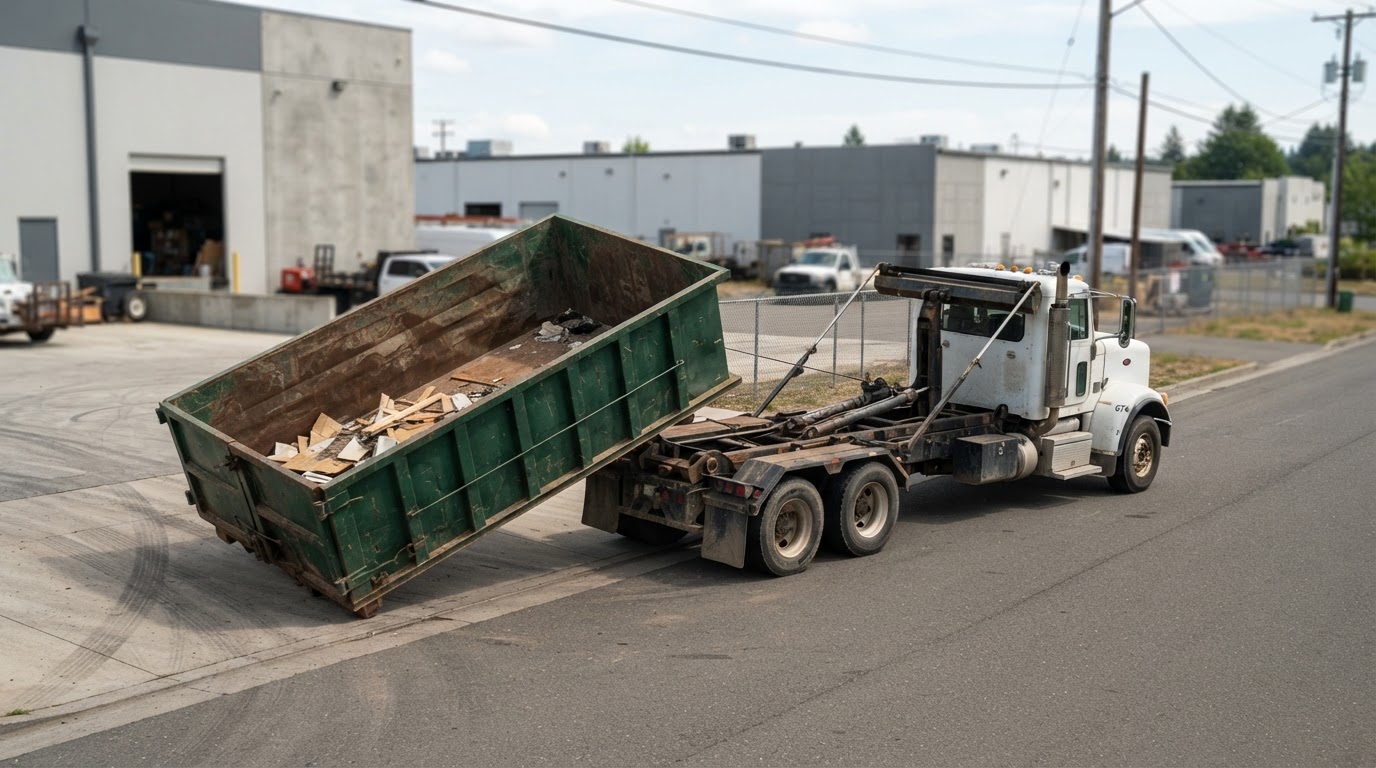
The container leaves before it is full.
If your hauler is pulling a box that is packed to the top of the walls with loose material and still light, you are paying for trips that are hauling air.
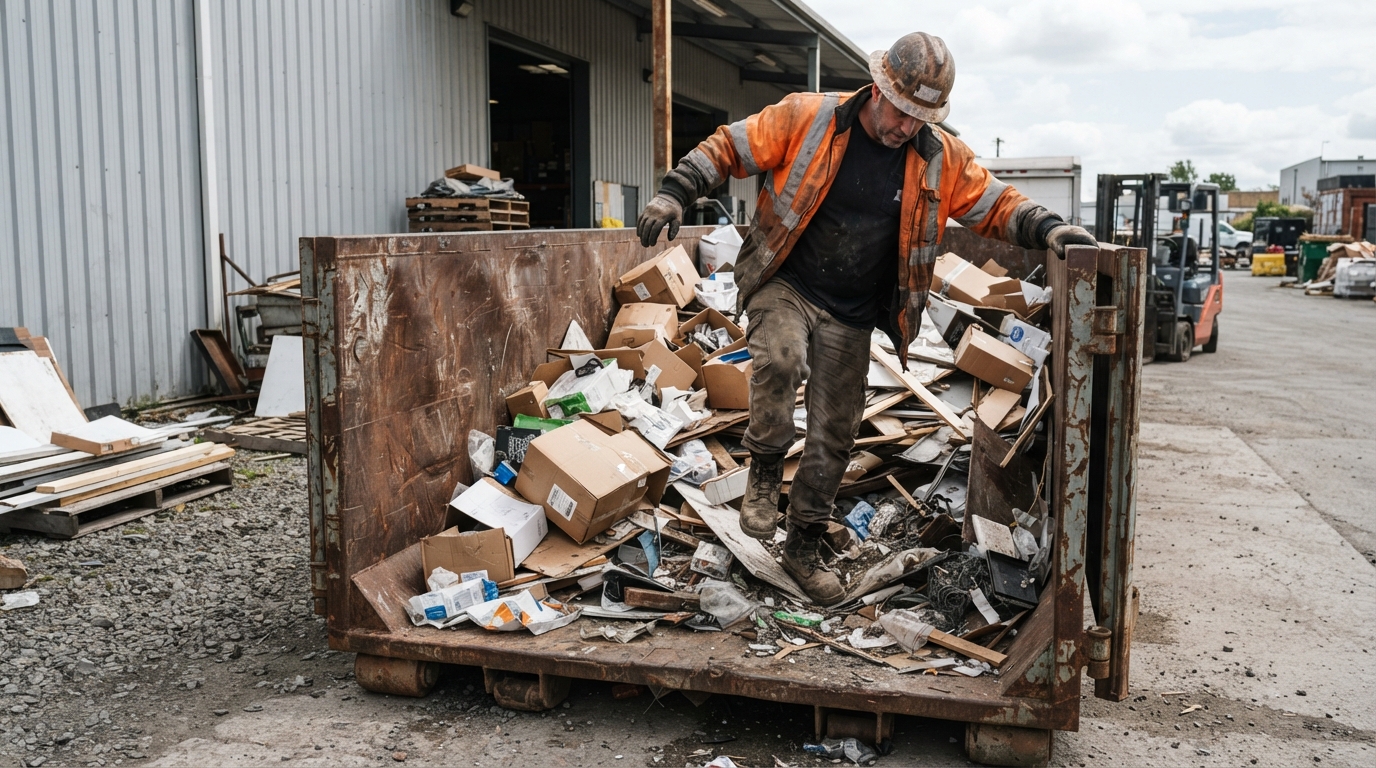
Someone is climbing in to stomp the load down.
That is an unsafe workaround for a container that cannot keep up with the volume you generate.
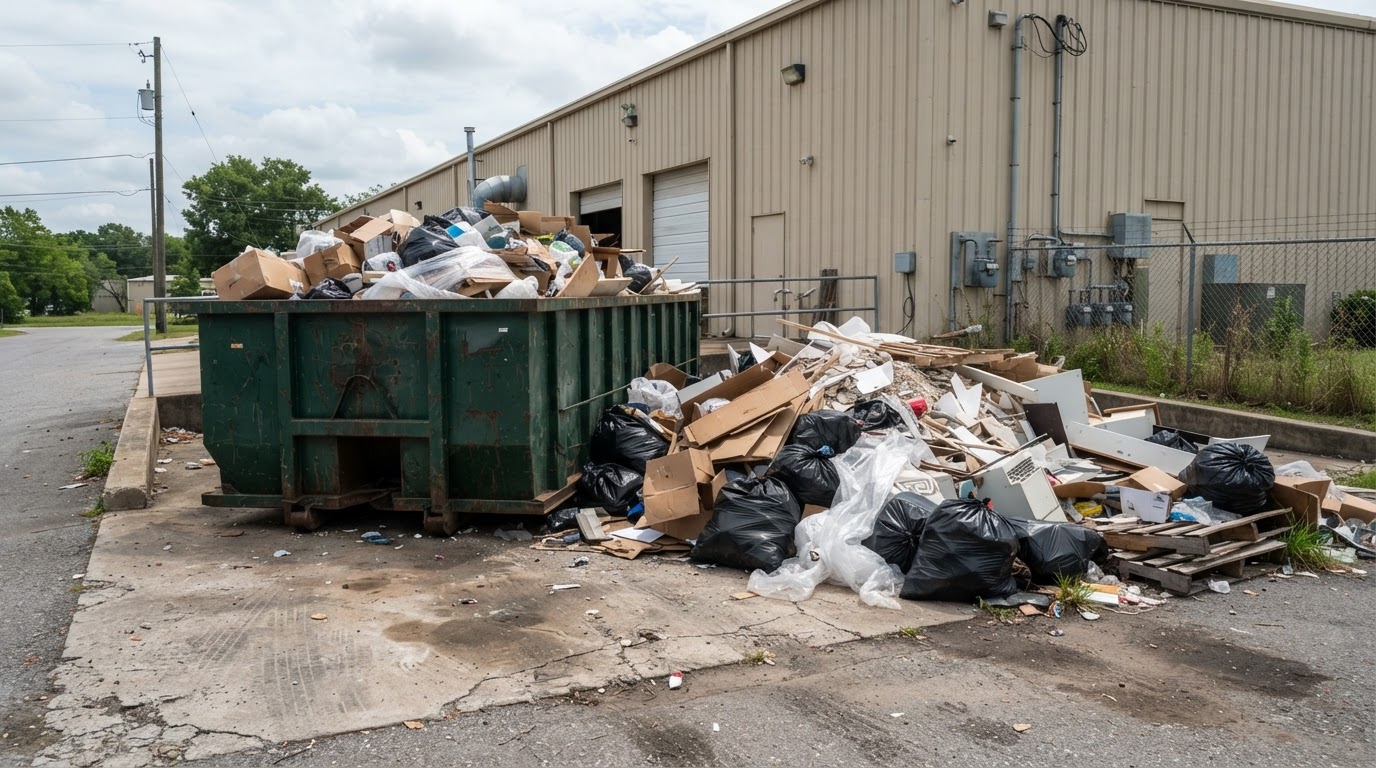
Waste stacks up next to the box between pulls.
Overflow on the pad means the size or the schedule is behind your operation.
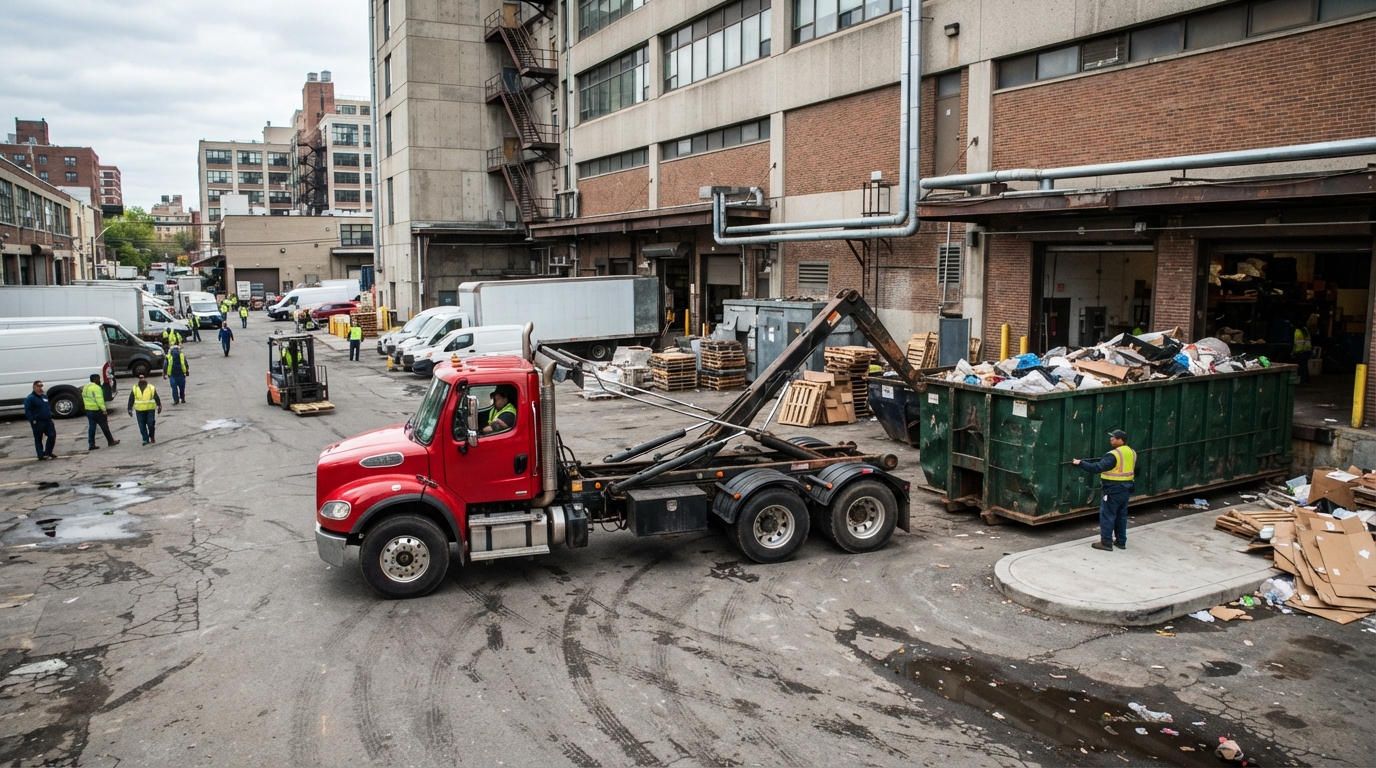
You are calling for an extra pull most months.
Unscheduled pulls are the clearest signal that the current setup is undersized for your flow.
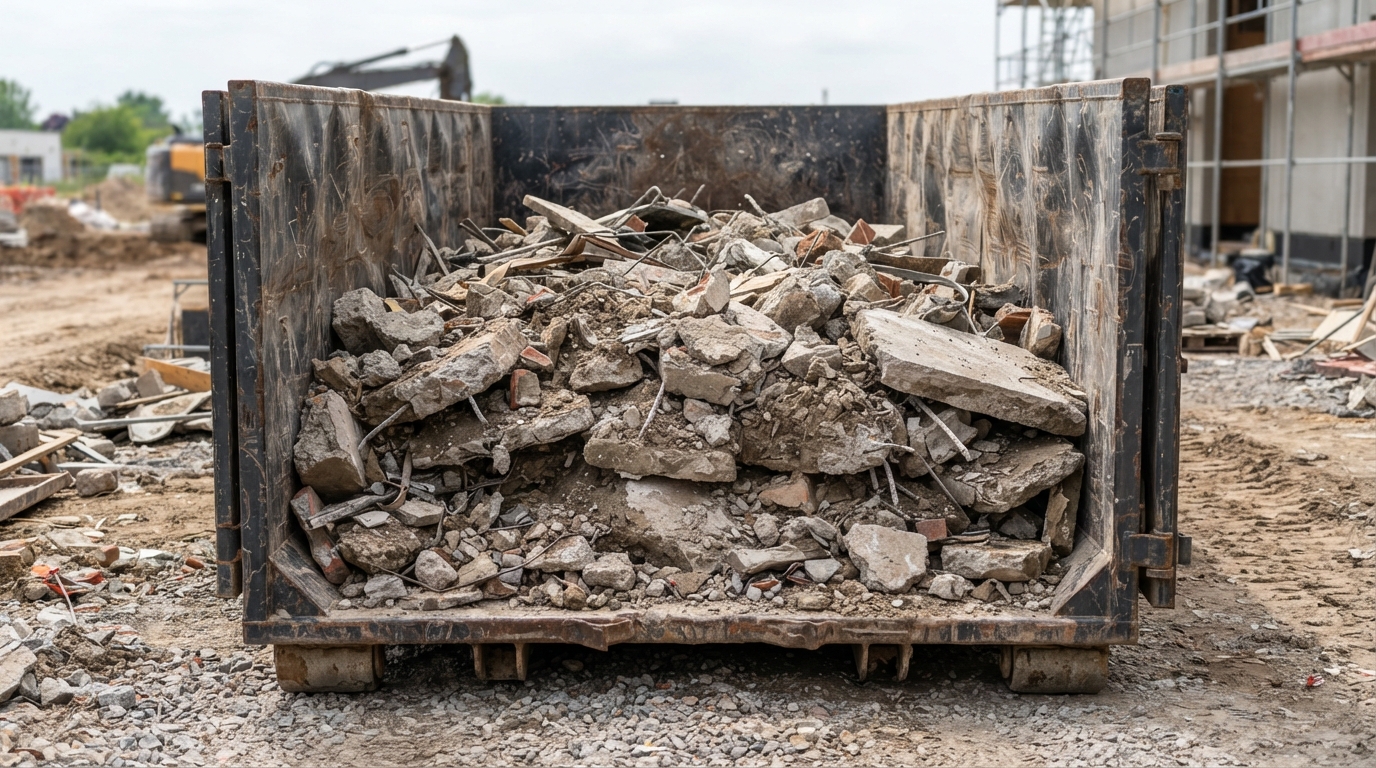
The container is heavy and only half full.
That is the opposite problem — dense material in an oversized box. You will hit the weight ceiling long before you hit the volume ceiling.
None of these mean you automatically need a bigger container. Two of them mean you need a smaller one. That is the part a size chart alone cannot tell you, and it is why we look at the material before we recommend the box.
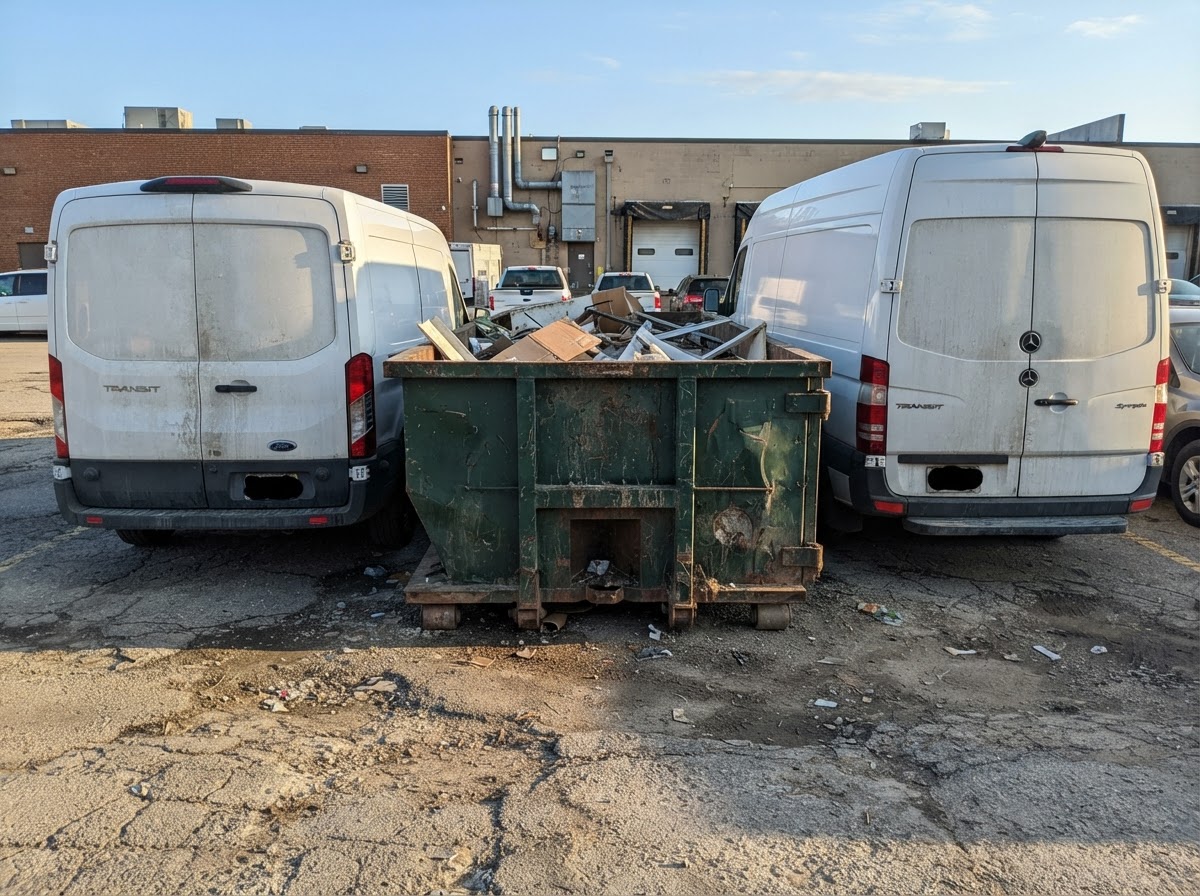
Tight Pads · Dense Material
20 Yard Dumpster Rental in Macon, GA
The 20-yard is the heavy-material container. Max Compacx puts these on properties where the waste stream runs dense enough that weight — not volume — is the limiting factor. Container dimensions vary, and lower yardage does not guarantee a smaller ground footprint, so confirm the actual length, width, height and delivery clearance for your pad.
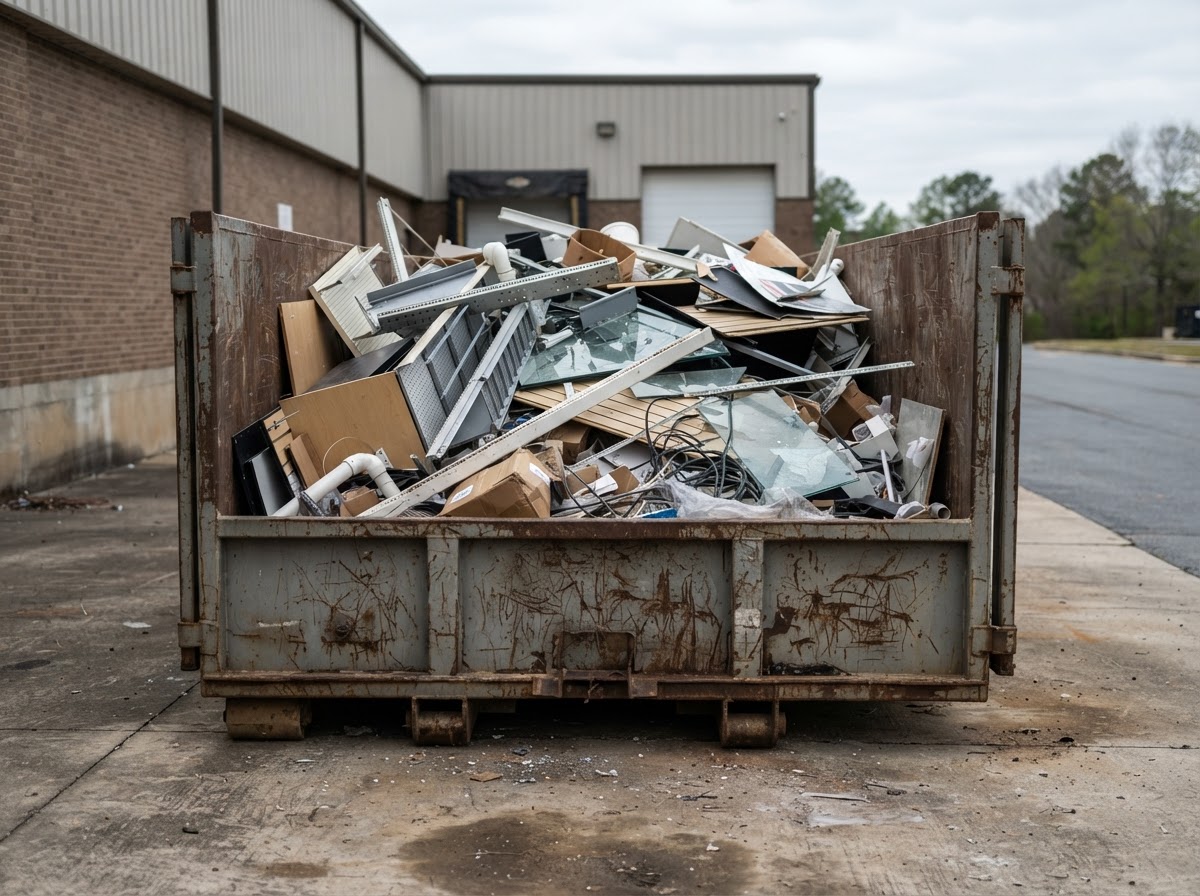
Dimensions and footprint. A 20-yard roll-off generally runs about 22 feet long, 8 feet wide, and roughly 4 feet high, though exact dimensions vary by container. The low walls are the point: at that height, crews can load over the side without a walk-ramp, which matters for a small dock crew or a job site with no forklift dedicated to waste.
Typical projects and materials. Retail and restaurant back-of-house waste. Small demolition and remodel debris. Mixed C&D on a contained commercial project. Manufacturing scrap that runs heavy — mixed metals, dense offcuts, banding and strapping. Property-management turnover work on a compact site.
Loading and weight considerations. Because the walls are low, a 20-yard fills by weight faster than it fills by volume when the material is dense. That is exactly the behavior you want with heavy debris and exactly the behavior that frustrates a cardboard-heavy stream. If your waste is mostly boxes and packaging, this is the wrong size no matter how well it fits the pad.
Access. Plan on a straight, level approach with enough room for the truck to line up, plus overhead clearance for the hoist arm to raise. Low limbs, canopies, awnings, and power drops are the usual obstacles on Macon commercial properties, and they are easier to solve before delivery than during it.
The Default Commercial Size
30 Yard Dumpster Rental in Macon, GA
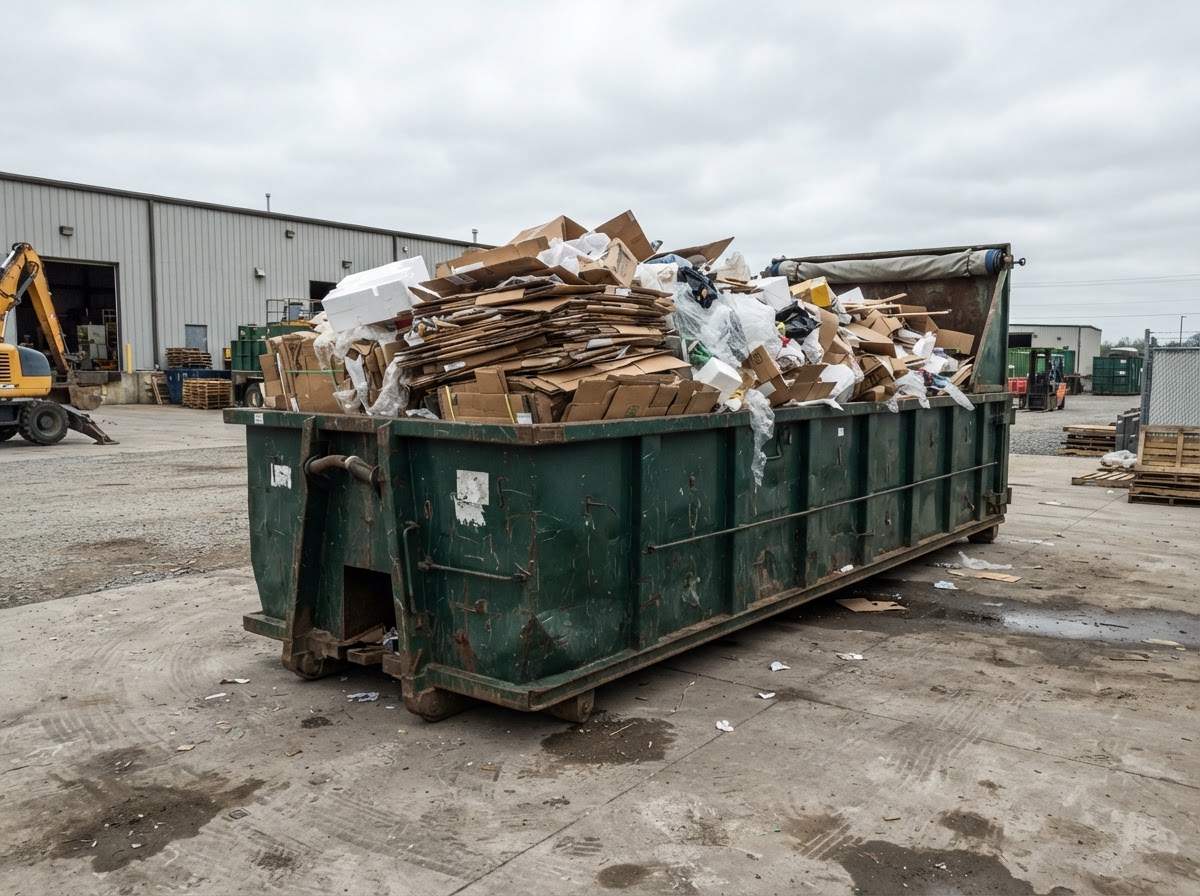
The 30-yard is the default commercial size, and for good reason. It is the container that handles a mixed business waste stream — some cardboard, some packaging, some general refuse, the occasional pallet — without the wall height of a 40-yard. Container dimensions vary, and lower yardage does not guarantee a smaller ground footprint, so confirm the actual length, width, height and delivery clearance. When a Macon business calls Max Compacx without a strong opinion about size, this is usually where the conversation lands.
Dimensions and footprint. A 30-yard roll-off is generally about 22 feet long, 8 feet wide, and roughly 6 feet high. The extra two feet of wall over a 20-yard is where the volume comes from. It also means loading happens through the door at the back end or over the rail with equipment rather than by hand over the side.
Typical projects and materials. Ongoing warehouse and distribution waste. Manufacturing packaging and production scrap. Multifamily and property-management refuse. General construction debris on an active commercial job. Restaurant and retail groups running a shared container. This is the size that fits the widest range of Middle Georgia commercial accounts.
Loading and weight considerations. A 30-yard is big enough to hide a problem. Loose, un-flattened cardboard and unbroken packaging will fill those six-foot walls with mostly air, and the box will leave light and get replaced by another one. That is the classic case where compaction pays: the same 30-yard, compacted on-site, holds substantially more before it needs to move.
Access. Same straight-line approach and overhead clearance as a 20-yard, with a bit more room needed for the door swing if your crew loads from the back. Most Macon docks, industrial yards, and commercial lots off the I-75 and I-16 corridors accommodate a 30-yard without modification.
High-Volume · Low-Density
40 Yard Dumpster Rental in Macon, GA
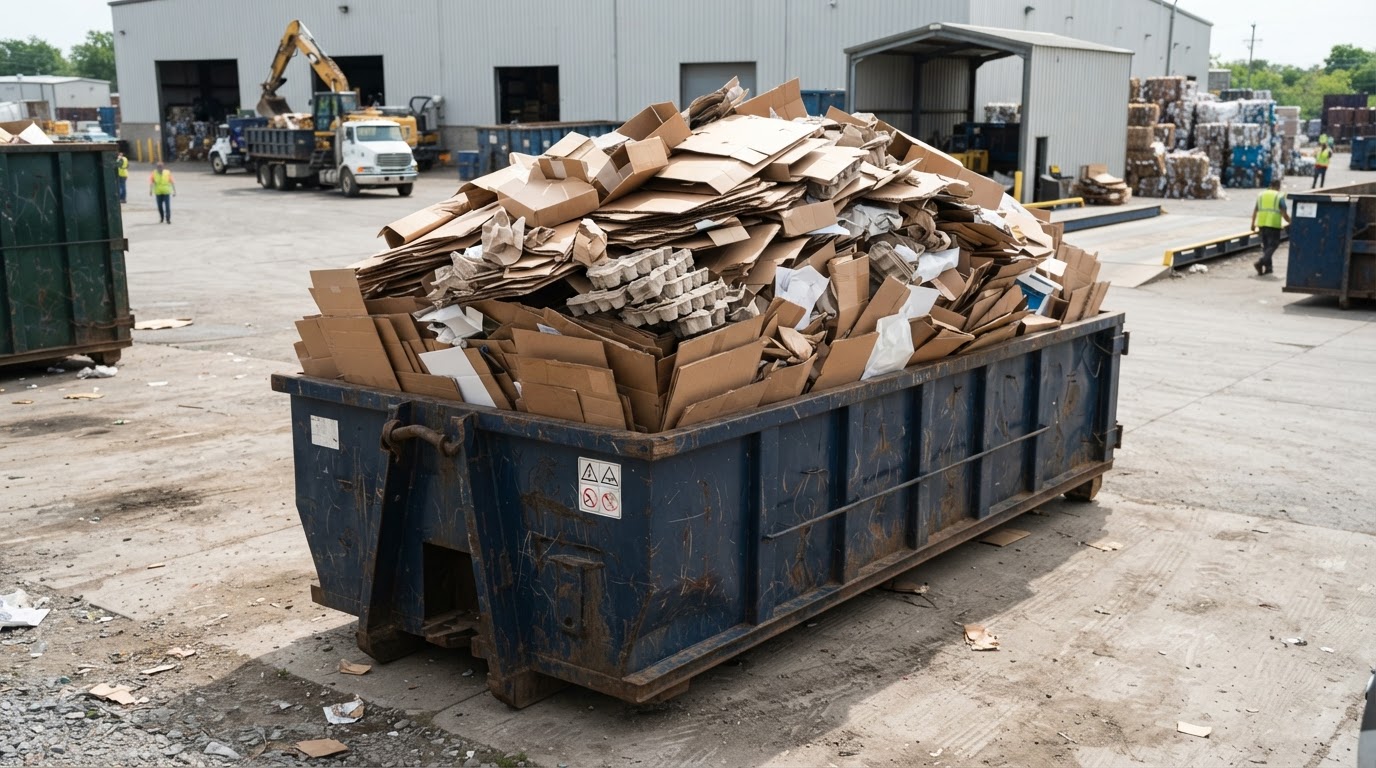
The 40-yard is the volume container. Max Compacx delivers these to operations that generate a large amount of bulky, low-density material — the kind of waste that fills space long before it approaches any weight limit.
Dimensions and footprint. A 40-yard roll-off is generally about 22 feet long, 8 feet wide, and roughly 8 feet high, though exact dimensions vary by container. The difference from a 20- or 30-yard is largely in wall height. Container dimensions vary, and lower yardage does not guarantee a smaller ground footprint — confirm the actual length, width, height and delivery clearance. A 40-yard needs more vertical clearance and a crew that can load high.
Typical projects and materials. Cardboard and corrugated at volume. Packaging, film, and void fill. Pallets and wood waste. Furniture, fixtures, and store-set debris. Large-scale commercial cleanouts and demolition where the debris is bulky rather than dense. Distribution centers running heavy inbound freight almost always belong here.
Loading and weight considerations. Do not fill a 40-yard with dense material. A container that size loaded with heavy debris hits road-legal payload well before the walls are full, which means a legally unhaulable box sitting on your pad. Concrete, aggregate, dirt, and soil are not accepted in our containers at any size, and that rule exists partly for this reason.
Access. The vertical envelope is what matters. The hoist arm needs meaningful headroom above the container to lift and set it, so watch for canopies, dock canopies, roof overhangs, and utility lines on the approach.
| Size | Approximate dimensions | Best for | Typical materials |
|---|---|---|---|
| 20-yard | ~22' L × 8' W × ~4' H | Tight pads, dense waste, weight-limited loads | Mixed C&D, small demo debris, mixed metals, heavy production scrap |
| 30-yard | ~22' L × 8' W × ~6' H | The default commercial stream; mixed volume and weight | General business refuse, packaging, moderate cardboard, construction debris, multifamily waste |
| 40-yard | ~22' L × 8' W × ~8' H | High-volume, low-density material | Cardboard and corrugated, film and void fill, pallets and wood, fixtures and store-set debris |
Dimensions are approximate and vary by container. Container dimensions vary — choose capacity for your material and fill rate, then confirm the actual length, width, height and delivery clearance. Lower yardage does not guarantee a smaller ground footprint.
Making the Call
Choosing Between Sizes: Is a 30 Yard Dumpster Rental in Macon, GA Enough?
This is the real question, and the honest answer starts with density, not volume.
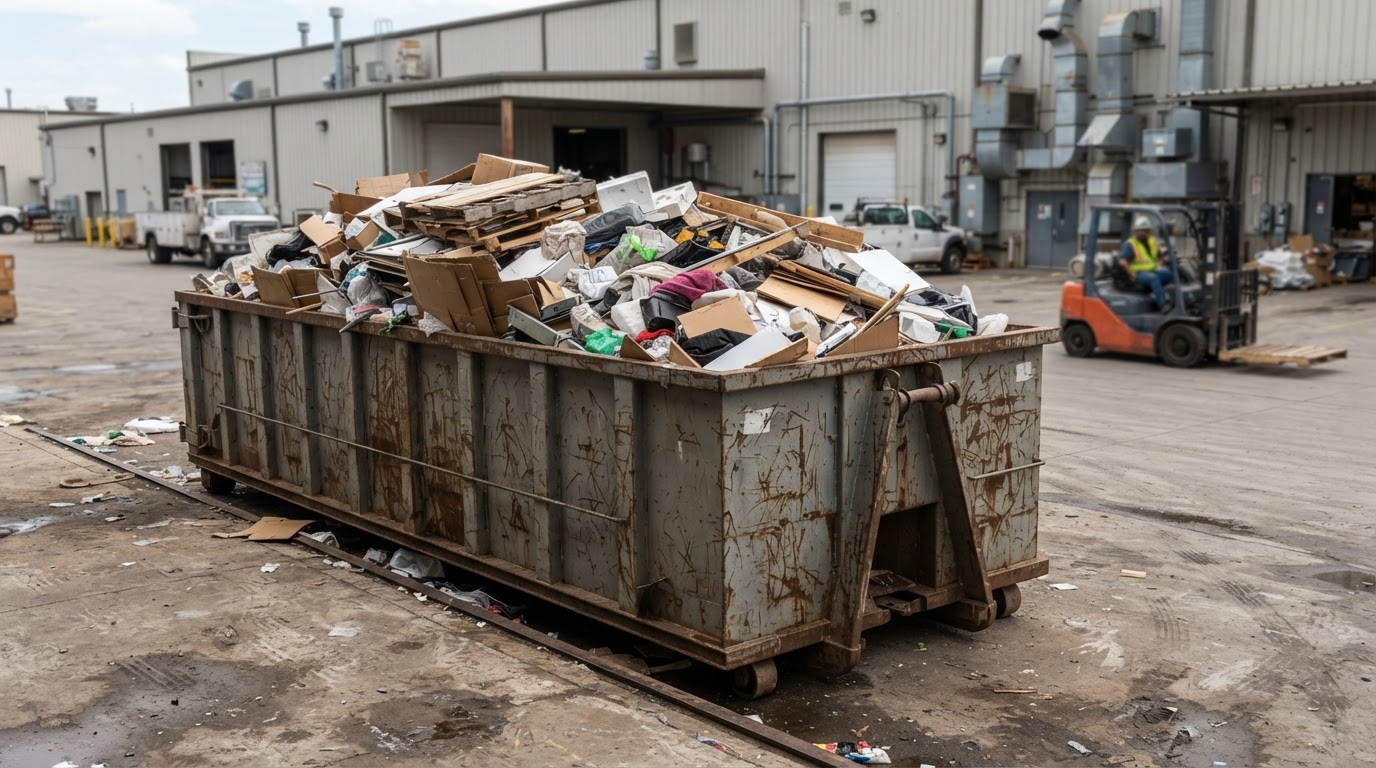
Step one: name the material.
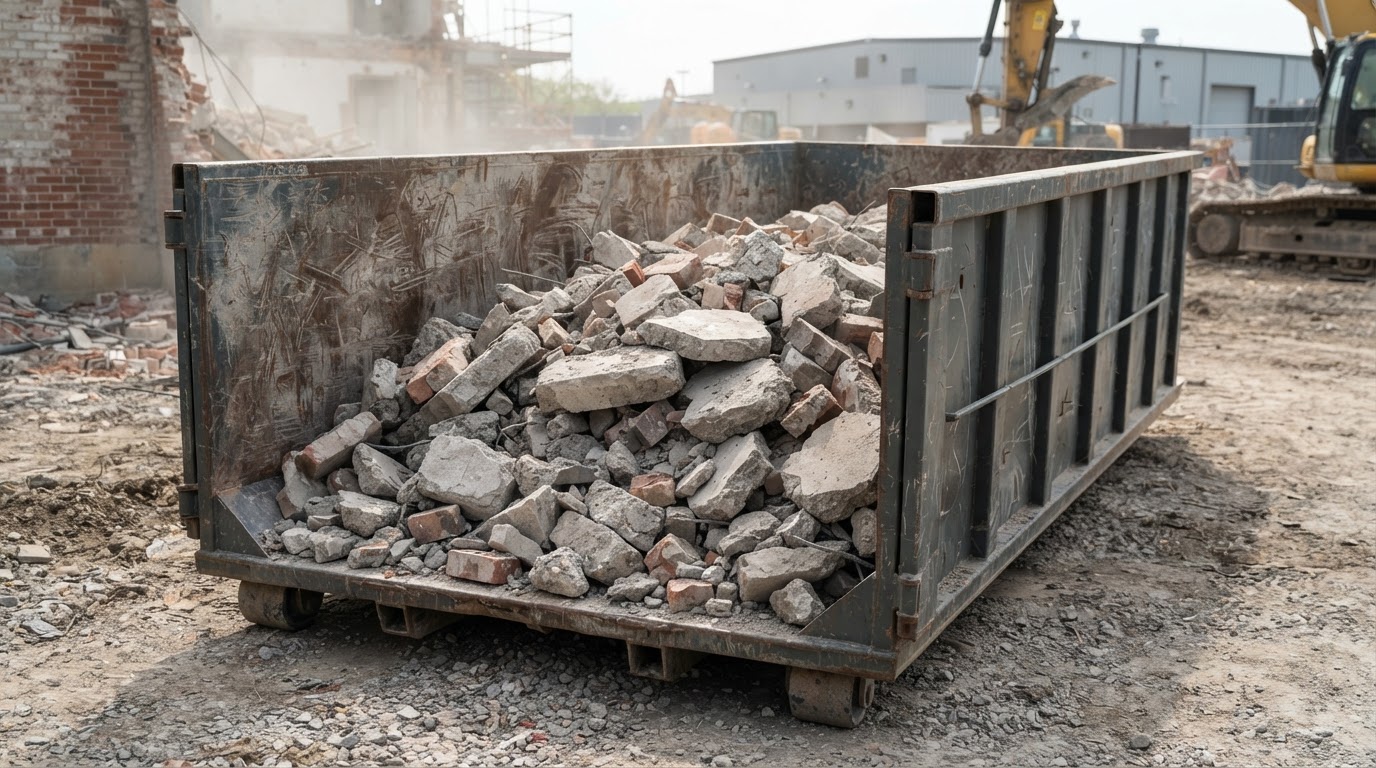
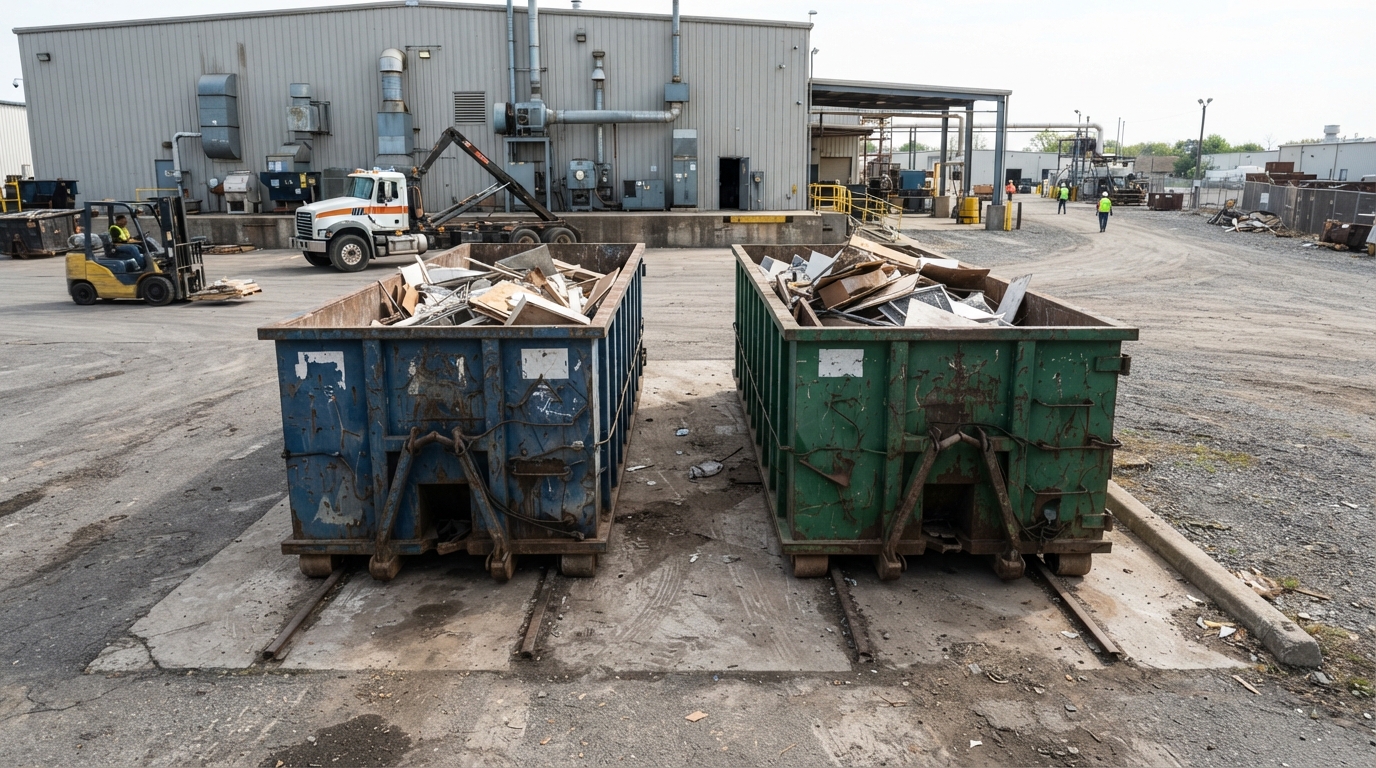
If your stream is dominated by cardboard, packaging, film, or pallets, size up — the volume will run out long before the weight does. If it is dominated by demolition debris, mixed metals, or heavy production scrap, size down — the weight will run out long before the volume does. Mixed streams that sit between those two extremes are where the 30-yard earns its reputation.
Step two: count the trips, not the yards.
A bigger container is not automatically the better deal, and a smaller one is not automatically the cheaper one. What matters is how many times a truck has to come. One larger container pulled twice a month usually beats a smaller container pulled four times, because the four trips cost four trips. But if that larger container leaves half empty, you have simply moved the waste from your pad to the truck bed.
Step three: check the footprint honestly.
Measure the pad, the approach lane, and the overhead clearance before the truck arrives. Container dimensions vary, and lower yardage does not guarantee a smaller ground footprint — confirm the actual length, width, height and delivery clearance. The question is almost always vertical clearance and turning room, not pad length.
Step four: factor in compaction, because it moves the line.
This is where standard size guidance stops being accurate. If the material in a 30-yard gets compacted on-site between pulls, that 30-yard can carry what an uncompacted 40-yard would have carried — often more, with a cardboard-heavy stream. Compaction does not change the box. It changes how much fits in it, and therefore how often it has to leave.
If you are genuinely between two sizes, we would rather look at your material and your pad than guess. Max Compacx will tell you if the smaller container is the better fit, and we will tell you if your waste stream is too dense or too infrequent for compaction to be worth it. That answer costs nothing and it saves everyone a wasted delivery.
Every roll-off has two ceilings. The first is volume — the walls. The second is weight — what the truck can legally carry on Georgia roads. Whichever ceiling you reach first ends the load, and businesses are routinely surprised that it is the weight one.
Road-legal payload, not container capacity, is what sets the practical limit. A hauler cannot legally move a container over the axle weight limits regardless of how much room is left inside it, so the tonnage a container can leave with is a function of the truck, the axle configuration, and the road rules — not the number on the side of the box.
Here is the part that matters for sizing. A loose commercial load typically leaves at roughly 2 to 3 tons. A compacted load on the same container can approach 8 to 12 tons at about 95% of legal DOT payload. That is the same steel box, the same pad, the same truck. The difference is entirely in how the material was arranged before it left.
Structurally, the containers handle far more than a typical load asks of them. A 40-yard container is rated well over fifteen tons static. The constraint has never been the box. It is the road.
Practical ways to stay under the ceiling without extra pulls: keep dense material out of oversized containers, break down cardboard so the volume you are paying to move is actually waste rather than air, keep prohibited material out entirely, and use compaction on high-volume, low-density streams where the payload gap is widest.
The Compaction Variable
How On-Site Compaction Changes the Size Math
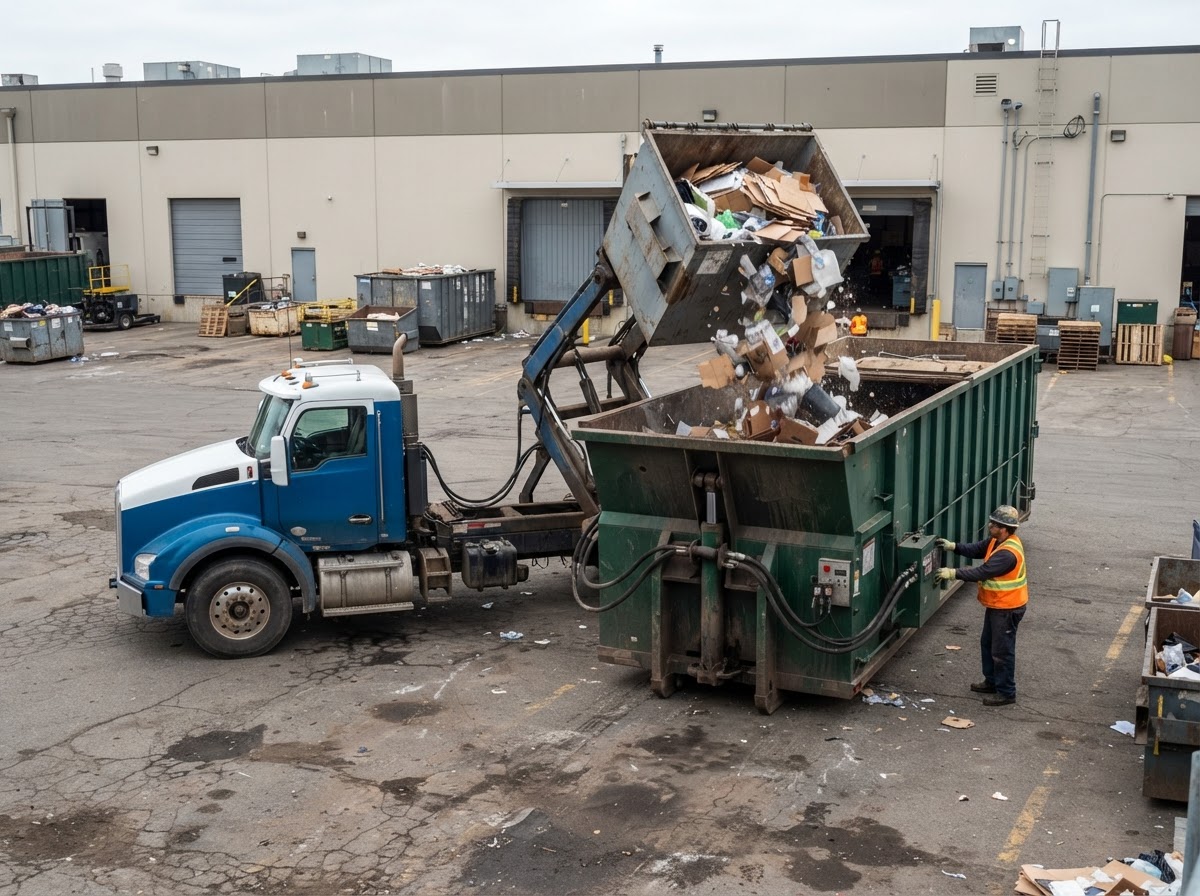
Max Compacx runs mobile on-site waste compaction on containers that are already in place — ours or the ones you already have. A truck comes to your property, compacts the load in the container where it sits, and leaves. Nothing gets hauled. The container stays.
The point is simple: instead of a haul-off, you get a compaction visit. The waste goes down; the container stays put; the trip does not happen. Plan around roughly 2:1 on a mixed commercial waste stream, and it approaches 3:1 on cardboard-heavy material. Most accounts land on one to two compaction visits between pulls.
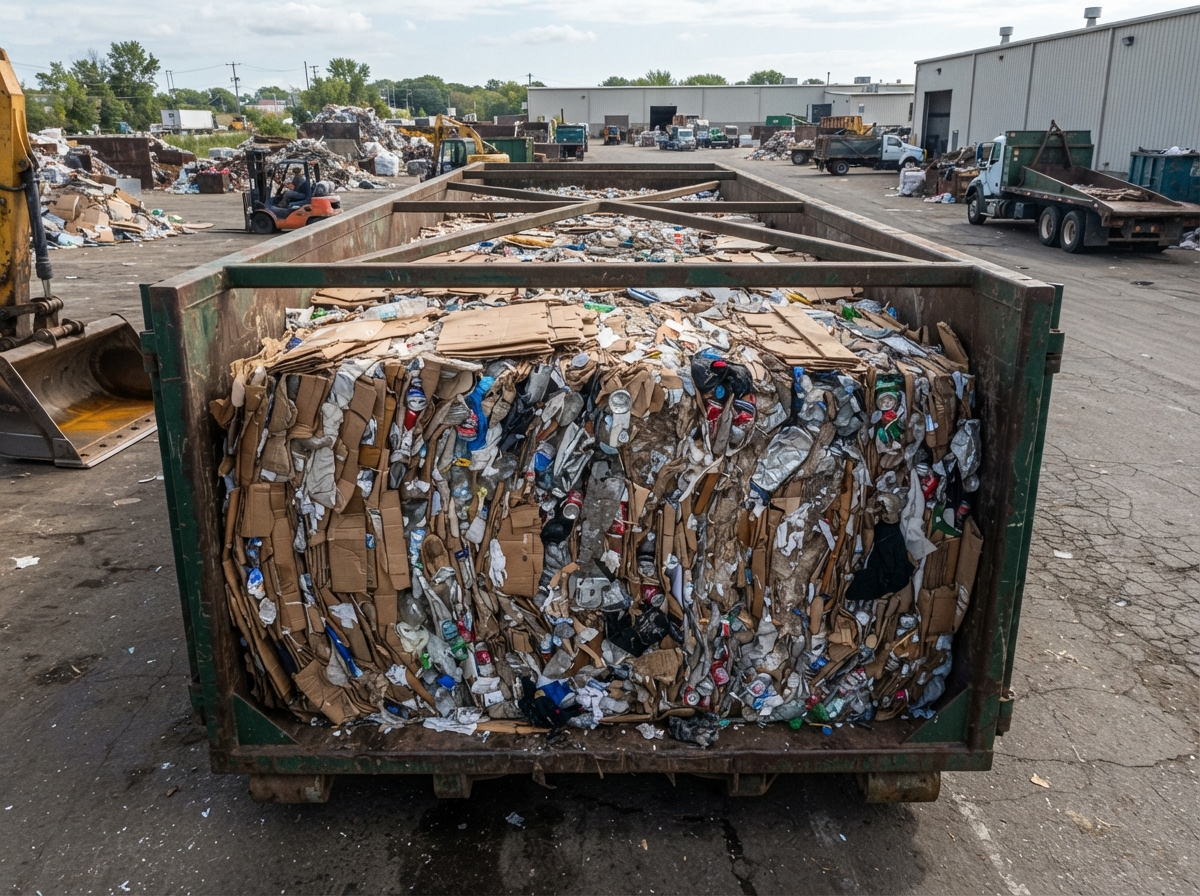
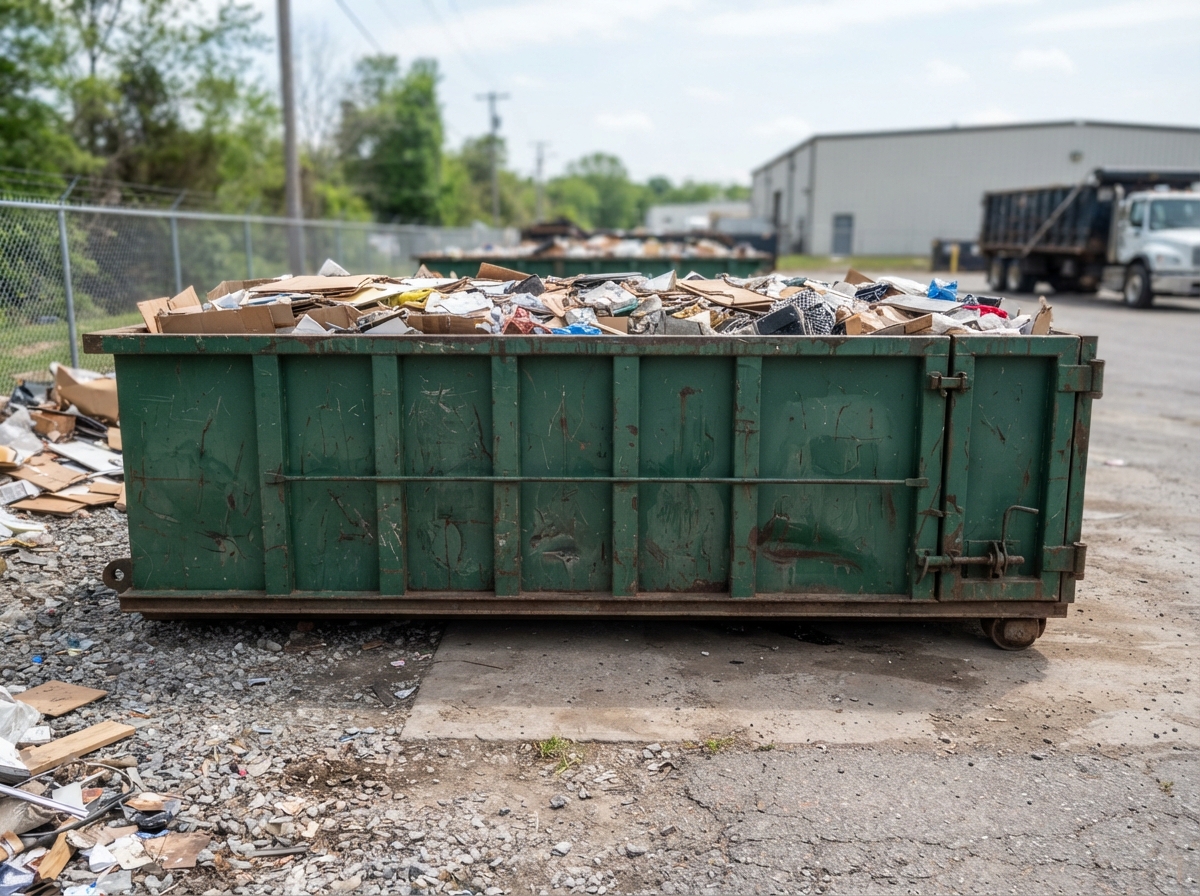
Volume reduction depends on what you are throwing away, and it is always material-dependent — never a guarantee. Up to 70% reduction is achievable on the right stream:
| Material | Typical volume reduction |
|---|---|
| Cardboard, packaging, recyclables | 60–70% |
| Compost and organics | 50–60% |
| C&D debris, wood and pallets, mixed metals | 40–50% |
Here is what that does to a size decision. Take one container running twelve haul-offs a month at $3,600 a month. Compacted, that same container needs four haul-offs a month, and the total lands near $2,800 — roughly $800 a month, about 22%, and 96 fewer haul-offs across a year. Same container. Same waste. Fewer trips.
There are two ways to start. Keep your current dumpster and your current hauler and we simply compact what is already on your pad. Or we provide the container and the compaction together. Both work, and which one is right usually depends on whether you are already under a hauling arrangement you want to keep.
The honest limits: compaction reduces haul-offs, it never eliminates them, and the container still has to be pulled. Dense material and infrequent waste streams may not benefit much — if that is your situation, we will say so rather than sell you a service that will not move your numbers. Full detail is on the on-site waste compaction page.
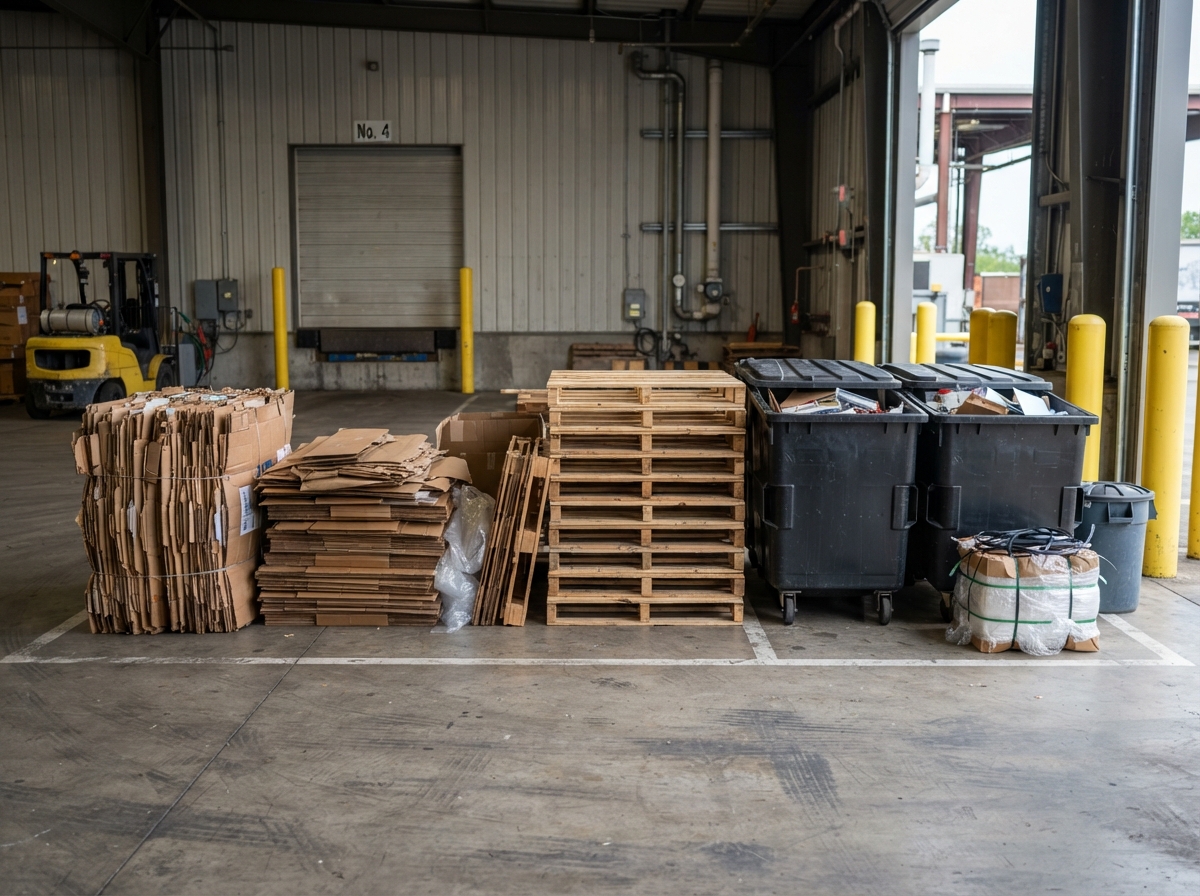
Size only works if the material belongs in the container. Across all three sizes, the accepted list covers general commercial and industrial waste: cardboard and packaging, pallets and wood, general business refuse, production and manufacturing scrap, construction and demolition debris, fixtures and store-set material, and mixed metals.
The excluded list is short and firm at every size:
- ·Liquids of any kind.
- ·Dirt, soil, aggregate, and dense no-air material. These have no air to remove, which defeats the purpose of the container and creates weight problems immediately.
- ·Hazardous and regulated waste.
- ·Sealed drums and pressurized vessels.
- ·Anything the hauler will not accept. If it will not be taken at the disposal end, it cannot go in the box at the start.
These exclusions are not fine print. A prohibited load can leave a container sitting on your pad because it cannot legally or safely be moved, which is a much bigger problem than picking the wrong size. If you are unsure about a specific material, ask before it goes in.
Tell us what you throw away.
Not the yardage — the material. Cardboard volume, production scrap, demolition debris, multifamily refuse. That is what determines the size.
We look at the pad and the access.
Pad length, approach lane, turning room, and overhead clearance. This is the step that prevents a truck showing up to a spot it cannot service.
You get a recommendation, including the smaller one.
If a 20-yard does the job, we say 20-yard. If your stream is too dense or too infrequent for compaction to help, we say that too.
Delivery and placement.
The container is set where your operation actually needs it — near the dock, out of the fire lane, clear of the drive aisle. Placement gets confirmed before the truck leaves.
Fill, then compact.
Your crew loads the container normally. Between pulls, we compact the load on-site, in place, on a schedule built around your dock hours rather than against them.
Pull or swap.
The container leaves when it is genuinely full, not when the calendar says so. Then the cycle starts again.
Container safety is built into the compaction step rather than bolted on. The compaction drum is narrower than the container, so it never contacts the walls. There is no hydraulic downforce driving the drum into the box. Wheels and end guards are safeguarded during the visit. We run a zero-touch policy — your people are not involved in the compaction operation. Every container gets a before-and-after inspection with photo documentation, so what happened on your property is on the record.
Size and schedule are the same decision made twice. A container that is correctly sized and pulled on a sensible cadence costs less to run than an oversized container pulled on a rigid calendar or an undersized one pulled on emergency calls.
Most commercial accounts settle into a rhythm within the first month once the real fill rate is visible. On an uncompacted stream, the fill rate is what it is — the container leaves when the walls are full. With compaction in the loop, one to two compaction visits typically fit between pulls, which stretches the interval without stretching your pad.
Scheduling gets built around dock operations. We work service windows around inbound freight, production runs, and business hours rather than dropping a truck into the middle of your busiest hour. Monday through Friday, 7am to 5pm, is when the work happens.
Why Max Compacx
Why Macon Businesses Choose Max Compacx
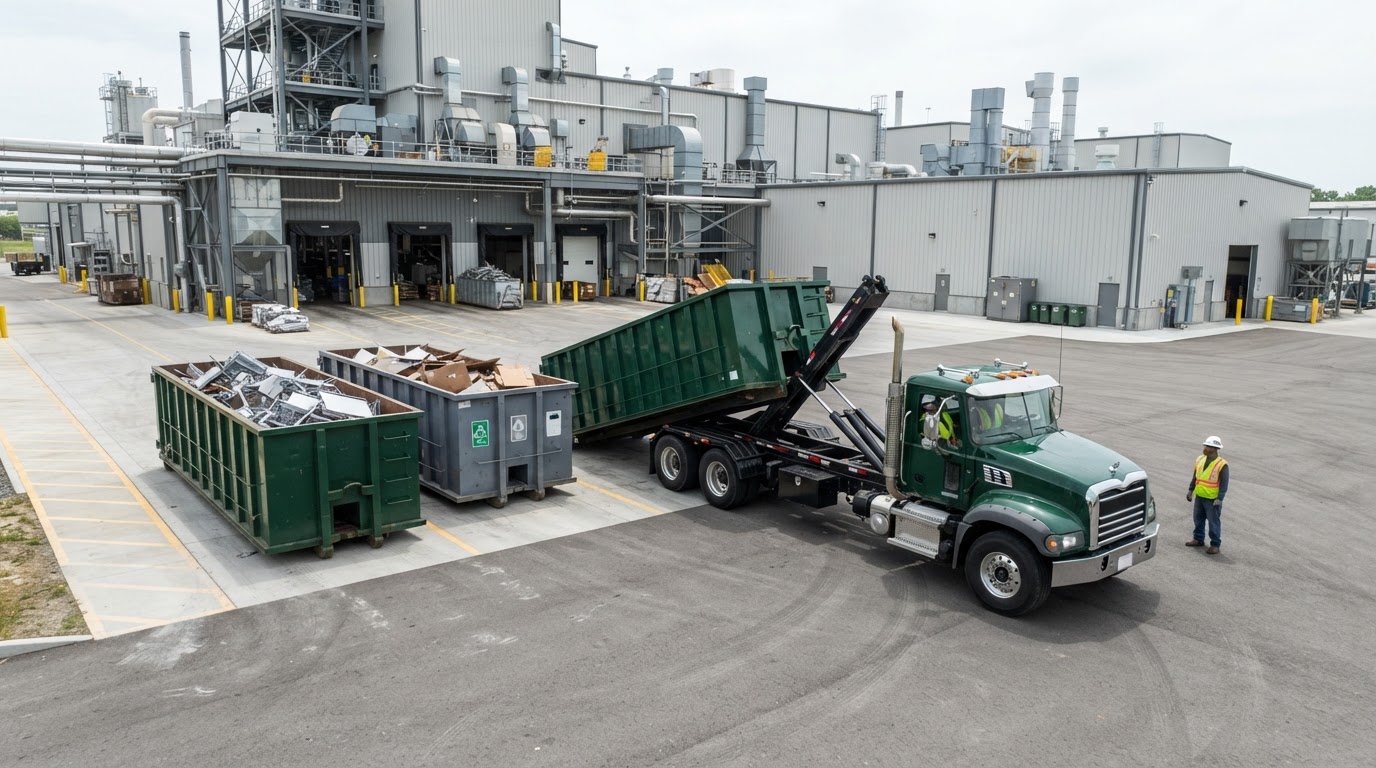
We are commercial and industrial only. That is not a limitation we apologize for — it is the reason the sizing advice is any good. Manufacturing and industrial plants, warehouse and distribution operations, construction contractors, property management and multifamily, retail and restaurant groups, and demolition and concrete crews all have waste streams that behave differently, and matching the container to that behavior is the whole job.
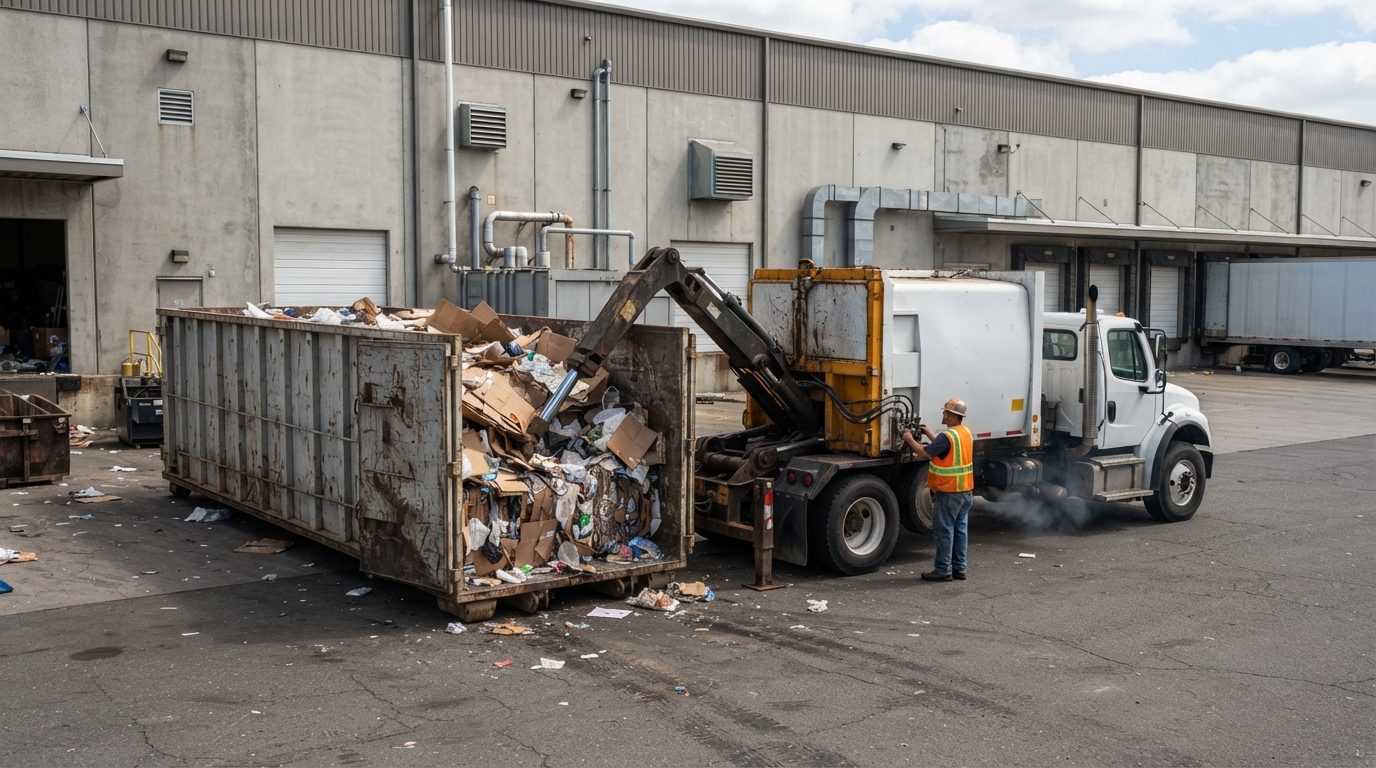
The compaction side of this is also the part that gets more useful the longer it runs. A hauler moves the box. We reduce how often the box has to move, which means the size you pick on day one is not a decision you are stuck paying for every week after.
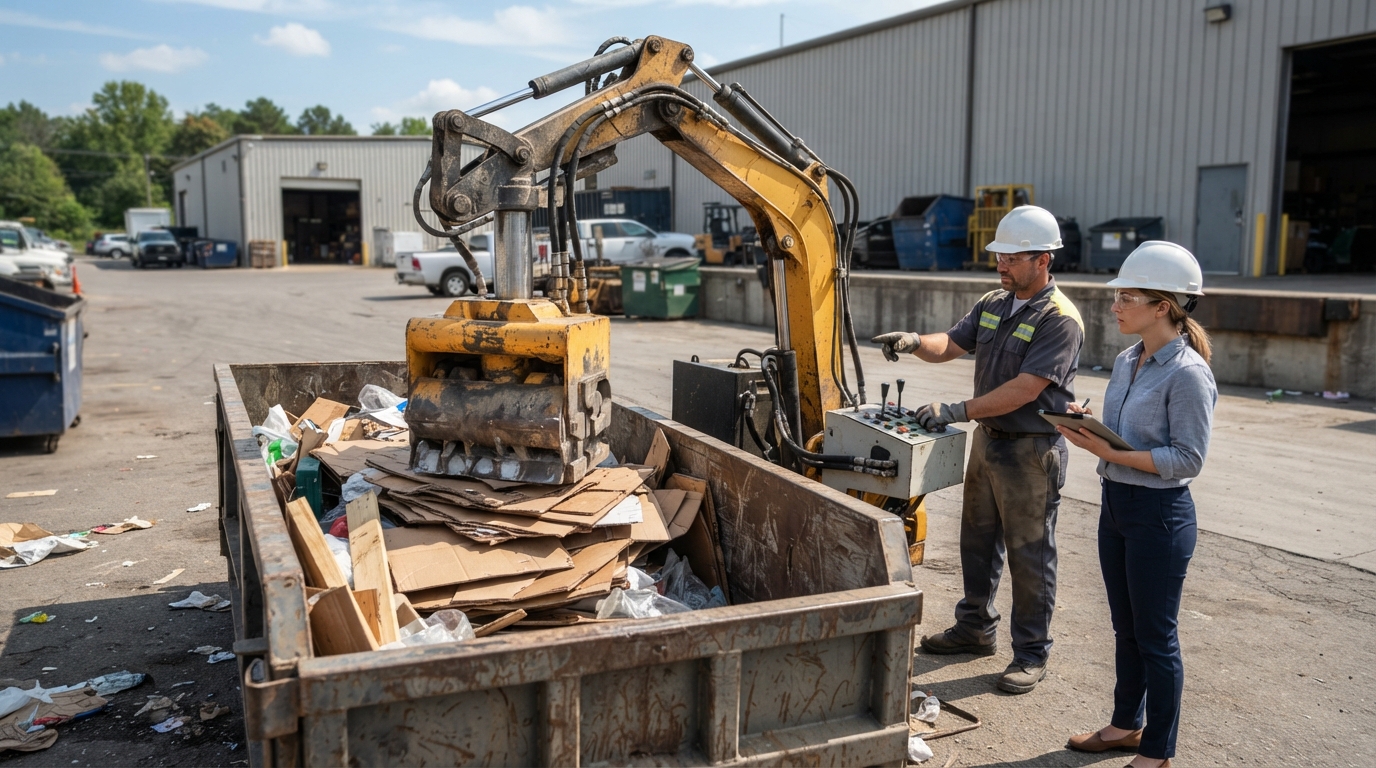
The free on-site demo takes about ten minutes. We come out, compact what is in your container, and you watch the level drop. If your material does not respond the way it should, you will know in ten minutes rather than after a contract.
Service Area
Sizes Delivered Across Macon and Middle Georgia
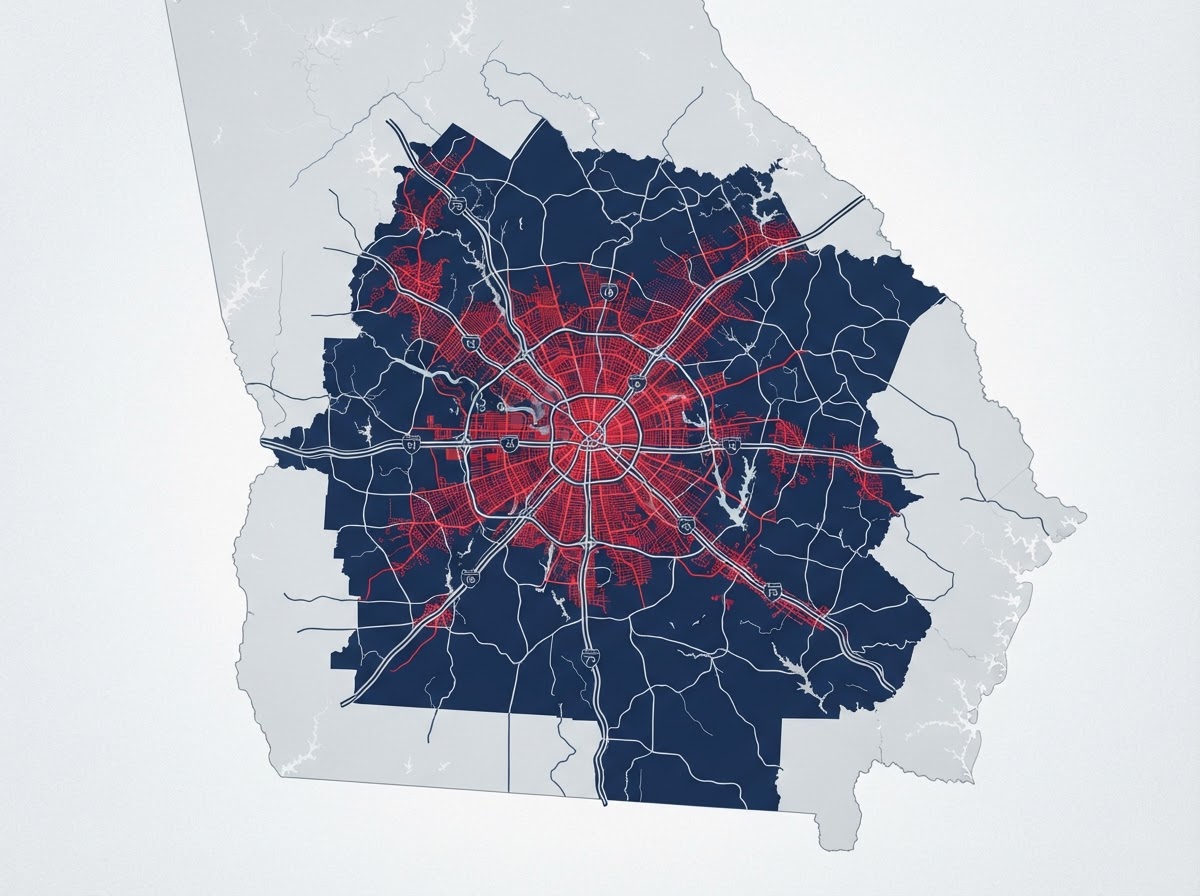
All three container sizes are available across Macon and Middle Georgia. From our Hawkinsville Road base in Macon, Max Compacx serves businesses throughout Bibb County and the surrounding Middle Georgia towns — Byron, Gray, Forsyth, Perry, Lizella, and Centerville — including the industrial and distribution corridors along I-75 and I-16.
If your operation runs multiple sites across the area, sizing does not have to be uniform. A distribution site running high cardboard volume and a fabrication shop running dense scrap should not be on the same container, even under the same account. Full coverage detail is on the service areas page.
Max Compacx
5900 Hawkinsville Rd, Macon, GA 31216
Monday – Friday, 7am – 5pm
FAQ
Dumpster Size Questions From Middle Georgia Businesses
Related Services
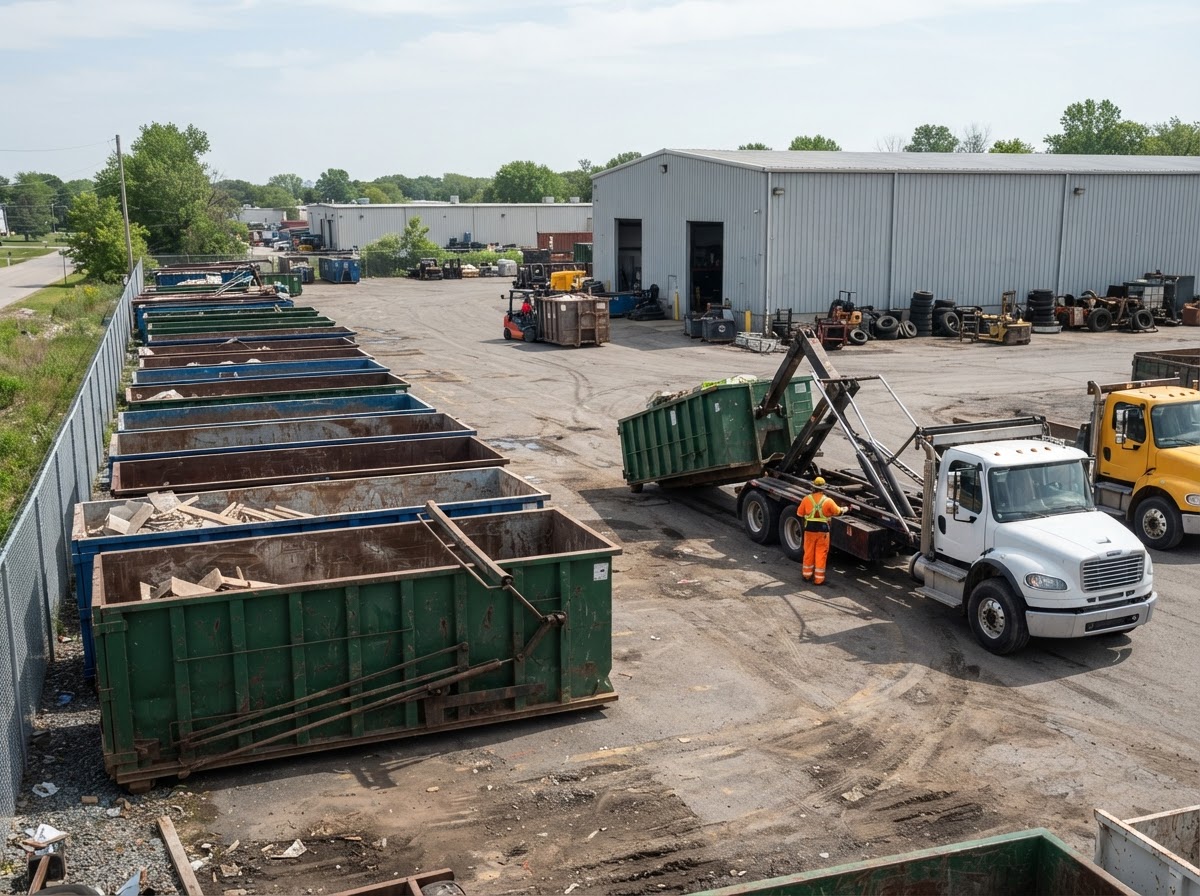
Roll-Off Dumpster Rental
how delivery, placement, filling, and pickup work once you have chosen a size.
On-Site Waste Compaction
the service that changes how much a given size holds, and how often it has to move.
Service Areas
where we deliver across Macon and Middle Georgia.
Request Service
tell us your material and your pad, and get a size recommendation.
Get the Right Size on Your Pad
Pick the size from the material, not the guess. Tell us what your operation throws away, what your pad looks like, and how often the container fills, and you will get a straight recommendation — including the smaller container when that is the honest answer. If your waste stream is bulky enough that compaction moves your numbers, we will show you in about ten minutes on your own property.
Max Compacx
5900 Hawkinsville Rd, Macon, GA 31216
Monday – Friday, 7am – 5pm