
Construction Dumpster Rental — Macon, GA
Construction Dumpster Rental in Macon, GA
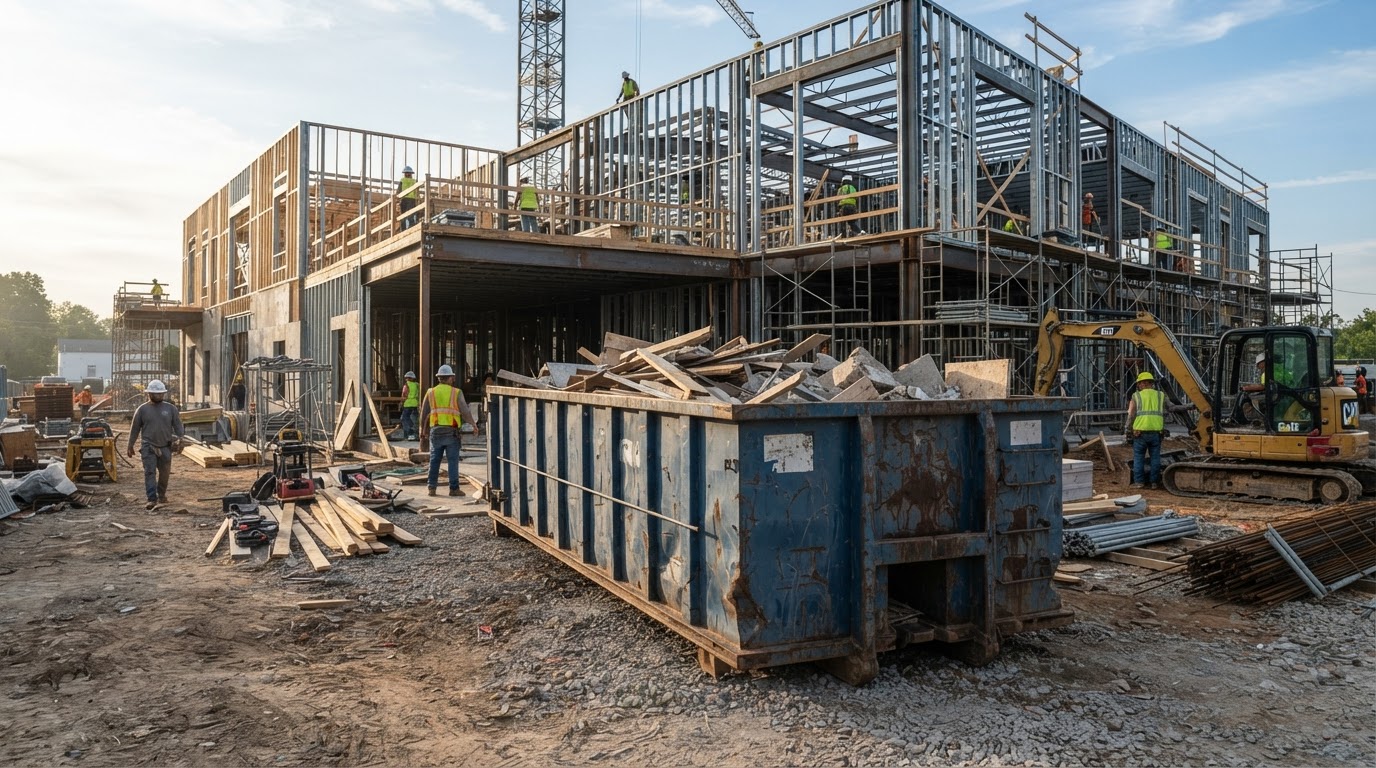
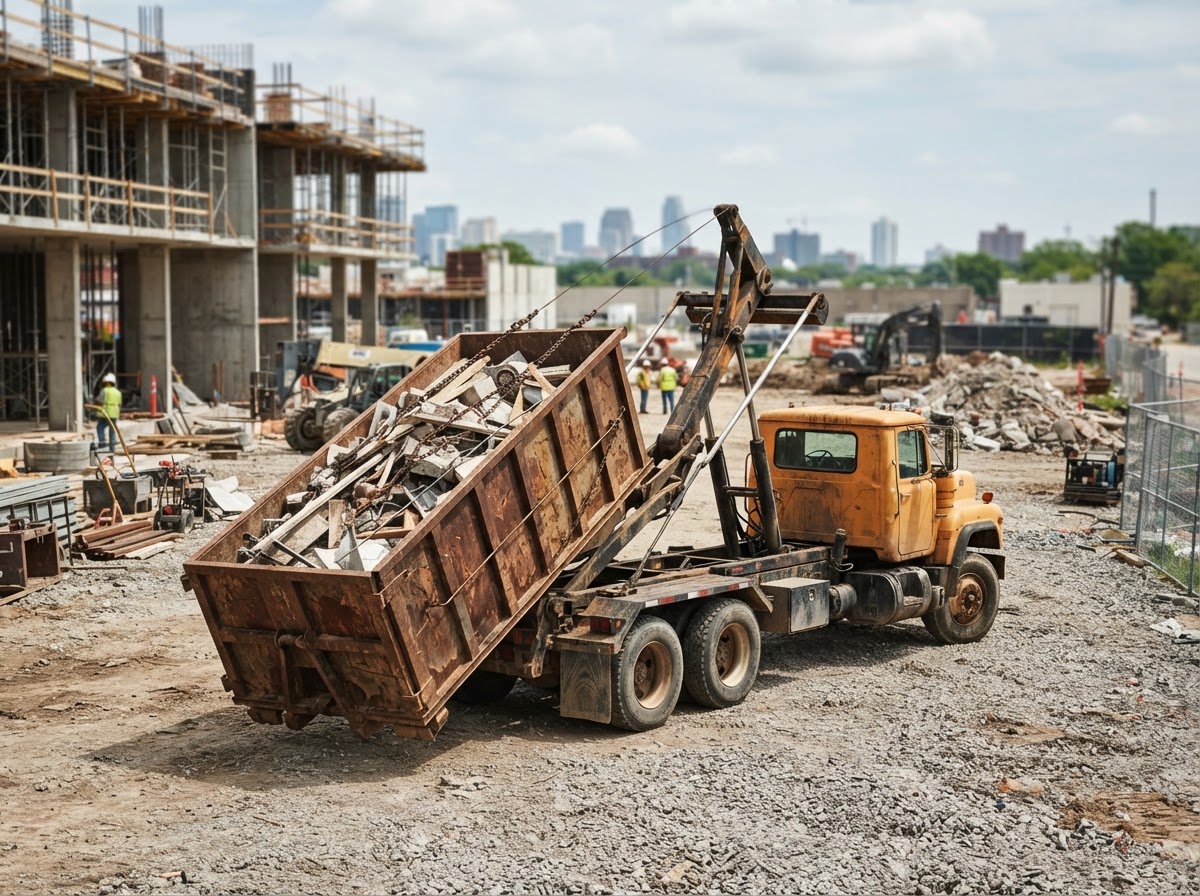
Max Compacx provides construction dumpster rental in Macon, GA for commercial jobsites: 20, 30 and 40 yard roll-off containers delivered to the site, sized to the phase the crew is working in, and compacted in place so the same box holds more before a truck has to come get it. On an active build, the container is rarely the expensive part. The swap trips are.
This is a commercial and industrial service. General contractors, commercial builders, renovation and fit-out crews, and the trades working under them across Macon, Bibb County, and Middle Georgia. If your debris volume changes three times before the job closes out, this page covers how the container and the schedule change with it.
- Macon, GA based
- Monday – Friday, 7am – 5pm
- Commercial jobsites only
- 20, 30 and 40 yard containers
The Real Cost
Why Construction Dumpster Rental in Macon, GA Costs More Than It Should
Jobsite waste is not one waste stream. It is four or five of them, arriving in sequence, and each one behaves differently in a container. Demo and rough-in produce heavy, awkward material. Framing and drywall produce bulk. Finishes and fit-out produce packaging — cardboard, foam, shrink wrap, banding, fixture crates — which is the lightest material on the job and the fastest to fill a box. Most container schedules get set once, in week one, against a guess about the whole job.
The result is a swap count nobody estimated. Every swap is a full truck trip: a driver, a roll-off truck, road time on I-75 or I-16 out to the site, a scale ticket, and a disposal charge on the other end. It shows up on the job as line items that were supposed to be predictable and were not.
Then there is the air. A construction debris dumpster loaded by hand is mostly empty space by the time it looks full. Drywall scrap gets thrown in flat. Crates go in whole. Insulation batts and ductwork offcuts take up room and weigh almost nothing. A container that reads "full" from the ground often carries a fraction of what it can legally and safely haul, which means the truck that comes to empty it is moving air at the same rate it moves debris.
The schedule cost is the one contractors feel first. A full container that cannot be swapped until tomorrow is a container the crew stops using today. Material stacks next to the box, the laydown area shrinks, and cleanup slides to the end of the week. Nobody bills for that, but it is real.
Compaction reduces the number of times a truck has to come out. It does not eliminate the trips — the debris still has to leave the site and go somewhere. What changes is how many of those trips the job pays for.
Jobsites We Serve
Jobsites We Set Containers For
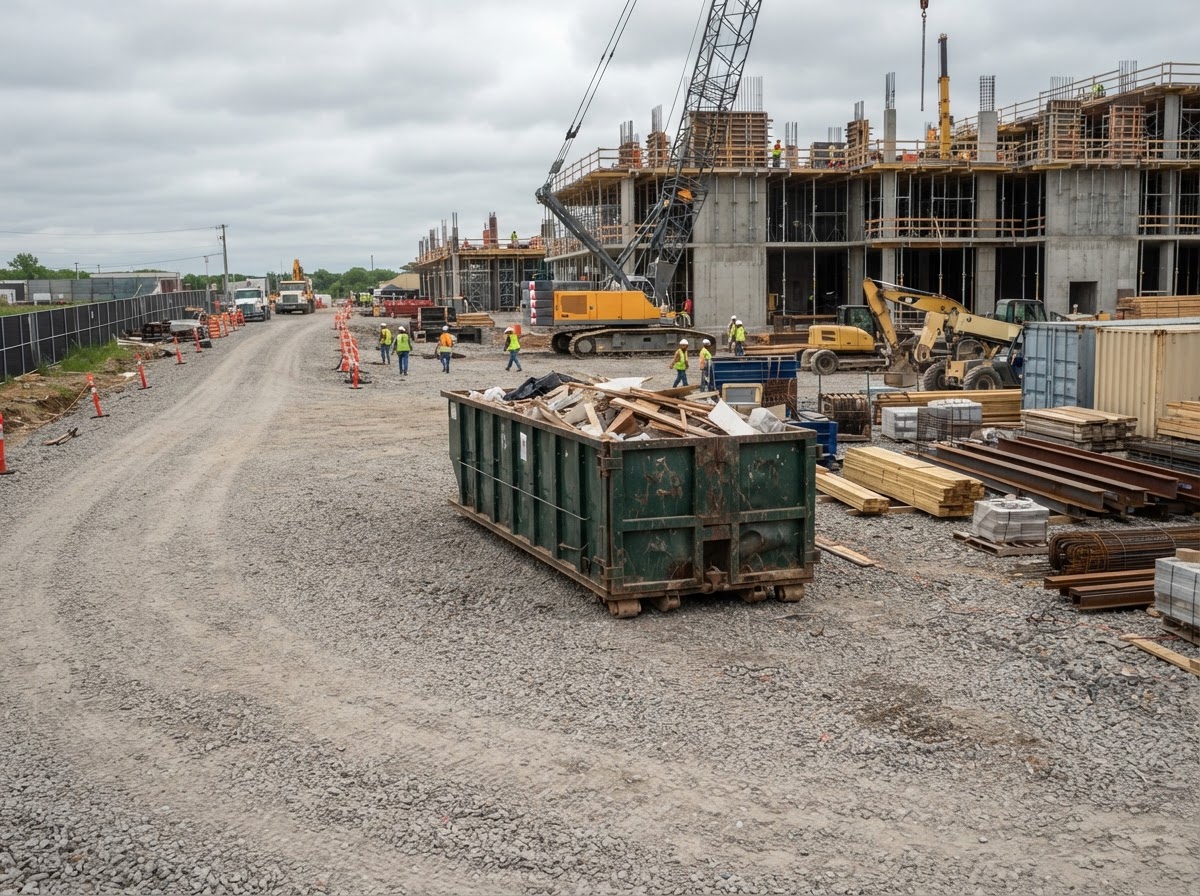
Max Compacx sets containers on active commercial work across Macon and the surrounding Middle Georgia corridors. The projects vary; the pattern is the same, which is that volume moves in phases.
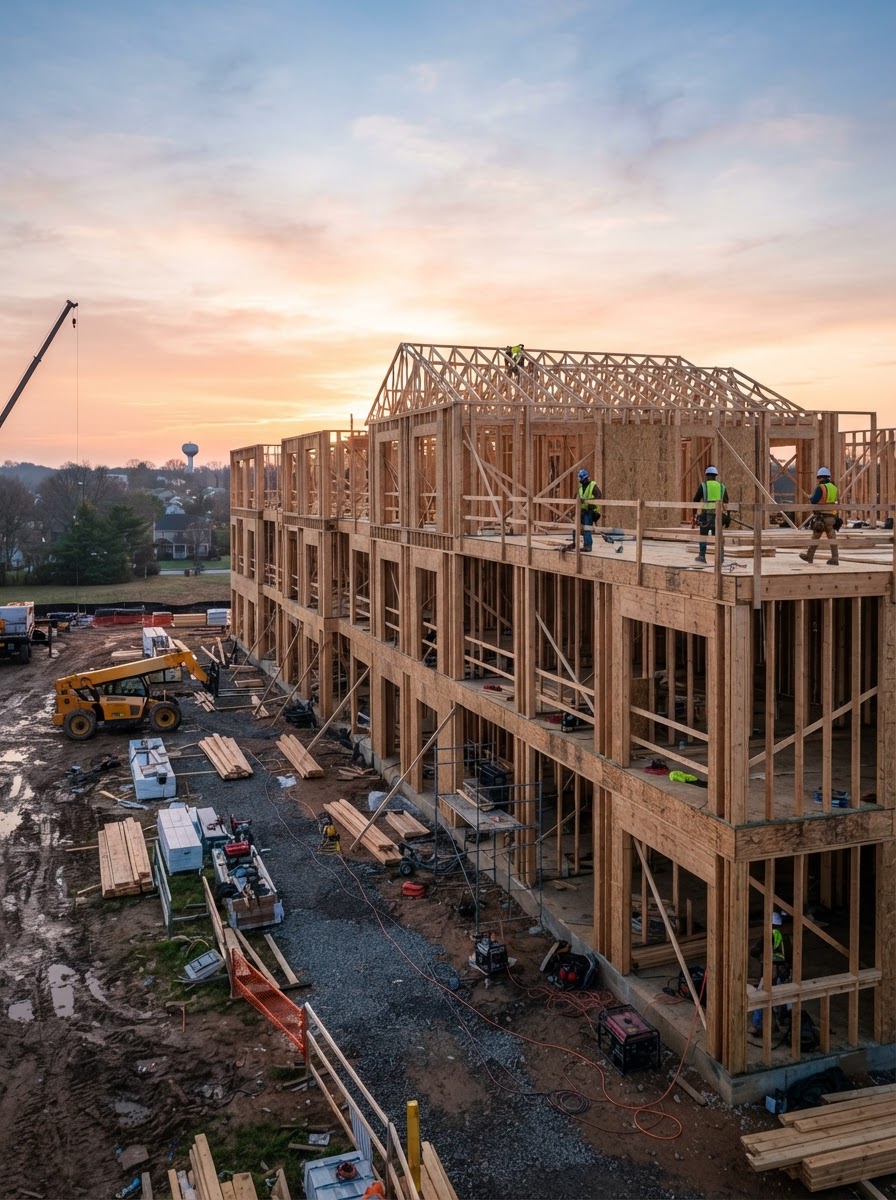
Ground-up commercial builds.
Long duration, changing material mix, and a laydown area that gets tighter as the structure goes up. These jobs usually run a permanent container position with swaps timed to phase changes.
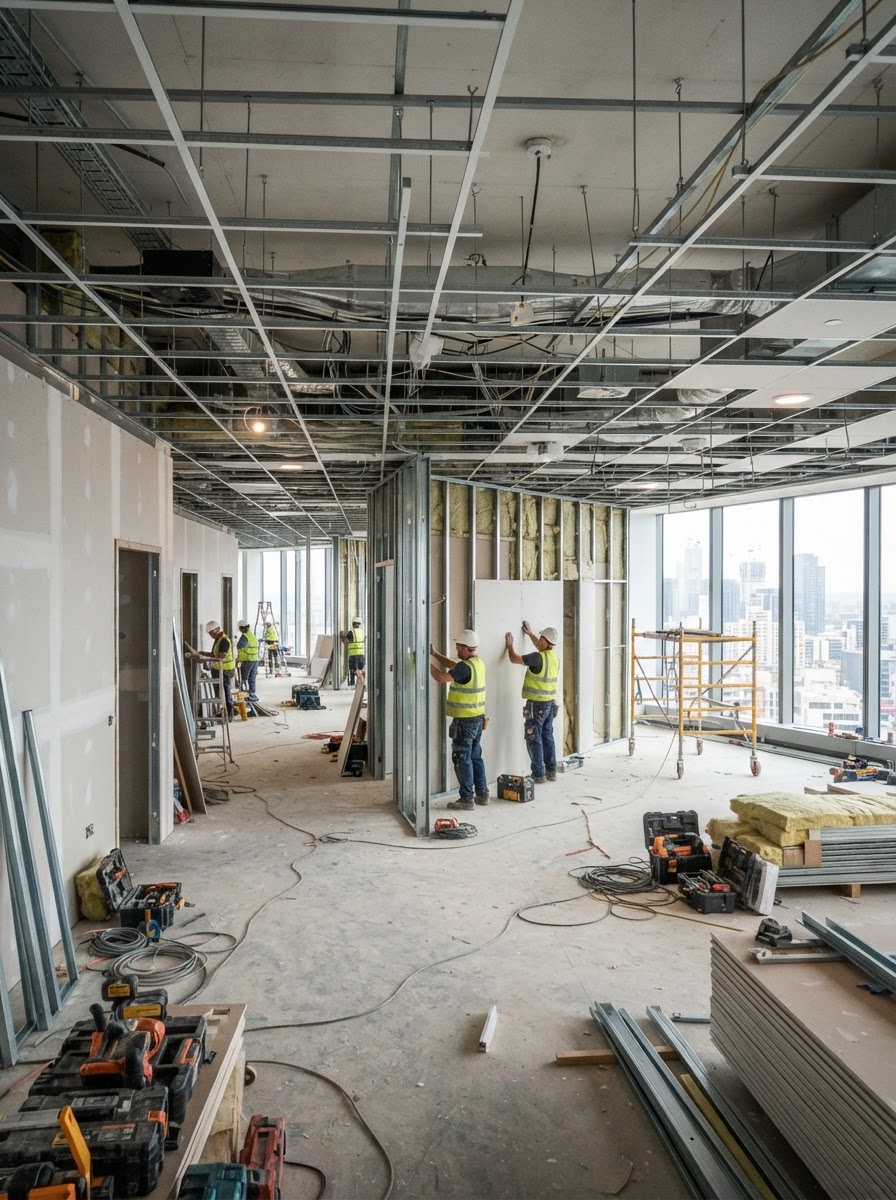
Interior renovations.
Heavy at the front end during selective demo, lighter and bulkier once the new work starts. The size that is right in week one is often wrong by week four.
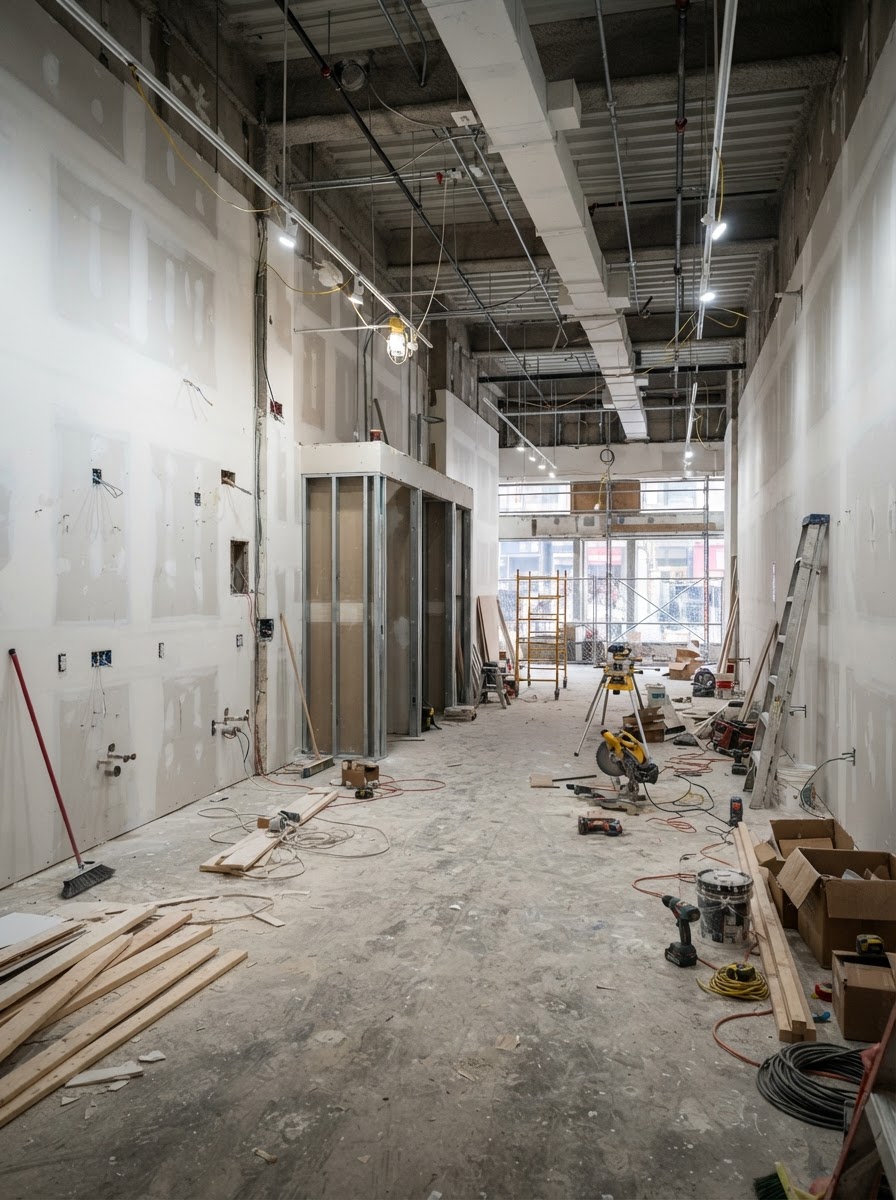
Tenant fit-outs.
Short, packaging-dominated, and almost always on an occupied property with restricted access hours. Compaction earns its keep here because the material is mostly air.
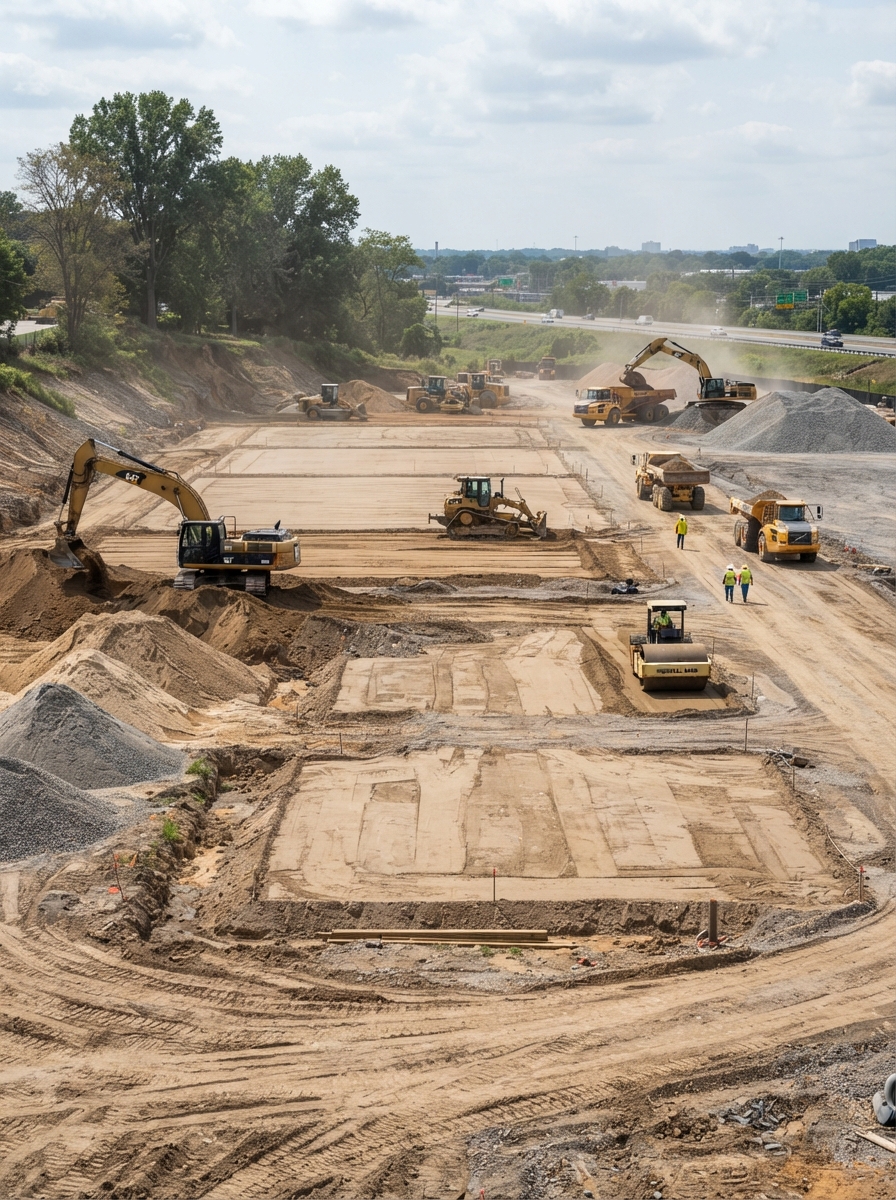
Retail and restaurant buildouts.
Fixture crates, millwork offcuts, and equipment packaging, on a hard open date. Volume spikes right when the schedule has the least slack.
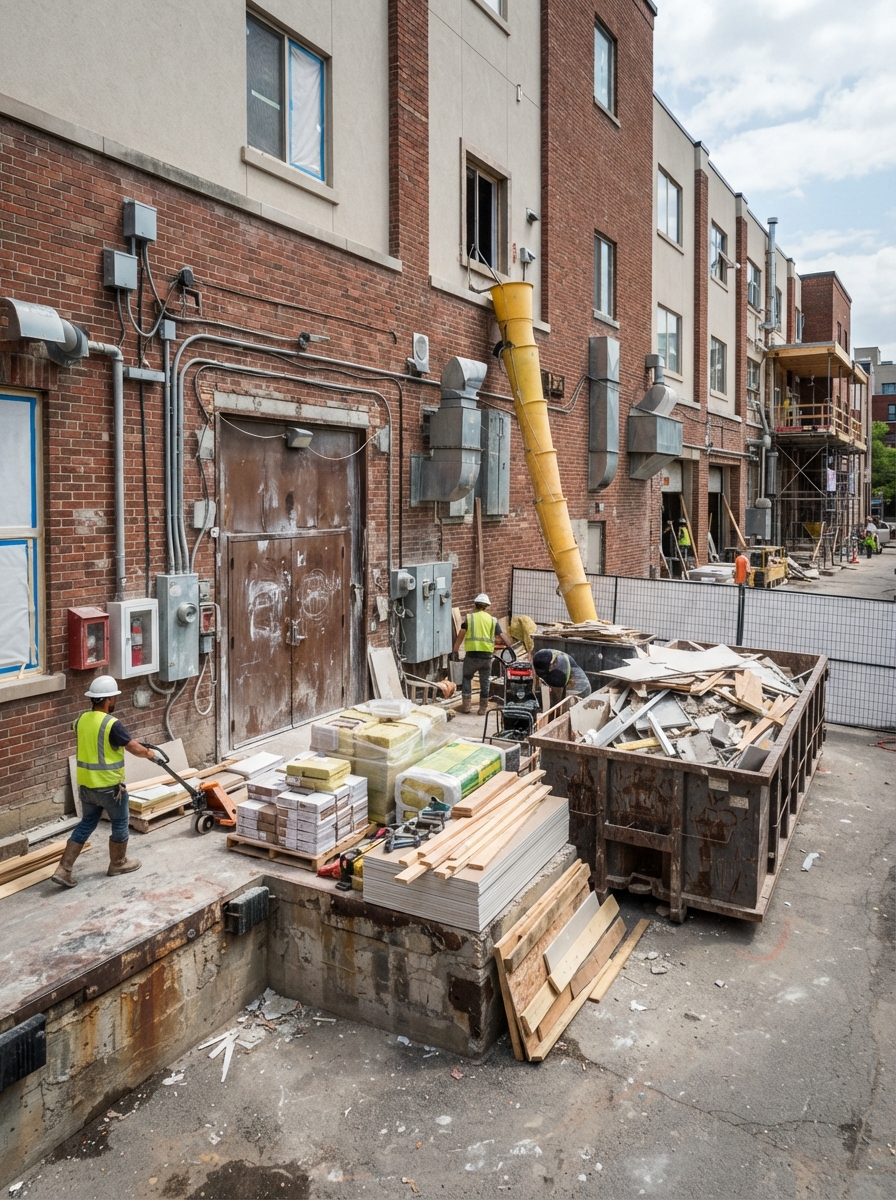
Warehouse and distribution expansions.
Racking crates, banding, pallets, and packaging in high volume, usually with a dock that cannot be blocked during shift.
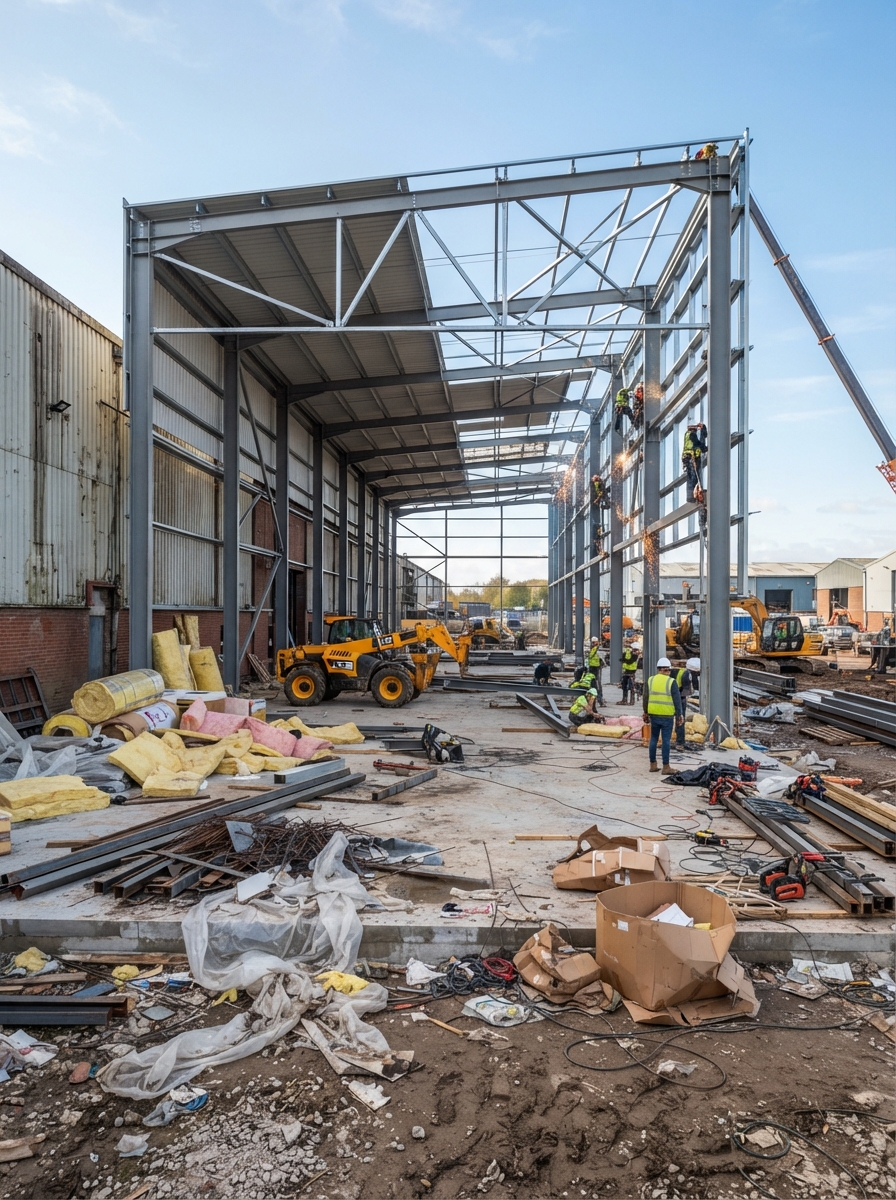
Industrial and plant work.
Line changes, equipment swaps, and reconfiguration debris, mixed with production waste that never stopped in the first place.
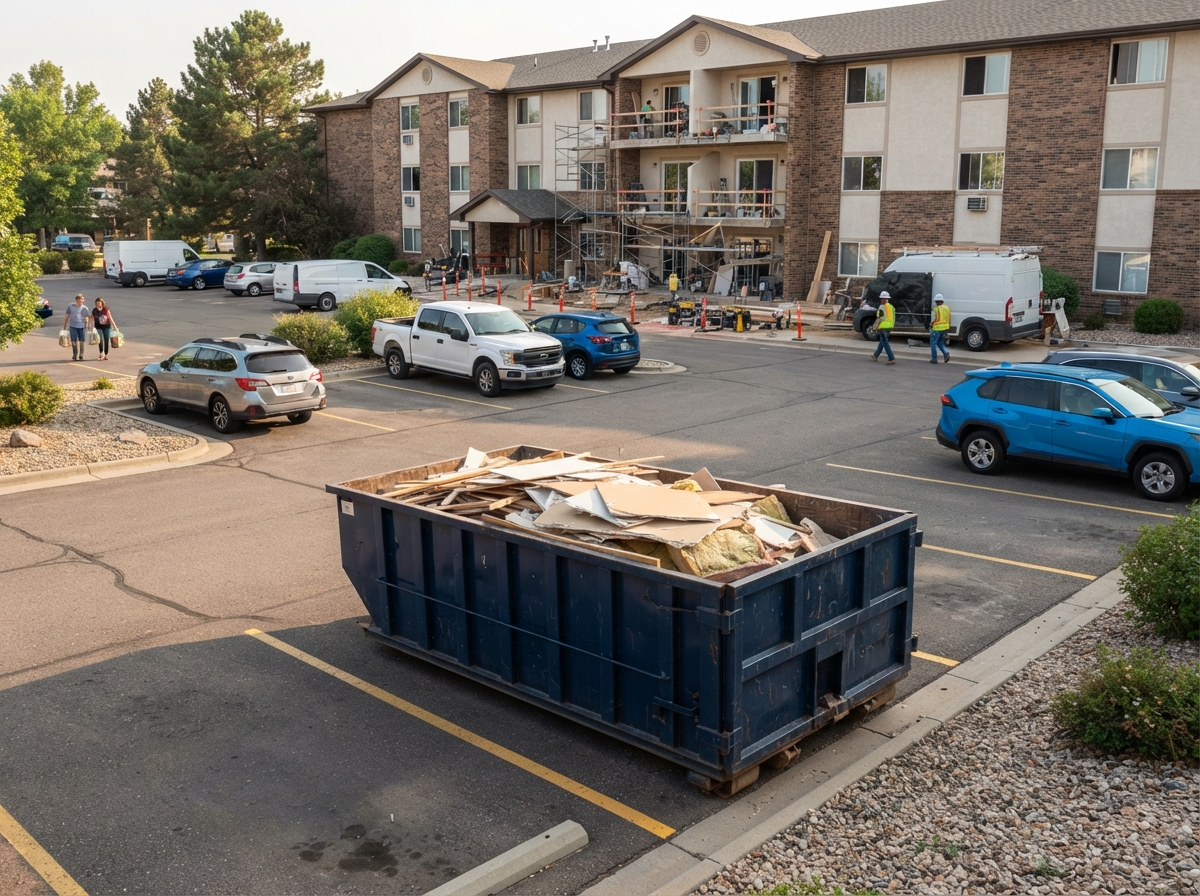
Multifamily and property renovation work.
Unit-by-unit turnover volume where the container sits in an active parking area and has to stay clean and contained.
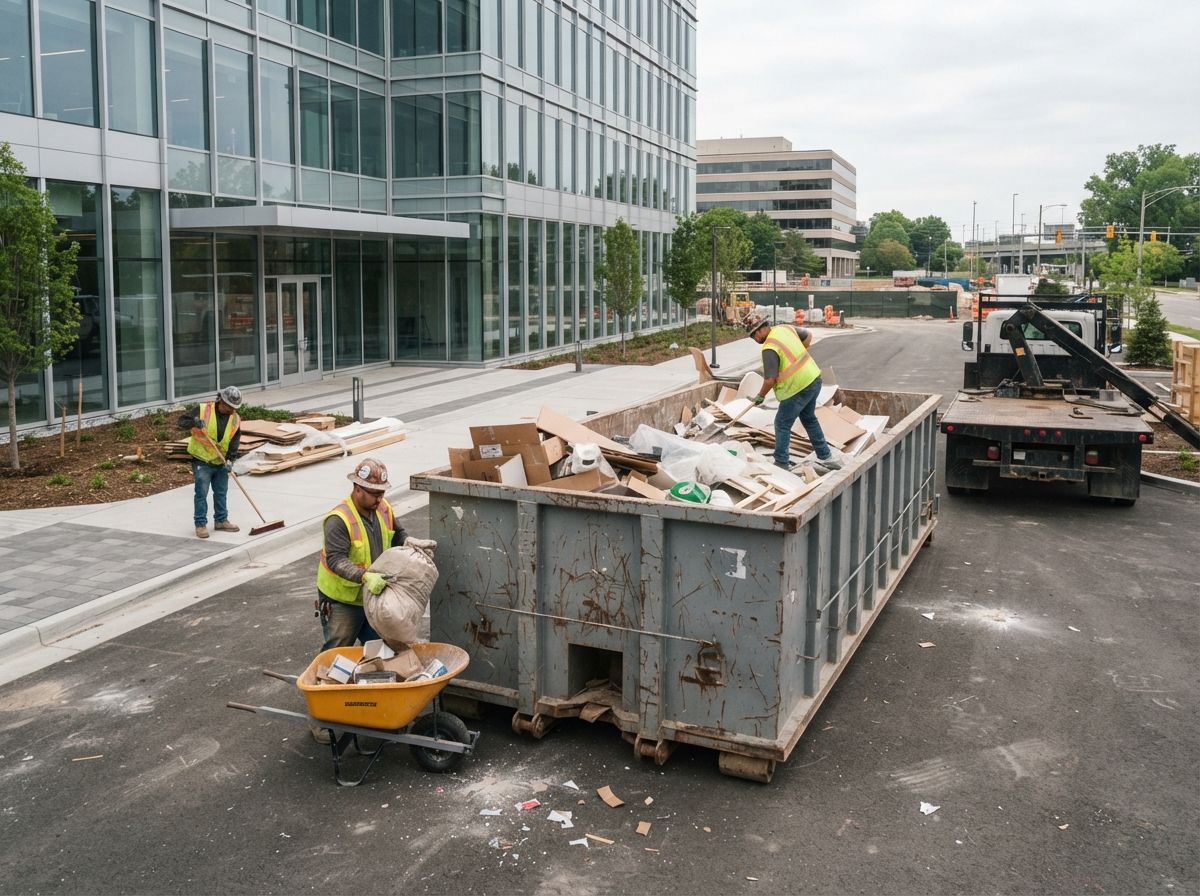
Close-out and punch-list cleanup.
The last surge before the job ends — usually underestimated, often the reason for a final unplanned swap.
Commercial and industrial accounts only. We do not provide residential service, including owner-built homes.
Container Sizes
Construction Dumpster Sizes by Project Phase
Three container sizes cover nearly all commercial construction work in Middle Georgia. The right one depends less on the size of the building than on which phase you are in and what the debris weighs. The full breakdown, with dimensions and footprints, lives on the dumpster sizes page.
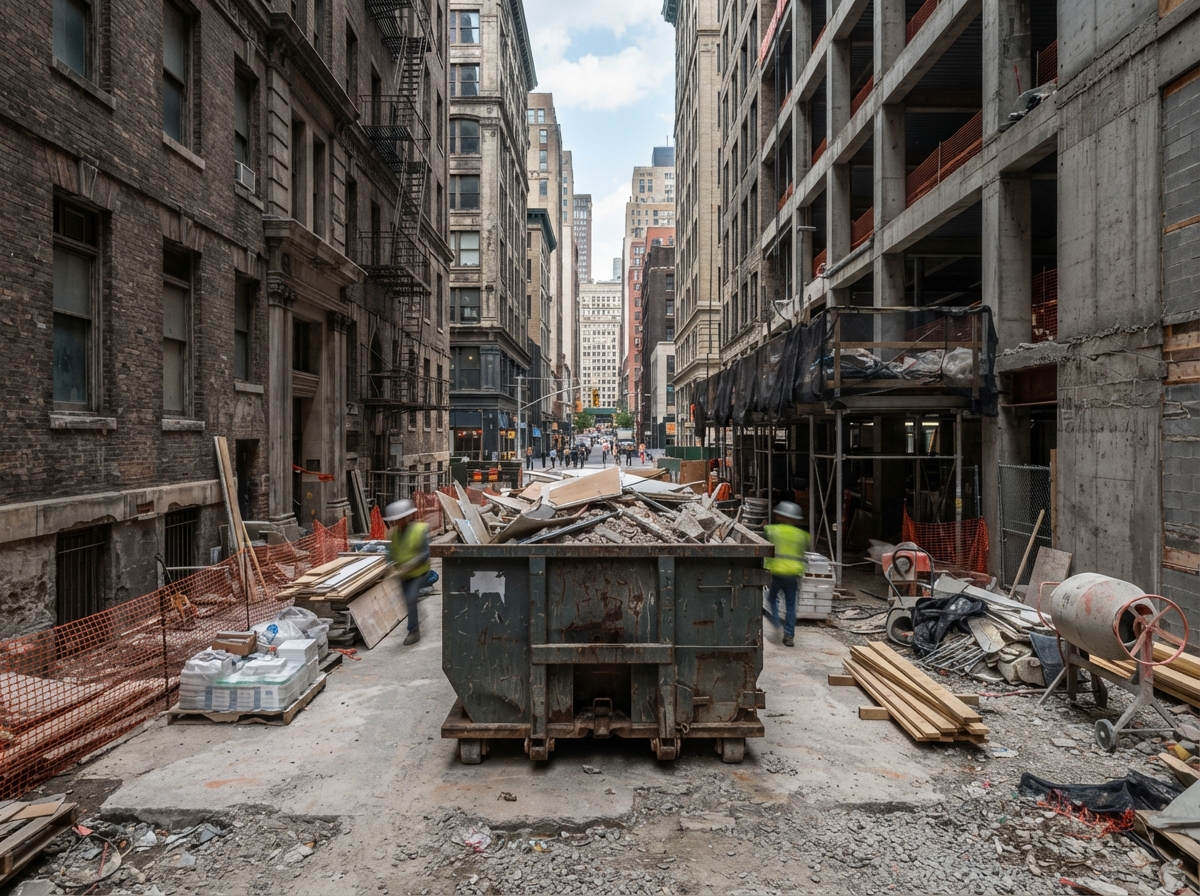
The honest choice for dense phases — selective demo, tile, plaster, and mixed rubble — where the load will hit its weight before it fills the box. Contractors often keep a 20 on site during demo and step up afterward. Container dimensions vary, and lower yardage does not guarantee a smaller ground footprint — confirm the actual length, width, height and delivery clearance for your site.
See 20-yard details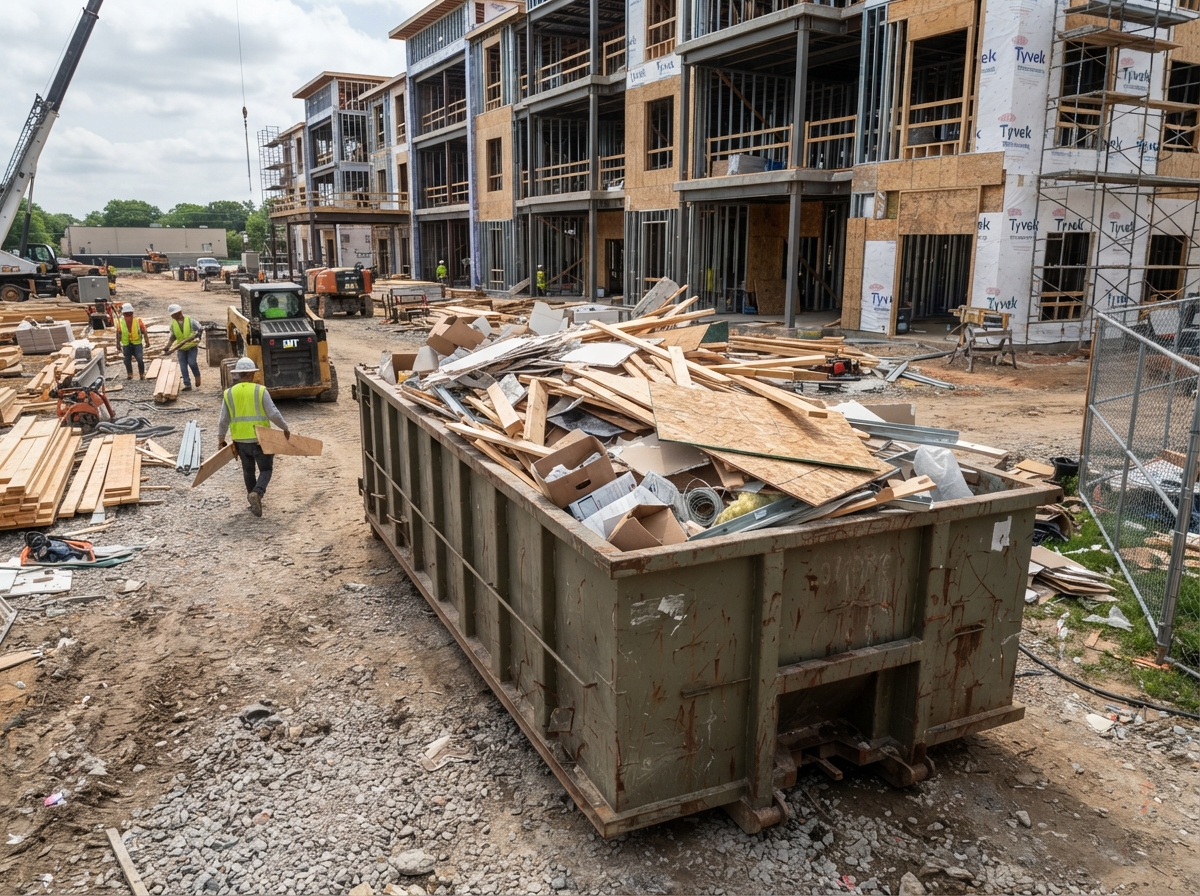
The default for active construction. Enough capacity for framing scrap, drywall, packaging, and general mixed debris. On most commercial jobs in Macon, this is the container that sits on site the longest. Container dimensions vary, and lower yardage does not guarantee a smaller ground footprint — confirm the actual length, width, height and delivery clearance.
See 30-yard details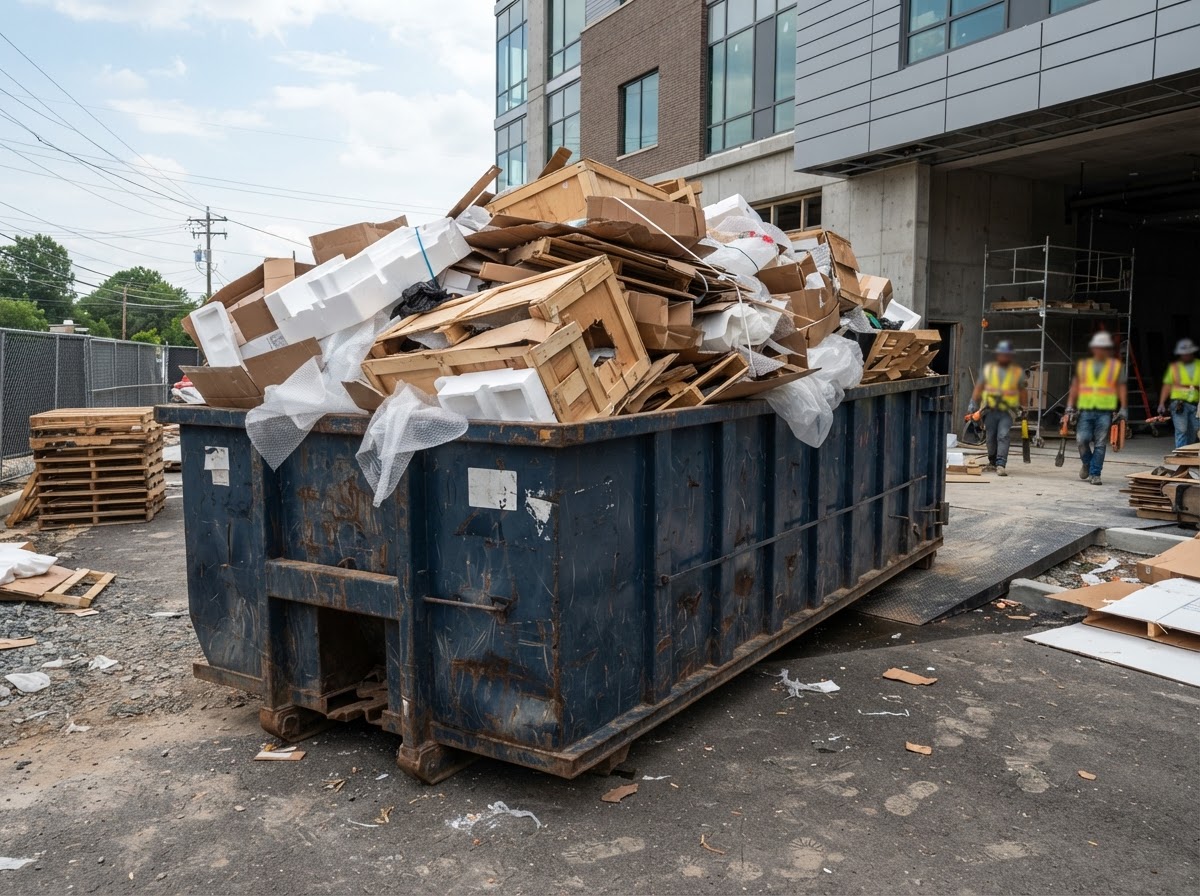
The largest standard roll-off, and the best fit for bulky, light material — fit-out packaging, crates, insulation, ductwork, and cleanout volume at close-out. It is also where compaction returns the most, because there is the most air in the load to remove. A 40-yard container is rated well over fifteen tons of static load.
See 40-yard detailsA practical way to think about it: size for the phase, not the project. Running one container from groundbreaking to punch list means it is oversized for half the job and undersized for the other half. Tell us the sequence and the rough durations, and the size and schedule get set against the phases instead of the calendar.
Accepted Materials
What Goes In a Construction Debris Dumpster, and What Doesn't
Being clear about this before delivery saves a rejected load and a return trip on a day the crew cannot spare one.
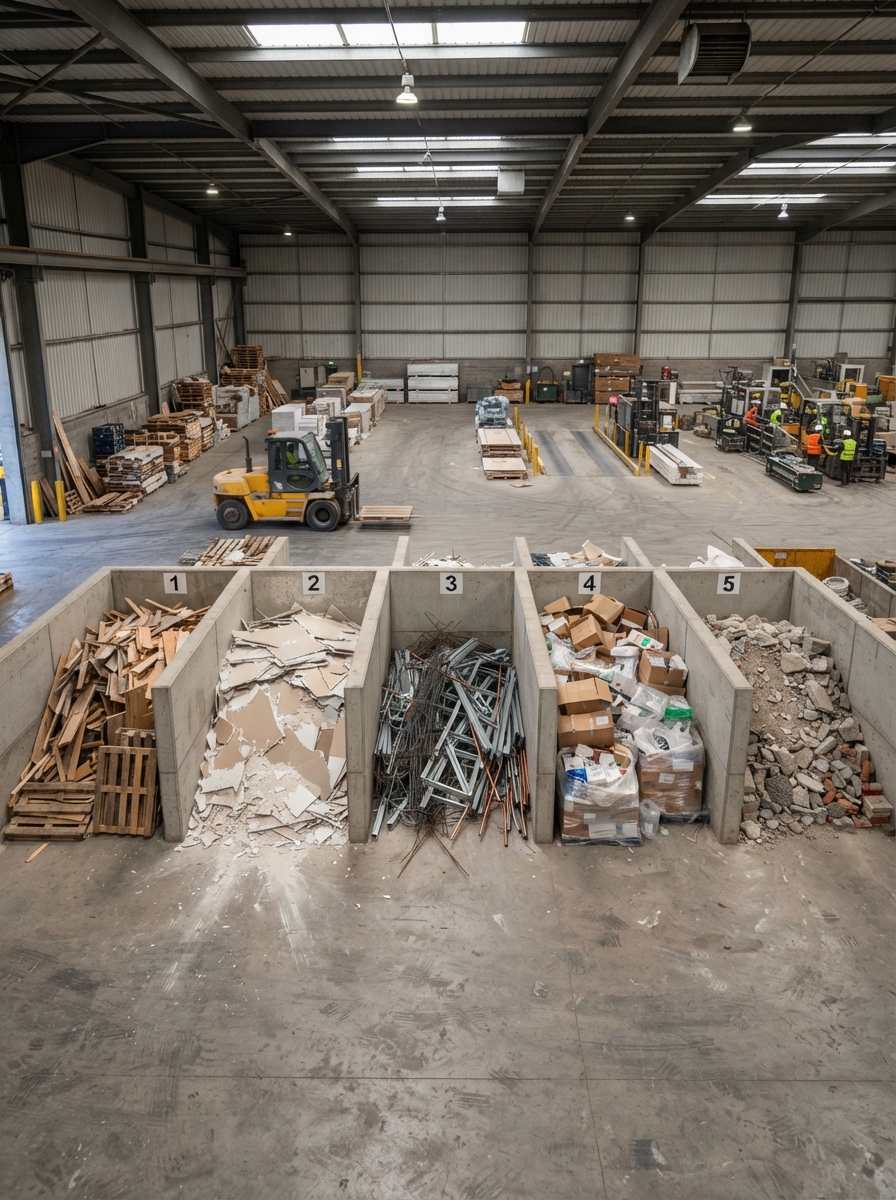
Accepted:
mixed construction and demolition debris · wood, framing scrap, and pallets · drywall and gypsum board scrap · cardboard, packaging, crating, and shrink wrap · insulation and vapor barrier · metal studs, ductwork, conduit, and mixed metals · fixtures, millwork, and casework offcuts · general jobsite cleanup waste.
Not accepted:
liquids of any kind, including paint, solvents, and fuels · dirt, soil, aggregate, and other dense no-air material · hazardous or regulated waste · sealed drums and pressurized vessels · anything the receiving hauler will not accept.
Two of those are worth explaining, because they come up on nearly every job. Dirt and aggregate are excluded partly for weight — a container full of soil hits its limit long before it looks full — and partly because there is no air in the material, so there is nothing for compaction to give back. Sealed drums and pressurized vessels are a safety exclusion: nothing under pressure goes into a container that is going to be worked.
Mixed loads are normal on construction work and we plan for them. Where a load turns into a problem is when a single dense stream — pure concrete, brick rubble, or excavated material — goes into a container sized for mixed debris. That is a different container and a different plan, and it is worth a phone call before the delivery rather than after the scale ticket.
If you are unsure about a specific material, describe it before the container goes out. A short description of the stream is usually enough for a straight answer.
Teardown vs. Buildout
When the Work Is Teardown, Not Buildout
Structural demolition, concrete removal, and heavy rubble are their own category. The weight math is different, the container sizing is different, and the compaction answer is different — dense debris sits at the bottom of what compaction can do, and some of it should not be compacted at all.
If that is the phase you are pricing, work from the demolition and concrete dumpster rental page instead. It covers weight limits, loading guidance for heavy debris, and where the honest line is on compacting dense material.
Plenty of commercial projects run both: a teardown phase up front, then construction behind it. Those get planned as one account with the container changing to match the work.
Swaps & Pulls
Swaps, Pulls, and Keeping the Container Off the Critical Path
The swap is the moment a waste plan either works or gets in the way. A few things make it predictable.
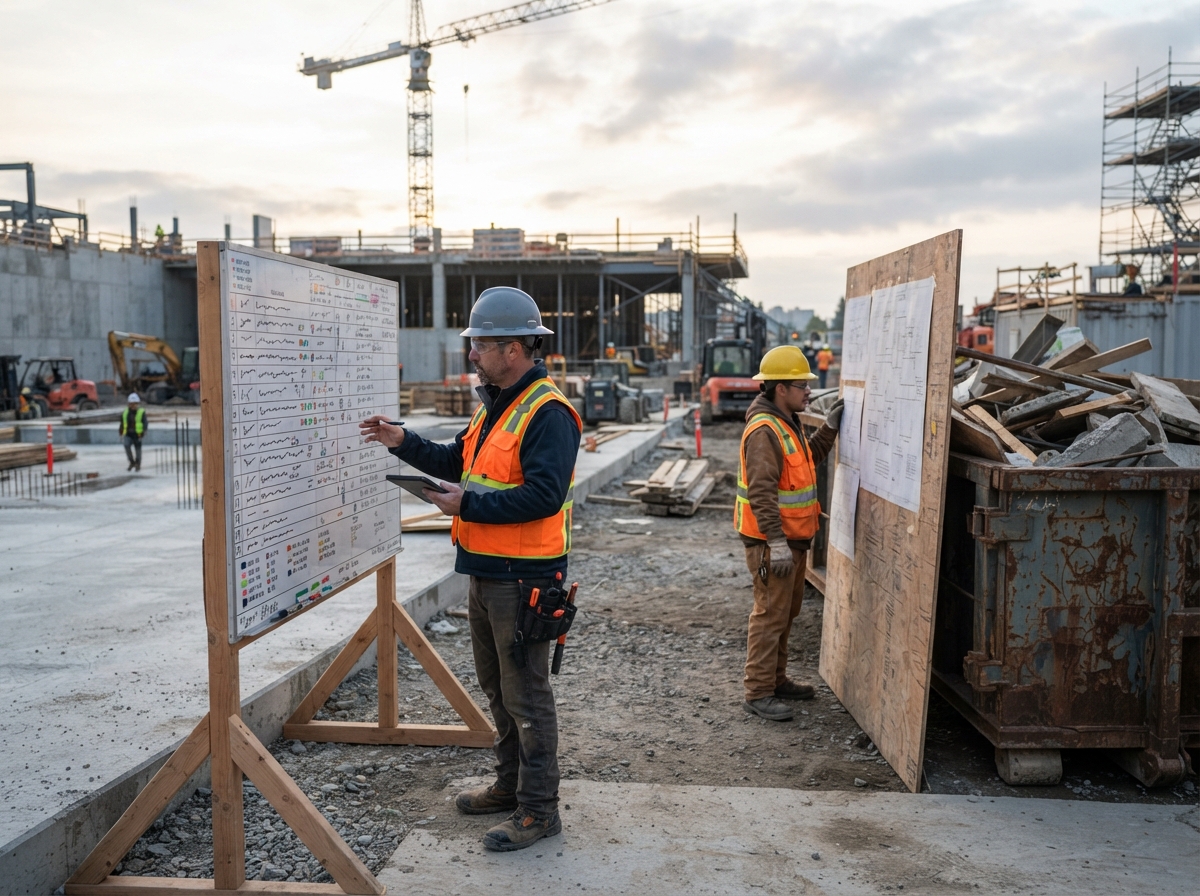
Set the cadence against the phase.
Demo weeks and close-out weeks generate far more volume than the middle of a job. A schedule built on an average will be wrong in both directions. It is better to plan for a heavier cadence during known surges and pull back when the site quiets down.
Give the surge some notice.
When a phase change is coming — the fit-out packaging landing, a punch-list push, a delivery of crated equipment — a heads-up lets the swap get scheduled ahead of the pile instead of behind it. Most of the swaps that go badly are the ones nobody saw coming.
Plan a container position that can be reached.
A swap requires the same clear approach as the original delivery. Once the slab is poured, the trailers are set, and material is staged, that access can quietly disappear. Walk the position at the start with the truck's approach in mind, not just the crew's.
Know that a swap is a full trip.
Every swap sends a truck out and back. That is why swap count, not container size, is the number that most directly drives what a job's waste line costs. It is also why reducing swaps is the lever worth pulling.
The Difference
Mid-Project Compaction: Fewer Swap Trips on the Same Container
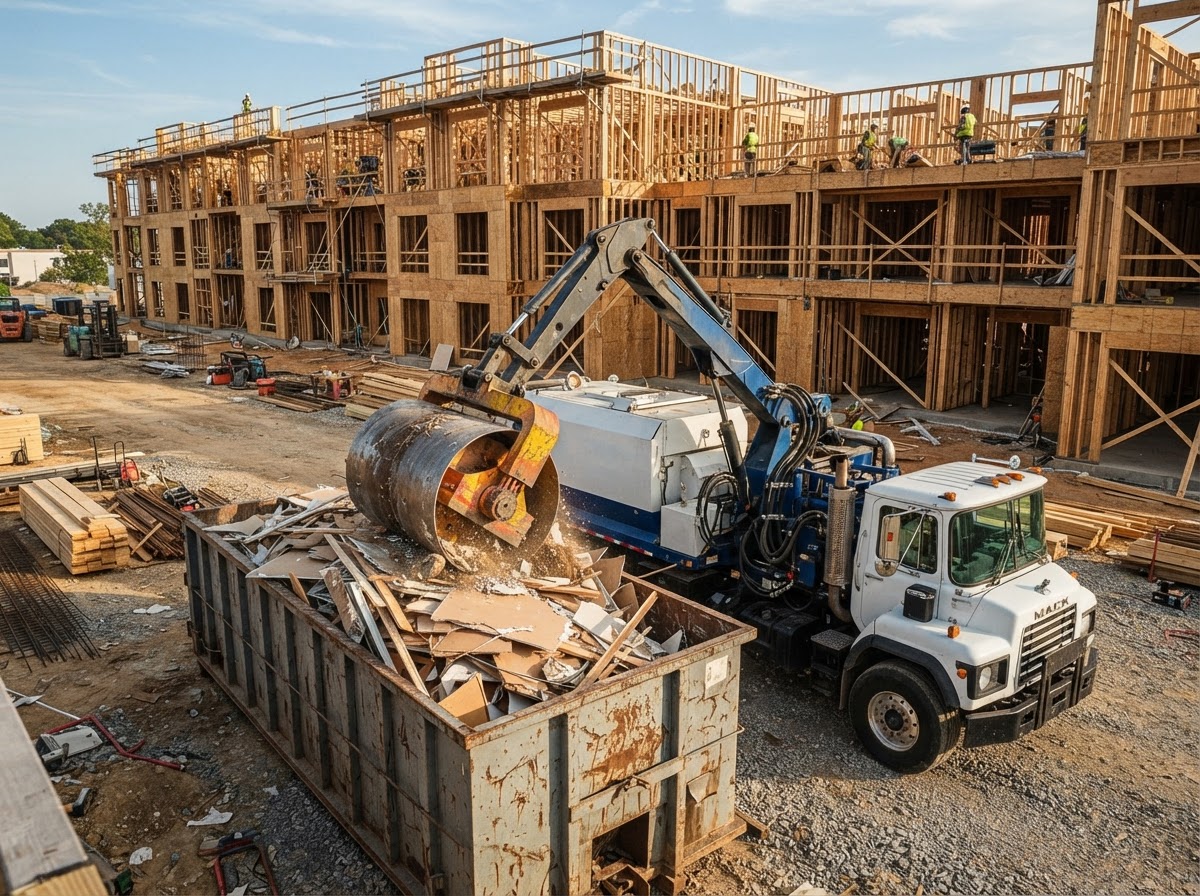
This is what makes a jobsite dumpster rental in Macon from Max Compacx different from any other box on the site. A mobile compaction unit comes to the container where it sits, works the load in place, and leaves. The container never moves, the crew never stops, and the top of the box opens back up for more debris. The visit takes about ten minutes.
Volume reduction runs up to 70%, and it is entirely material-dependent:
| Material stream | Typical volume reduction |
|---|---|
| Cardboard, packaging, recyclables | 60–70% |
| Compost and organics | 50–60% |
| C&D debris, wood and pallets, mixed metals | 40–50% |
Read that table honestly. Mixed construction debris sits in the 40–50% range, which is real but not the headline number. The fit-out and packaging phases of a commercial job behave much better than that, because crating and cardboard are almost entirely air. Plan around roughly 2:1 on mixed waste, approaching 3:1 on cardboard-heavy stretches, with one or two compaction visits between pulls.
Here is the one illustration we use, from a real service pattern on a single container: a site running twelve haul-offs a month drops to four. Monthly haul-off spend goes from about $3,600 to about $2,800 — roughly $800 a month, about a 22% reduction — and 96 fewer truck trips over a year. A construction project's numbers will look different, because a jobsite's volume is not flat across the schedule. That is what the demo and your own swap history are for. Open the Waste Savings Calculator
Two ways to start. Keep your existing container and your existing hauler and have Max Compacx compact what is already on the jobsite — nothing about the current arrangement changes, and the general contractor's disposal relationship stays exactly where it is. Or we provide the container and the compaction together as one service.
The on-site demo is free, takes about ten minutes, and happens on a container you already have. You watch the load get worked and see how much room comes back before anything is agreed to.
The Process
How a Jobsite Dumpster Rental in Macon Works, Start to Finish
Max Compacx runs the same sequence on every commercial job, whether it is a single fit-out or a multi-phase build.
You describe the job.
Project type, rough duration, the phases and their order, the material you expect, and what the site looks like. That is enough to size a container and set a starting cadence.
Free on-site demo.
About ten minutes, on a container already on your site or another of your properties. You see the compaction result on your own material rather than taking our word for it.
Delivery and placement.
The container is set where you specify, with the doors facing the way the crew loads, on a surface that will hold a loaded box and a truck.
The crew fills it.
No change to how anyone works. Breaking down crates and boxes still helps, and it helps more than most people expect.
Compaction visits.
A mobile unit comes to the container in place — typically once or twice between pulls, more during packaging-heavy phases. The load is worked, the top opens back up, and the box keeps taking debris.
Swap or pull.
When the container is genuinely full, by weight or by volume, it gets hauled and either returned empty or replaced with another so the site is never without a box.
Every compaction visit includes a before-and-after inspection with photo documentation. The compaction drum is narrower than the container, so it works the load without contacting the walls. There is no hydraulic downforce driving against the box, and safeguard wheels and end guards keep the unit off the container structure. Our operators run a zero-touch policy on your equipment — nothing on the site gets handled that does not need to be.
That matters most on the arrangement where the container is not ours. If the box on the jobsite belongs to your hauler, it goes back the way it came.
Delivery & Access
Delivery and Jobsite Access in Macon and Bibb County
Max Compacx works from a Hawkinsville Rd base in Macon, which puts most of Bibb County and the I-75 and I-16 commercial corridors within a short run. Jobsite delivery has a few more variables than a finished commercial property, so it is worth planning:
Surface and ground conditions.
A loaded roll-off is heavy and the truck that sets it is heavier. Concrete and compacted gravel handle it. Fresh asphalt can mark under sustained load in Georgia summer heat, and a graded site after a wet stretch can bog a truck down completely. If placement is on asphalt or anywhere marking is a concern, say so and we will bring boards.
Approach and clearance.
A roll-off truck needs roughly sixty feet of straight-line approach to set and retrieve a container, plus overhead clearance clear of power lines, canopies, and scaffold. On active sites the usual obstructions are stacked material, a concrete pump, parked crew trucks, and a gate nobody has the key to.
Position that survives the schedule.
The best container position on day one is sometimes unreachable by month three. Set it where the approach will still exist after the slab, the trailers, and the laydown area are in place.
Which way the doors face.
Doors should open toward where the debris comes from. It sounds obvious. It gets missed on nearly every job, and it costs the crew time on every load.
Site hours and occupied properties.
Renovation and fit-out work on an occupied building usually has restricted delivery windows. Tell us the windows and the service gets scheduled inside them, before or after the trade day if that is what it takes.
Why Max Compacx
Why Macon Contractors Work With Max Compacx

Compaction is part of the plan, not an upsell.
For suitable jobsite debris, on-site compaction can create more capacity before the next swap. Material suitability varies by project phase.

You do not have to change haulers.
If the disposal relationship on your projects is already set, keep it. We compact the container that is already on the site. That is the easiest way for most contractors to start, and it does not touch anything you have already negotiated.

The schedule bends around the job.
Deliveries, compaction visits, and swaps get set to your site hours and phase changes, not to a route sheet. Waste service should be invisible to the trade schedule.

Straight answers about fit.
Dense material does not compress much, and a container that only leaves once during a whole phase does not have enough trips to save. We will say that before you commit, not after. The ten-minute demo exists precisely so the claim gets tested on your debris.

One account across multiple sites.
Contractors running more than one job in Macon and Middle Georgia work through a single account and a single number rather than starting over on every address.

Documented handling.
Before-and-after inspection and photo documentation on every visit, on your equipment or ours.

Service Area
Service Area: Macon, Bibb County and Middle Georgia
Max Compacx delivers construction containers and provides on-site compaction across Macon and Middle Georgia, working from a Hawkinsville Rd base with quick access to the I-75 and I-16 corridors that most commercial jobsites in the region sit near. Regularly served communities include Macon, Byron, Gray, Forsyth, Perry, Lizella, and Centerville, along with the surrounding Bibb County commercial and industrial corridors.
If a jobsite sits outside the towns listed, ask. Coverage depends on the route and the schedule, and it takes about five minutes to find out.
Max Compacx
5900 Hawkinsville Rd, Macon, GA 31216
Monday – Friday, 7am – 5pm
Construction Dumpster Rental in Macon, GA: Common Questions
Related Services
Roll-Off Dumpster Rental
the container service itself: how delivery, compaction, and pulls work on a commercial account.
Dumpster Sizes: 20, 30 and 40 Yard
dimensions, footprints, weight considerations, and matching a size to your material.
Demolition & Concrete Dumpster Rental
teardown, concrete, and heavy debris, including where compaction stops making sense.
On-Site Waste Compaction
how the mobile unit works a container in place and which material streams gain the most.
Start Your Construction Dumpster Rental in Macon, GA
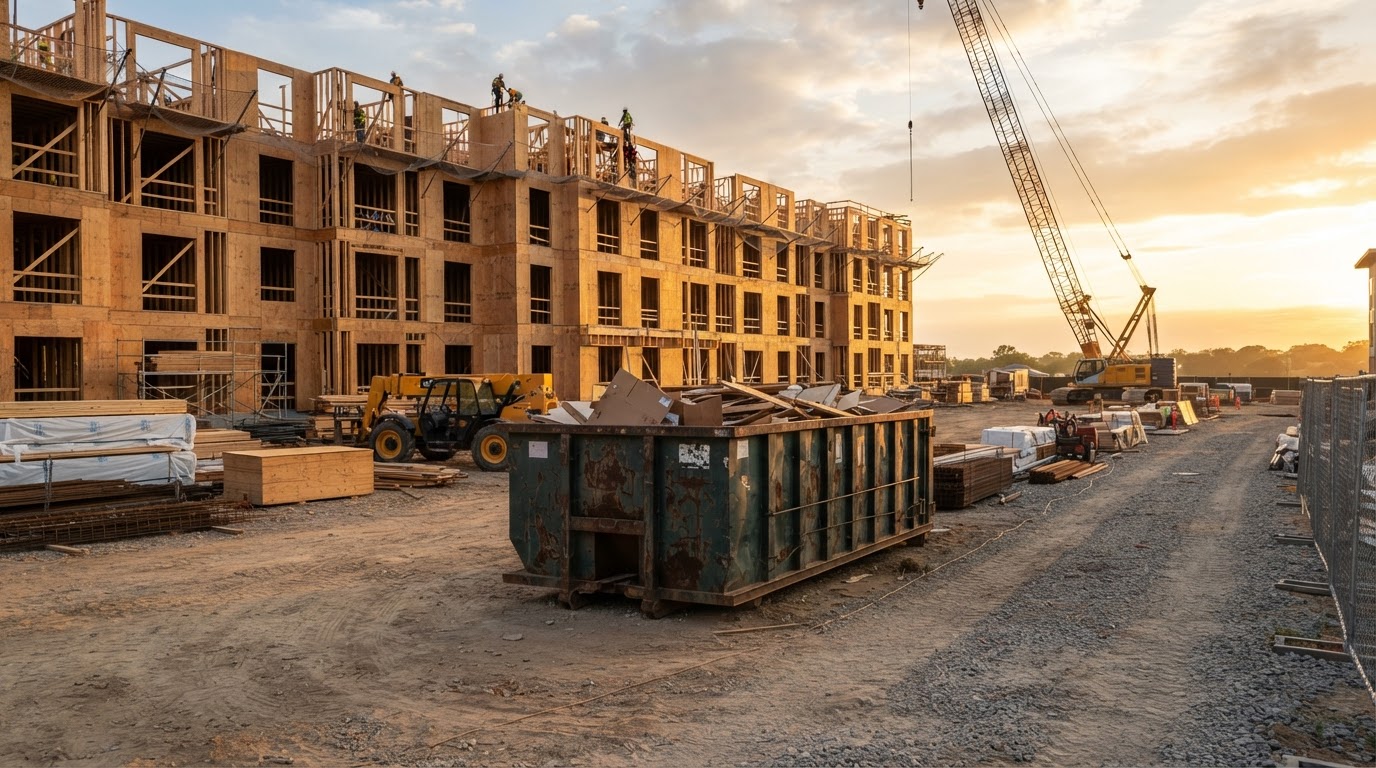
Tell us the project, the phases, and where the container would sit. We will size it, set a swap cadence around the schedule, and give you an honest read on whether compaction changes your numbers on this particular job. The on-site demo is free and takes about ten minutes.
Max Compacx
5900 Hawkinsville Rd, Macon, GA 31216
Monday – Friday, 7am – 5pm