
Contractor Dumpster Rental — Macon, GA
Contractor Dumpster Rental in Macon, GA
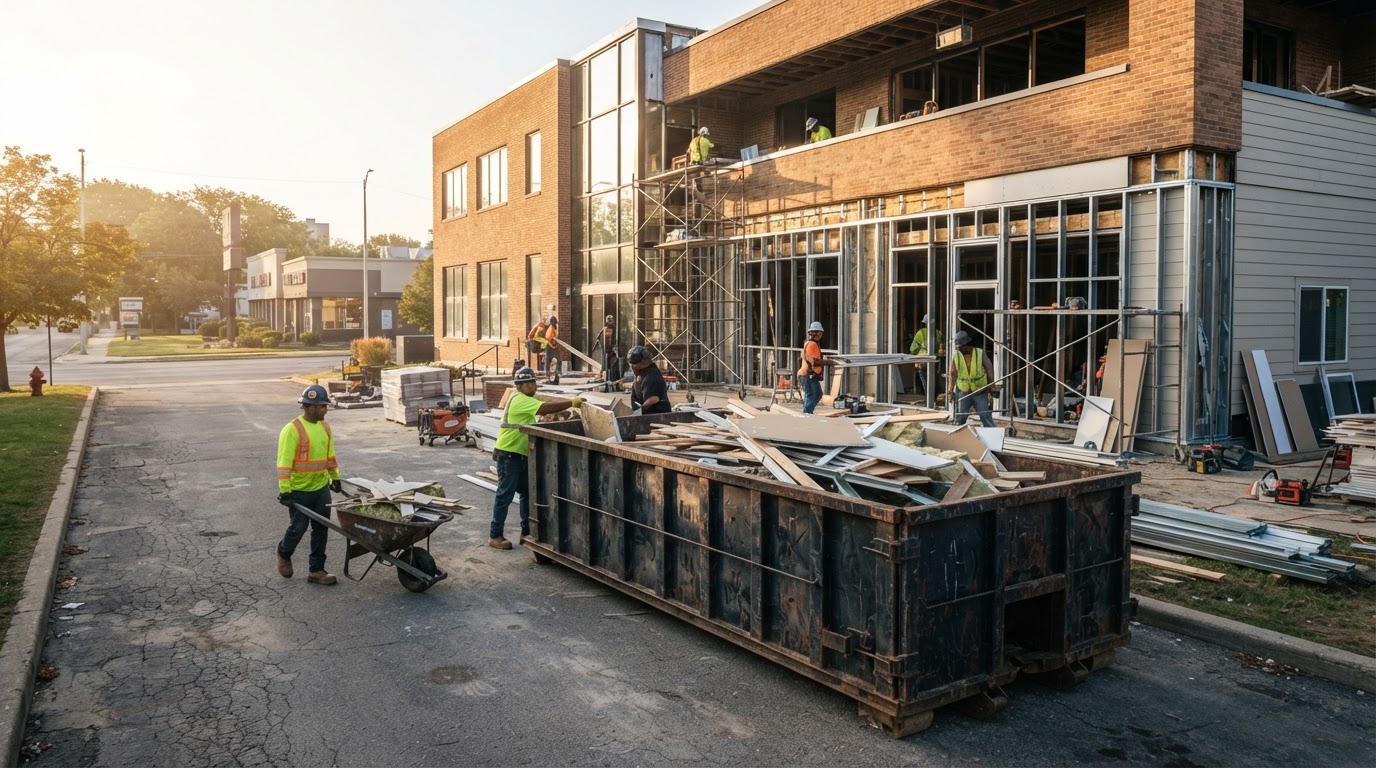
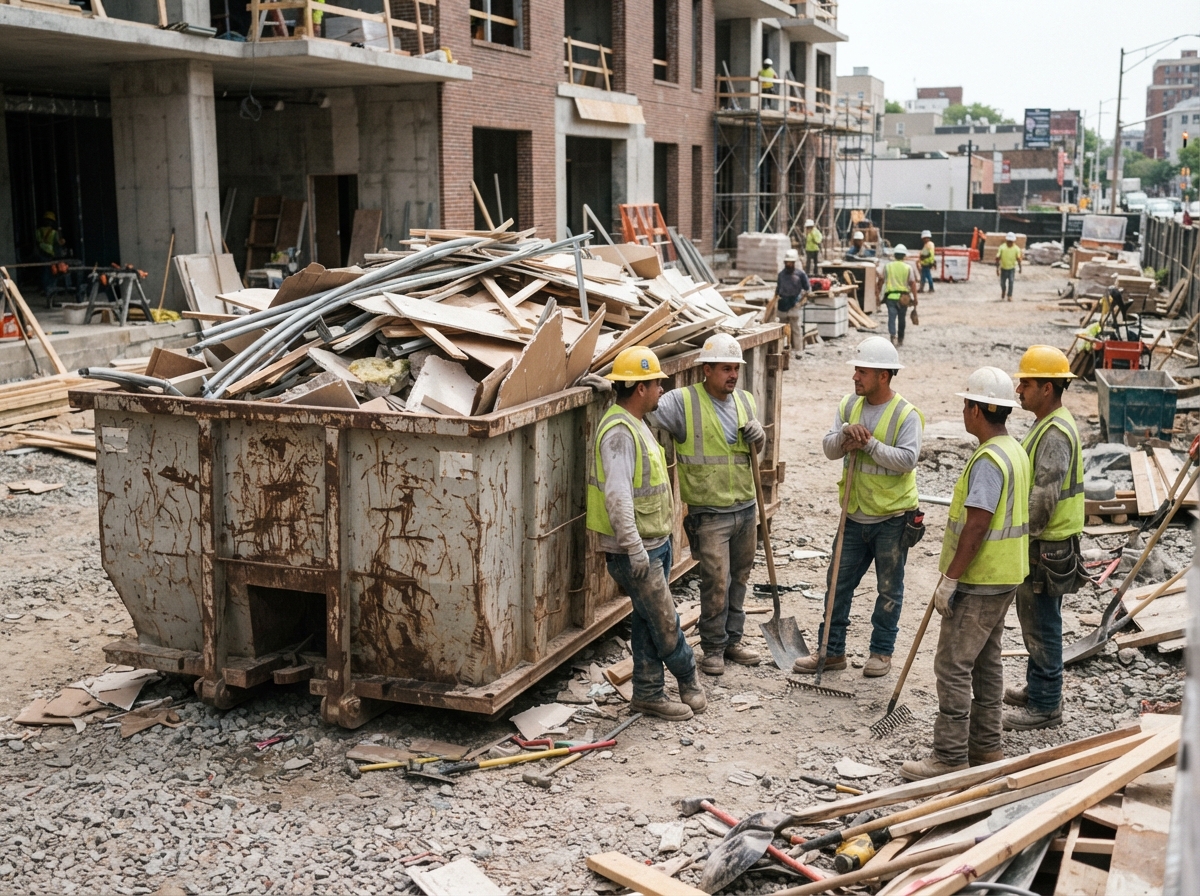
Max Compacx sets up contractor dumpster rental in Macon, GA as an account, not a series of one-off orders. One phone number, one point of contact, containers placed across every jobsite you are running, and a service schedule that follows your crews from address to address. Most contractors do not have a dumpster problem. They have a dumpster logistics problem.
We work with general contractors, remodelers, renovation crews, specialty trades, and commercial property investors across Macon, Bibb County, and the Middle Georgia towns around them. If you are managing more than one active job at a time, this page is about how the container side of that gets handled.
- Macon, GA based
- Monday – Friday, 7am – 5pm
- Commercial & Industrial Accounts
- One account, every jobsite
The Real Cost
What Contractor Dumpster Rental in Macon, GA Actually Has to Deliver
A container is the easy part. Every hauler in Middle Georgia owns boxes. What separates a working arrangement from a frustrating one is everything around the box: whether it arrives the day the crew does, whether the swap happens before the pile starts growing beside it, and whether you have to re-explain your whole operation every time you call.
Contractors get burned in three predictable places. The first is arrival. A container that shows up two days late does not cost you a delivery fee — it costs you a crew standing around, or worse, debris stacked on a floor that the next trade needs clear. The second is the swap. A full box on a Thursday afternoon with nobody scheduled until Monday stops the job just as effectively as a missing permit. The third is the account itself: a new order, a new credit check, and a new set of site instructions for every address, when you are running four jobs and have run forty with the same company.
The fix is not complicated, but it does require a company that is set up for repeat work rather than one-time rentals. Your addresses live on one account. Your site instructions carry over. When you call and say the Vineville job needs a swap, that means something to whoever picks up.
Then there is the part almost nobody in this market offers. The container on your jobsite can be compacted in place, so it holds more before it has to leave. On tight-margin renovation work, that is fewer swap trips billed against the job.
Is It Time?
Signs Your Current Container Setup Is Costing You Money
Most contractors absorb waste-hauling friction as a cost of doing business until somebody points at it. A few signs it is worth looking at:
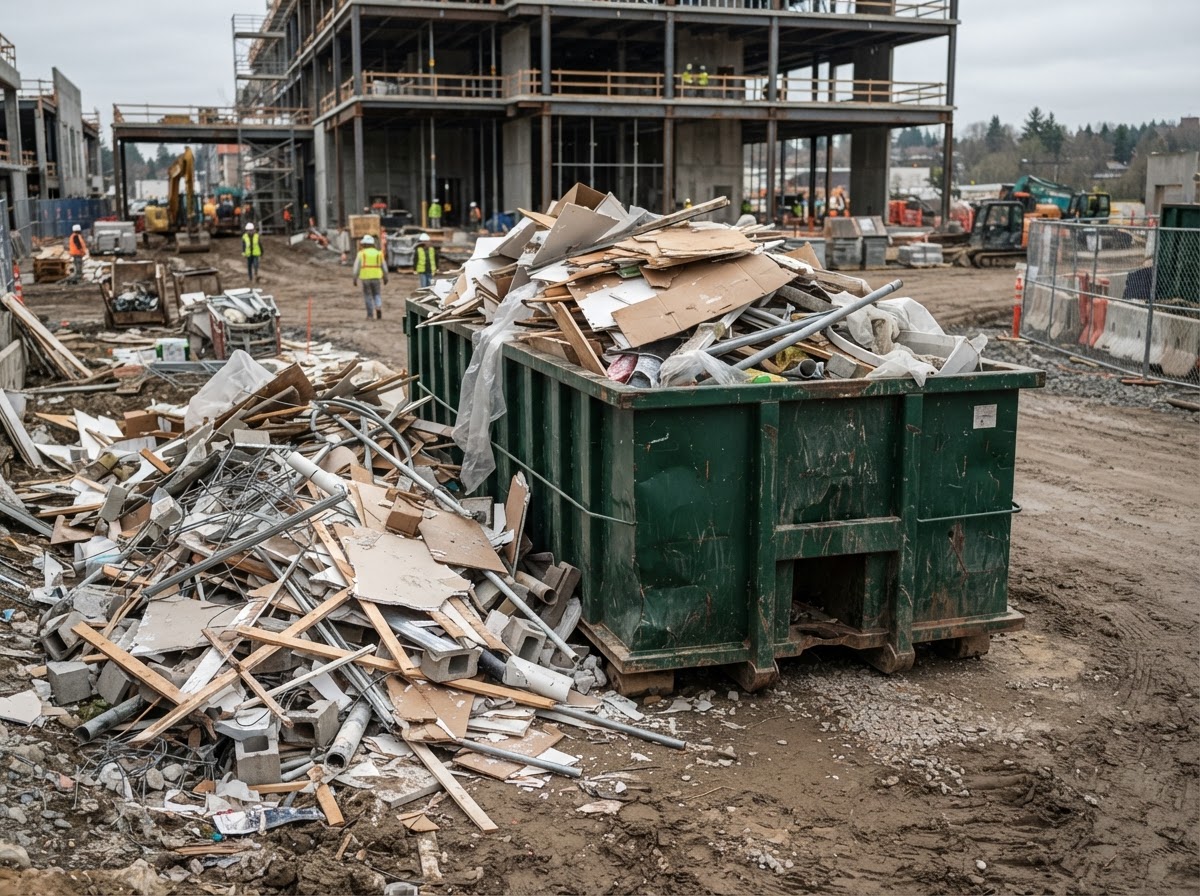
Debris piles up beside the box between swaps.
The container is undersized, the swap cadence is wrong, or both. Either way, somebody is getting paid to move the same material twice.

Your crews are hand-carrying debris across a site
because the container could not be placed where the work is.

You are calling for swaps at the last minute.
On-call service outside a set cadence is the most expensive way to move a container, and it is the one most contractors default to.
Every job means a new order.
If setting up disposal takes the same hour of office time on job number thirty as it did on job number one, the account structure is wrong.
Boxes leave light.
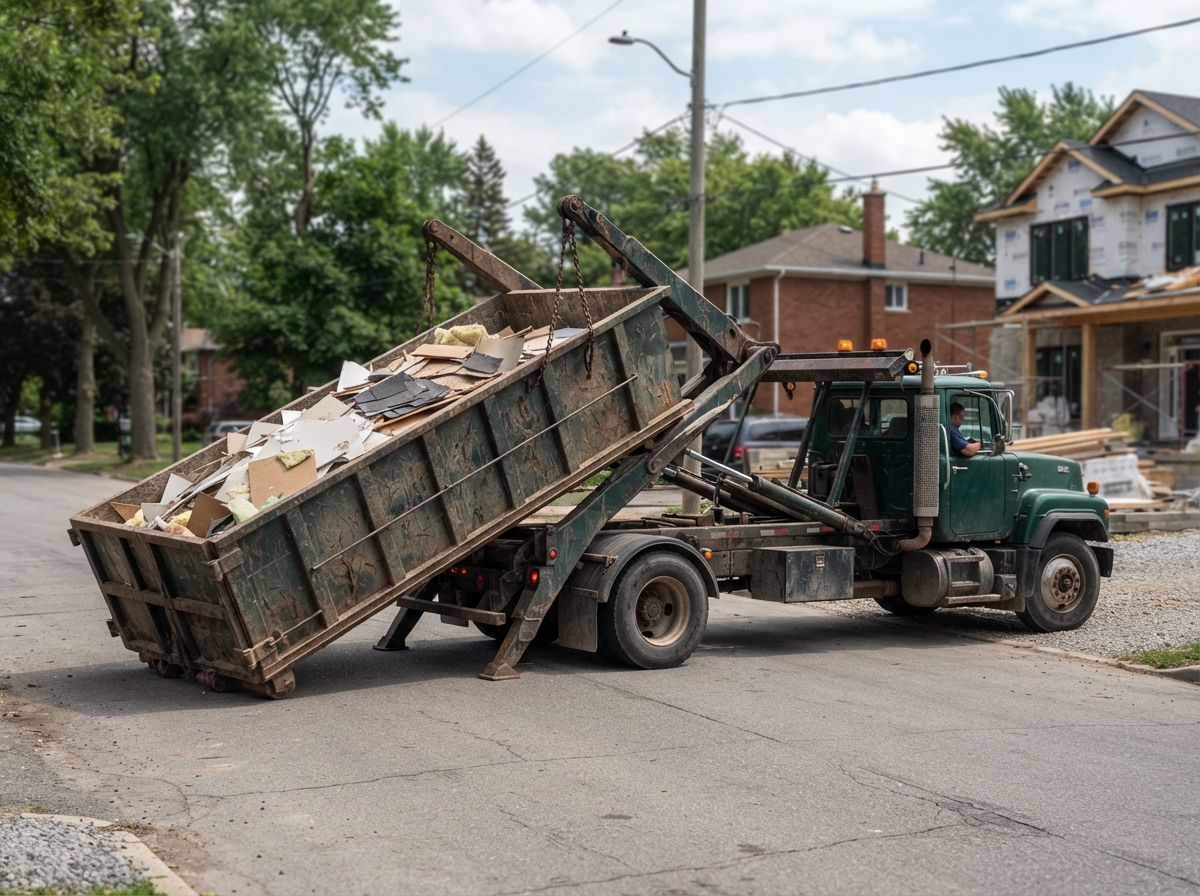
A container full of framing scrap, cabinet boxes, packaging, and drywall offcuts is mostly air. If it looks full at half its rated weight, you paid for a trip that hauled space.
Disposal is eating a line item you priced tight.
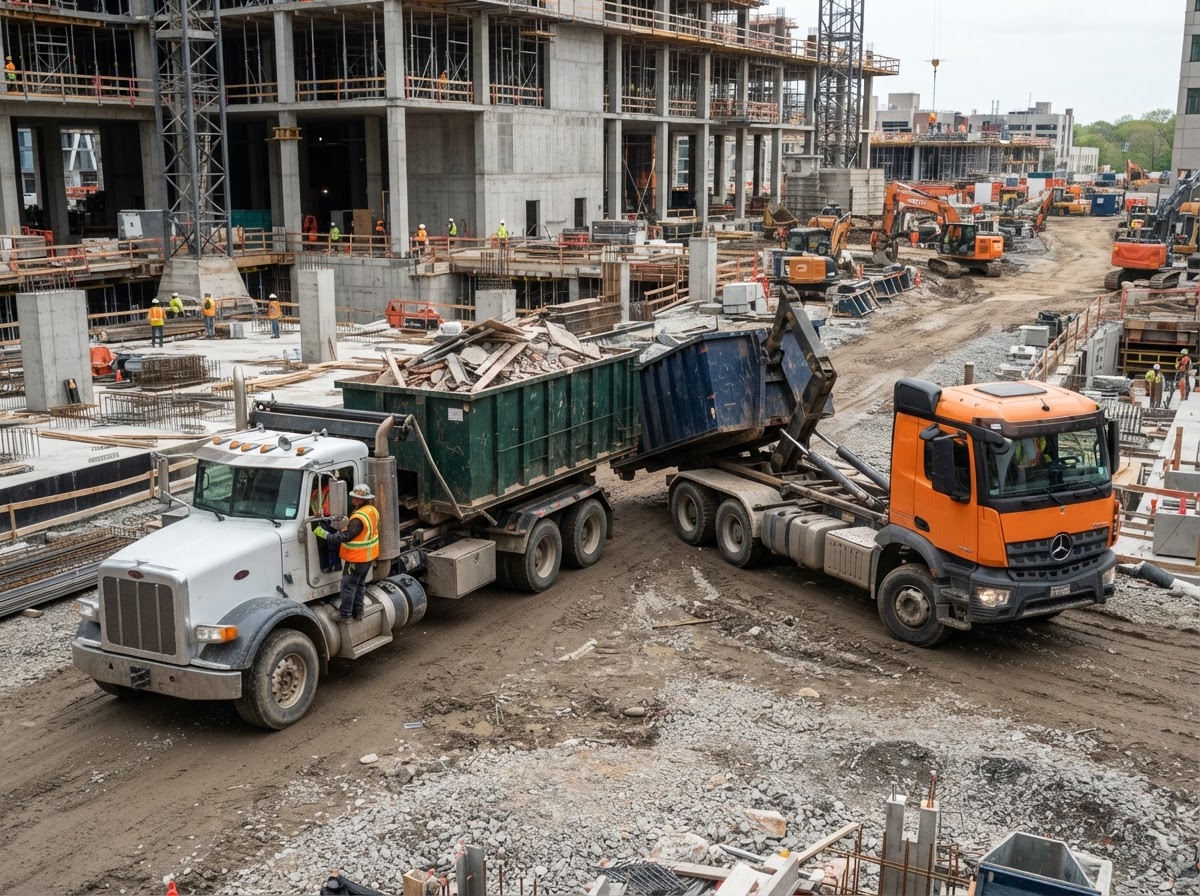
On renovation and fit-out work where the margin is already thin, swap count is one of the few cost drivers still in your control.
None of these are emergencies on their own. Together they usually mean the container plan was built for one job and never updated for the way you actually work now.
Who We Serve
Who These Accounts Are Built For
Different contractors put very different material in a box, on very different rhythms. The account gets built around which one you are.
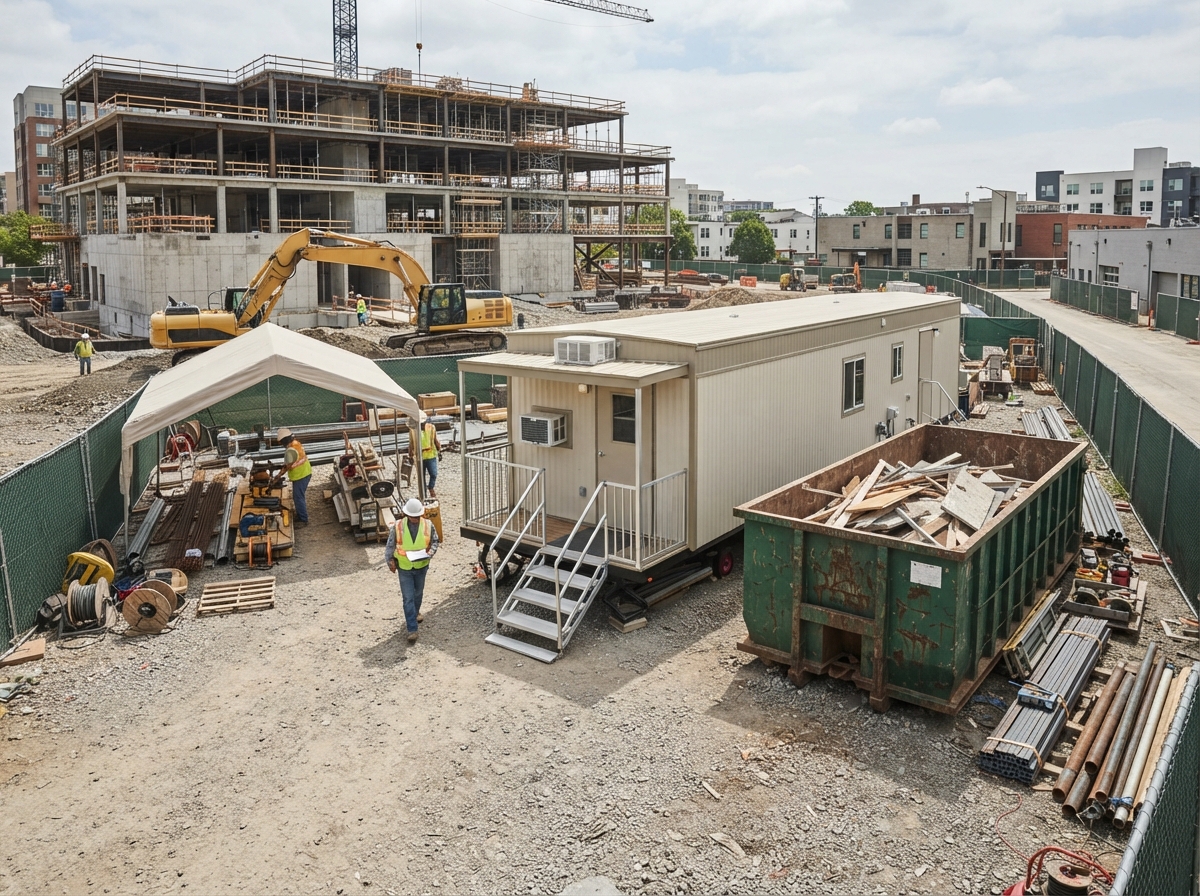
Multiple active jobs, multiple phases, multiple trades pushing debris into the same container. GCs need containers that move with the schedule and a single point of contact who can redirect a delivery without a new order being written. If you are managing one large commercial build and the question is phasing and swap cadence on that specific site, the construction dumpster rental page covers that logistics side in more depth.
Interior demo, cabinetry, flooring, drywall, trim, and packaging, usually on a tight site with limited placement options. Renovation debris is bulky and light, which makes it one of the better candidates for on-site compaction. Middle Georgia has a deep stock of older commercial buildings and mid-century housing, and a steady amount of that stock is being reworked at any given time.
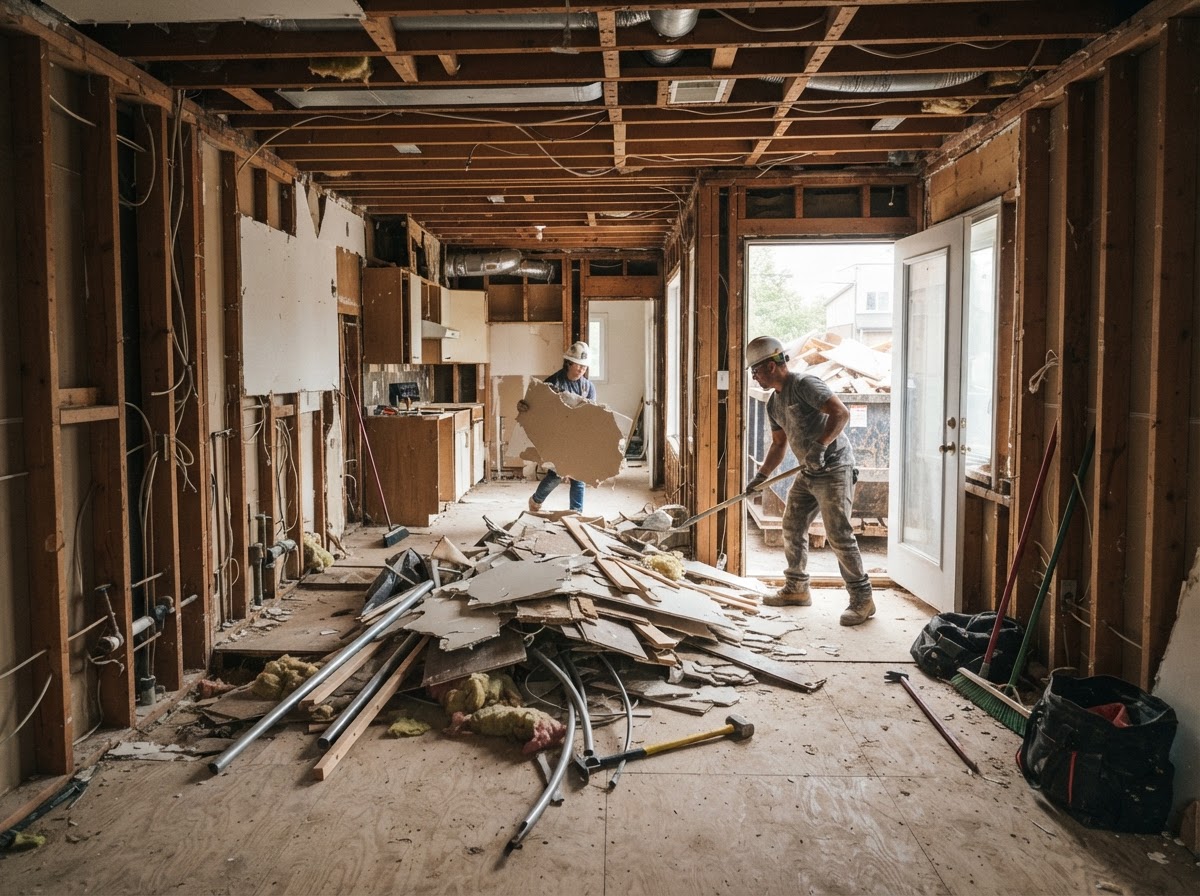
Fast turnarounds, heavy front-end cleanout volume, then a long tail of finish debris. The container schedule needs to spike and then drop. Accounts are commercial — the arrangement is with the contractor or the investing entity, not with a homeowner. Max Compacx does not provide residential service, so if you are the crew doing the work, the account is yours.

Framing, drywall, flooring, mechanical, and electrical crews often need a container for a defined window inside somebody else's schedule. Placement and access matter more than size. Roofers sit in this group too, but tear-off work has its own weight and container rules — see roofing dumpster rental for shingle loads and tear-off day sequencing.
Commercial and industrial accounts only. We do not rent containers to homeowners.
The Account
One Account, Every Jobsite: How Recurring Service Runs
This is the part that makes the arrangement worth setting up. Max Compacx keeps one account for your company and hangs every address off it, so a container at a Macon fit-out and a container at a Byron renovation are two line items on one relationship rather than two separate rentals.
Your site instructions carry. Gate codes, placement notes, which surface takes the box, who to call on site, and what time of day trucks can be there — recorded once per address and reused. New job, new address, same account.
Deliveries get scheduled against your build calendar. If you know the demo phase starts the second week of next month, the container gets booked then, not the morning your crew shows up and finds nowhere to put drywall.
Swaps are cadence-based where the volume is predictable and on-call where it is not. Production-style work — repeat fit-outs, multifamily turnovers, a run of similar renovations — settles into a rhythm quickly. One-off jobs stay on call.

One point of contact. You call and say which job. Nobody makes you re-describe the operation.
Billing consolidates. Job-level detail without a separate account per site, which matters when disposal is a cost you are allocating back to a specific project.
The practical effect: setting up the container on job number twelve should take a phone call, not an intake process. If it is still taking an intake process, that is the thing to fix.
The Number That Matters
How Often Contractor Containers Get Swapped
Swap frequency is the number that quietly sets what disposal costs on a job. It is worth knowing yours before you price the next one.
A renovation or fit-out generates waste in waves. Demo week fills a container fast and with the bulkiest material of the whole job. The middle of the job is slower and steadier — packaging, offcuts, and trash. Finish work produces less volume but produces it right when the site needs to look clean for a walkthrough. A single fixed cadence set on day one will be wrong for at least two of those three phases.
What usually works is a container sized for the heaviest phase and a swap schedule that flexes. Demo week may need two pulls. The middle of the job may need one every couple of weeks. Setting that up front, rather than reacting to a full box, is most of the difference between a container that helps and a container that becomes somebody's daily problem.
When compaction is part of the arrangement, the rhythm changes again. A mixed jobsite container typically takes one or two compaction visits between swaps, which stretches the same box across more of the job. On packaging-heavy work — a fit-out full of fixtures, appliances, and crated material — it often supports more.
We will tell you when it does not pencil out. If a job only runs three weeks and the container leaves twice total, there are not enough trips to save, and compaction will not change your numbers. That is a straight answer worth having before you agree to anything.
Three Options
Swap It, Size Up, or Compact It
When a jobsite container keeps filling before you want it to, there are three moves. Which one is right depends on the material and the site.
The default, and usually the most expensive, because every swap is a full truck trip billed against a job you already priced. It is genuinely the right answer during demo weeks and hard deadlines, where volume is real and time is the constraint.
Going from a 20 to a 30, or a 30 to a 40, buys volume — if the site has room for the larger box and the material is light enough that you fill the space before you reach a weight limit. On a downtown Macon renovation with one usable parking area, sizing up is frequently not an option at all.
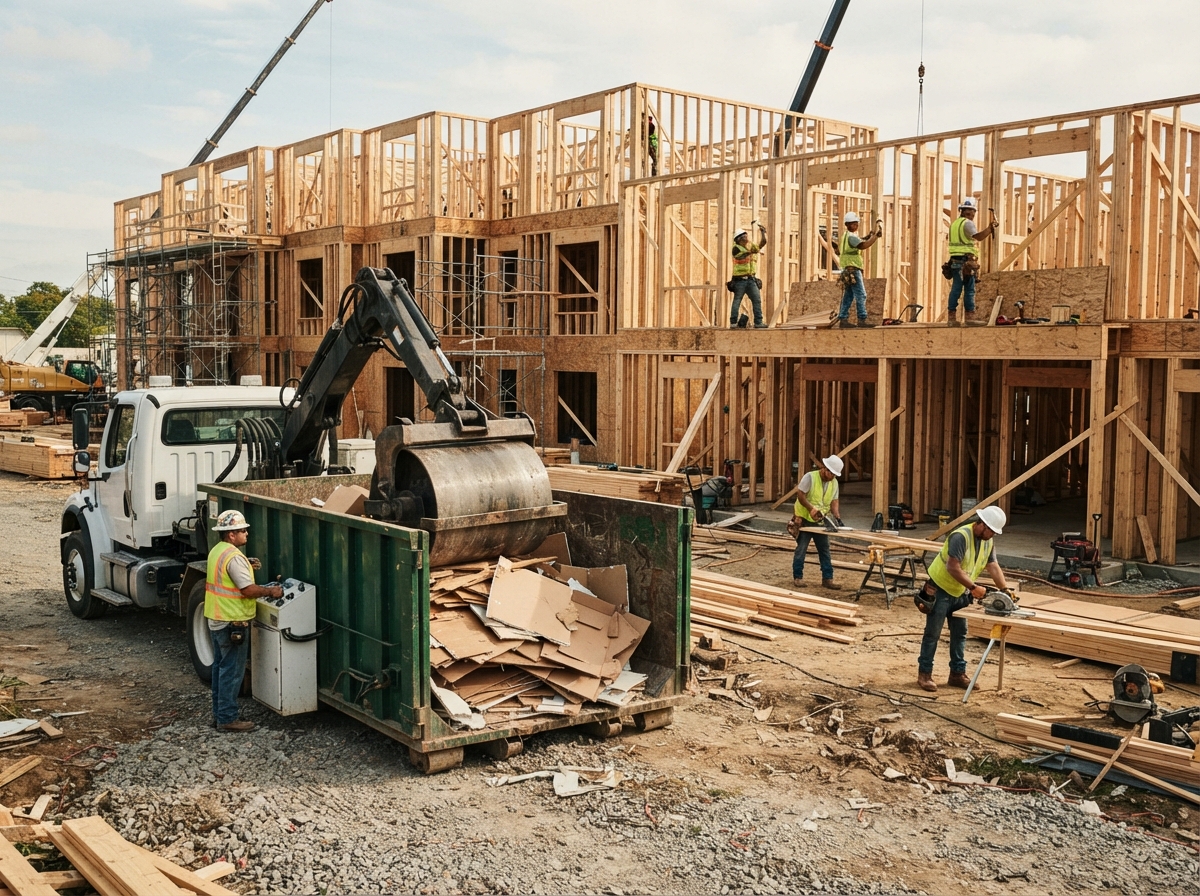
The container stays the same size, in the same spot. A mobile unit works the load in place, the top opens back up, and the box keeps taking debris. Plan around roughly 2:1 on mixed waste; packaging-heavy loads approach 3:1.
The honest version: compaction wins when your load has air in it and the job runs long enough for the reduction to matter. It does not win on dense material with no air in it to begin with — and dirt, soil, and aggregate are not material we take in any case. If your debris is mostly heavy teardown material rather than renovation waste, tell us before the container is sized, because the weight math works differently and the answer may be a smaller box on a tighter schedule.
The Difference
How On-Site Compaction Changes Contractor Margins
Here is the difference between a container from Max Compacx and any other box on a Macon jobsite: ours gets worked before it goes. A mobile compaction unit comes to the container in place. Nothing is transferred, nothing is moved, and the box does not leave the site until it is genuinely full rather than full of air.
Volume reduction runs up to 70%, and it is entirely material-dependent:
| Material stream | Typical volume reduction |
|---|---|
| Cardboard, packaging, recyclables | 60–70% |
| Compost and organics | 50–60% |
| C&D debris, wood and pallets, mixed metals | 40–50% |
Contractor debris sits across that range. Fixture crates, appliance boxes, and packaging are at the top. Framing scrap, pallets, and mixed renovation debris land in the C&D band — real reduction, just not the headline number. Dense material near the bottom may not be worth compacting at all, and we will say so on your material rather than after the invoice.
Weight tells the same story from the other side. A loose load often weighs somewhere around two to three tons when the container looks full. A properly compacted load can approach eight to twelve tons, near the legal DOT payload ceiling at roughly 95% of what the truck is permitted to carry. Same box, same trip, several times the material.
The margin framing is simple: swap count is a cost line you control, and it is one of the few on a fixed-price job that can move after the bid is signed. Here is the one illustration we use, from a real service pattern on a single container: a site running twelve haul-offs a month drops to four. Monthly haul-off spend goes from about $3,600 to about $2,800 — roughly $800 a month, about a 22% reduction — and 96 fewer truck trips over a year. Your job will not look identical to that one. That is what the demo is for.
Two ways to start. Keep the container and hauler you already use and have us compact what is on your site — nothing about your current arrangement changes. Or we provide the container and the compaction together as one service.
The free on-site demo takes about ten minutes on a container you already have. The crew keeps working; you watch how much room comes back before anything is agreed to.
Container Sizes
Which Container Size for Which Kind of Job
Three sizes cover nearly every contractor application in Middle Georgia. Full dimensions and weight detail live on the sizes page; this is the short version for job planning.
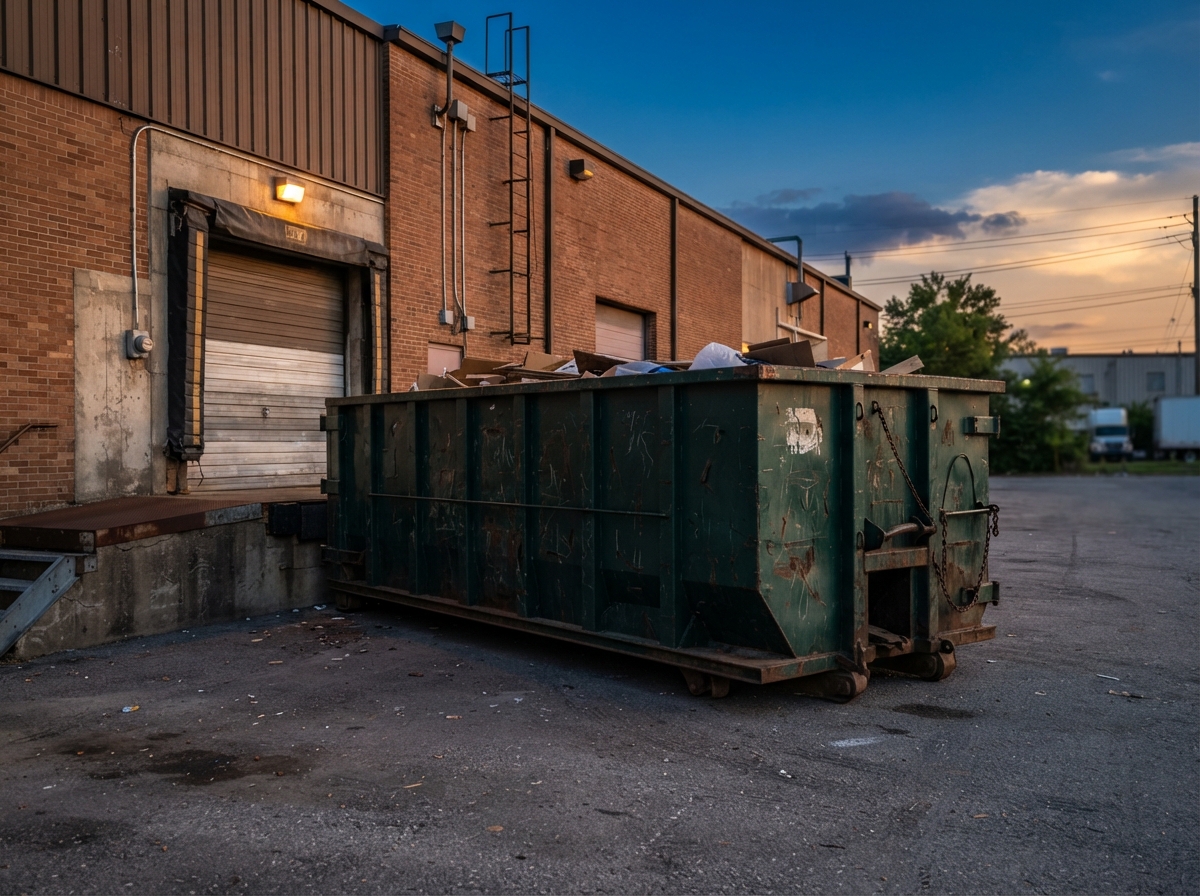
The one that fits where the others do not — tight downtown lots, shared parking, occupied buildings with one usable access point. Also the right call when material is dense enough that weight fills the box before volume does. Common for interior demo, bath and kitchen work, and small commercial renovations.
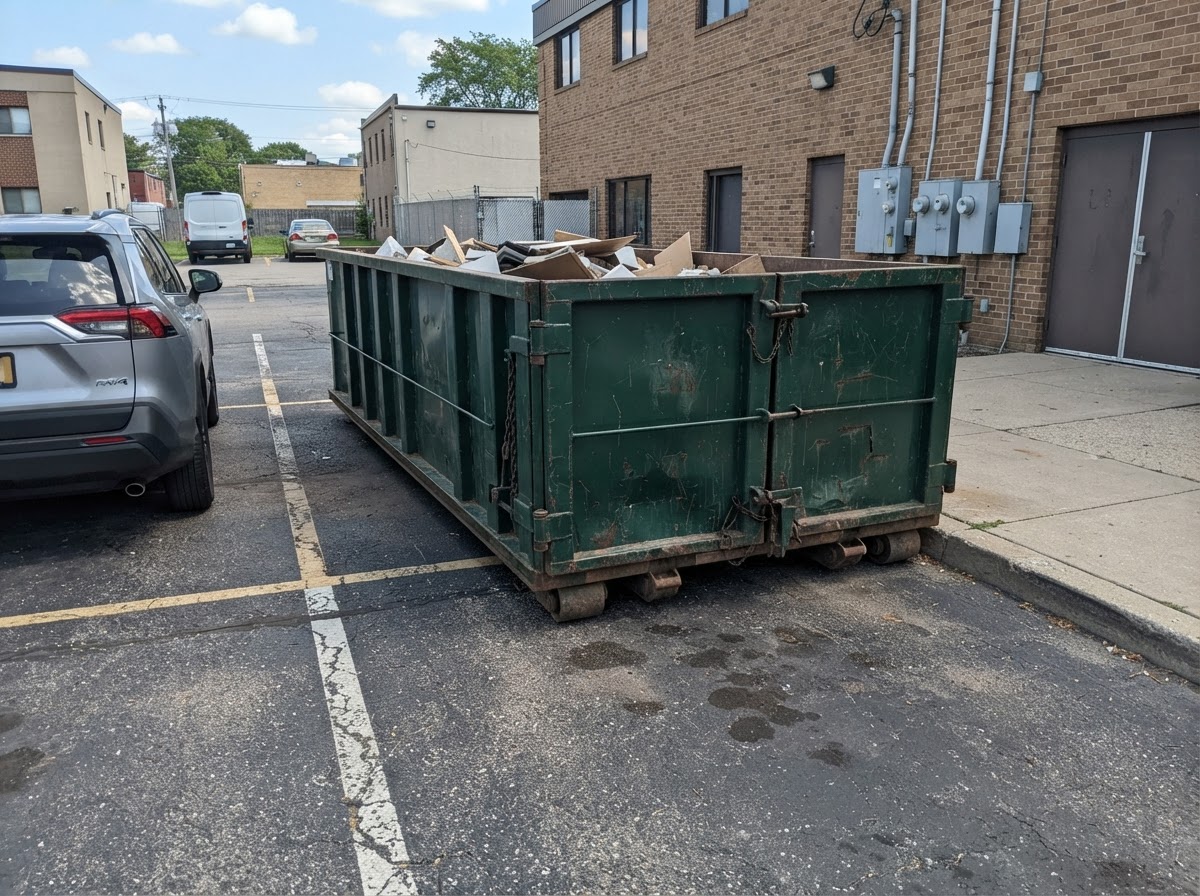
The default for most active jobsites. Enough capacity for framing scrap, drywall, packaging, and mixed debris without the footprint a 40 demands. Most contractor accounts start here and adjust after the first job shows what the actual volume looks like.
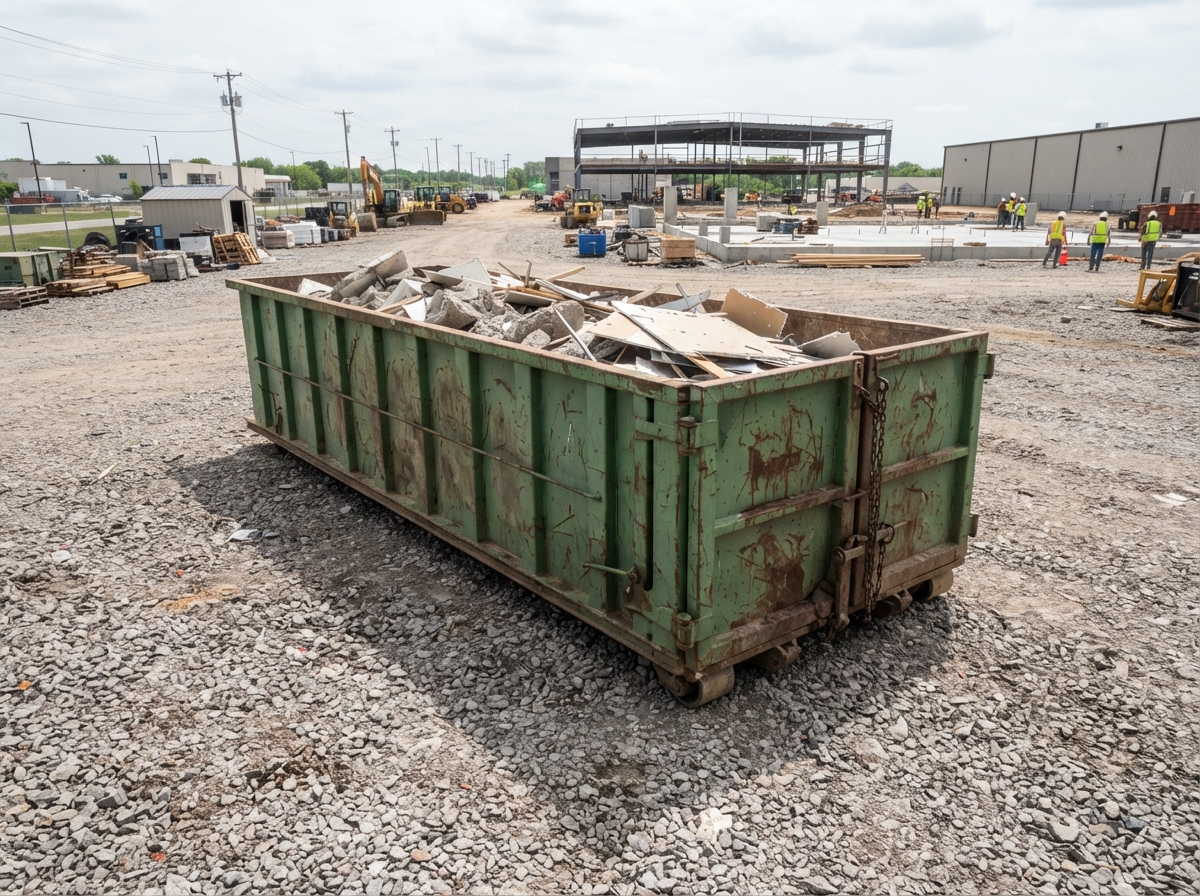
For large fit-outs, full-building renovations, and heavy cleanout phases where debris is bulky and light. It is also where compaction pays off hardest, because there is the most air to remove. A 40-yard container is rated well over fifteen tons of static load.
If you are between sizes, describe the material and the site access and we will size it. A container that is larger than the job needs takes up room most jobsites do not have to spare, and one that is too small adds swaps you did not price for.
Accepted Materials
What Goes In a Contractor Container — and What Does Not
Being clear up front saves a rejected load and a return trip that lands on your schedule, not ours.
Accepted:
mixed construction and renovation debris · framing scrap and dimensional lumber · drywall and offcuts · cabinetry, millwork, and trim · flooring and underlayment · pallets and crating · cardboard, packaging, and fixture boxes · mixed metals · general jobsite waste.
Not accepted:
liquids of any kind · dirt, soil, aggregate, and other dense no-air material · hazardous or regulated waste · sealed drums and pressurized vessels · anything the receiving hauler will not accept.
Two of those are worth explaining. Dirt and aggregate are excluded partly because there is no air in them to remove and partly because they hit weight limits long before they fill a container. Sealed drums and pressurized vessels are a safety exclusion: nothing under pressure goes into a container that is going to be worked.
Paint, solvents, adhesives, and fuel are the ones that most often show up on a renovation site by accident. If a subcontractor leaves something questionable in the box, tell us before the swap rather than after — it is a much smaller problem in advance.
Scheduling
Scheduling and Swap Turnaround: What to Expect
We do not publish a guaranteed turnaround window, because a promise that cannot be kept on a Friday afternoon in the middle of a route is worse than no promise. What we do instead is give you a real window when you call, and tell you honestly if the one you need is not available.
A swap booked a few days out against a known phase gets planned into the route. A swap called in at noon for that same afternoon depends on what the route already looks like. The more of your container plan you set ahead, the less of it depends on luck.
Tell us the day the crew is on site and the container is set before they get there, not the same morning.
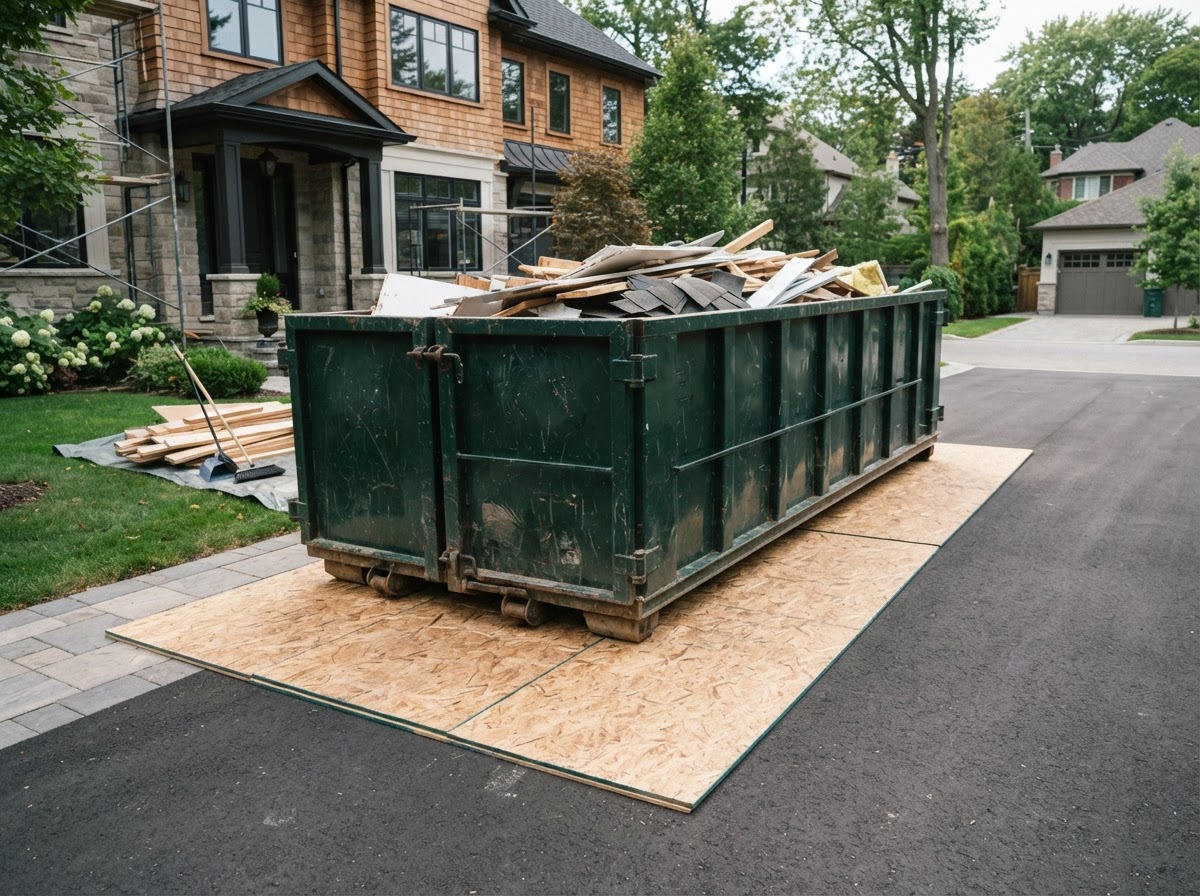
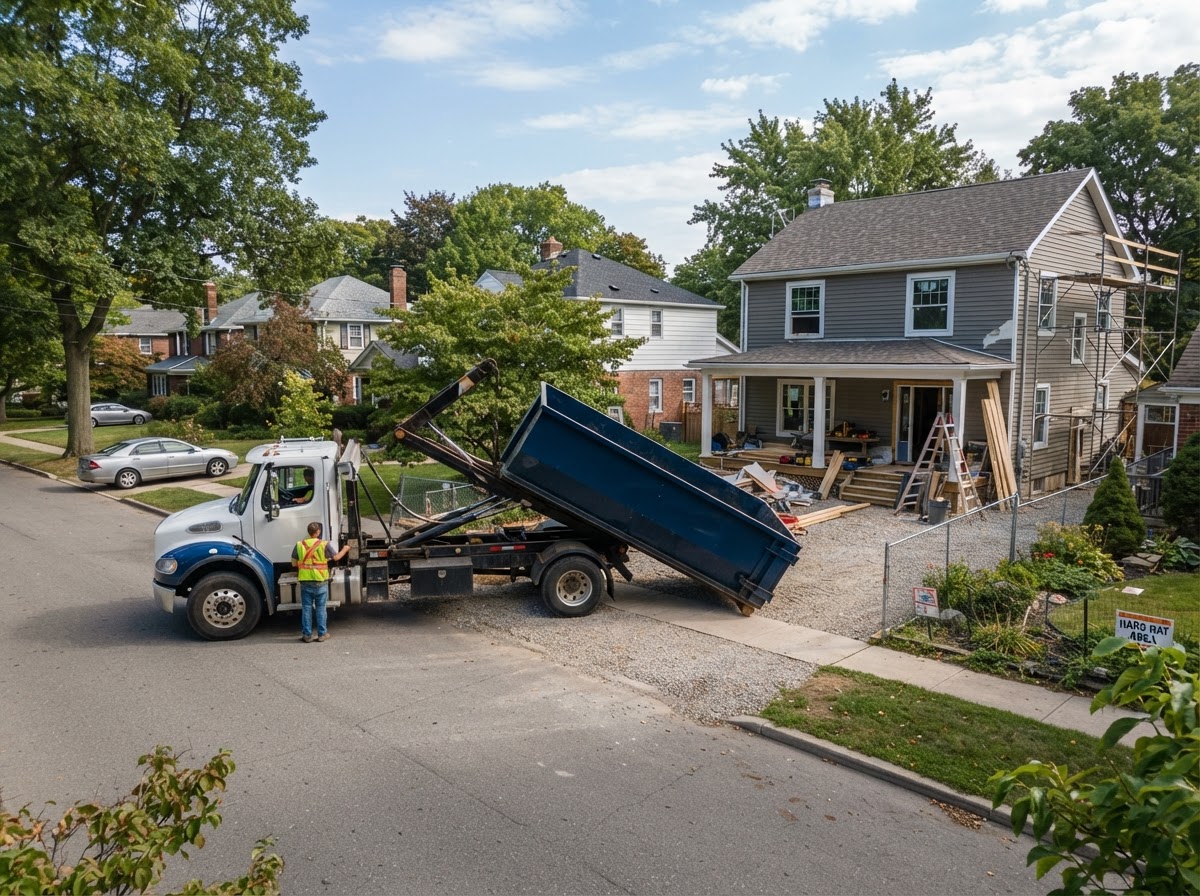
A roll-off truck needs a clear approach of roughly sixty feet, overhead space free of lines and canopies, and a surface that will hold a loaded box. Concrete and compacted gravel handle it. Asphalt can mark under sustained load in Georgia summer heat — say so ahead and we bring boards. Gates, bollards, and parked trailers are the three things that turn a delivery into a wasted trip.
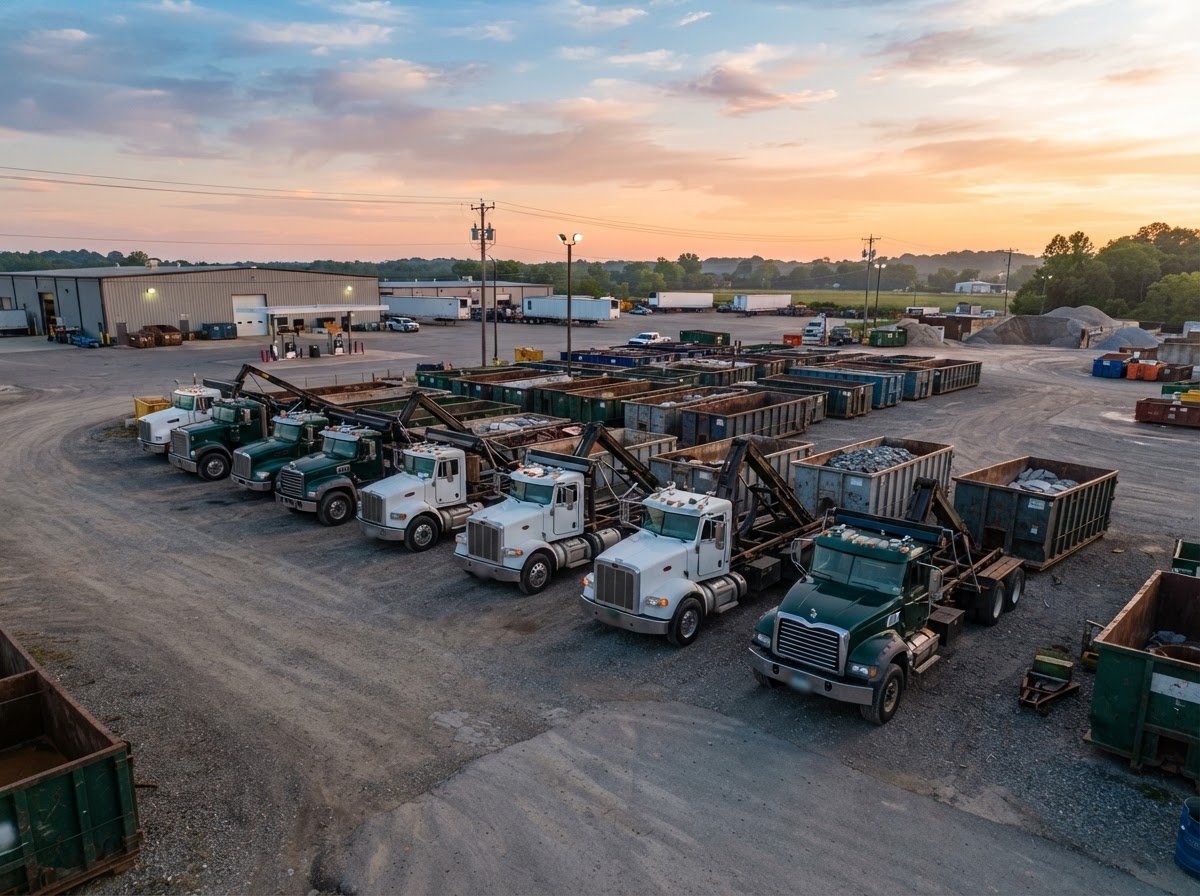
Max Compacx runs from a Hawkinsville Rd yard in Macon with quick access to the I-75 and I-16 corridors, which covers most of the commercial corridors and older neighborhoods where renovation work concentrates.
If your volume is predictable, putting swaps on a cadence takes the container off your daily list entirely.
The Process
How a Contractor Account Runs, Start to Finish
You describe how you work.
How many active jobs you typically run, what the debris looks like, what your usual swap frequency is now, and what site access is like on the kind of job you do most.
Free on-site demo.
About ten minutes, on a container you already have, at a job you are already running. You see how much room compaction gives back on your own debris before committing to anything.
The account is set up once.
Company-level, with addresses added as jobs open. Site instructions get recorded per address.
Delivery and placement.
The container is set where you specify, oriented toward where the material is coming from, on a surface that will hold it loaded.
Your crews fill it.
Nothing changes about how anybody works, though breaking down boxes still helps.
Compaction visits.
A mobile unit comes to the container in place — usually once or twice between swaps, more on packaging-heavy jobs. The load gets worked, the top opens back up, and the box keeps taking material.
Swap or pull.
When the container is full by weight or volume, it gets hauled and either returned empty or replaced with another so the site is never without one.
The next job.
Call with an address and a start date. Steps one through three do not repeat.
On every compaction visit the container is inspected before and after and the condition is photographed. The compaction drum is narrower than the container itself, so it works the load without contacting the walls. There is no hydraulic downforce driving against the box, and safeguard wheels and end guards keep the unit off the container structure. Our operators run a zero-touch policy on your equipment.
That matters most when the container is not ours. If you are keeping the box and the hauler you already use, the equipment being worked belongs to somebody else — and it goes back the way it came.
Why Max Compacx
Why Middle Georgia Contractors Work With Max Compacx
The account follows you, not the job.
Addresses get added and closed as work moves. You are not opening a new rental every time you win a bid.
Compaction is part of the service, not an upsell.
Every other container on a Macon jobsite fills with air and gets hauled. This one gets worked before it goes, which is fewer swap trips on the same box.
You do not have to change haulers.
If you have a hauling arrangement that works, keep it. Max Compacx compacts the container already on your site. That is the simplest way for most contractors to start.
Straight answers about fit.
Short jobs, dense debris, and low swap counts do not benefit much from compaction, and we say so before you agree to anything. The ten-minute demo exists so you can judge it on your own material.
Commercial and local.
Max Compacx works with Macon and Middle Georgia businesses on commercial and industrial accounts — not a national call center routing your job to whoever answers the phone.
Documented handling.
Before-and-after inspection and photo documentation on every visit, on your equipment or ours.
Service Area
Service Area: Macon, Bibb County and Middle Georgia
Max Compacx delivers contractor containers and provides on-site compaction across Macon and Middle Georgia, working from a Hawkinsville Rd base with quick access to the I-75 and I-16 corridors. Regularly served communities include Macon, Byron, Gray, Forsyth, Perry, Lizella, and Centerville, along with the surrounding Bibb County commercial corridors and older neighborhoods where renovation work tends to concentrate.
If you are running jobs in more than one of those towns at once, that is exactly the situation the account structure is built for. If a jobsite sits outside the communities listed, ask — coverage depends on the route and the schedule, and it is a short conversation.

Max Compacx
5900 Hawkinsville Rd, Macon, GA 31216
Monday – Friday, 7am – 5pm
Contractor Dumpster Rental in Macon, GA: Common Questions
Related Services
Construction Dumpster Rental
single-project jobsite logistics: phasing, swap cadence, and mixed C&D streams on one build.
Roofing Dumpster Rental
tear-off day sequencing, shingle weight, and container sizing for roofing work.
On-Site Waste Compaction
how the mobile unit works a container in place and which material streams benefit most.
Roll-Off Dumpster Rental
the container service itself: sizes, delivery, and how pull frequency drives cost.
Start Your Contractor Dumpster Rental in Macon, GA
Tell us how many jobs you run, what your debris looks like, and how often your containers leave now. We will size the containers, set up one account across your addresses, and tell you honestly whether compaction moves your numbers. The on-site demo is free and takes about ten minutes.
Max Compacx
5900 Hawkinsville Rd, Macon, GA 31216
Monday – Friday, 7am – 5pm