
Roofing Dumpster Rental — Macon, GA
Roofing Dumpster Rental in Macon, GA
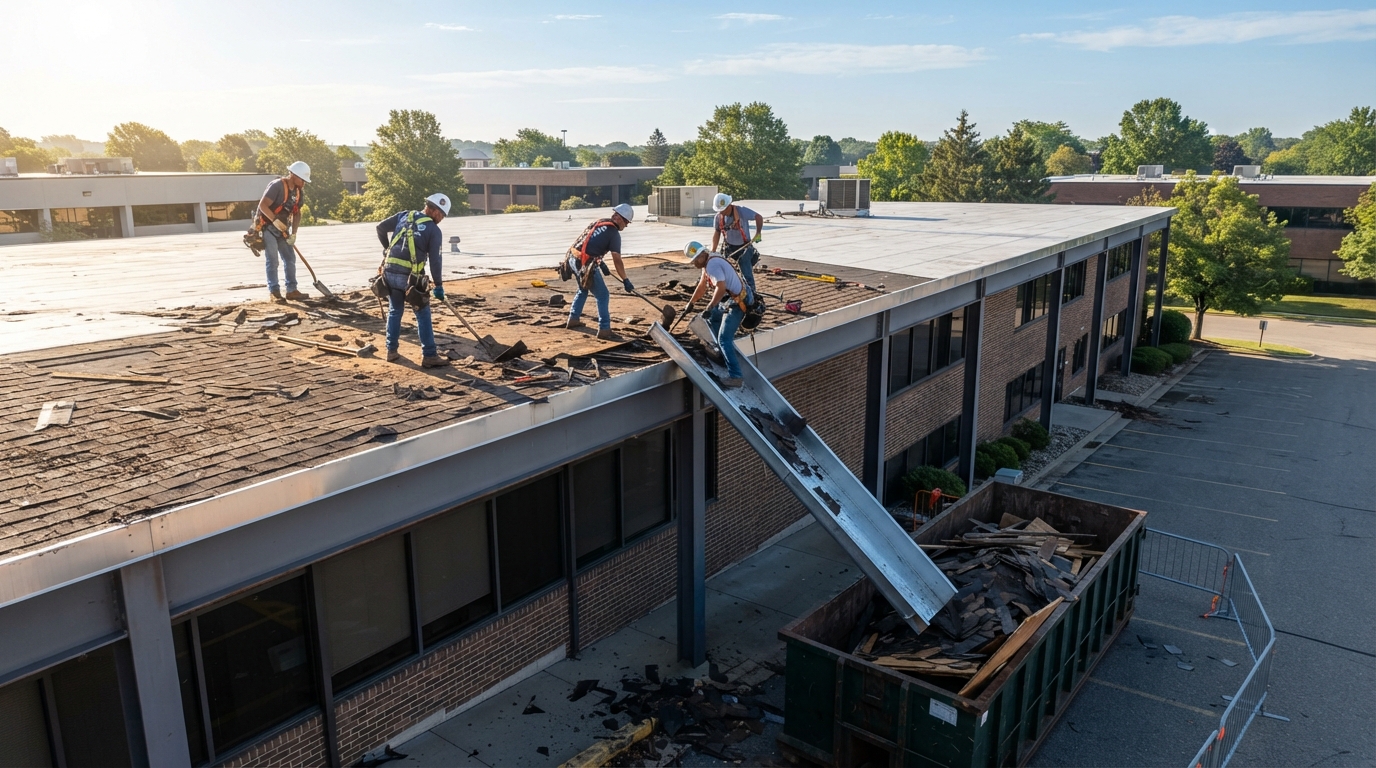
Max Compacx provides roofing dumpster rental in Macon, GA for tear-off crews, with containers sized around shingle weight rather than shingle volume. The first thing worth knowing has nothing to do with the container itself: Macon-Bibb convenience centers do not take roofing material. A crew with a truck bed full of tear-off shingles has no free local fallback, which means the container on the job is the disposal plan.
We work with roofing contractors, commercial property owners, and property management groups across Macon and Middle Georgia. Containers get delivered before tear-off day, loaded straight off the roof, and hauled when the job is finished or when weight says it is time.
- Macon, GA based
- Monday – Friday, 7am – 5pm
- Commercial & Industrial Accounts
- Sized for shingle weight
Where the Shingles Can Go
Why Roofing Dumpster Rental in Macon, GA Starts With Where the Shingles Can Go
Local disposal rules decide how a tear-off gets planned, and roofing material sits on the wrong side of them. Macon-Bibb convenience centers exist to take household waste and yard debris from residents. Construction and roofing material is outside what those sites accept, so a roofer showing up with a load of shingles is turned around. That is the local reality, and it is worth confirming with the facility before any job, because local rules do change and the crew is the one standing at the gate.
What that leaves is a permitted disposal site that accepts construction and demolition material, on a paid basis, with a scale and a receiving window. From there the choice is simple. Either the crew hauls its own material across town in pickups and trailers, one load at a time, or a container sits at the job and takes everything in one place.
The truck-and-trailer method is the expensive one, and the cost is hidden because it does not show up on an invoice. It shows up as crew hours. Two roofers running loads across Bibb County are two roofers not on the roof, and the tear-off stretches into a second day that was supposed to be one. On a bid built around a fixed number of labor hours, that comes straight out of the margin.
A container also changes what the job looks like from the ground. Shingles go from the roof into the box instead of into a pile on the lawn or the parking apron that somebody has to handle a second time. Nails and debris stay in one footprint. The property owner sees a job with a plan rather than a job with a mess.
When a Container Makes Sense
When a Roof Tear-Off Needs a Container on Site
Not every roof repair needs a roll-off. Most full tear-offs do. The signals are consistent:
The roof is coming off, not being patched.
Any full tear-off produces material measured in tons, and it produces it all at once.
There is more than one layer.
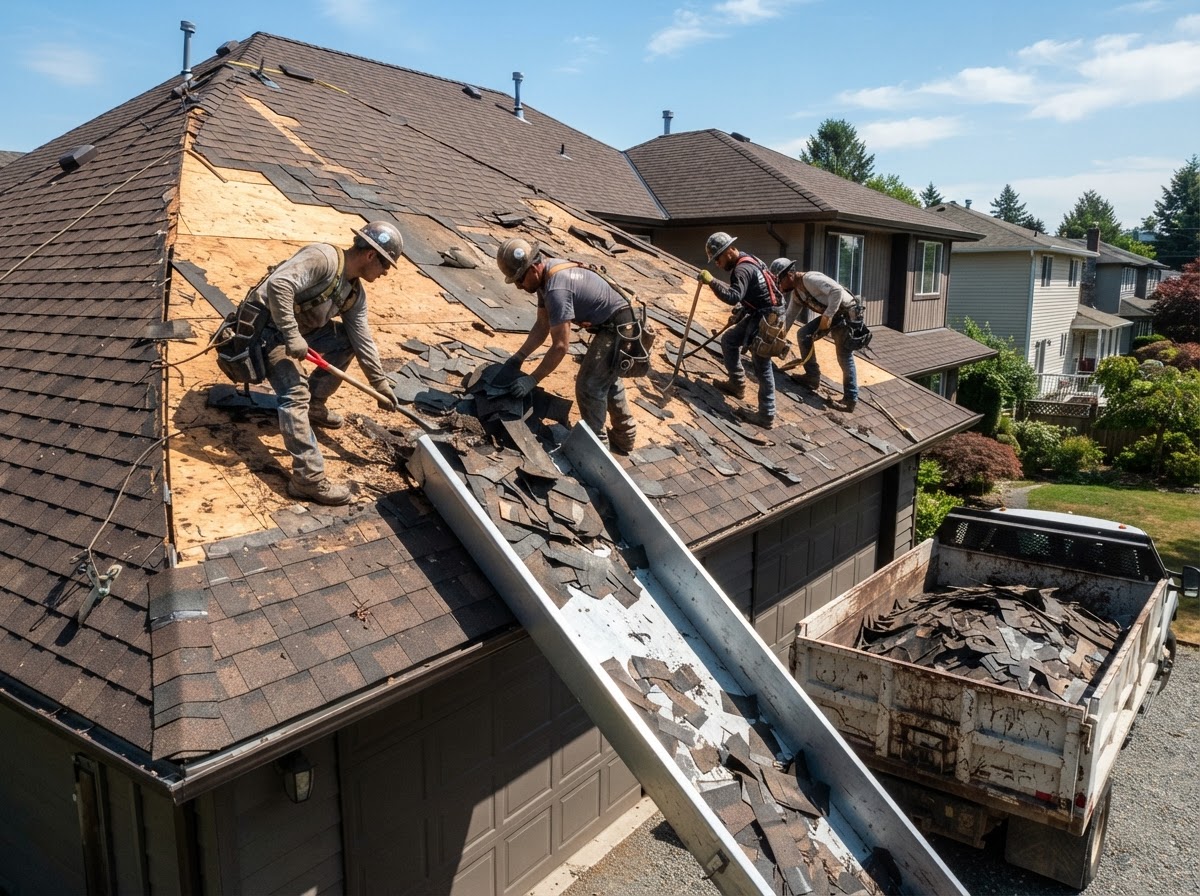
A second or third layer of shingles multiplies the tonnage without changing the size of the roof, and layered tear-offs are where crews most often underestimate what they are moving.

It is a commercial low-slope roof.
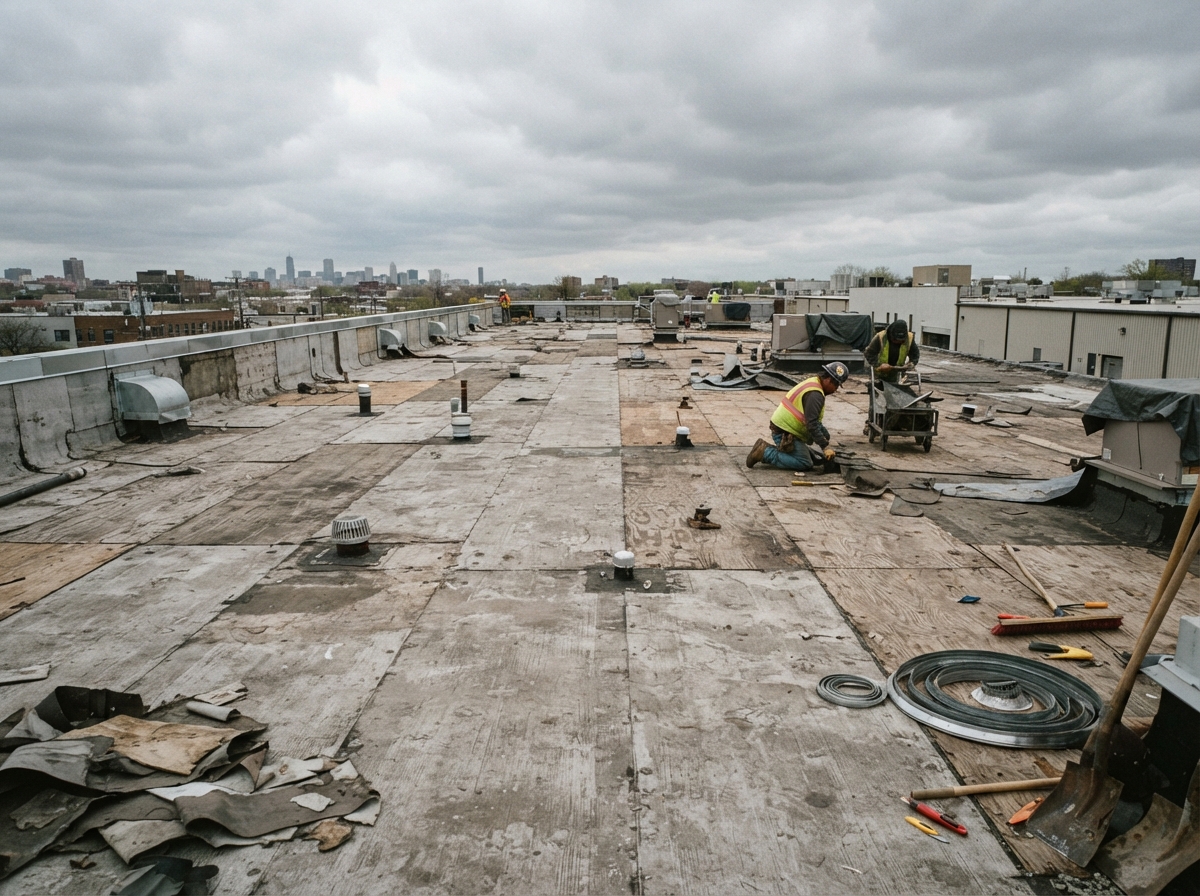
Built-up roofing, ballast, insulation board, and membrane come off in bulky, awkward pieces that fill a container fast.

The property cannot hold a debris pile.
Occupied retail centers, restaurants, apartment properties, and medical or office buildings need the debris contained from the first hour, not staged and cleaned up later.
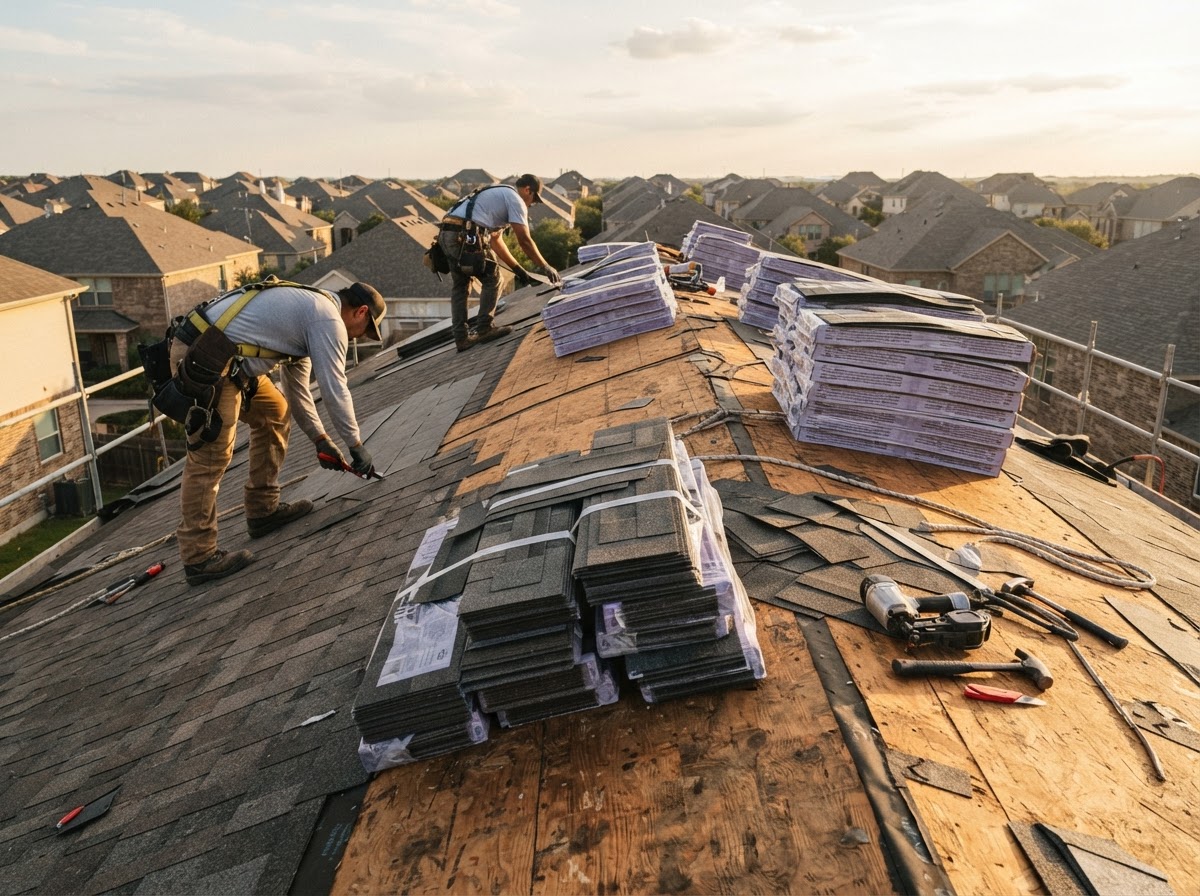
The crew is losing hours to hauling.
If two people are running loads instead of working, the container pays for itself in schedule alone.
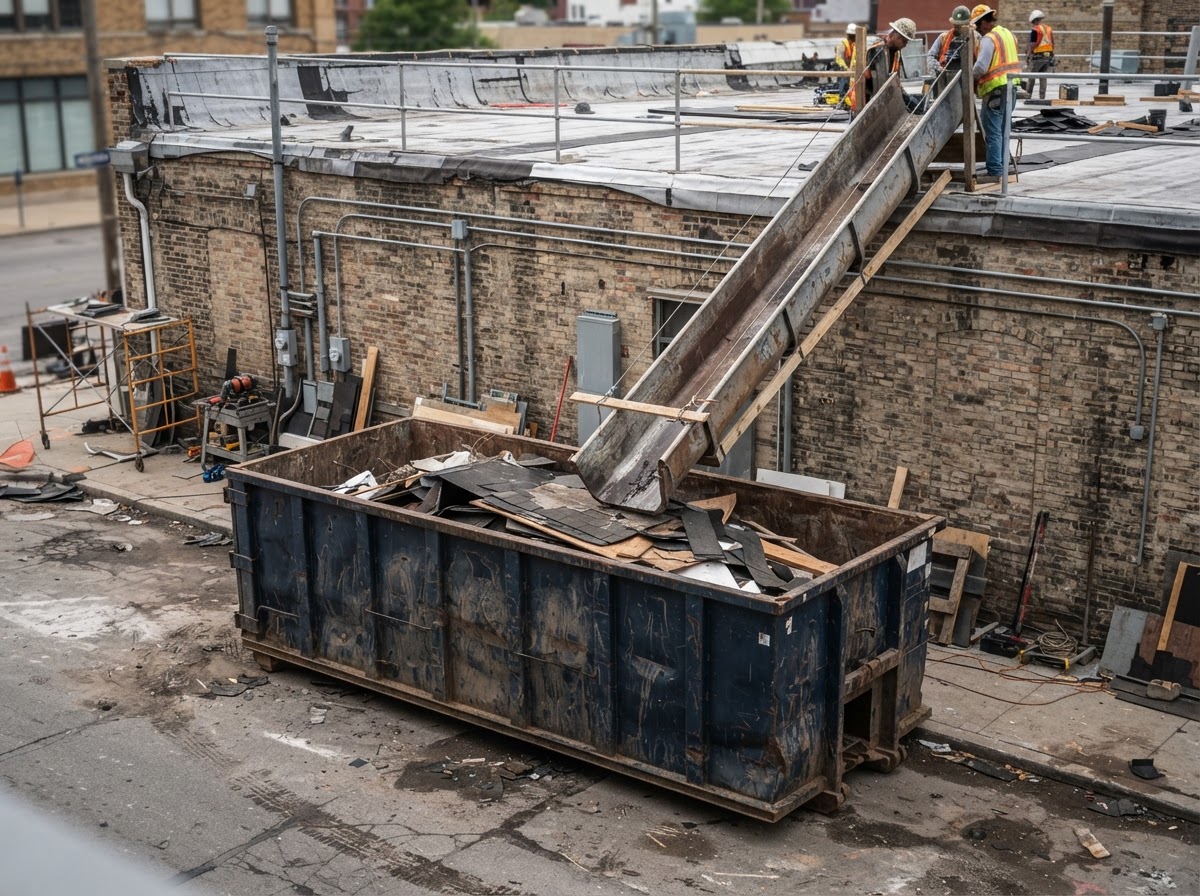
The job is one of several.
Storm work rarely arrives as a single roof, and a crew moving between addresses cannot also be running a disposal route.
Any one of these is worth a call. Several at once means the container should already be scheduled.
The Workflow
How the Tear-Off Workflow Runs
A roofing container is a timing problem more than a logistics problem. The box has to be in position before the first shingle comes off, and it has to be in the right position.
Placement before tear-off day.
Containers are set the afternoon before the job or first thing that morning, whichever the site allows. A crew standing on a roof waiting for a truck is the one delay that ruins a one-day tear-off, so delivery gets scheduled against the crew's start time rather than a general window.
Position relative to the dump zone.
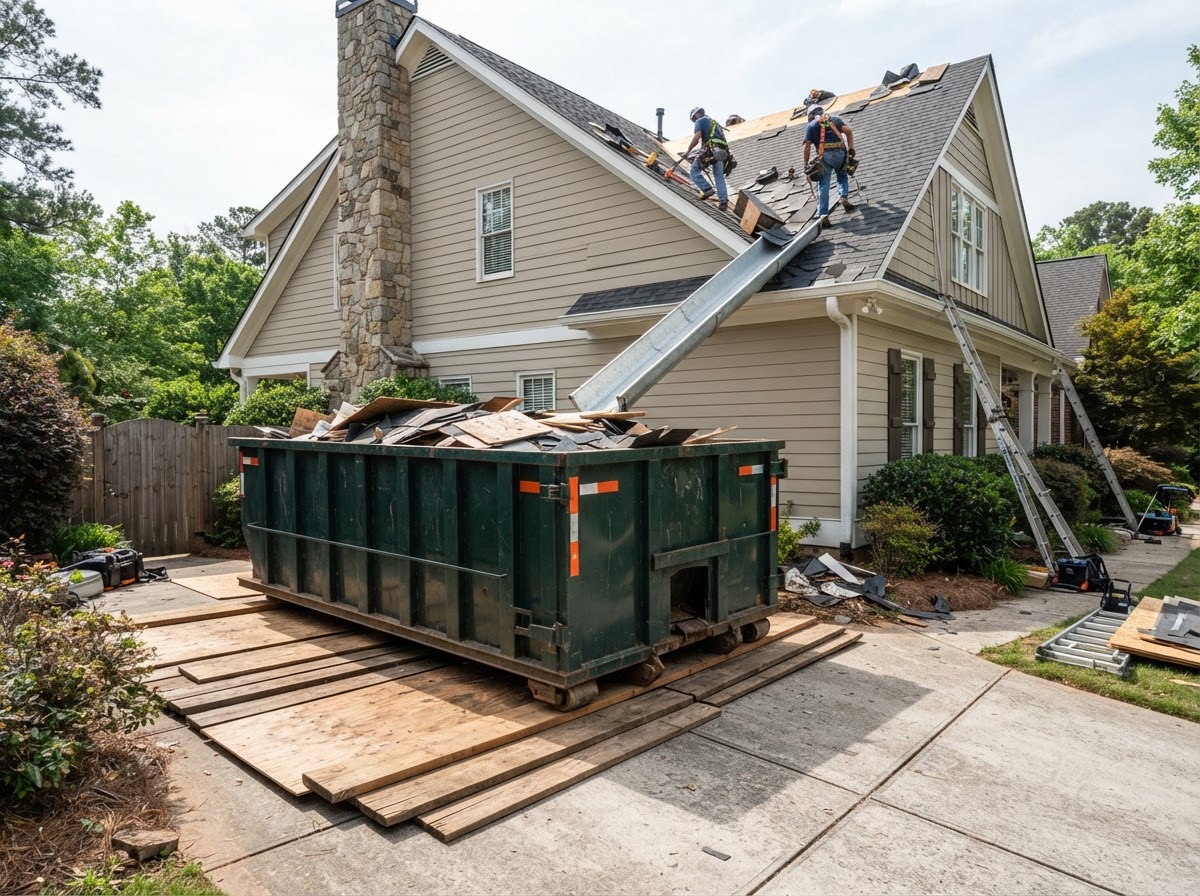
The container should sit under the slope the crew is tearing, close enough that shingles go over the edge and into the box instead of onto the ground. On multi-slope roofs that sometimes means moving the container mid-job or planning the tear-off order around where the box can physically go. Tell us the roof layout and the access when the job is booked and the placement gets planned instead of improvised.
Surface protection.
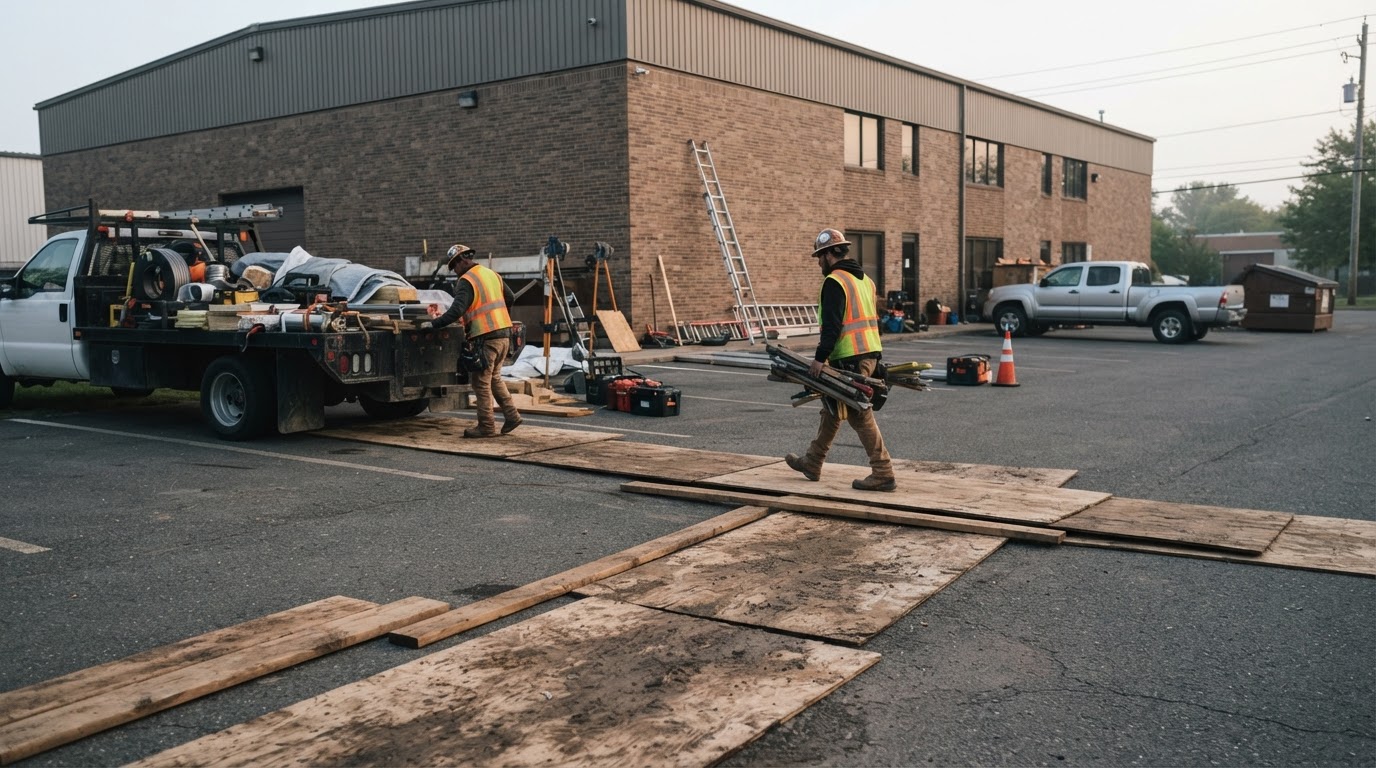
Loaded roll-offs are heavy and they are set by a truck that has to back into position. Driveways, parking aprons, and asphalt lots can mark under sustained weight, especially through a Georgia summer. If placement is anywhere marking is a concern, say so and boards go under the container. On a job where the property owner is already nervous about the roof, a rutted driveway is not a conversation anybody wants.
Same-day loading.
The efficiency of a tear-off comes from handling material once. Shingles leave the roof and land in the container. They do not land on a tarp that someone forks up later. Where a chute or a slide is being used, the container gets positioned to receive it.
Clearance for the truck.
A roll-off truck needs a clear straight approach, roughly sixty feet of space to set and retrieve, and open overhead — no power lines, no low canopies, no tree limbs over the drop point. Gates, bollards, and parked vehicles are what usually turn a delivery into a return trip.
The pull.
When the job is done or the container is at weight, it goes. On multi-day or multi-building jobs, a swap gets scheduled so the crew never stops for an empty box.
Weight, Not Volume
Shingle Weight and the Right Roofing Dumpster Size
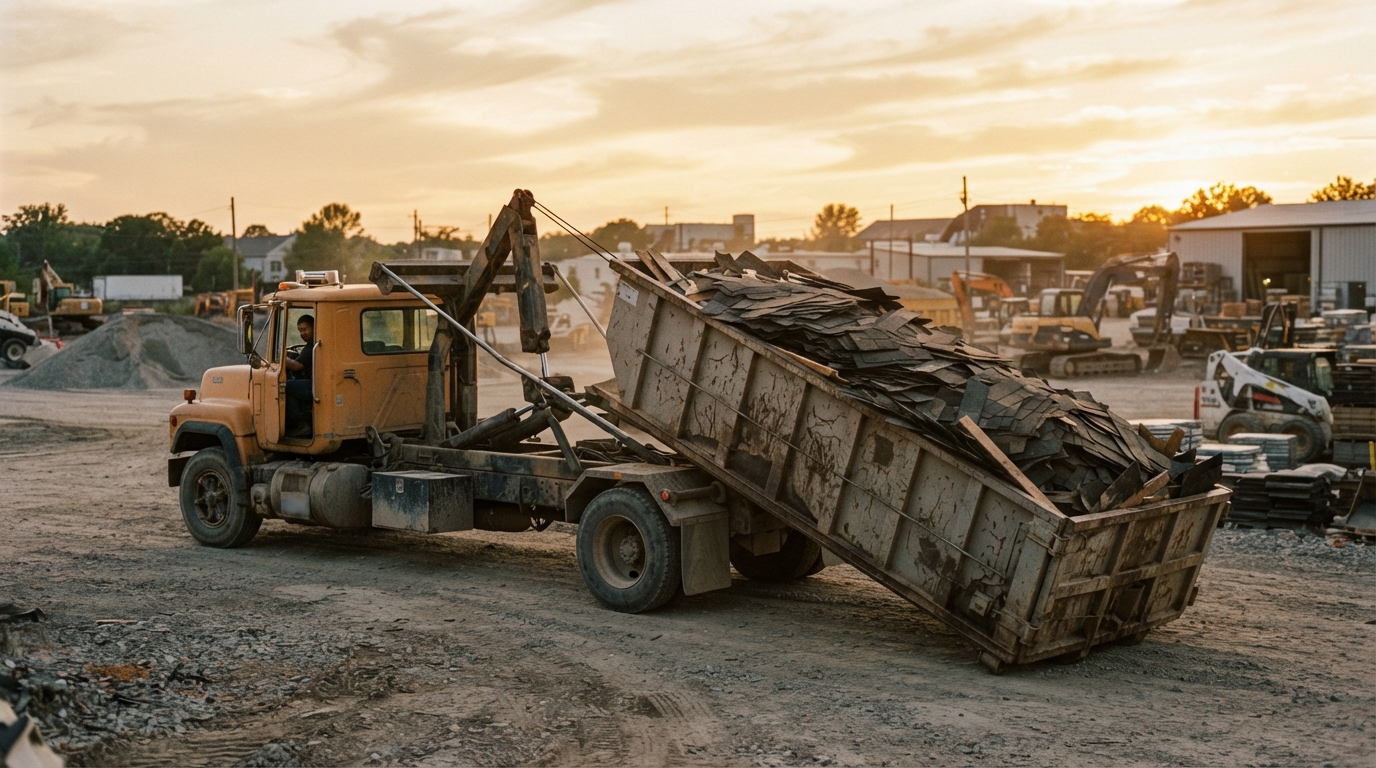
This is where roofing behaves differently from every other kind of debris, and where the wrong instinct costs money. Most trades size a container by how much space the material takes up. Roofing gets sized by weight.
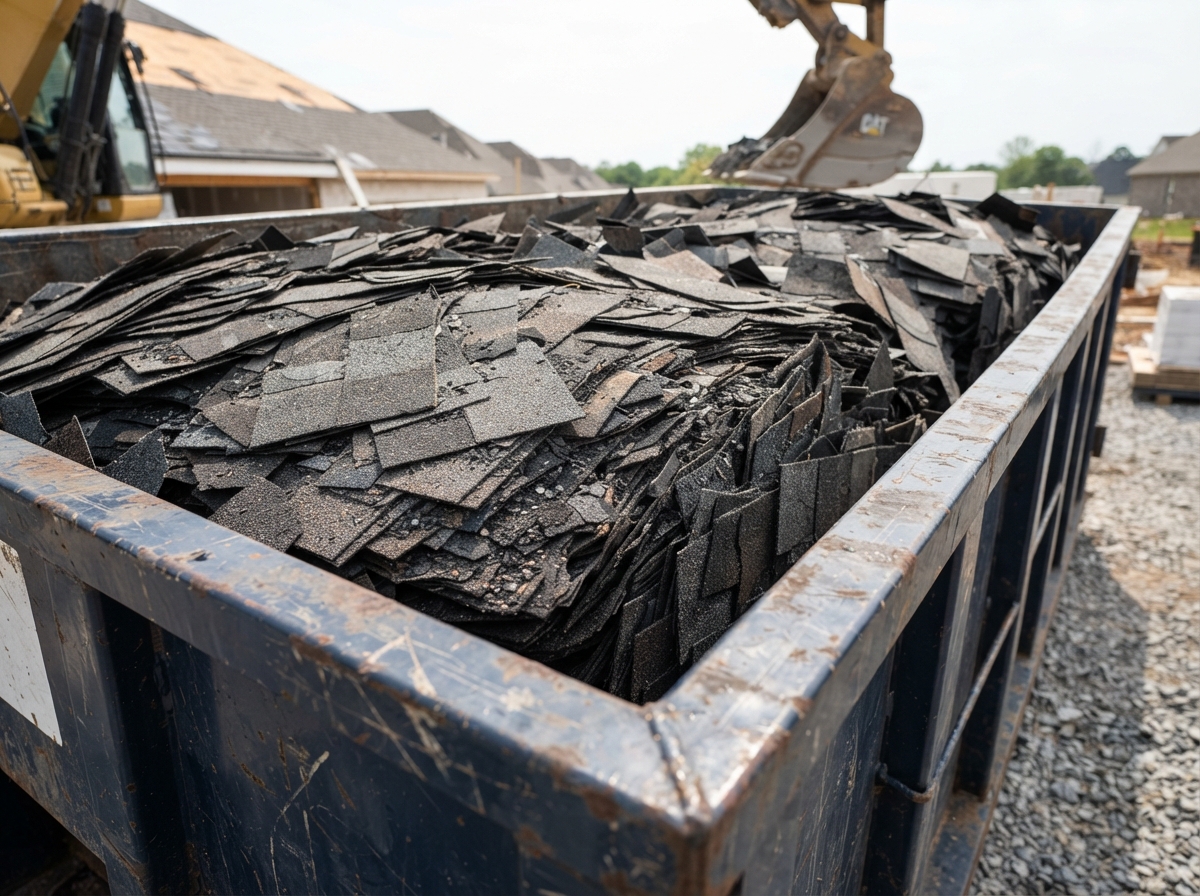
Asphalt shingles are dense and heavy for their bulk, and a tear-off is measured in squares across an entire roof. Add a second or third layer and the tonnage multiplies while the volume barely moves. The practical result is that a shingle container hits its weight limit while it still looks half empty from the ground. Ordering the biggest box available does not help — it just means more room you are not allowed to use.
Max Compacx sizes roofing containers around that reality. The full dimensions and footprint breakdown lives on the sizes page; here is how the three sizes tend to land on roofing work.
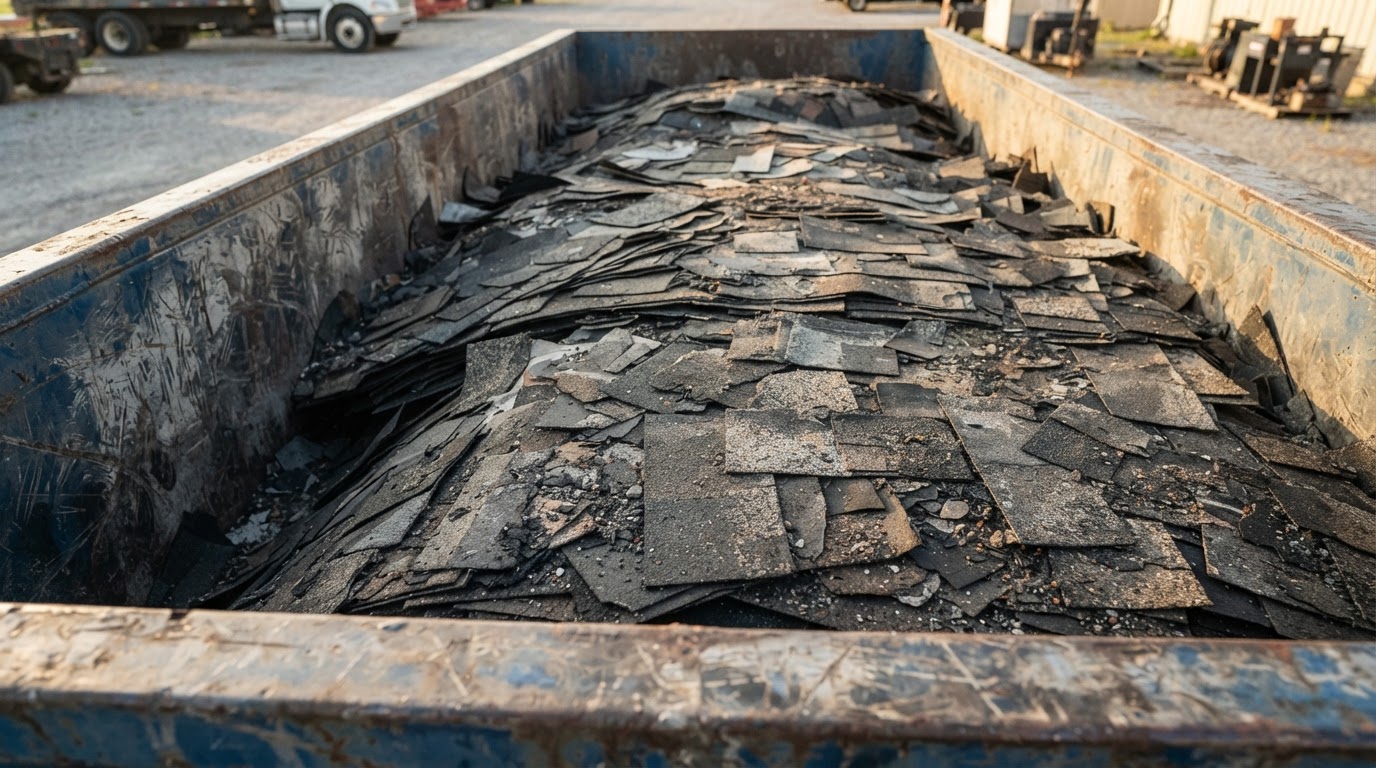
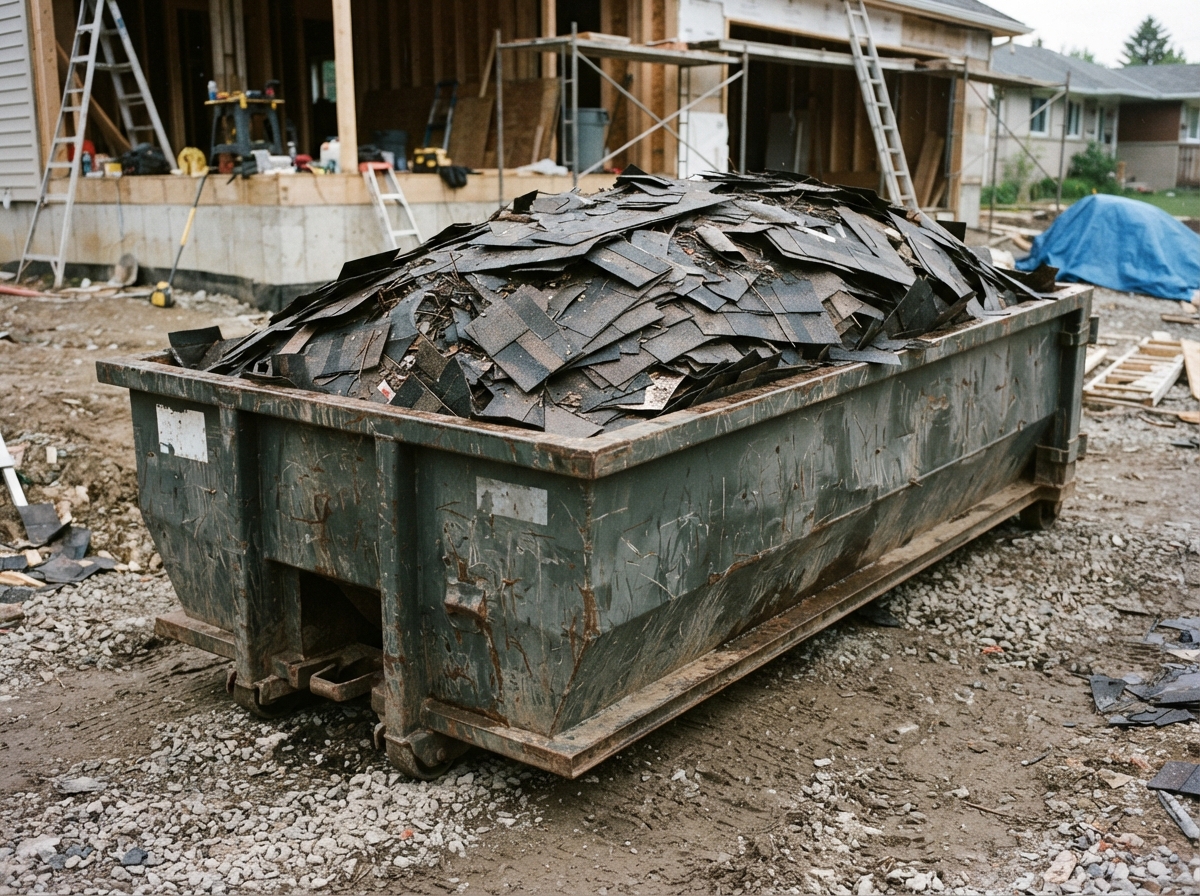
The default for straight shingle tear-offs. Small footprint, easy to place on a driveway or a tight commercial lot, and matched to the fact that weight will end the load long before volume does. For most single-roof tear-offs a contractor is running, this is the right box.
See 20-yard details →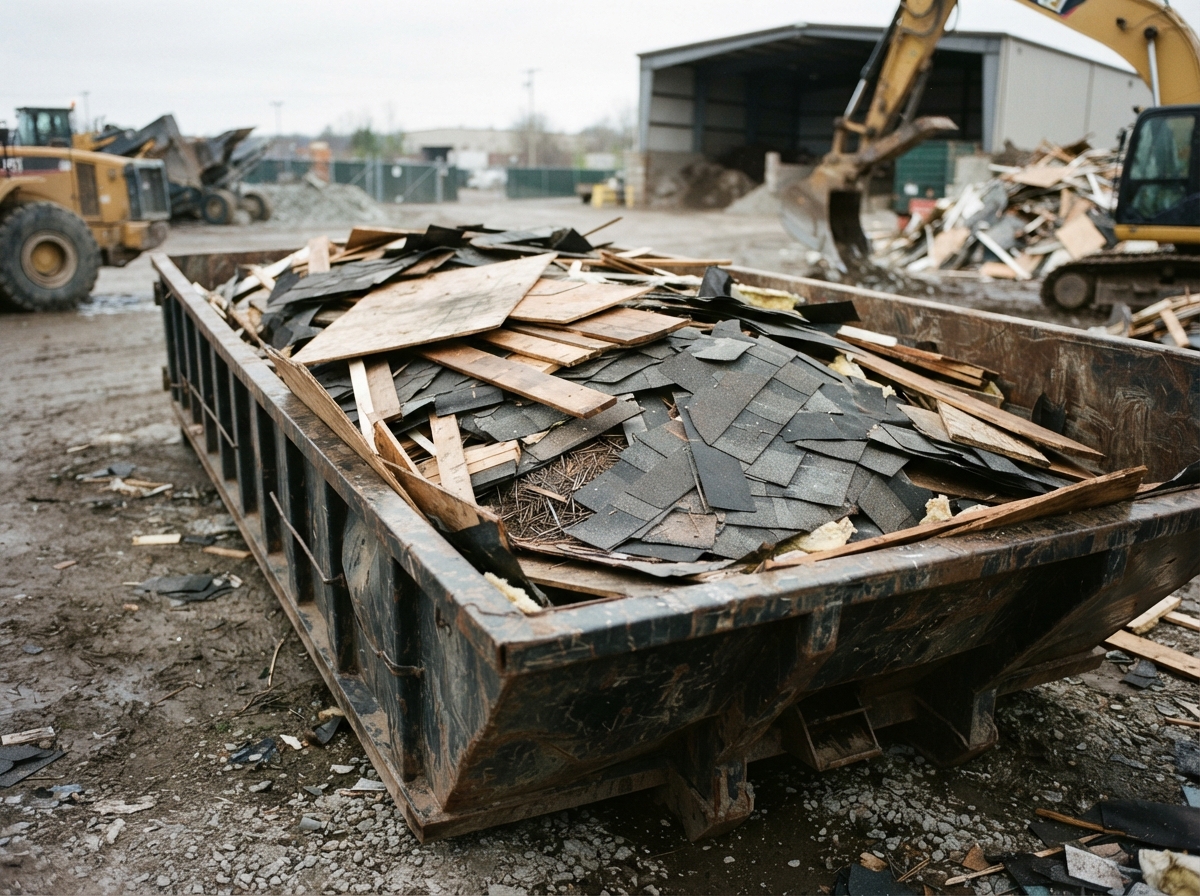
The choice when the tear-off is bigger, or when the stream is mixed rather than pure shingle — decking, ridge vents, gutters, packaging from the new material, and carpentry debris alongside the shingles. Larger commercial re-roofs and multi-building properties usually land here.
See 30-yard details →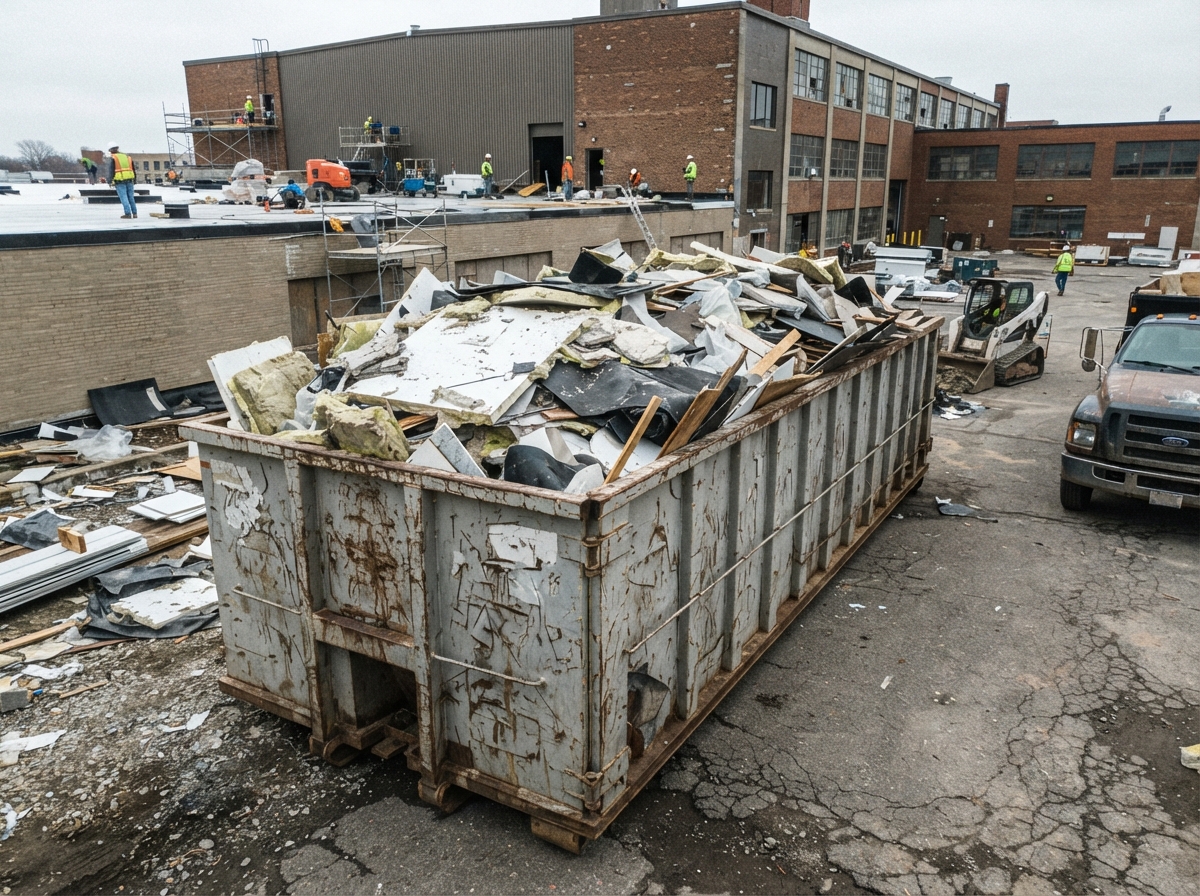
Rarely the right answer for shingles alone, and often the wrong one, because the container will reach its legal payload with two-thirds of the space unused. Where a 40 earns its place on roofing work is bulky low-slope material: insulation board, ballast, membrane, and tear-off from a commercial deck. A 40-yard container is rated well over fifteen tons of static load, which is what makes it usable on this kind of debris at all.
See 40-yard details →Weight also explains something crews notice on the scale ticket. A loose commercial load often weighs somewhere around two to three tons when the container looks full, while a dense, properly loaded one can approach eight to twelve tons — near the DOT payload ceiling at roughly 95% of what the truck is legally permitted to carry. Shingles get to that ceiling faster than almost anything else that goes in a roll-off. Describe the roof — square footage, number of layers, and whether decking is coming off — and the container gets sized before the truck leaves rather than after.
Accepted Materials
What Goes In a Roof Tear-Off Container, and What Doesn't
Being clear about this before delivery saves a rejected load and a second trip.
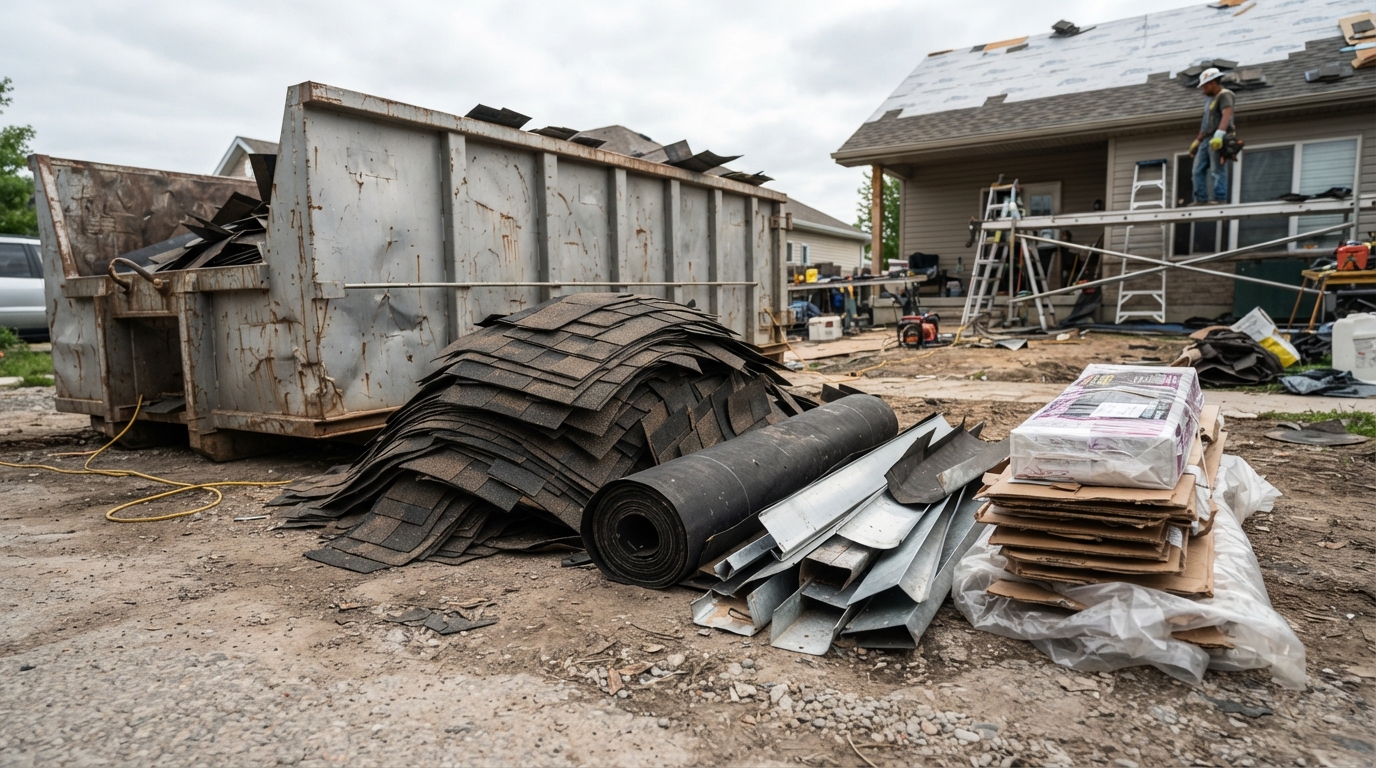
Accepted on a roofing job:
asphalt shingles · underlayment and felt · ice-and-water membrane · flashing, drip edge, and metal trim · rotted decking and sheathing · ridge vents and boots · roofing nails and fasteners in the debris · packaging and banding from the new material · gutters and downspouts removed as part of the job · general construction and demolition debris from the same scope.
Not accepted:
liquids of any kind, including leftover coatings, adhesives, and solvents still in liquid form · dirt, soil, aggregate, and other dense no-air material · hazardous or regulated waste · sealed drums and pressurized vessels · anything the receiving hauler will not take.
Two of those deserve a direct answer. Material identified or suspected as containing asbestos — which turns up on older built-up and commercial roofs in Middle Georgia — is regulated and goes to a specialized abatement handler. It does not go in our containers, and if there is any question about a roof's age or composition, that gets resolved before a container is scheduled rather than after it is loaded. Sealed drums and pressurized vessels are excluded for safety, because nothing under pressure belongs in a container that may be worked.
One more practical note: some receiving facilities treat shingles differently from mixed construction debris, and separating the streams occasionally matters. If a job has a reason to keep shingles clean, mention it when booking and we will tell you whether it changes anything.
The Honest Version
On-Site Compaction on a Roofing Container: The Honest Version
Max Compacx exists because most commercial containers get hauled full of air, and a mobile compaction unit can come to a container in place, rework the load, and open the top back up so the same box keeps taking material. On the right waste stream that cuts haul-offs substantially. Roofing is not automatically the right waste stream, and we would rather say so on the page than discover it on your job.
Volume reduction runs up to 70%, and it is entirely material-dependent:
| Material stream | Typical volume reduction |
|---|---|
| Cardboard, packaging, recyclables | 60–70% |
| Compost and organics | 50–60% |
| C&D debris, wood and pallets, mixed metals | 40–50% |
Shingles sit at the bottom of that table and often below it. A shingle load has very little air in it to begin with, the material does not restructure much under pressure, and weight ends the load before volume ever becomes the constraint. Compacting a container of dense tear-off shingles gains less than compacting almost anything else we handle, and on a single-roof job it usually gains nothing worth scheduling a visit for.
Where compaction does earn its place on roofing work is the mixed fraction. A re-roof that includes decking, insulation board, ballast, ridge vents, gutters, carpentry debris, and packaging from the new material behaves much more like general construction debris — bulky, irregular, full of gaps — and it gives room back. The same is true of a shop or yard container at a roofing company's own facility, where packaging and mixed debris accumulate between jobs. Plan around roughly 2:1 on genuinely mixed waste; cardboard-heavy streams approach 3:1. Straight shingles do not get anywhere near that.
Two ways to start. Keep your existing container and your existing hauler and have Max Compacx compact what is already on your pad, with nothing about your current arrangement changing. Or we provide the container and the compaction together as one service.
The free on-site demo takes about ten minutes, runs on a container you already have, and settles the question on your actual material instead of in the abstract. If the answer is that your stream does not benefit, that is the answer you will get. You can also work the math yourself on the waste calculator.
Storm Season Ready
Recurring Accounts for Roofing Contractors
Roofing volume does not arrive evenly. Middle Georgia gets its share of spring and summer storm weather, and a single hail or wind event turns a normal month into a queue of claim work that has to be scheduled fast. Crews end up running several addresses at once, and container logistics become the constraint that decides how many roofs get finished in a week.
A recurring account is built for that pattern. One account covers every jobsite instead of a new order each time, so booking a container means giving an address and a start time rather than opening a file. Containers are scheduled against tear-off dates, swapped on multi-day jobs, and pulled when the crew moves on. When a storm week doubles the workload, the schedule is adjusted rather than rebuilt.
We do not publish turnaround promises we cannot keep on every job, because delivery windows depend on the route, the day, and how many crews are working at once. What we will do is give you a real window when you call and tell you early if a date is tight, which is more useful than a number on a website.
Contractors whose work runs past roofing — remodels, renovations, build-outs, multiple trades across multiple addresses — usually want the account structured around the whole operation rather than one service line. That is covered on the contractor dumpster rental page.
Start to Finish
How the Service Runs, Start to Finish
You describe the roof.
Square footage, number of layers, whether decking is coming off, what else is in the scope, and where a container can physically sit. That is enough to size the box and set the delivery time.
Placement is planned.
Access, clearance, surface, and the slope the crew is tearing. If boards are needed to protect a driveway or a lot, they come with the delivery.
Delivery before tear-off.
The container is set the afternoon before or early on the morning of the job, positioned where the material is going to land.
The crew loads it.
Shingles and tear-off debris go straight from the roof into the container, handled once.
Swap or pull.
Single-day jobs get a pull when the crew finishes. Multi-day and multi-building jobs get a swap scheduled so work never stops for an empty box.
Compaction, where it helps.
On mixed tear-off debris or an ongoing yard container, a mobile unit works the load in place between pulls. On straight shingle loads we will usually tell you to skip it.
Where compaction is part of the arrangement, the equipment protections are the same on your container as on ours. The compaction drum is narrower than the container, so it works the load without contacting the walls. There is no hydraulic downforce driving against the box. Safeguard wheels and end guards keep the unit off the container structure. Operators run a zero-touch policy on your equipment, and every container is inspected before and after the visit with the condition photographed. On the arrangement where the container belongs to you and your hauler, that documentation is the point.
Why Max Compacx
Why Macon Roofers Choose Max Compacx
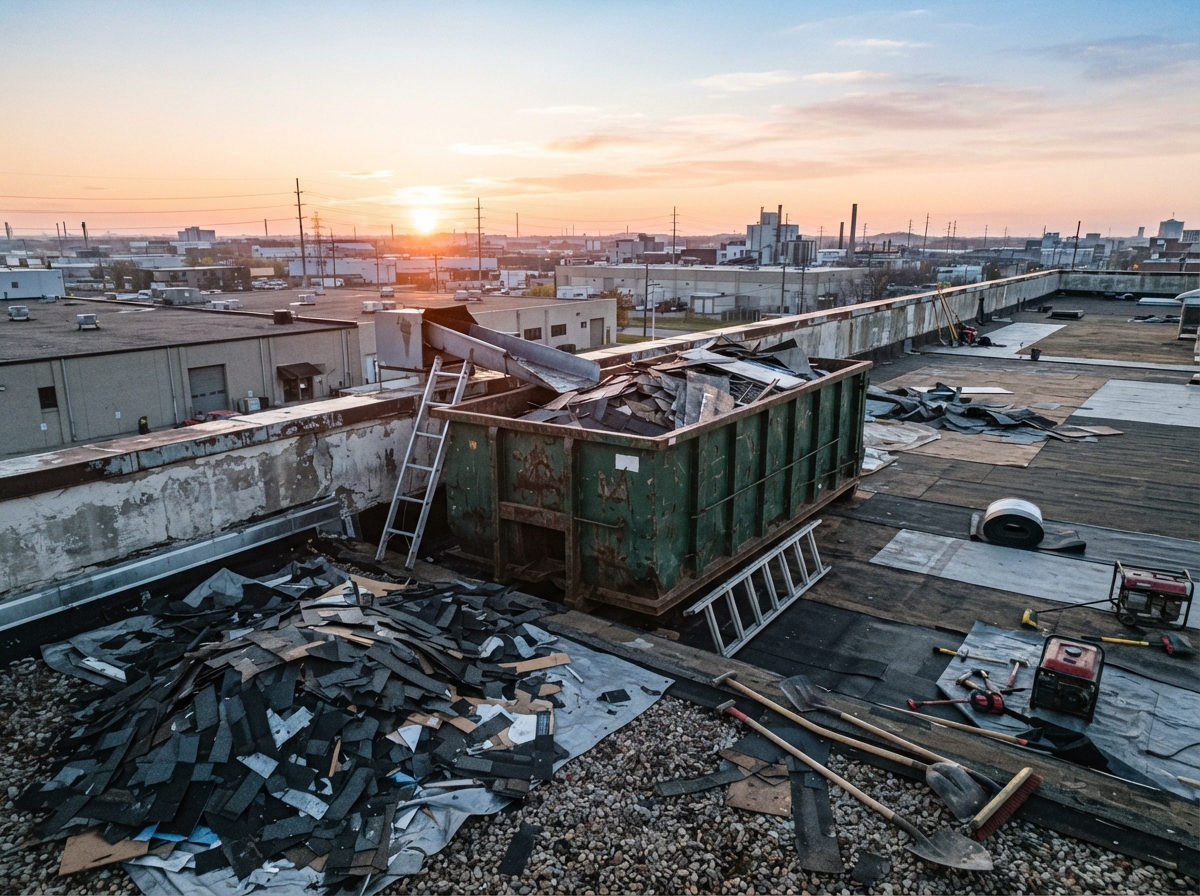
Containers sized for weight, not for looks.
A roofing container that arrives too big is a container you cannot legally fill. Sizing starts from the roof and the layer count.
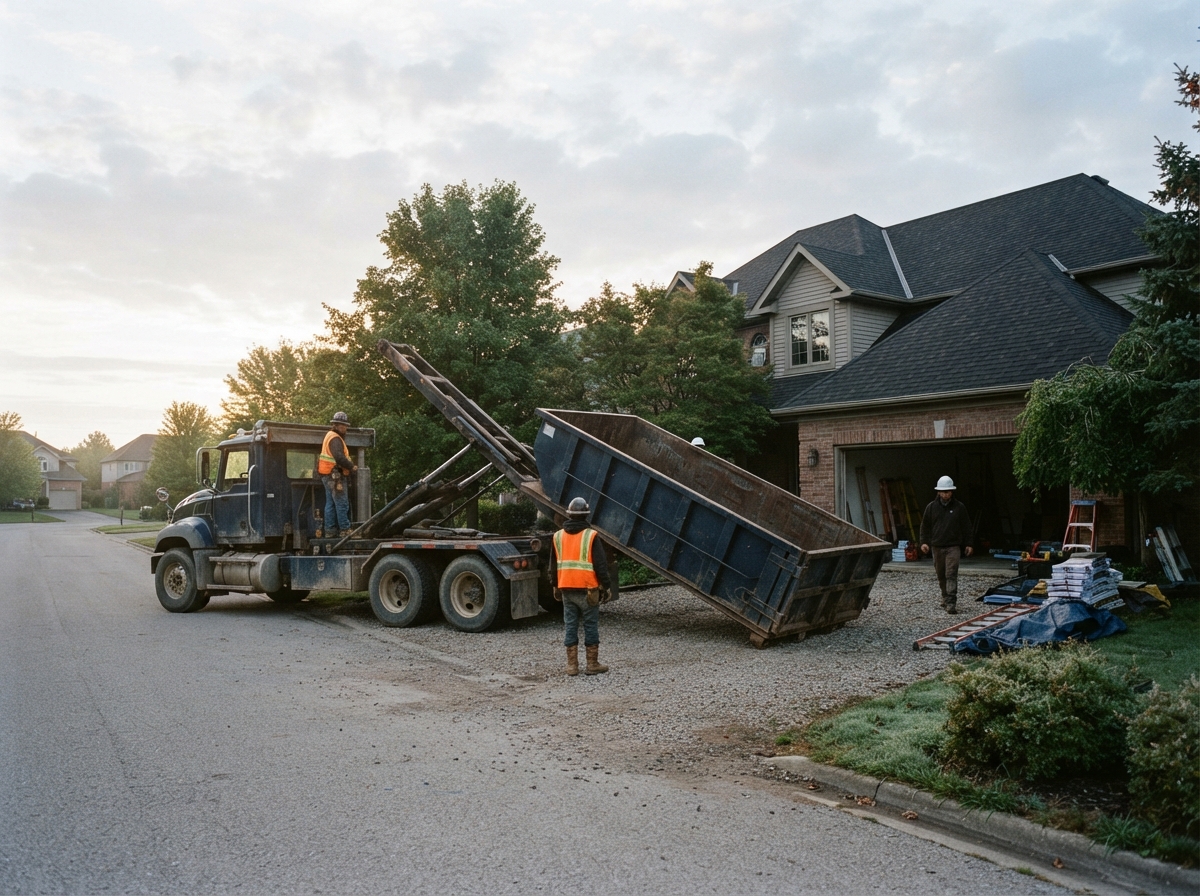
Delivery timed to the tear-off, not to a window.
The box is on site before the crew is on the roof, because a one-day tear-off only stays a one-day tear-off if nothing waits.
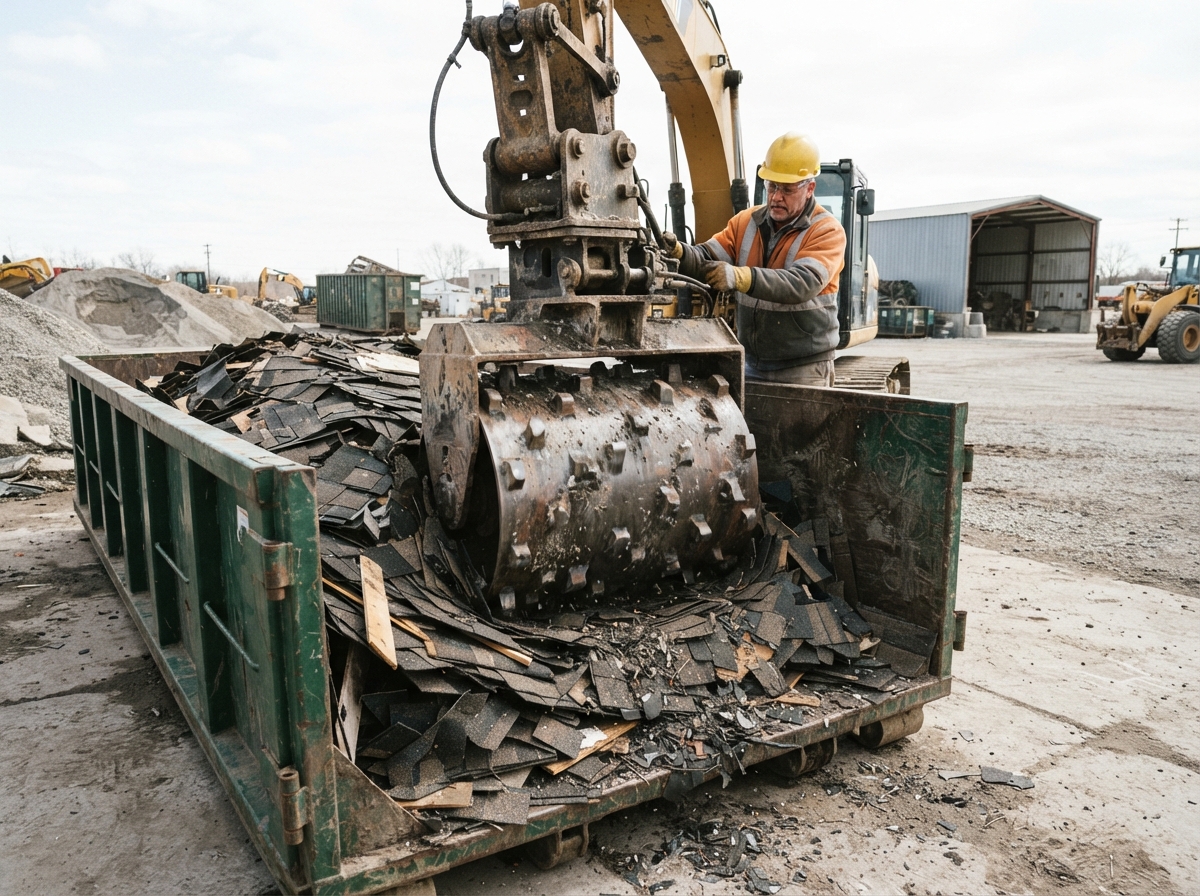
Straight answers about compaction.
Dense shingle loads gain less than mixed debris, and we say that before you book rather than after. The ten-minute demo exists so the question gets settled on your own material.

You do not have to change haulers.
If a hauler and a container are already working for you, keep both. Max Compacx can compact what is on your pad, and that is the whole arrangement.
Built for accounts, not one-off orders.
One account across every address, with the schedule adjusted when storm work stacks up.
Local and commercial.
Max Compacx serves Macon and Middle Georgia businesses on commercial and industrial accounts, dispatched locally rather than routed through a national call center. Homeowners replacing their own roof are outside what we do — the account is with the roofing company or the property owner.

Service Area
Service Area: Macon, Bibb County and Middle Georgia
Max Compacx delivers roofing containers and provides on-site compaction across Macon and Middle Georgia, working from a Hawkinsville Rd base with quick access to the I-75 and I-16 corridors and the Bibb County commercial corridors. Regularly served communities include Macon, Byron, Gray, Forsyth, Perry, Lizella, and Centerville.
If a job sits outside the communities listed, ask. Coverage depends on the route and the day's schedule, and it is a short conversation to find out.
Max Compacx
5900 Hawkinsville Rd, Macon, GA 31216
Monday – Friday, 7am – 5pm
Roofing Dumpster Rental in Macon, GA: Common Questions
Related Services
Contractor Dumpster Rental
recurring accounts for GCs, remodelers, and crews running multiple jobsites across Middle Georgia.
Roll-Off Dumpster Rental
how commercial container service works, from delivery through pull scheduling.
Dumpster Sizes: 20, 30 and 40 Yard
dimensions, footprints, and weight considerations for each container.
On-Site Waste Compaction
how the mobile unit works a container in place, and which streams actually benefit.
Start Your Roofing Dumpster Rental in Macon, GA
Tell us the roof, the layers, the address, and the day the crew starts. We will size the container for weight, get it on site before the tear-off begins, and give you a straight answer about whether compaction does anything for your debris. The on-site demo is free and takes about ten minutes.
Max Compacx
5900 Hawkinsville Rd, Macon, GA 31216
Monday – Friday, 7am – 5pm