
Property Management Dumpster Rental — Macon, GA
Property Management Dumpster Rental in Macon, GA
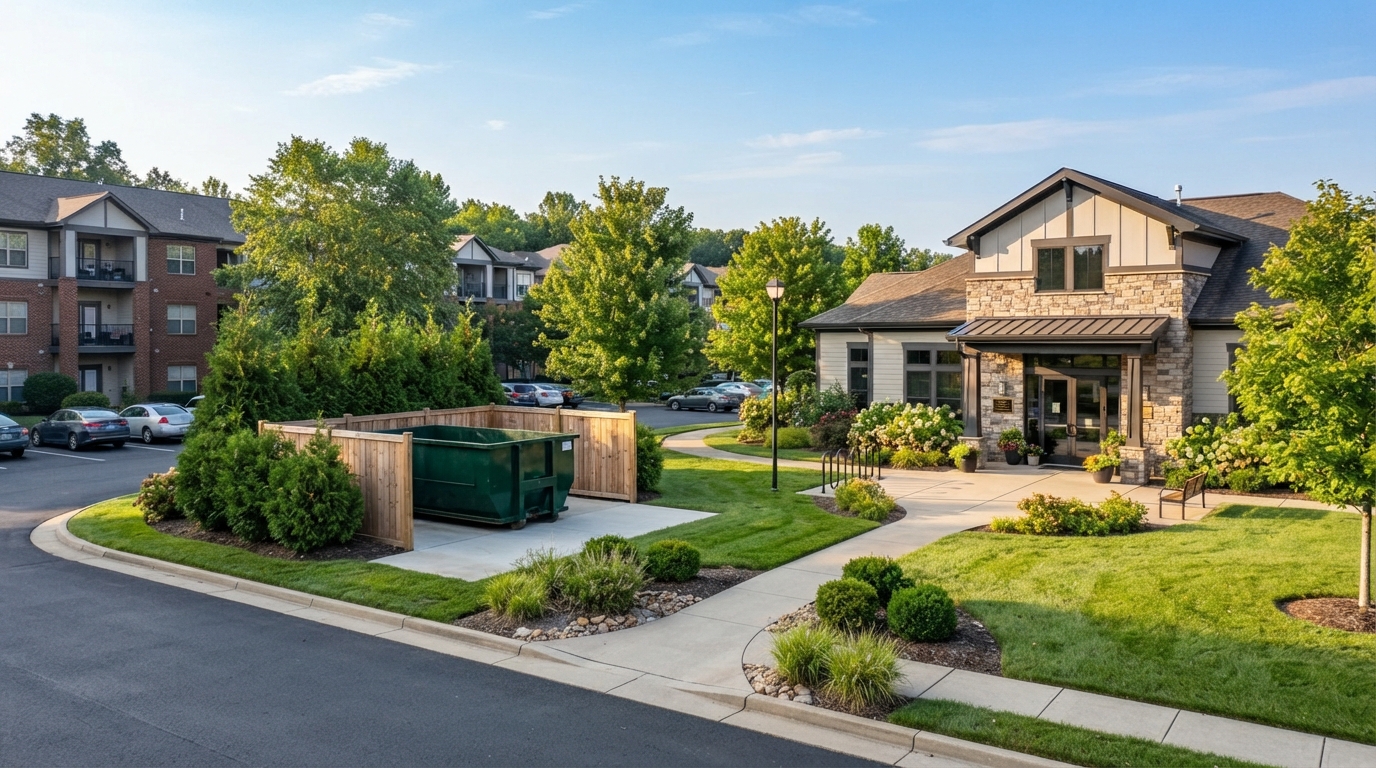
Max Compacx sets up property management dumpster rental in Macon, GA as one account across your whole portfolio — every apartment community, office building, and retail center on a single relationship, with per-property placement instructions and a service schedule built around turnover season instead of against it. You call and name the property.
We work with property management companies, multifamily owners, community and HOA managers, and commercial landlords across Macon, Bibb County, and Middle Georgia.
- Macon, GA based
- Monday – Friday, 7am – 5pm
- Commercial & Industrial Accounts
- One account, every property
What It Has to Handle
What Property Management Dumpster Rental in Macon, GA Has to Handle
Property waste is a baseline that runs forever — resident trash, move-in cardboard, packaging, bulk items — interrupted by spikes you can only half predict. A lease ends and one two-bedroom unit produces more volume in an afternoon than the building produced all week, and four units can end in the same week. A box sized for the quiet weeks is undersized during turn season, one sized for turn season wastes a parking space for nine months, and every unplanned pull is a line item somebody has to explain.
Who These Accounts Are Built For
Who These Accounts Are Built For
Different property types produce different waste on different rhythms. The account gets built around which one you are running.

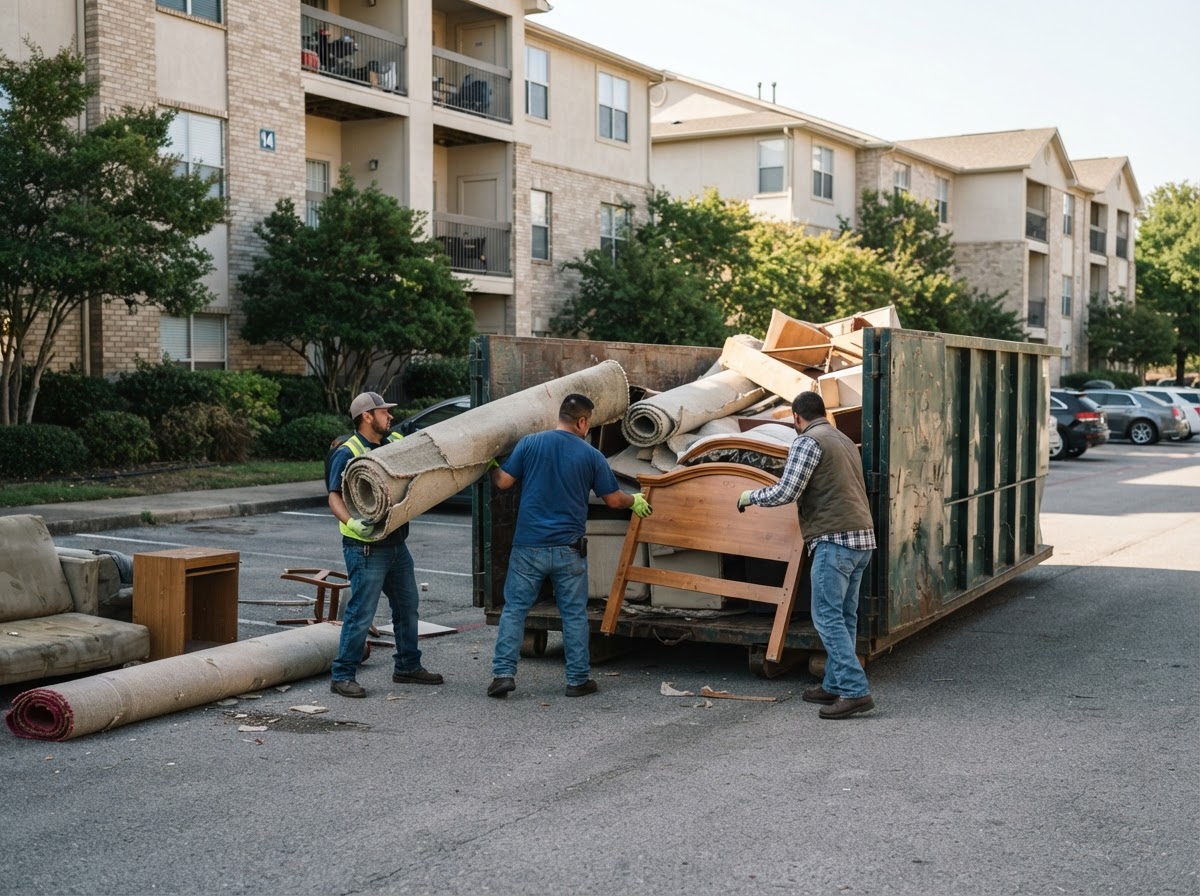
Steady resident waste, cardboard that spikes with every move-in, bulk items that appear beside the container without warning, and turnover debris tied to your lease calendar. Macon's stock runs from newer suburban communities to older downtown buildings, where access usually decides container size.

Lower baseline volume, mostly cardboard and paper, with sharp spikes when a tenant moves out. One of the lighter, airier streams we handle, and a strong candidate for compaction.
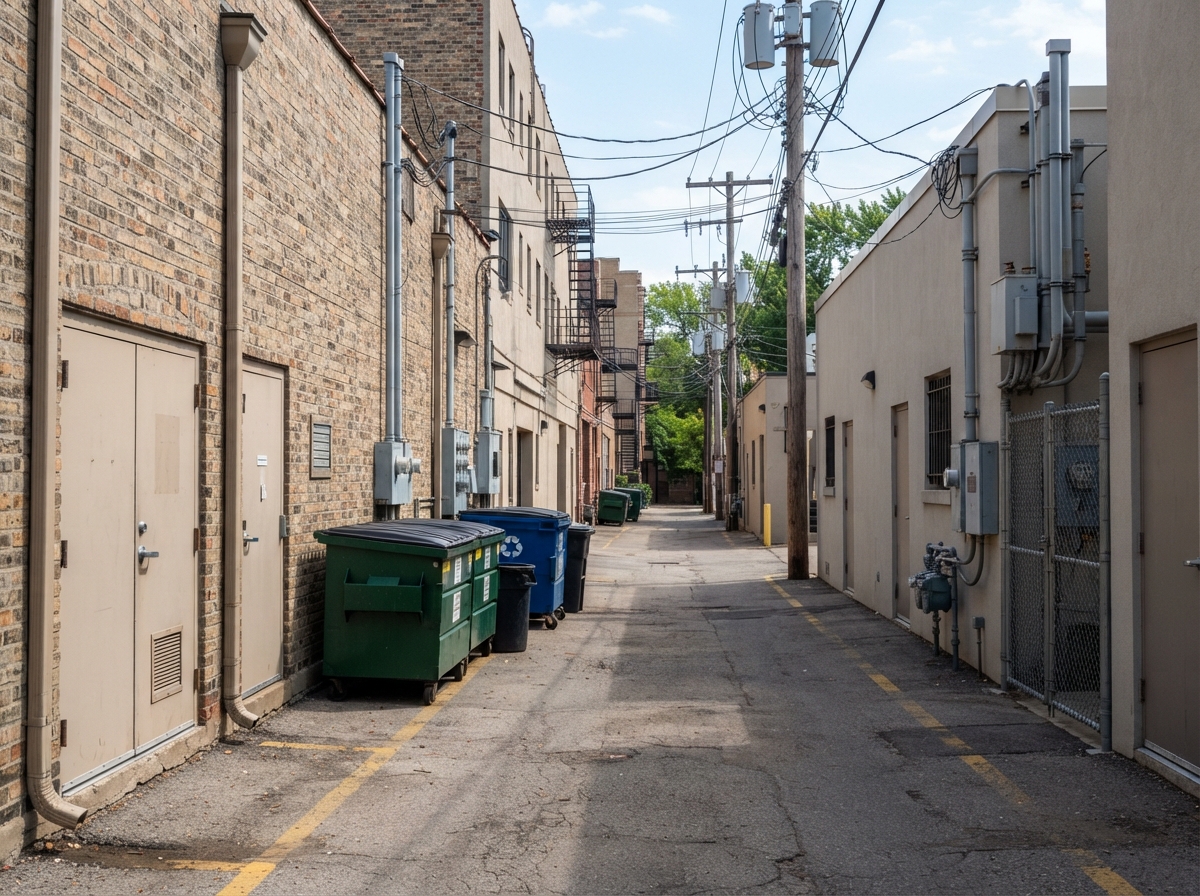
A shared container behind a strip center fills with boxes nobody broke down, and corrugated is mostly air, so this is where volume reduction runs highest. Seasonal swings mean the plan flexes several times a year.
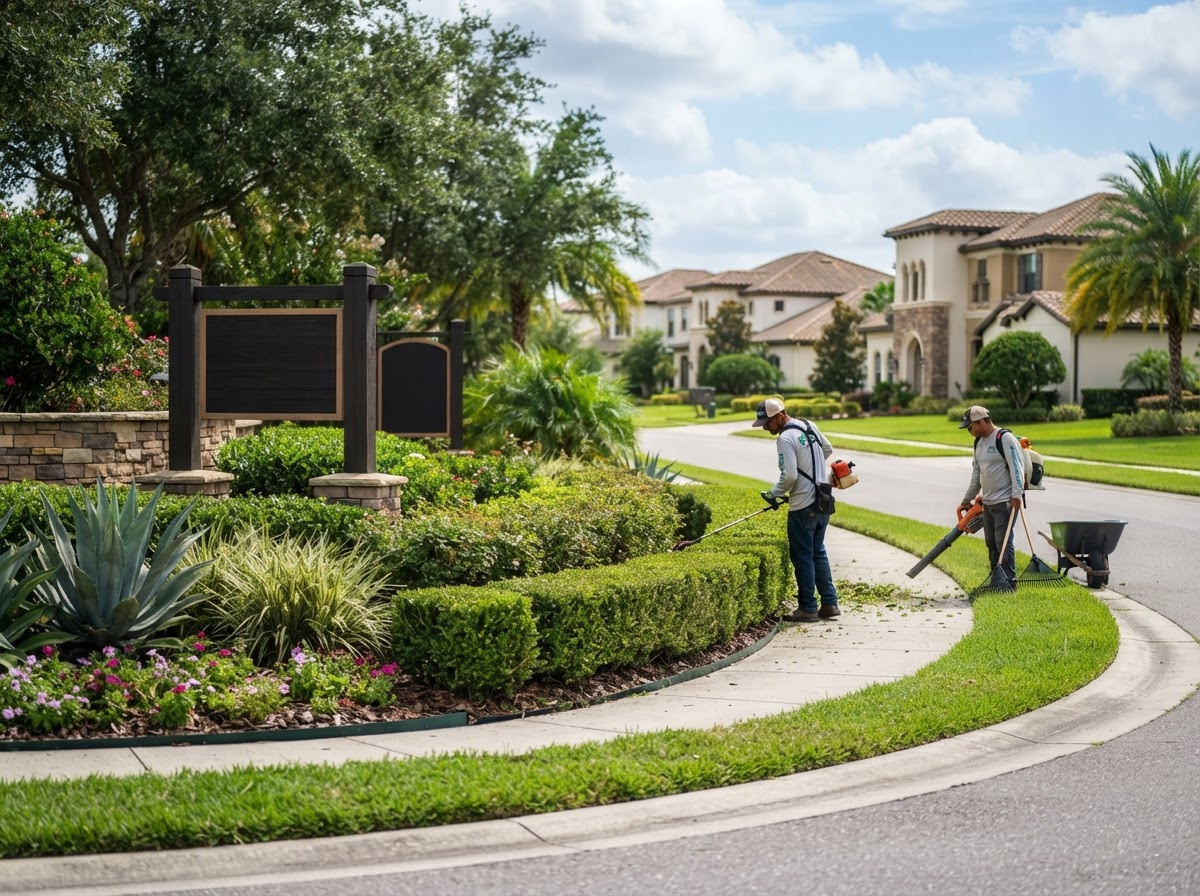
Common-area projects, amenity refreshes, storm debris, and clubhouse cleanouts — often for a defined window rather than a standing service.
Accounts are commercial: the management company, the ownership entity, or the association, never an individual resident.
Portfolio Service
One Account, Every Property: How Portfolio Service Runs
One account for your management company, with every property hanging off it, so a container at a Macon apartment community and one at a Byron retail center are two line items on one relationship instead of two separate rentals.
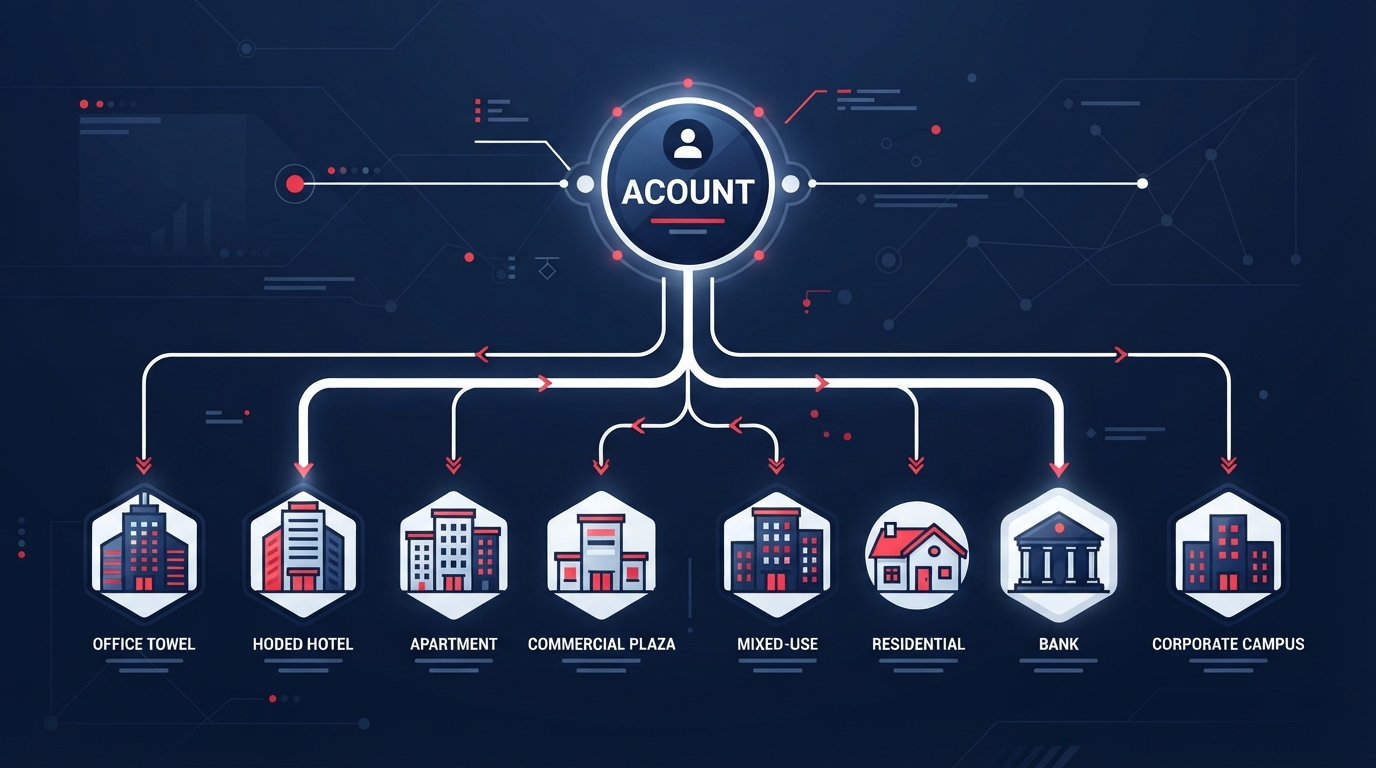
Per-property instructions get recorded once.
Gate codes, pad location, the approach the truck uses, quiet hours, and who to call on site — recorded per address, reused every time.
Cadence is set per property, not per company.
A 200-unit community and a six-suite office building do not need the same schedule, and cadences get revisited when volume changes. If your lease calendar concentrates ends in certain months, capacity gets scheduled ahead of the surge.
One point of contact, and billing with property-level detail.
Disposal still has to be allocated back to a specific property or owner, so the detail survives consolidation. Adding a property should take a phone call, not a process.
Turnovers and Surges
Turnovers, Cleanouts, and the Surges in Between
None of these are emergencies if the container plan expects them.
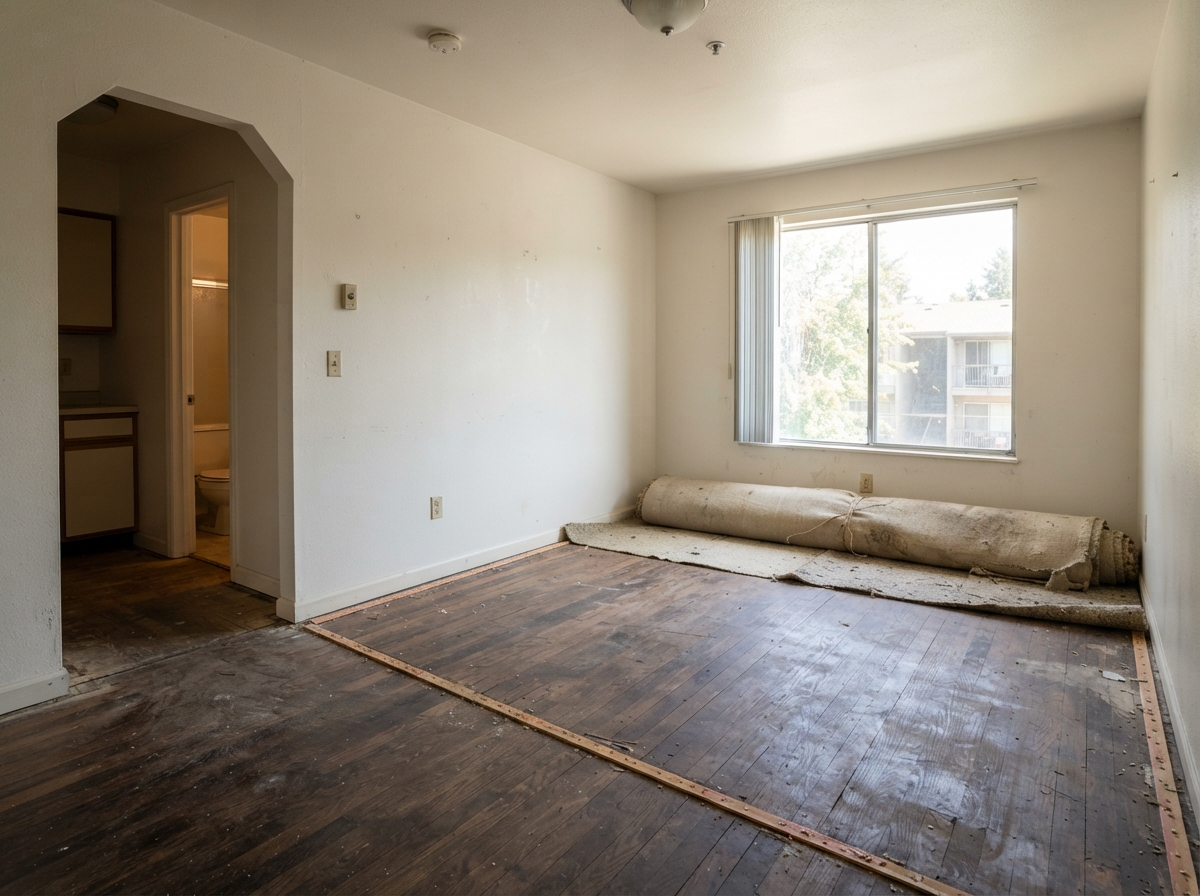
Carpet, pad, blinds, appliances, cabinet fronts, and whatever the last resident left. One unit is manageable; several turning in the same week is what breaks a schedule, and the lease calendar says so in advance.
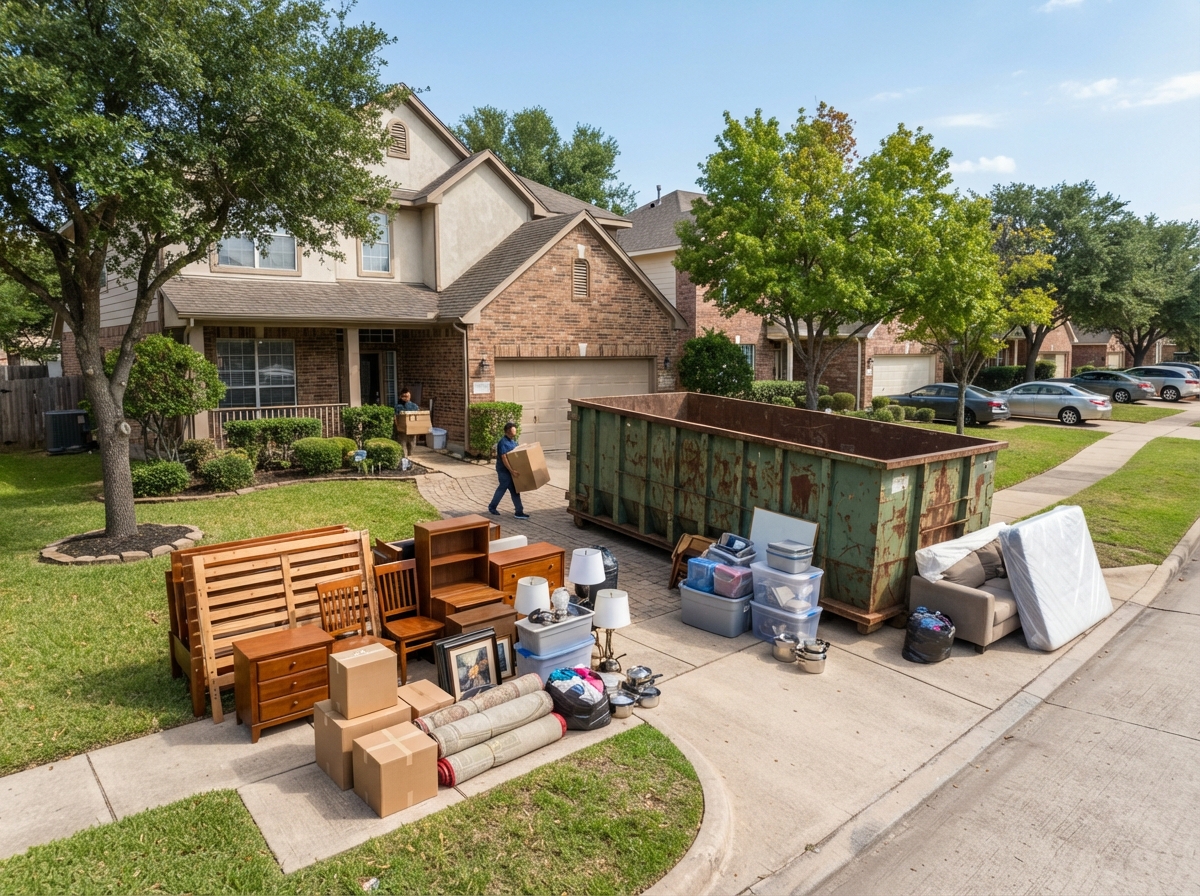
Recovered units come with furniture and household goods rather than construction debris: bulky, light, awkward to load. Furnished-unit volume is consistently underestimated, so it is usually worth sizing up. The legal process is your counsel's lane, not ours.
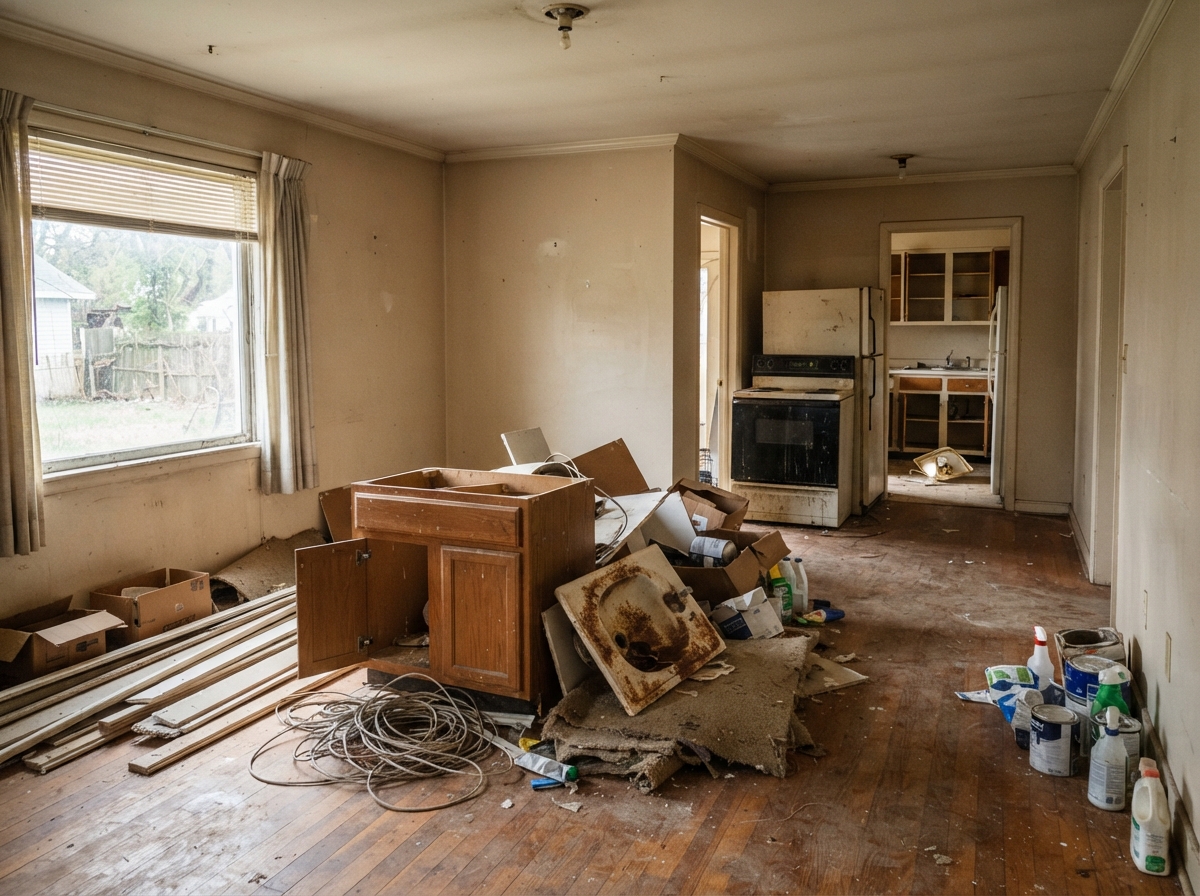
A property arrives with contents in place, and everything has to leave before it can be listed or leased. Single-visit, high-volume, hard date — which makes a 40-yard the normal call.
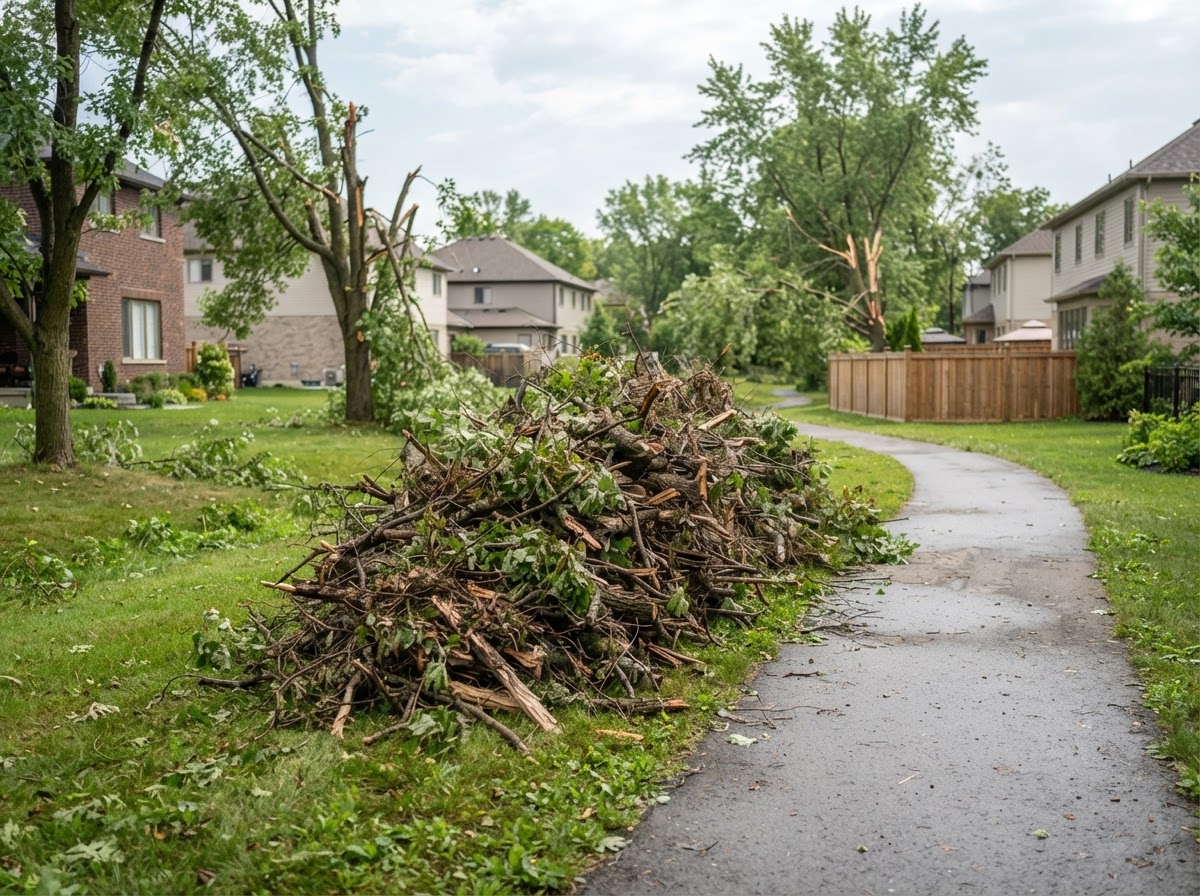
Storm work is on-call by nature, and an open account makes it a dispatch decision rather than a new customer setup. Clubhouse refreshes, pool furniture, and bulk-item collection days run the other way: planned dates, easy to size for.
When an outside crew handles a unit rehab or a commercial fit-out, that container account usually belongs with the crew doing it — see contractor dumpster rental.
Three Moves
Extra Pull, Bigger Box, or Compact It
When a property container keeps filling before the scheduled pull, there are three moves.
The default, and usually the most expensive, because every unscheduled pull is a full truck trip charged against a budget that did not plan for it. It is the right answer on a hard-deadline cleanout.
A 20 to a 30, or a 30 to a 40, buys capacity — if the pad has room and the material is light enough to fill the space before you reach a weight limit. On an older downtown Macon property with one usable corral, that is often not an option.
Same container, same corral, same pad. A mobile unit works the load in place, the top opens back up, and the box keeps taking waste. Plan around roughly 2:1 on mixed property waste; cardboard-heavy loads approach 3:1.
Compaction wins when the load has air in it and the property produces enough volume for the reduction to matter — not on dense material, and not on a property that pulls a container rarely.
Compaction Absorbs Surges
How On-Site Compaction Absorbs Cleanout Surges
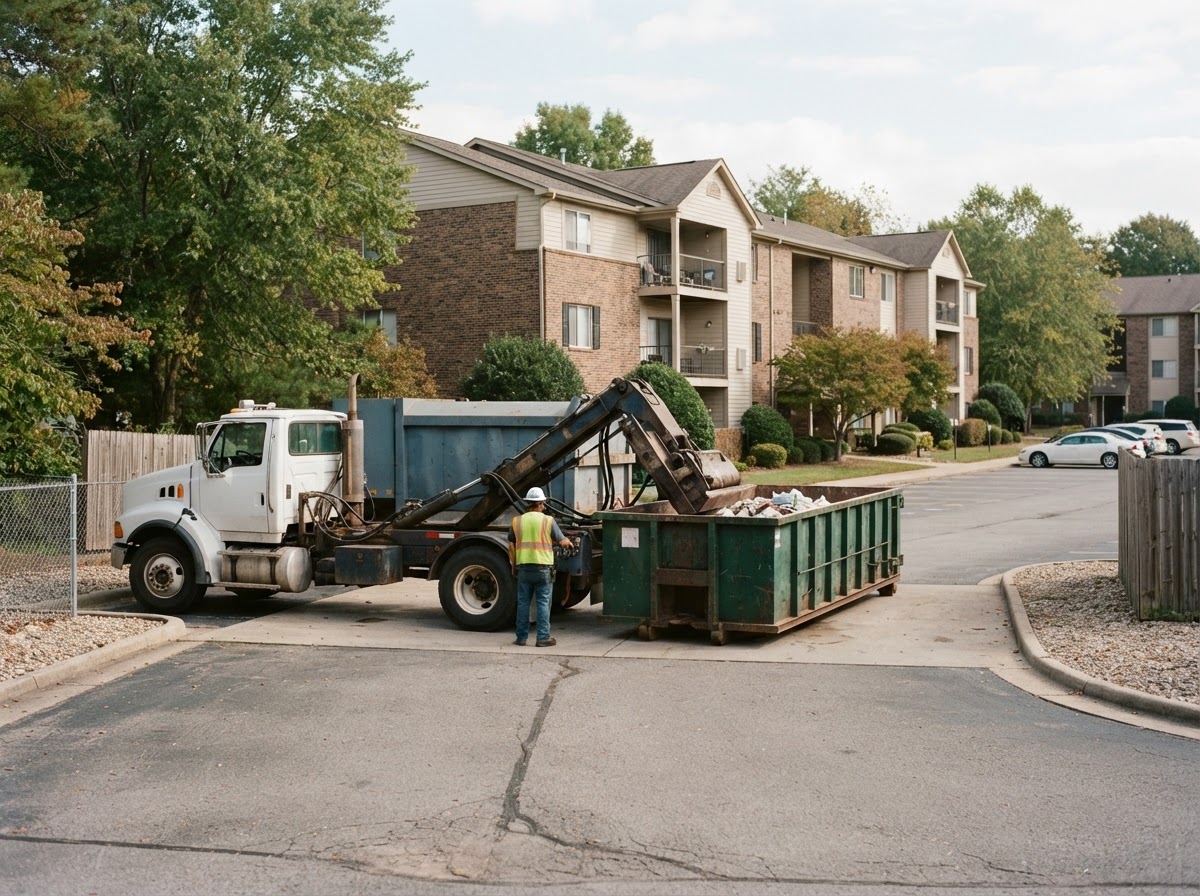
Here is the difference between a container from Max Compacx and any other box behind a Macon apartment community: ours gets worked before it goes. A mobile unit compacts the container in place, so the box does not leave until it is genuinely full rather than full of air. For property management, the value is the spike: a compacted container still has room when four units turn at once.
Volume reduction runs up to 70%, and it is entirely material-dependent:
| Material stream | Typical volume reduction |
|---|---|
| Cardboard, packaging, recyclables | 60–70% |
| Compost and organics | 50–60% |
| C&D debris, wood and pallets, mixed metals | 40–50% |
Move-in cardboard and retail packaging sit at the top of that range; turnover debris with tile or cabinet carcasses lands in the C&D band. Dense material may not be worth compacting at all, and we will say so.
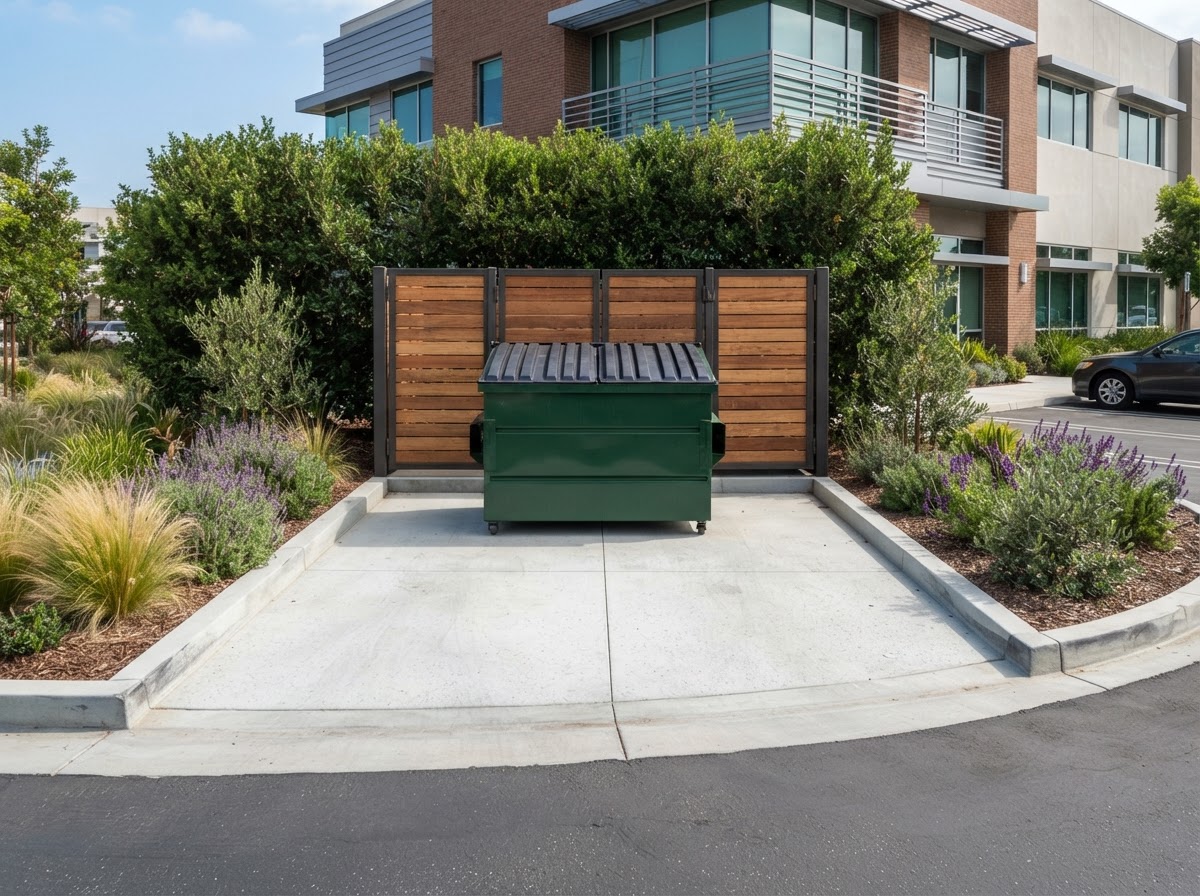
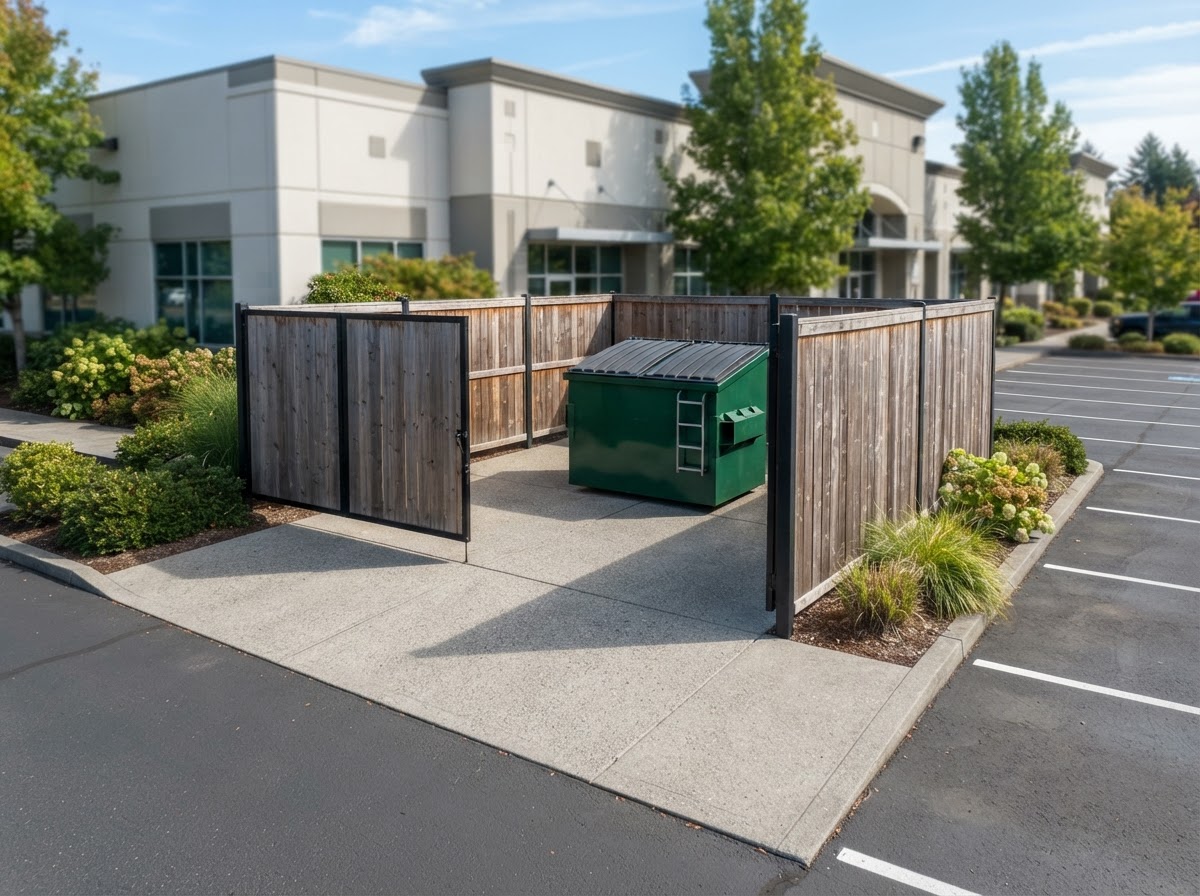
A loose load often weighs two to three tons when the container looks full, while a compacted load can approach eight to twelve tons — roughly 95% of the legal DOT payload. Compaction reduces haul-offs. It does not eliminate them, and it is not a substitute for a hauler.
Two ways to start. Keep the container and hauler you already use and have us compact what is on your property, or we provide both together. The free demo takes about ten minutes.
Container Sizing
Which Container Size for Which Kind of Property Work
Three sizes cover nearly every property application in Middle Georgia. Full dimensions and weight detail live on the sizes page.
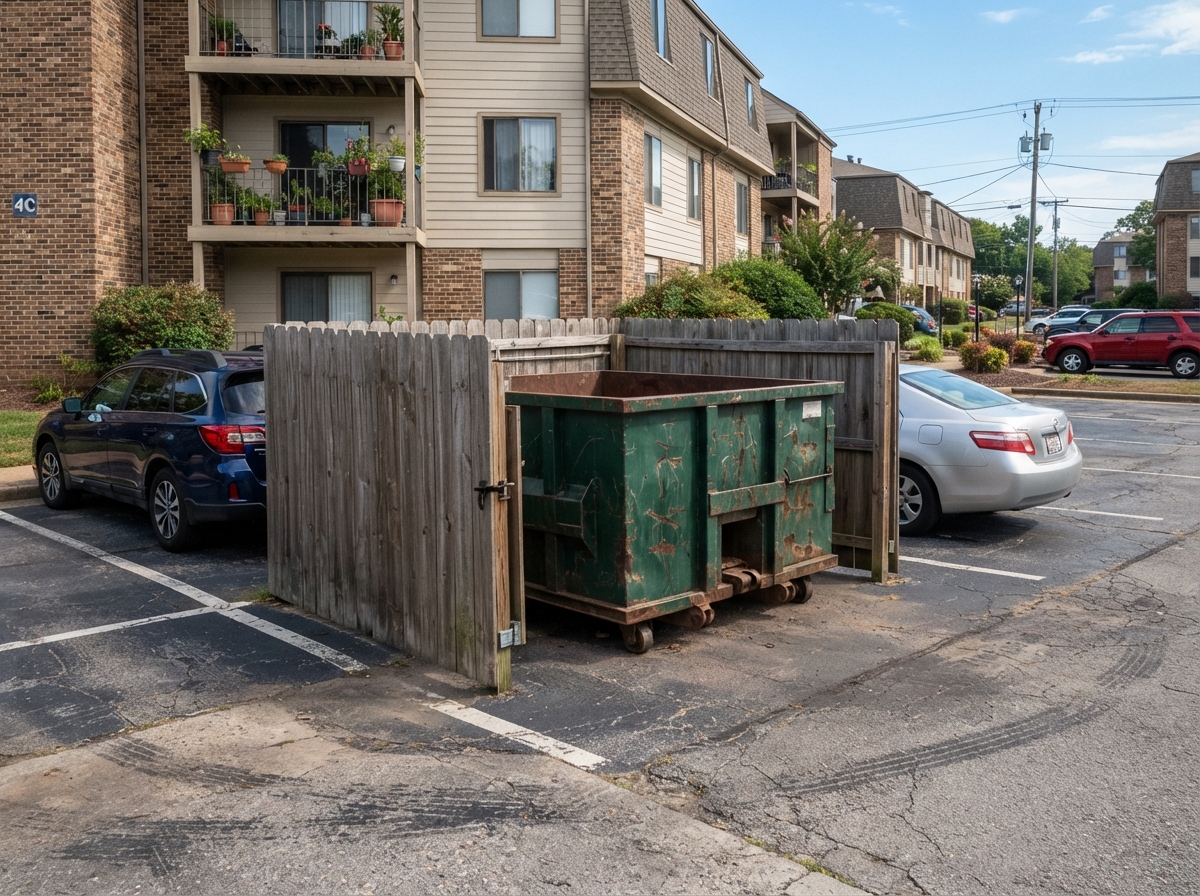
Fits where the others do not: tight corrals, shared alleys, older downtown properties, and sites with one usable approach. Also right when material is dense enough that weight fills the box before volume does.
See 20-Yard details →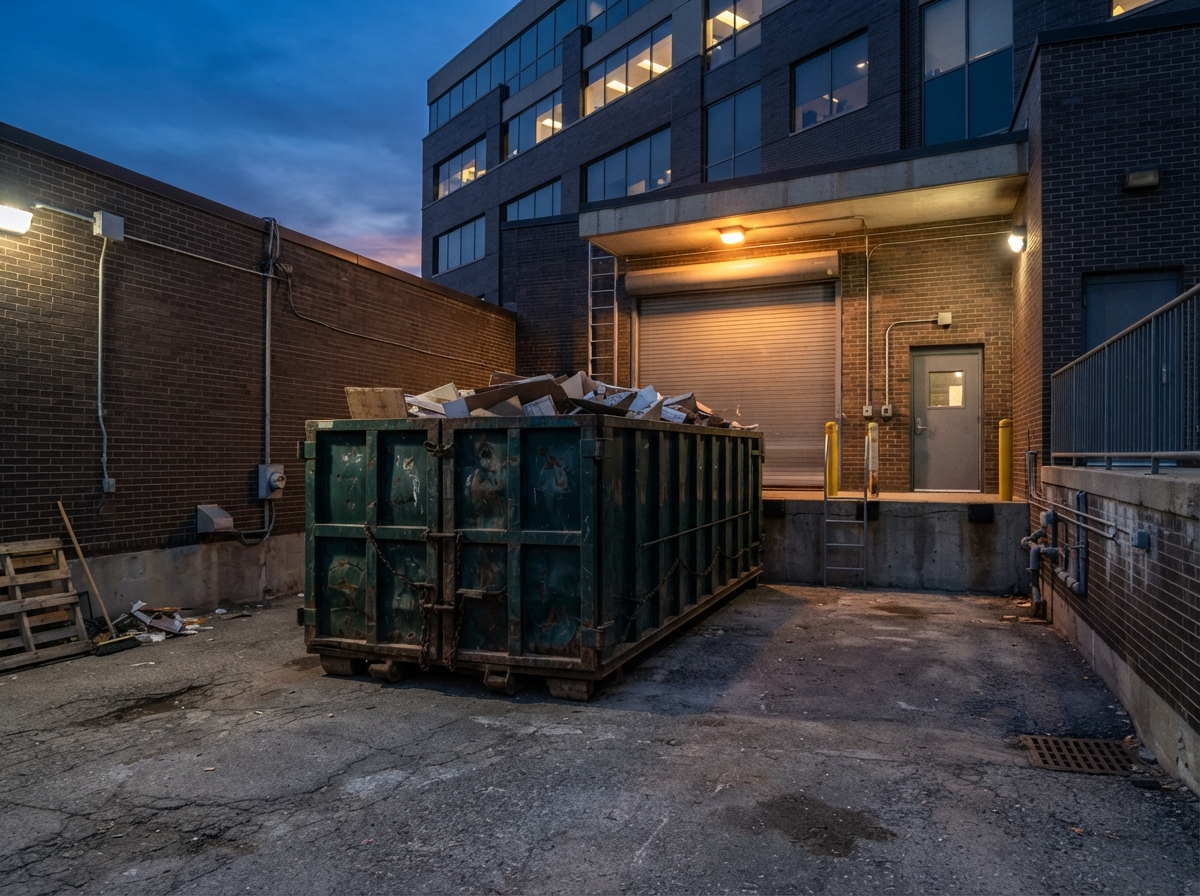
The default for active turnover work — carpet, appliances, furniture, and mixed unit debris without the footprint a 40 demands. Most multifamily accounts start here and adjust after the first turn cycle.
See 30-Yard details →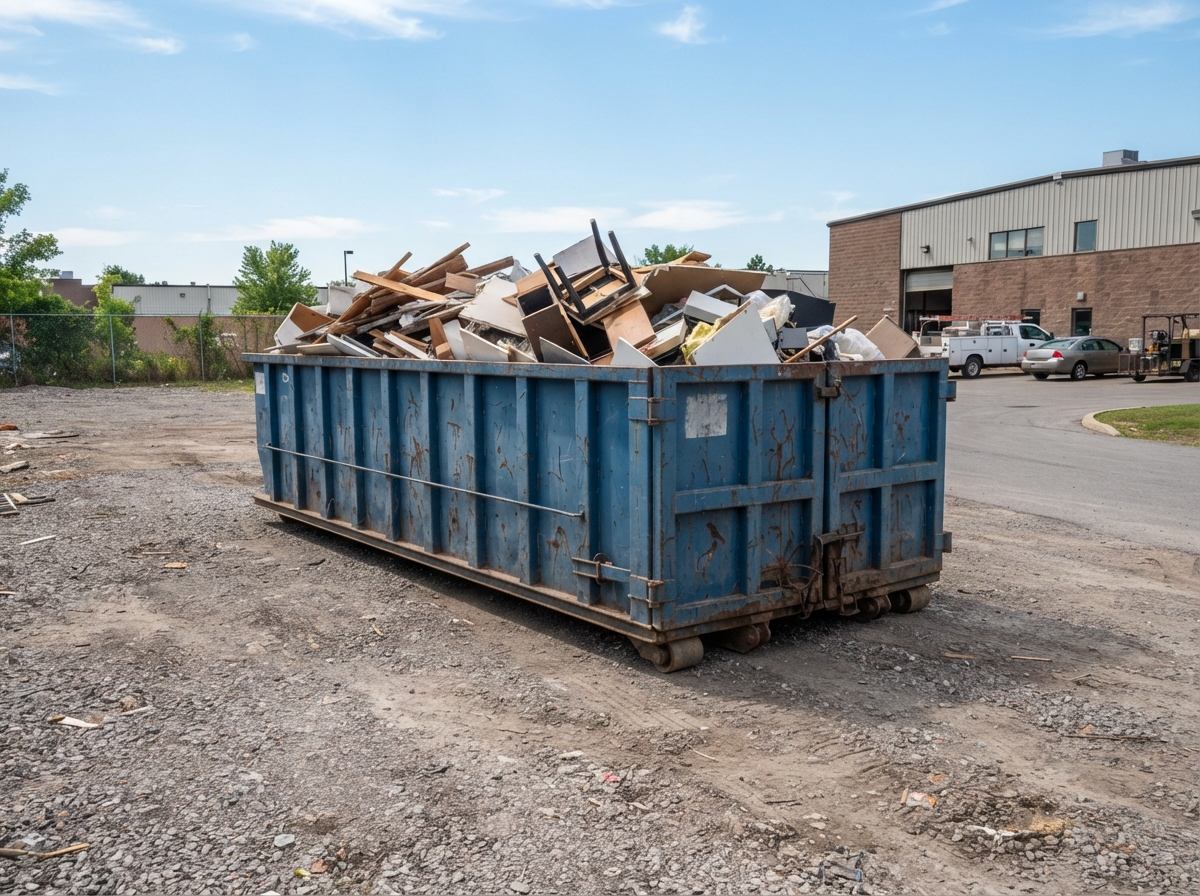
For full cleanouts, foreclosure and bank-owned properties, and multi-unit turn weeks where debris is bulky and light. Also where compaction pays off hardest. Rated well over fifteen tons of static load.
See 40-Yard details →Between sizes? Describe the property, the material, and the access, and we will size it.
Placement and Appearance
Placement and Site Appearance on Tenant-Facing Properties
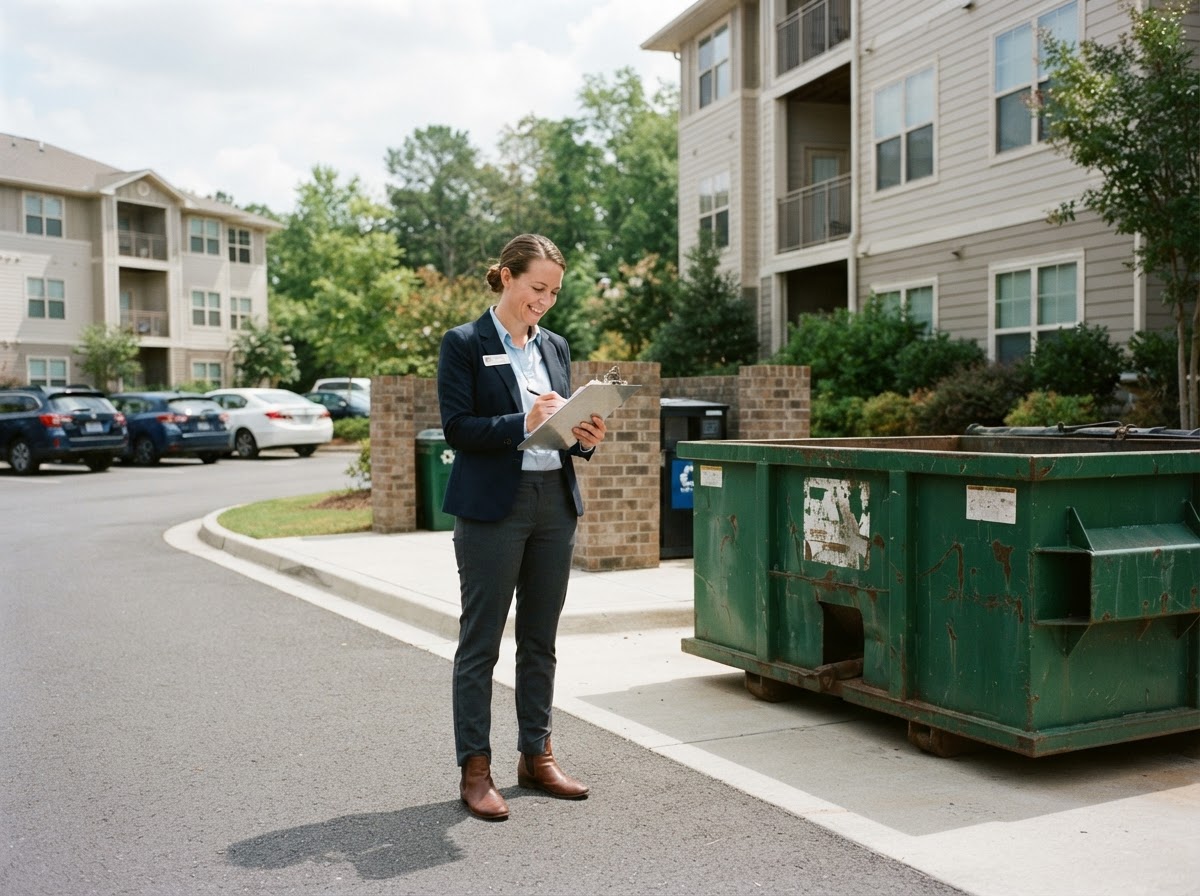
On a jobsite, a container is equipment. On a property somebody lives in or leases space in, it is part of the site. Max Compacx places and services containers with that difference in mind.
Placement is agreed before delivery, not decided by the driver.
Where the box goes on each property gets recorded, and it goes back to the same spot every time. Residents notice when a container migrates.
Access and surface get confirmed up front.
A roll-off truck needs a clear approach, overhead space free of lines and limbs, and a surface that will hold a loaded box. Asphalt can mark under sustained load in Georgia heat, so flag it and we bring boards. Corral gates, bollards, and parked vehicles most often turn a scheduled service into a wasted trip.
Service happens on your terms.
Tell us the windows that do not work — leasing tours, quiet hours, the landscape crew's morning — and service gets scheduled around them where the route allows.
Accepted and Excluded
What Goes In a Property Container — and What Does Not
Being clear up front avoids a rejected load and a return trip that lands on your turn schedule.
Accepted
General property and tenant waste · furniture, mattresses, and household goods · carpet, pad, and flooring · appliances · cabinetry and millwork · blinds, fixtures, and trim · cardboard, packaging, and paper · yard and storm debris · mixed turnover and light renovation debris.
Not accepted
Liquids of any kind · dirt, soil, aggregate, and other dense no-air material · hazardous or regulated waste · sealed drums and pressurized vessels · anything the receiving hauler will not accept.
Dirt and aggregate hit weight limits long before they fill a container, and nothing under pressure goes into a container that will be worked. Paint, pool chemicals, motor oil, and propane cylinders left in a unit are what turn up by accident — tell us before the pull.
Scheduling
Scheduling Around Turn Dates and Tenants
We do not publish a guaranteed turnaround window, because a promise that cannot be kept in the middle of a route is worse than no promise. You get a real window when you call, and an honest answer if the one you need is not available.
A container booked a few days out against a known turn date gets planned into the route; a same-day call depends on the route.
Properties with predictable weekly or biweekly volume belong on a standing cadence, since on-call service is the most expensive way to move a container.
Cleanouts and amenity projects get their own booking, with the box on site the day before the crew.
Max Compacx runs from a Hawkinsville Rd yard in Macon with quick access to the I-75 and I-16 corridors, covering the multifamily, office, and retail corridors across Bibb County and the towns around it.
Start to Finish
How a Property Management Account Runs, Start to Finish
You describe the portfolio.
Properties, types, roughly what each produces, your pull frequency, and when turnover concentrates.
Free on-site demo.
About ten minutes, on a container you already have.
The account is set up once.
Company- or ownership-level, with placement and access recorded per property.
Delivery and normal operation.
Containers go where you specified, and residents, tenants, and maintenance staff use them as they do now.
Compaction visits.
A mobile unit works the load in place, typically once or twice between pulls.
Pull or swap.
When the box is full by weight or volume it is hauled and returned empty or replaced.
Surges and new properties.
Call with a property and a date. Steps one through three do not repeat.
Every visit includes before-and-after inspection and photo documentation. The drum is narrower than the container, so it works the load without contacting the walls; there is no hydraulic downforce against the box, and safeguard wheels and end guards keep the unit off the container structure. Our operators run a zero-touch policy on your equipment.
Why Max Compacx
Why Middle Georgia Property Managers Work With Max Compacx
One account across the whole portfolio.
Properties get added and removed as the portfolio changes, with placement, access, gate codes, and service windows recorded once and followed every time.
Compaction is part of the service, not an upsell.
The container gets worked before it goes, which means fewer pulls on the same box and room left when turnover spikes.
You do not have to change haulers.
If your hauling arrangement works, keep it. Max Compacx compacts the container already on your property, and that is the simplest way for most portfolios to start.
Straight answers about fit.
Low-volume properties and dense waste streams do not benefit much from compaction, and we say so before you agree to anything. The ten-minute demo lets you judge it on your own material.
Commercial, local, and documented.
Max Compacx serves Macon and Middle Georgia businesses on commercial and industrial accounts, with photo documentation on every visit.
Service Area
Service Area: Macon, Bibb County and Middle Georgia
Max Compacx delivers containers and provides on-site compaction for property management accounts across Macon and Middle Georgia. Regularly served communities include Macon, Byron, Gray, Forsyth, Perry, Lizella, and Centerville, along with the surrounding Bibb County multifamily, office, and retail corridors. If a property sits outside them, ask — coverage depends on the route and the schedule.
Max Compacx
5900 Hawkinsville Rd, Macon, GA 31216
478-722-3852
office@MaxCompacx.com
Monday – Friday, 7am – 5pm
FAQ
Property Management Dumpster Rental in Macon, GA: Common Questions
Related Services
Related Services
Contractor Dumpster Rental
For the renovation and rehab crews you hire: one account across their jobsites, sized for construction debris.
Learn moreOn-Site Waste Compaction
How the mobile unit works a container in place and which material streams benefit most.
Learn moreRoll-Off Dumpster Rental
The container service itself: sizes, delivery, and how pull frequency drives cost.
Learn moreContainer Sizes
Dimensions, capacity, and weight detail for the 20, 30, and 40-yard containers.
Learn moreStart Your Property Management Dumpster Rental in Macon, GA
Tell us how many properties you manage, what they produce, and how often your containers leave now. We will size the containers, set one account across every property, and tell you honestly whether compaction moves your numbers. The on-site demo is free and takes about ten minutes.
Max Compacx
5900 Hawkinsville Rd, Macon, GA 31216
478-722-3852
office@MaxCompacx.com
Monday – Friday, 7am – 5pm