
Byron, GA · I-75 Exits
Commercial Dumpster Rental in Byron, GA
Roll-off containers and mobile on-site waste compaction for the warehouse, distribution, light industrial and construction operations working Byron's I-75 exits.
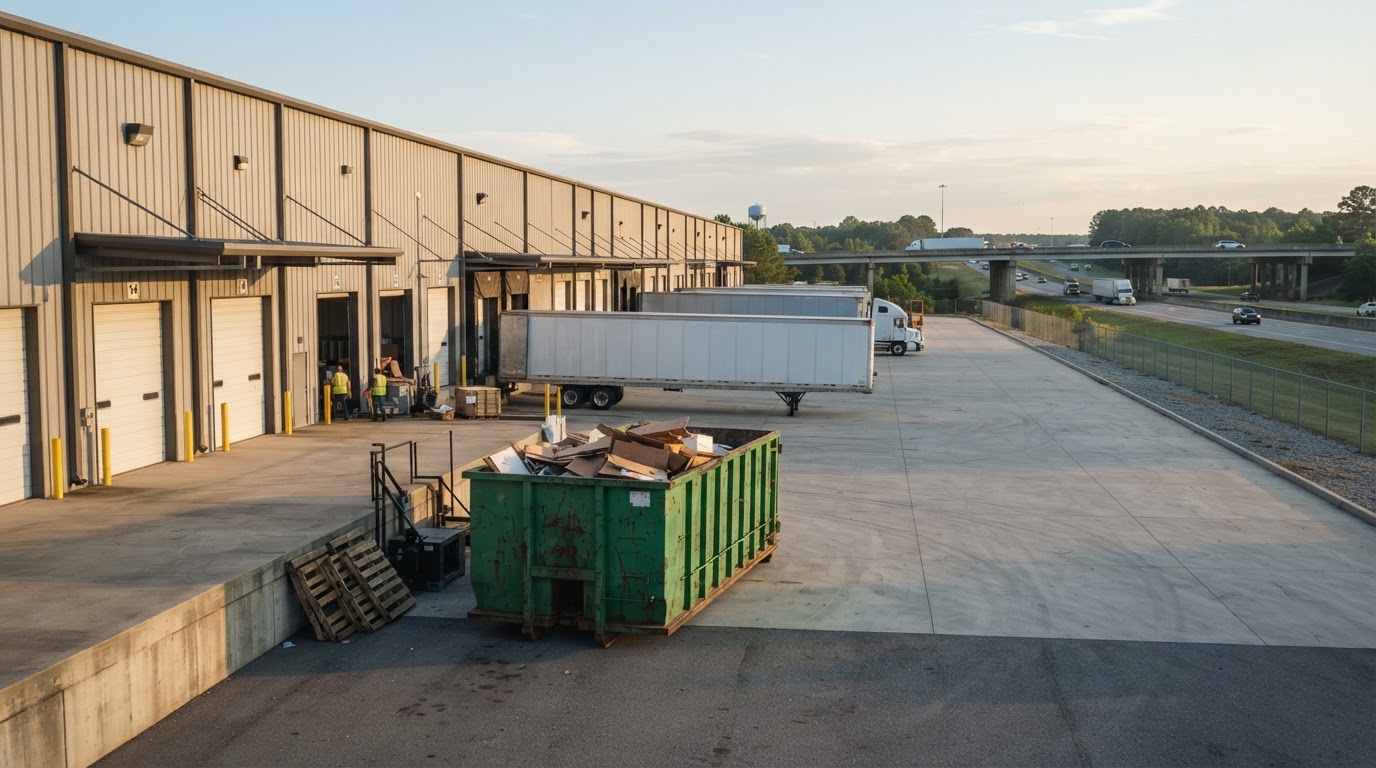
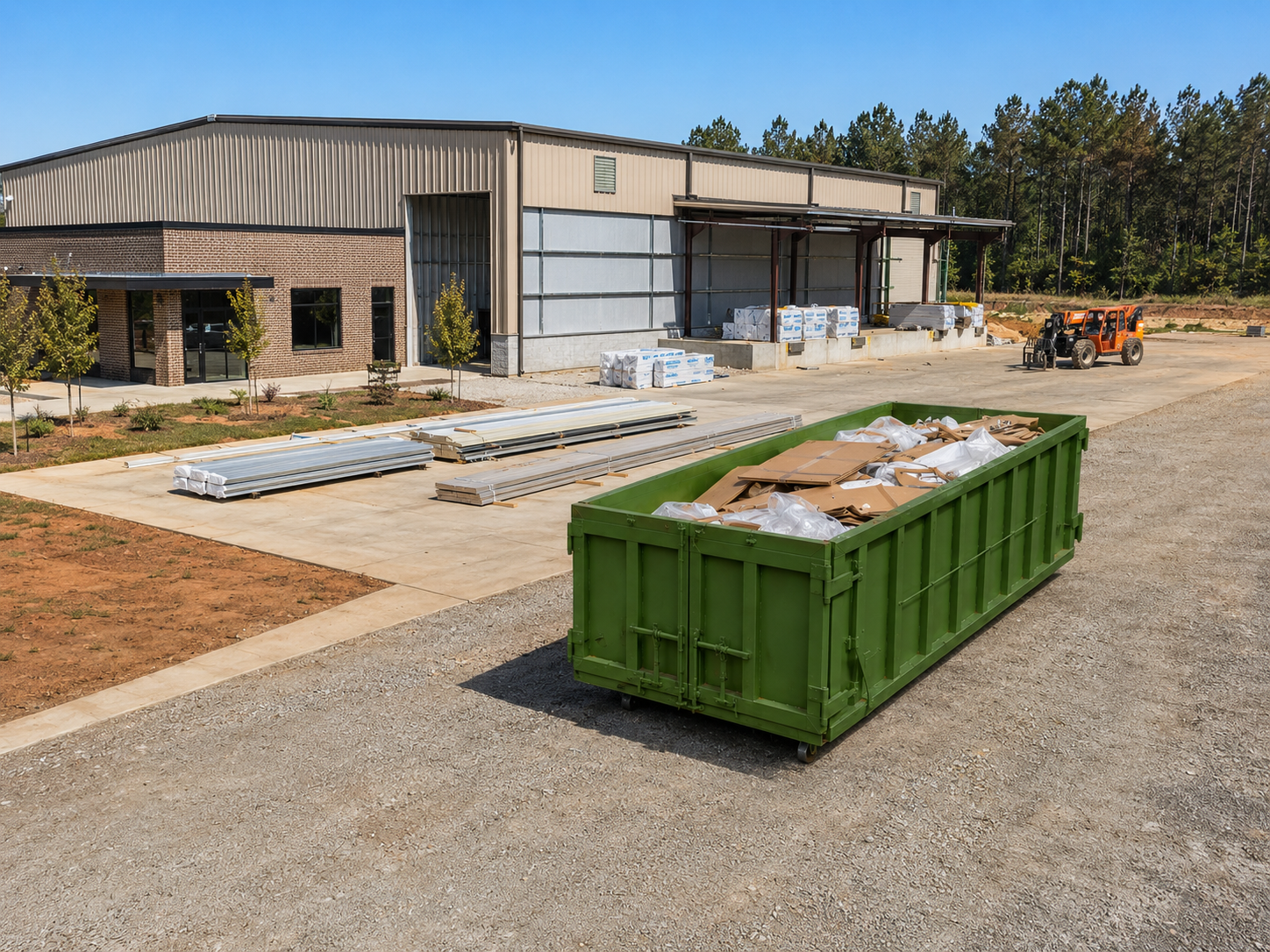
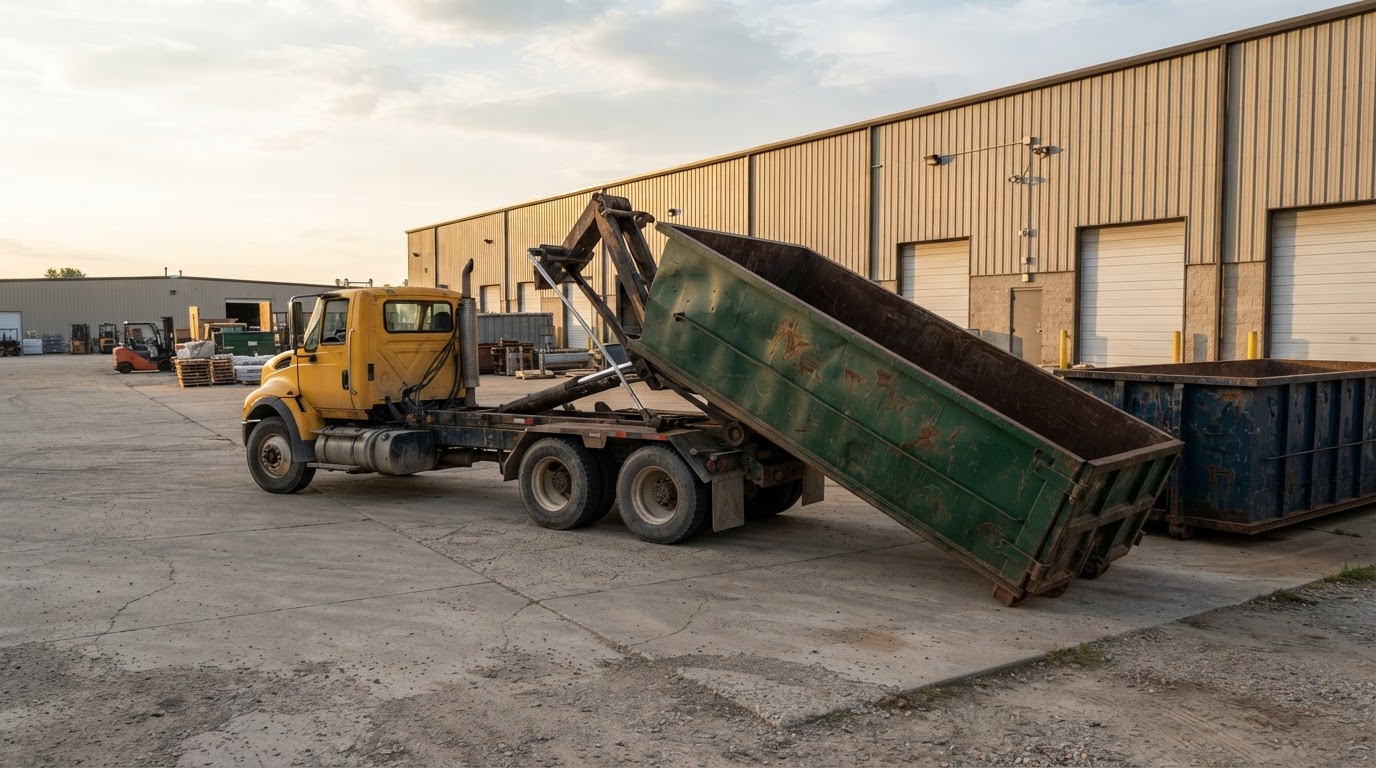
Max Compacx provides commercial dumpster rental in Byron, GA to businesses on the Peach County side of the interstate — buildings where freight arrives strapped to pallets and leaves as corrugated, film and dunnage. We deliver 20-, 30- and 40-yard roll-off containers into the Byron industrial and distribution areas, and we compact those containers where they already sit. Out here the box is full long before it is heavy.
Why Byron Waste Is a Volume Problem
Byron sits on the freight side of Middle Georgia. The I-75 exits put warehouse and distribution buildings within a minute of the interstate, US-49 carries the local commercial traffic through town, and the industrial and distribution areas around those exits generate the lightest, bulkiest waste stream we handle anywhere in the territory.
That changes what a container plan has to solve for. Three points shape almost every Byron account:
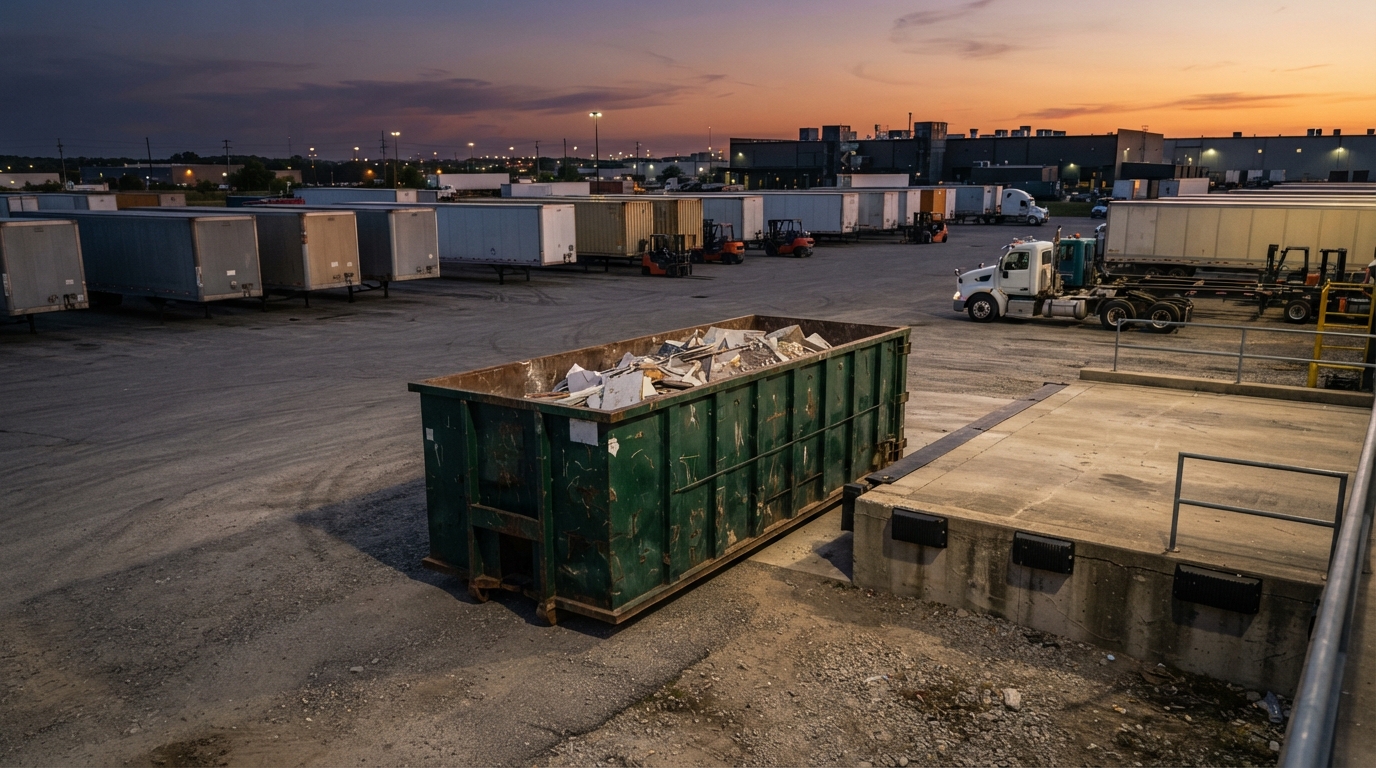
- Fill rate sets the schedule, not container size. A larger box on a dock producing this much packaging is simply a larger box that fills a day later.
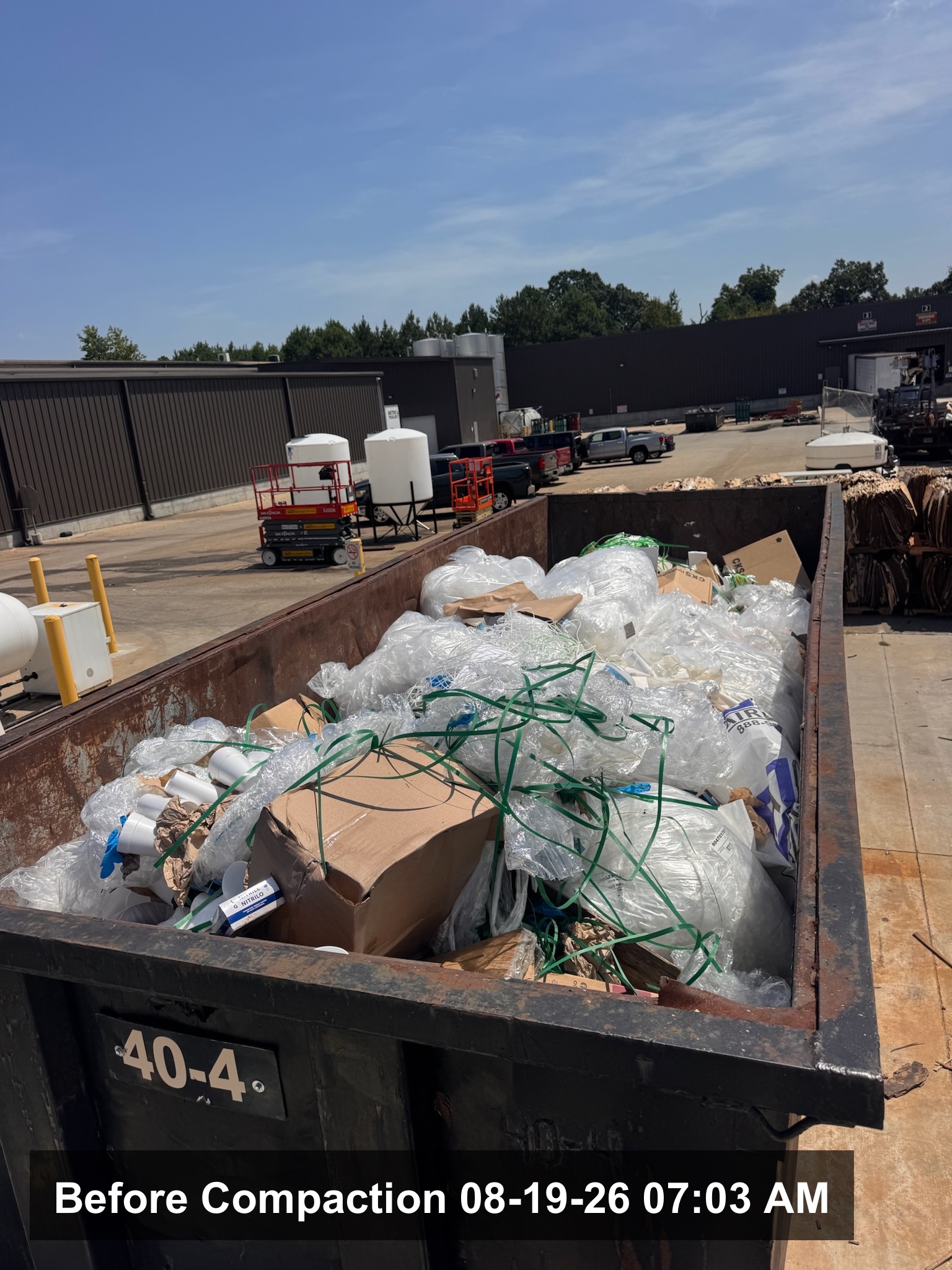
- The material is mostly air. Corrugated, stretch wrap, banding, dunnage and broken-down cartons take up enormous room and weigh very little, so containers leave light.
- The volume arrives in waves. A heavy inbound week and a slow one do not want the same pull cadence, and a fixed schedule gets one of them wrong.
A site running dense material is the opposite case, and we treat it as one. Some Byron waste streams have very little air in them to give back.
Commercial Dumpster Rental in Byron, GA: How the Account Works
Max Compacx builds a Byron account around what comes off the dock in a normal week and in a busy one. You describe the material and the pace, we size the container to it, and compaction visits get placed between pulls so the box reaches its real capacity rather than its visible one.
There are two ways to start. The first leaves your setup alone: your container stays, your approved local hauler stays, your disposal terms stay where you negotiated them, and Max Compacx works the load already sitting on your pad so it leaves less often. The second is container and compaction together, on one account and one schedule. Either way it begins with a free on-site demo — about ten minutes, at your building, on your own waste in your own box.
Accounts here are commercial and industrial only.
Container Work Around Byron
Byron work sorts into three shapes, and each one behaves differently once the container is on the ground.
Warehouse and Distribution Docks
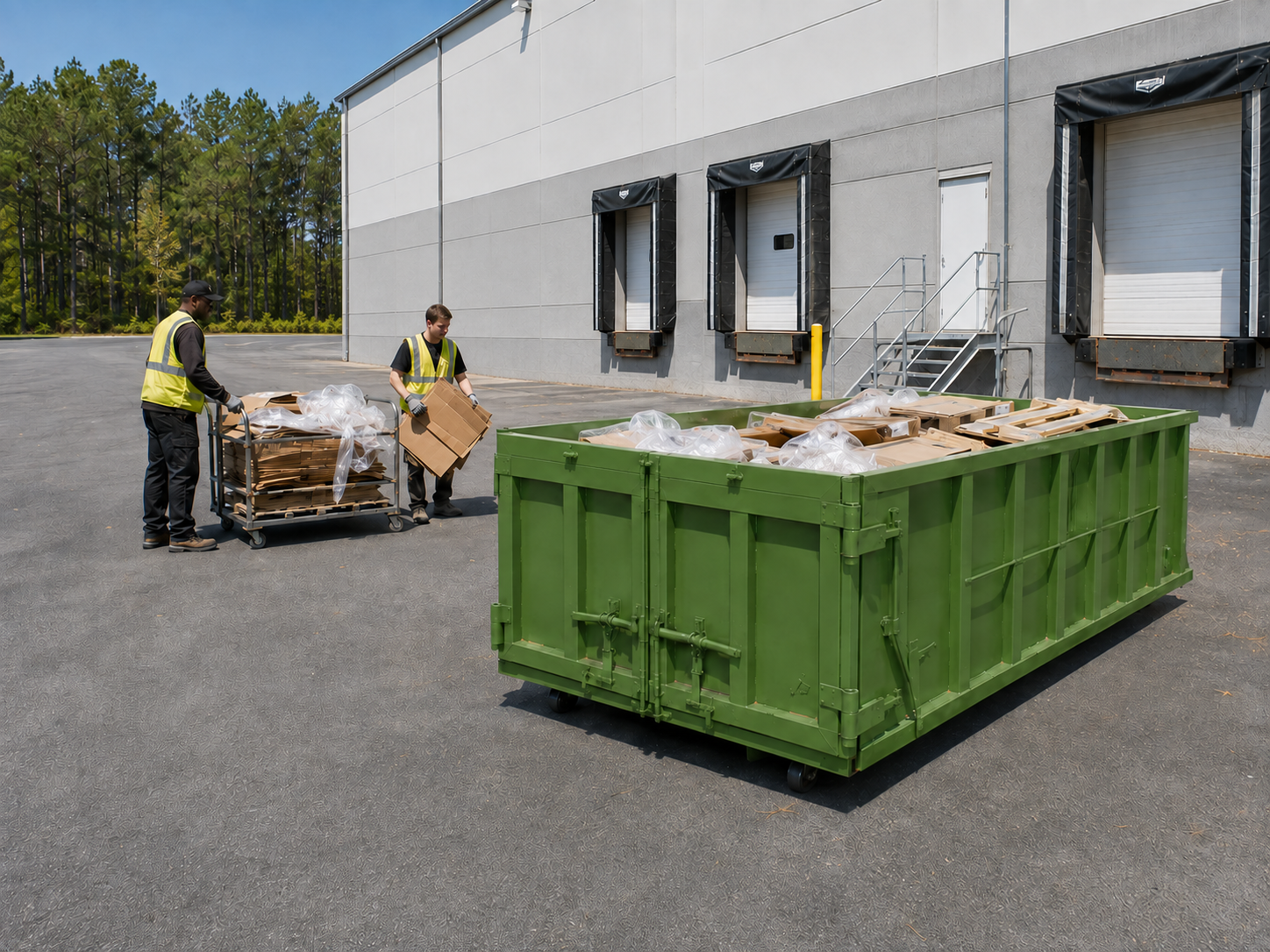
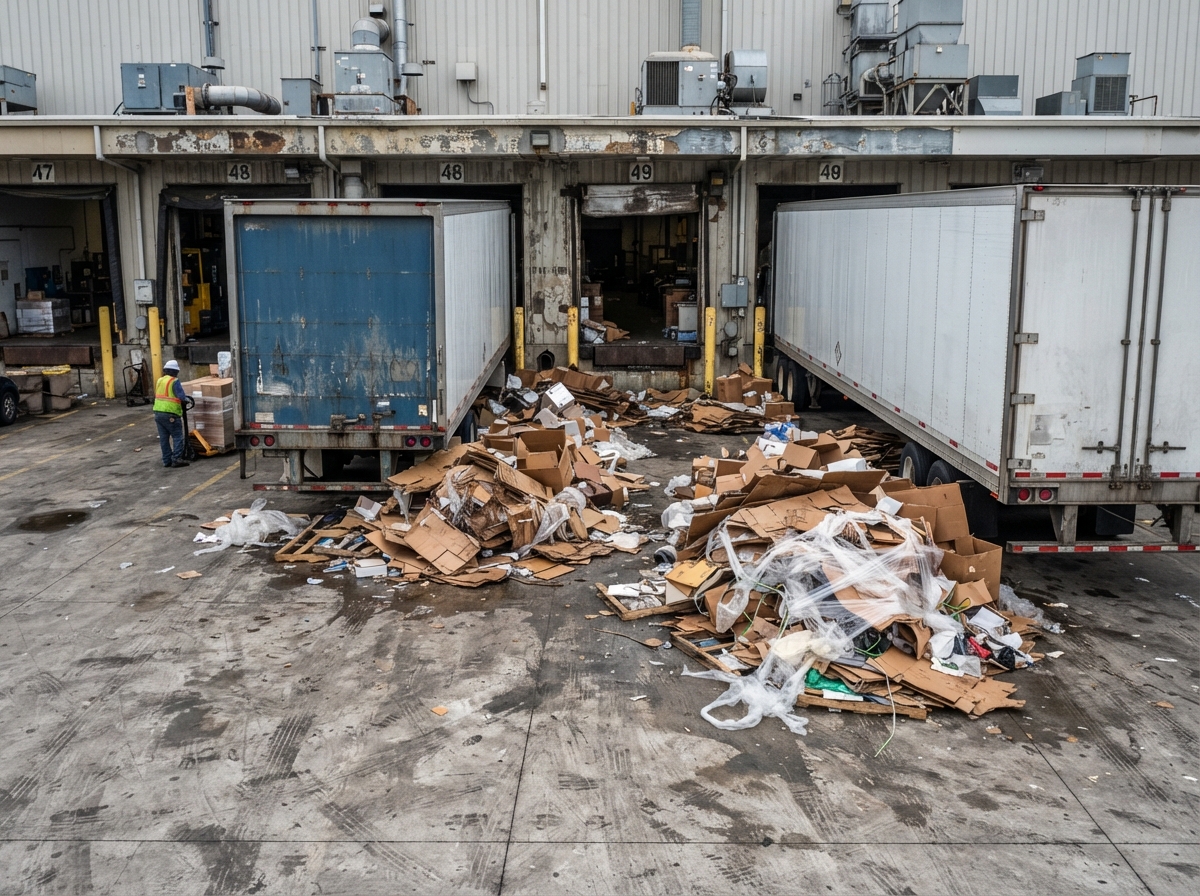
The center of the work in Byron. Corrugated, film, banding, dunnage, damaged goods and pallets that came apart in transit, produced continuously at a dock where trailers already compete for the concrete. These containers get sized against fill rate rather than building square footage, and they are where a compaction rhythm changes the schedule most. Standing containers for distribution and warehouse operations, including multi-shift buildings, are covered on the industrial dumpster rental page.
Light Industrial and Production Waste
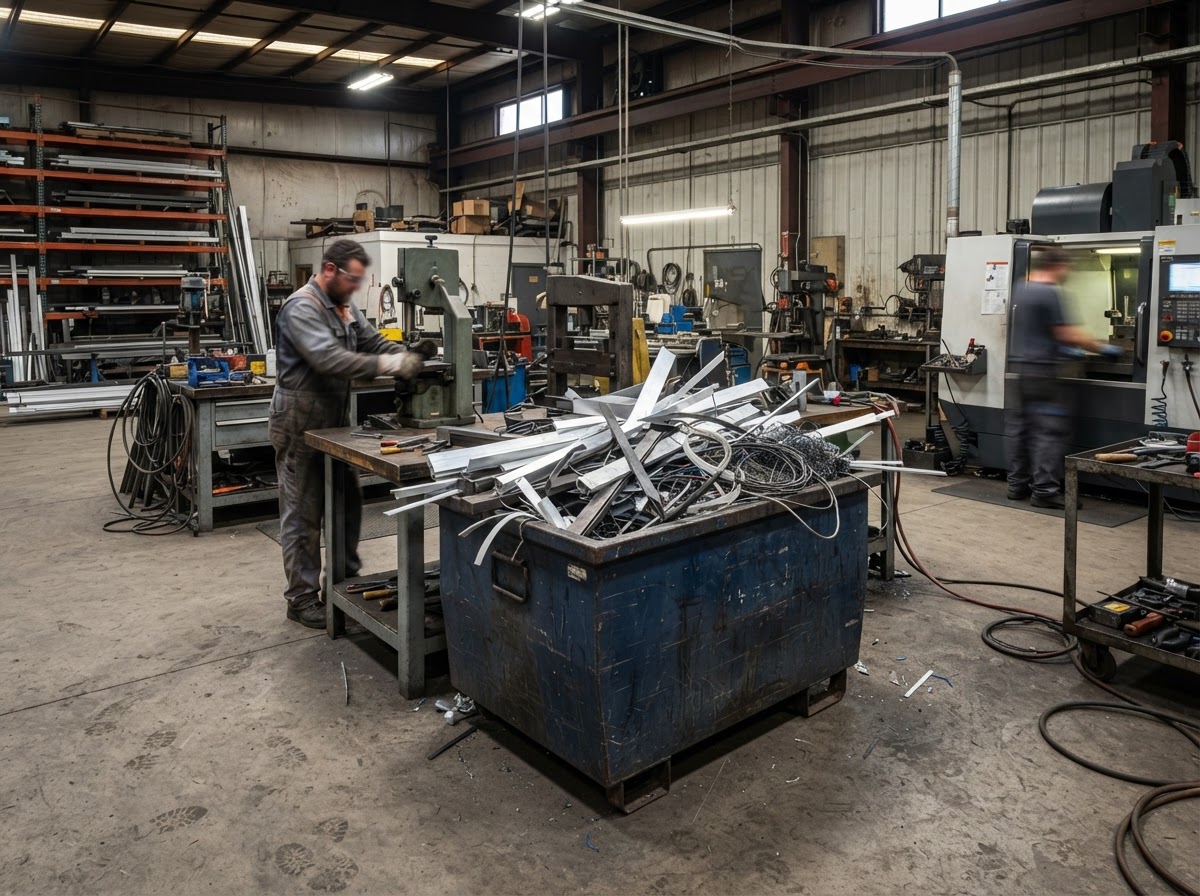
Production scrap, packaging off inbound components, crating, shelving and racking pulled during a reconfiguration, plus the general commercial waste any building makes. This stream is mixed rather than uniform, which puts it in the middle of the compaction range instead of the top. Max Compacx sizes it against a real week rather than a peak week, then adjusts once we have watched the container for a stretch.
Commercial Construction Near the Exits
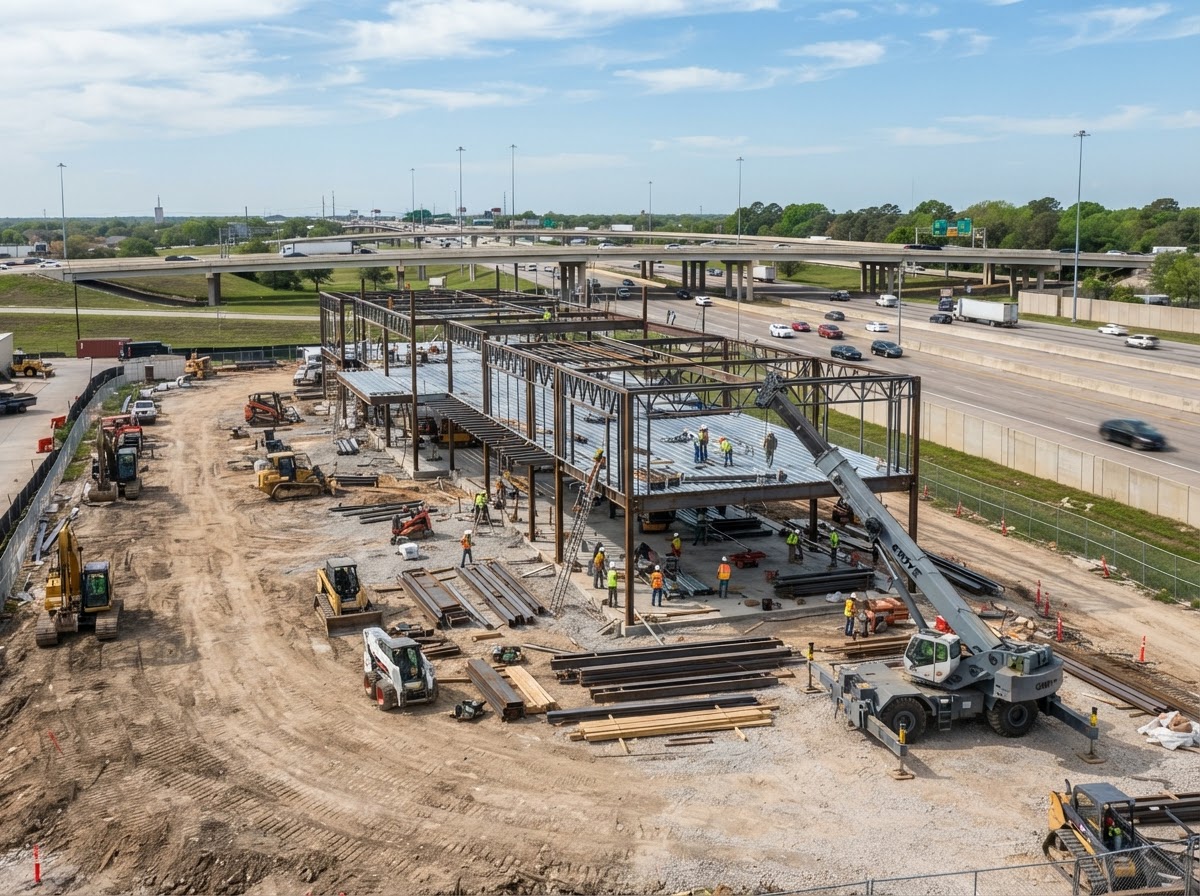
Build work around the Byron industrial and distribution areas runs on project-length containers. Debris changes character as the job moves — bulky crating and framing waste early, denser finish material later — so container size and swap timing get set against the phase sequence rather than fixed at delivery. Phase planning and material limits are on the construction dumpster rental page.
Sizing is the same conversation across all three. Capacity, footprint and weight detail sit on the dumpster sizes page, and roll-off dumpster rental covers how a commercial container account runs from delivery through pull. What stays out is short and firm: liquids, dirt and soil and aggregate, hazardous or regulated waste, sealed drums and pressurized vessels, and anything the receiving hauler will not accept. Ask about an unusual material before the container is loaded rather than at the scale.
Compacting the Container Where It Stands
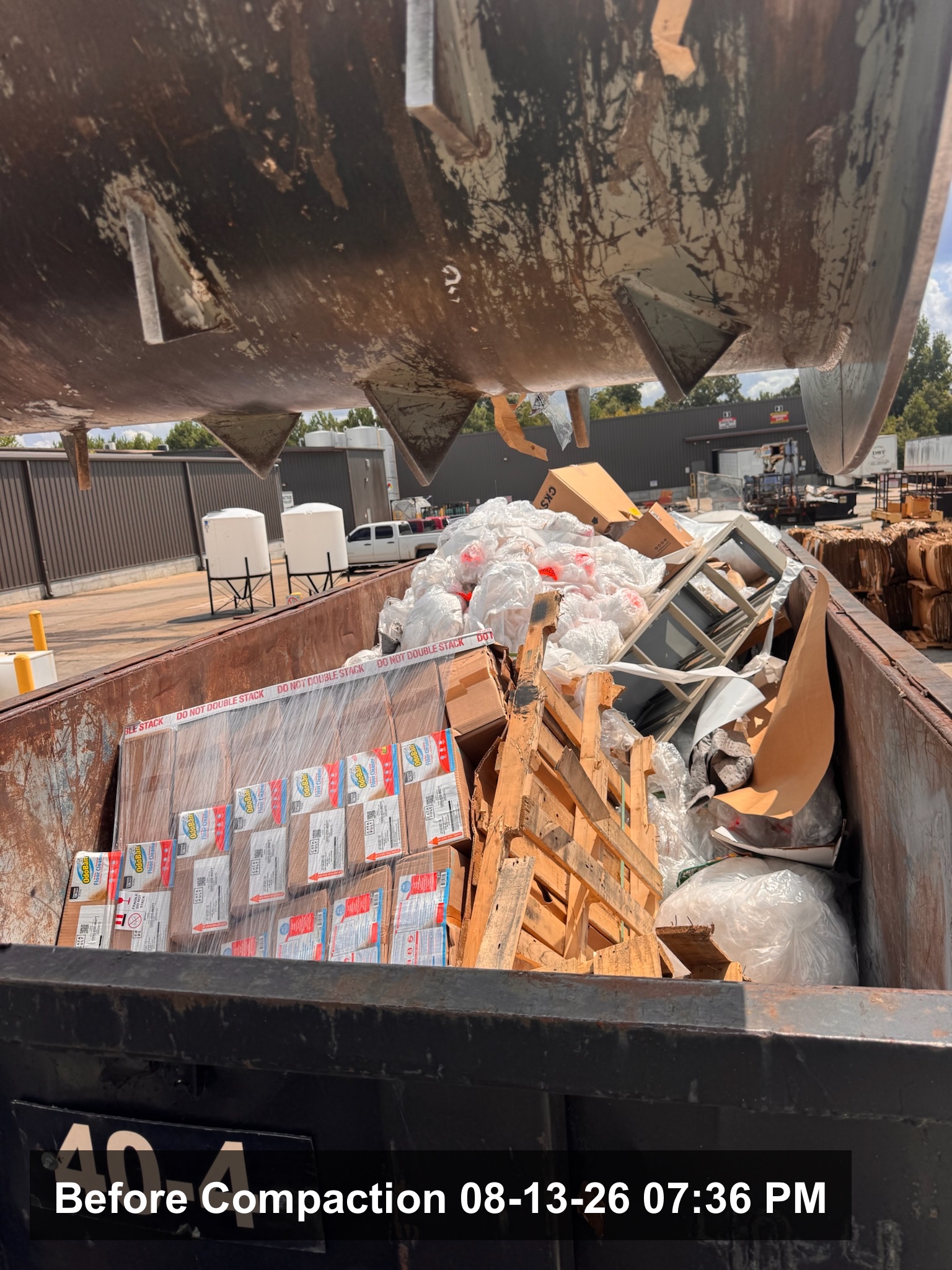
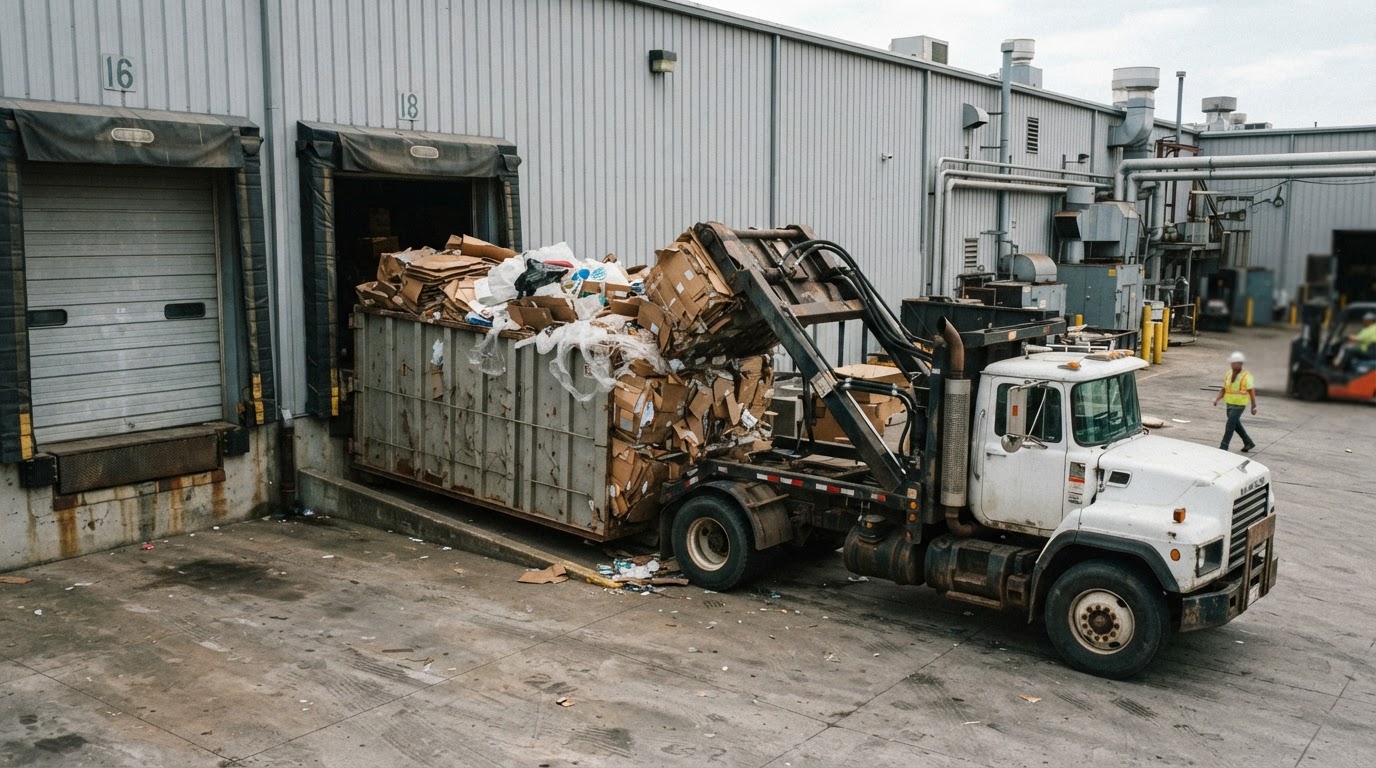
Max Compacx brings a mobile unit to your apron, works the load down inside the container already in place, and leaves the top of the box open again. Nothing comes out onto the concrete, no second container is involved, and the dock keeps loading through the visit.
How much room comes back depends on what is in the box. Volume reduction can reach up to 70%, always material-dependent:
| Material stream | Typical volume reduction |
|---|---|
| Cardboard, packaging, recyclables | 60–70% |
| Compost and organics | 50–60% |
| C&D debris, wood and pallets, mixed metals | 40–50% |
Byron is the market where that top row is the ordinary case rather than the exception. Plan around roughly 2:1 on a mixed commercial stream; a cardboard-heavy distribution load can approach 3:1. Most containers take one or two compaction visits in the gap before each pull.
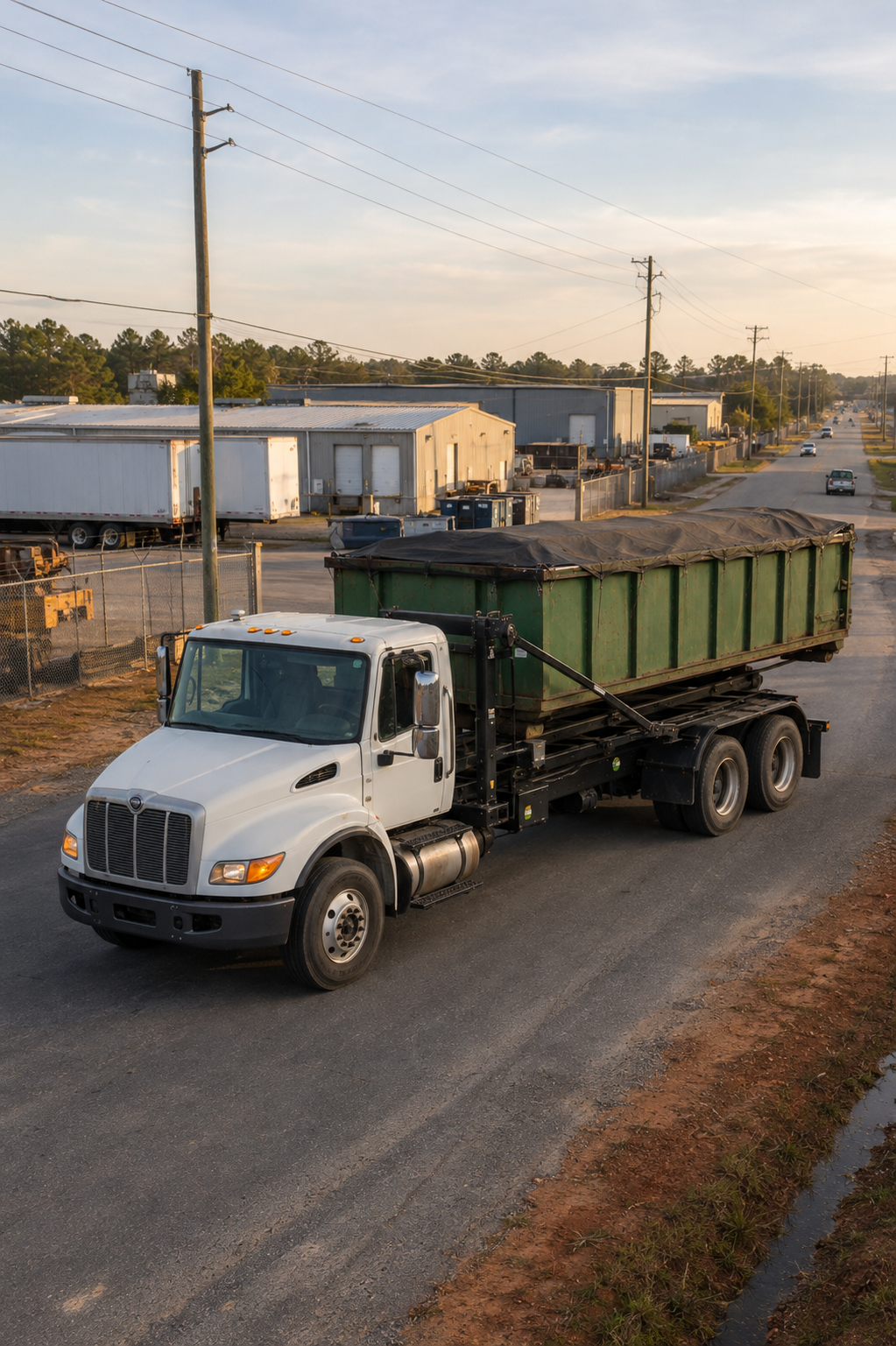
Weight tells the same story from the other side. A loose container can read as completely full at two to three tons, which means a truck leaving a Byron dock is carrying mostly air onto I-75. A properly worked load can approach eight to twelve tons, near roughly 95% of legal DOT payload. On one representative mixed-waste container, that has meant twelve haul-offs a month becoming four — 96 fewer truck trips across a year.
The honest limit: compaction reduces haul-offs, it does not eliminate them, and it does not replace the hauler performing them. A site running genuinely dense material has no air to recover, and an operation that needs a container only occasionally does not have enough monthly trips for the reduction to show. Max Compacx tells you which of those you are at the demo, before there is anything to sign.
A Representative Byron Distribution Account
Described as a pattern, not a named customer.
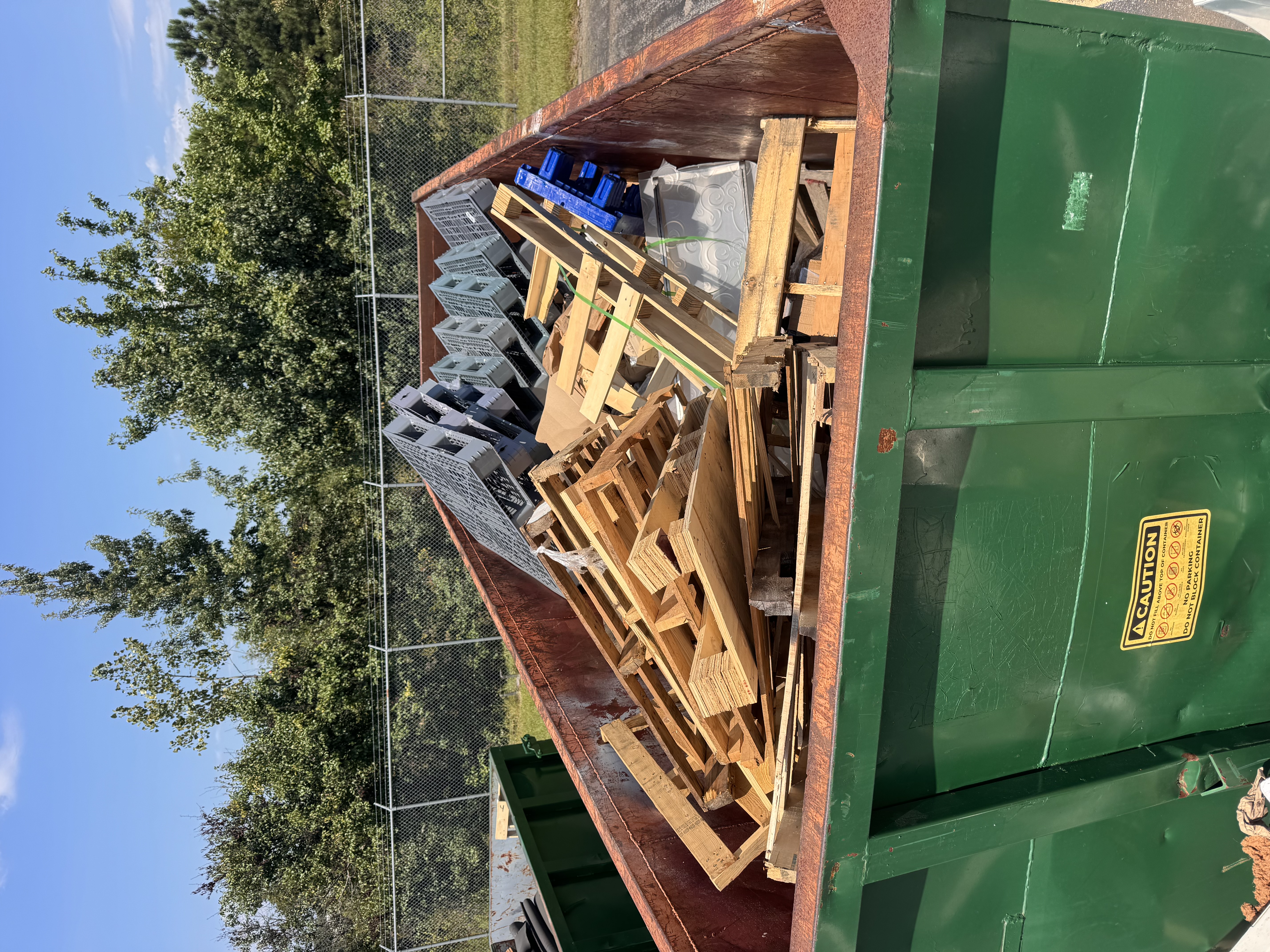
A distribution building near one of the Byron exits runs a 40-yard container on the concrete beside its dock doors. The stream is corrugated, stretch wrap and dunnage stripped off inbound freight, plus a run of broken pallets. With no compaction, the box is full by volume in a couple of days, gets pulled on a standing twice-weekly schedule, and still spills onto the apron during a heavy inbound week.
Max Compacx places a compaction visit in the middle of that cycle. The load comes down, the container carries the rest of the week, and the pull cadence gets rebuilt around when the box is genuinely full instead of when it looks full. Nobody on the dock loads any differently, the container never leaves its square of concrete except to be hauled, and the apron stays clear.
A second building on the same account runs light industrial production waste and does not behave the same way — mixed material, a slower fill, a container in the middle band of the table. Same account and same contact, two different schedules.
Serving Byron
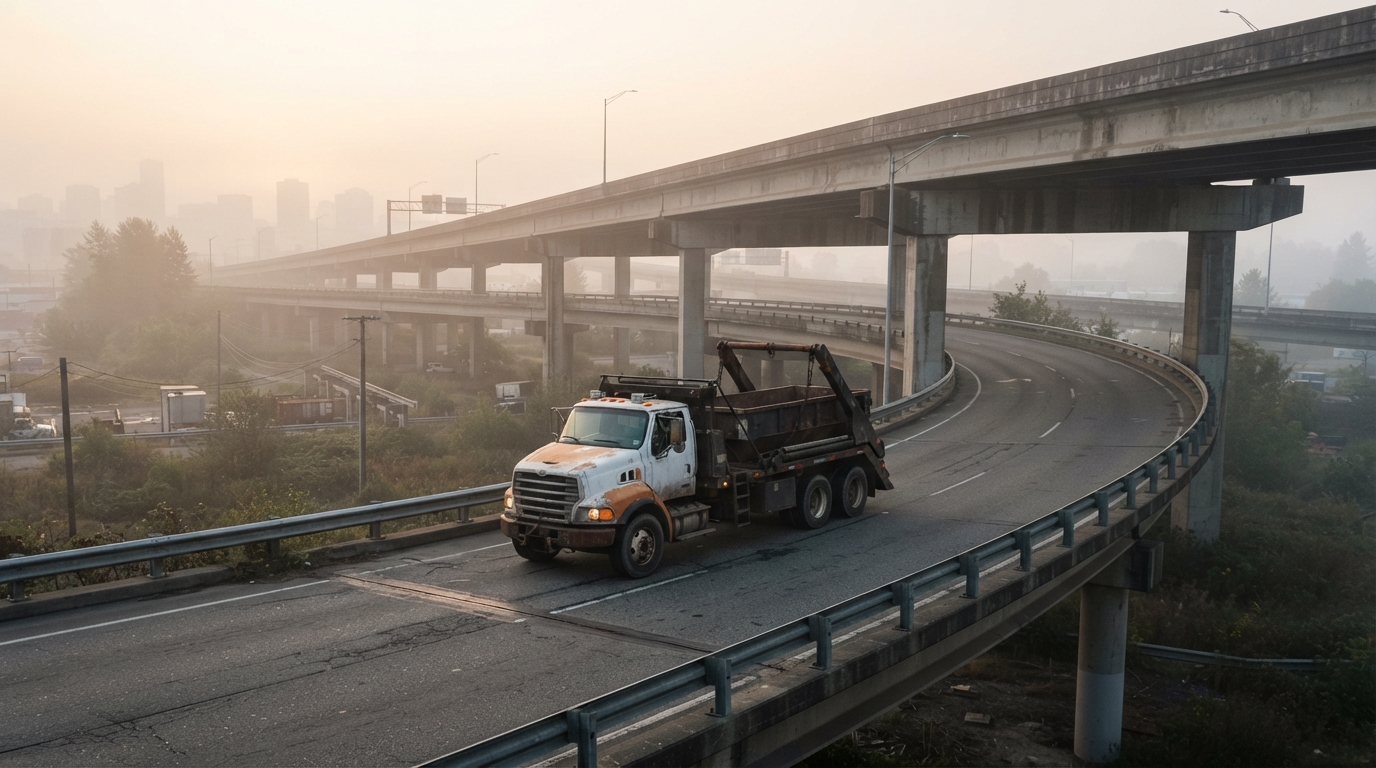
Max Compacx dispatches from 5900 Hawkinsville Rd in Macon and runs Byron as a scheduled stop down I-75 across the Peach County line, not as an errand at the end of a Bibb County route. Deliveries, swaps and compaction visits are planned into the day, which is what makes a firm service window possible on an out-of-county account. Nothing here asks you to come to us — the container arrives on a truck, and so does the compaction unit.
Placement is the whole delivery conversation.
The constraint at a Byron building is rarely open space. It is whether the truck can line up straight behind the container without a parked trailer in the way, and whether the ground above the box is clear of a dock canopy. Name the door, the side of the building and the hours the apron clears, and we plan the delivery to fit.
Surfaces around the exits are usually generous.
Concrete truck aprons and compacted gravel yards carry a loaded container easily. The place to be careful is freshly graded ground on a construction site or a soft yard after a wet stretch — say so and boards come with the delivery.
Fast-filling docks want booked-ahead service.
On a container that fills in two days, the difference between a smooth week and a bad one is whether the next visit was already on the schedule. Standing service beats calling once the box is overflowing.
Service runs Monday through Friday, 7am – 5pm, across Macon and Middle Georgia — Byron, Gray, Forsyth, Perry, Lizella and Centerville included.
Max Compacx
5900 Hawkinsville Rd, Macon, GA 31216
478-722-3852
office@MaxCompacx.com
Monday – Friday, 7am – 5pm
Commercial Dumpster Rental in Byron, GA: Common Questions
What Byron Businesses Say
REVIEW PLACEHOLDER — warehouse or distribution account, Byron I-75 exits
REVIEW PLACEHOLDER — light industrial operation, Byron industrial area
REVIEW PLACEHOLDER — commercial construction project, Byron
Related Pages and Nearby Service Areas
Industrial Dumpster Rental
Standing containers for warehouse, distribution and light industrial operations.
Construction Dumpster Rental
Phase planning and swap timing on commercial build work.
Roll-Off Dumpster Rental
How a commercial container account runs from delivery through pull.

Choosing a Container Size
Capacity, footprint and weight detail on the 20-, 30- and 40-yard boxes.
On-Site Waste Compaction
The mobile unit, the safety points, and what each material gives back.
Nearby: Rutland & South Bibb
The growth corridor just north of Byron along I-75.
Nearby: Centerville
Houston County commercial and distribution coverage.
All Service Areas
Every area Max Compacx runs containers into.
Home
Max Compacx — roll-off containers and on-site compaction.
Start Commercial Dumpster Rental in Byron, GA
Start with the material. Describe what comes off the dock, how fast it stacks up, and how often the container leaves today. What comes back from Max Compacx is a container size, an opening cadence, and a straight answer on whether compaction moves the trip count on that particular stream. The demo takes about ten minutes on the box already sitting at your building.
Max Compacx
5900 Hawkinsville Rd, Macon, GA 31216
478-722-3852
office@MaxCompacx.com
Monday – Friday, 7am – 5pm