
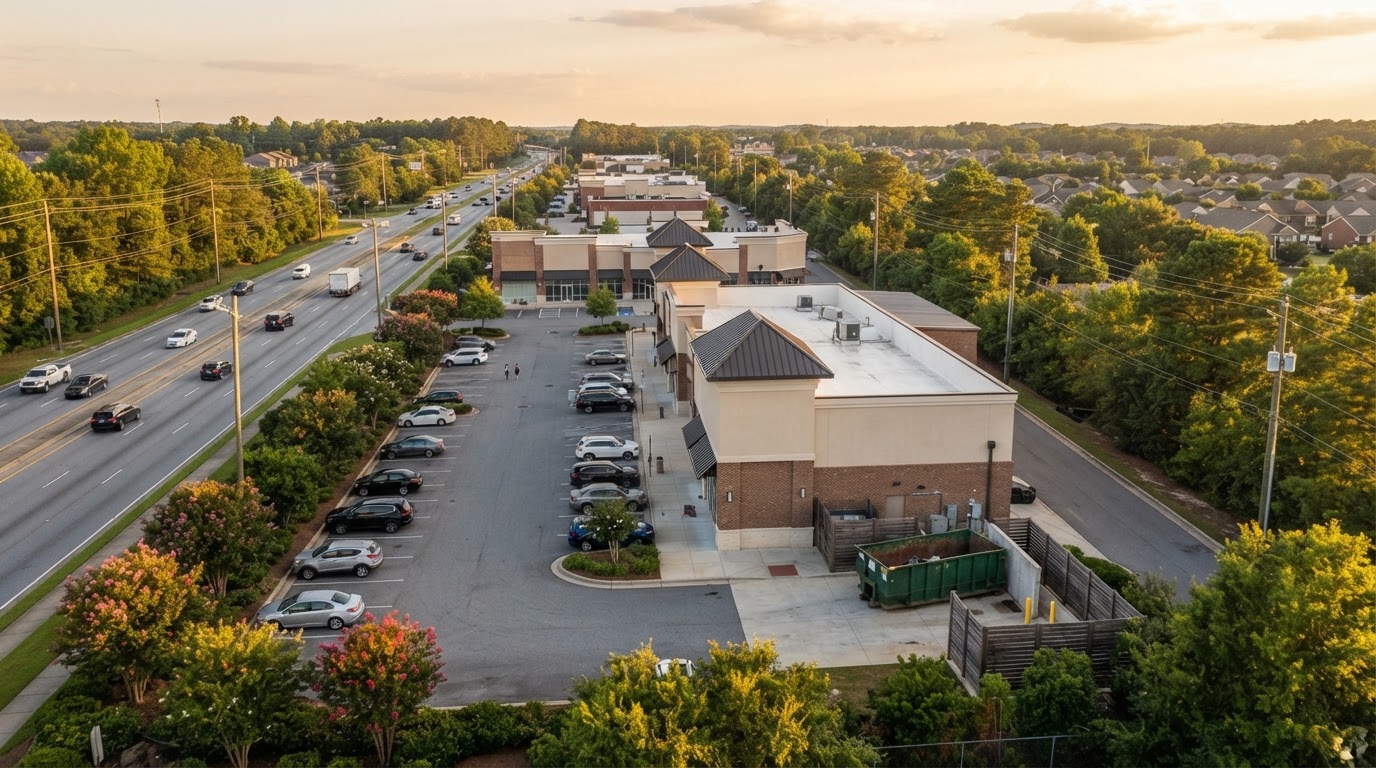
Centerville, GA · Houston County
Commercial Dumpster Rental in Centerville, GA
Roll-off containers and mobile on-site compaction for storefronts, restaurants, managed commercial properties and remodel crews along Centerville's commercial corridor.
Max Compacx provides commercial dumpster rental in Centerville, GA for businesses whose waste problem is not weight. It is room — cartons, packaging and fixture debris that fill a container long before that container is anywhere near a truckload. We deliver 20-, 30- and 40-yard roll-off containers into Houston County, and we compact them where they already sit so the box stops dictating the service schedule.
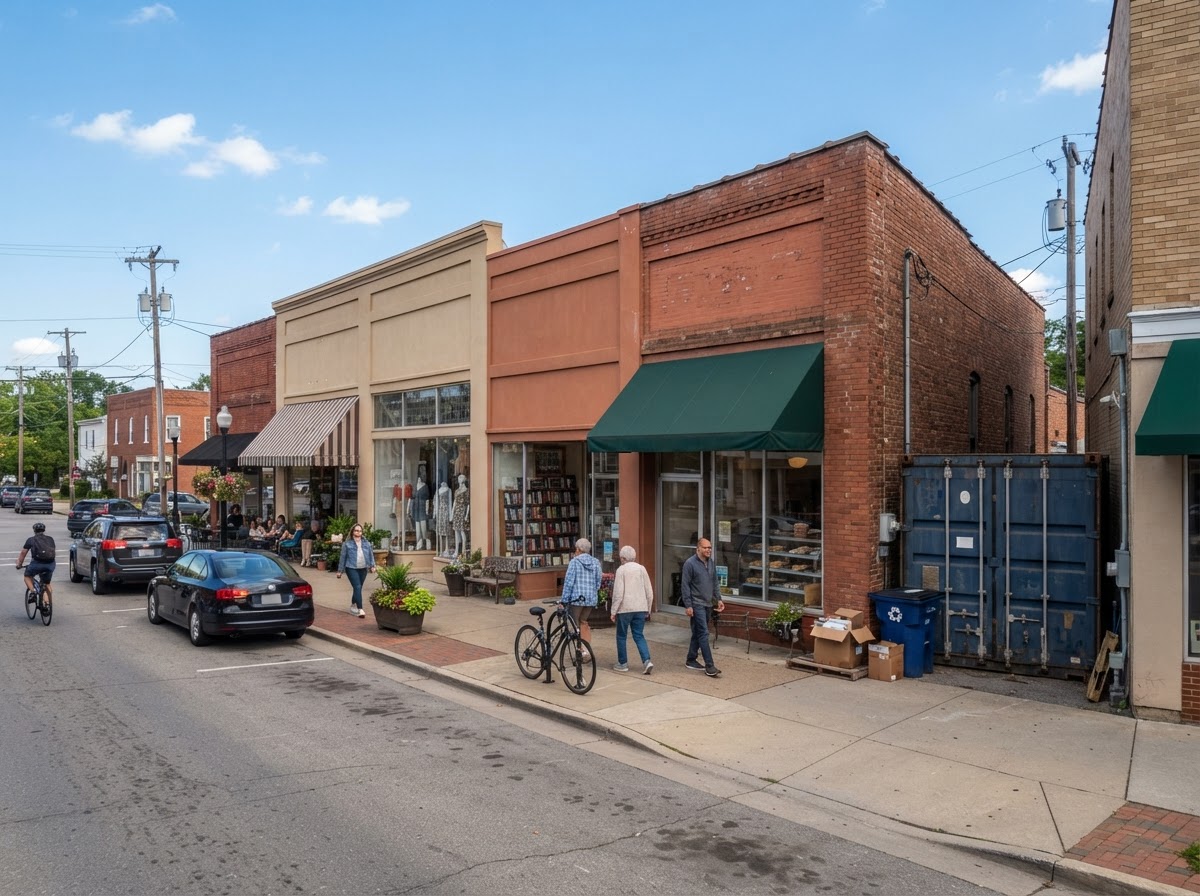
Centerville is a customer-facing town. Most of the containers here live behind a business that people walk into, which changes two things at once: where the box can go, and how long it can look full.
What a Storefront Corridor Actually Puts in a Container
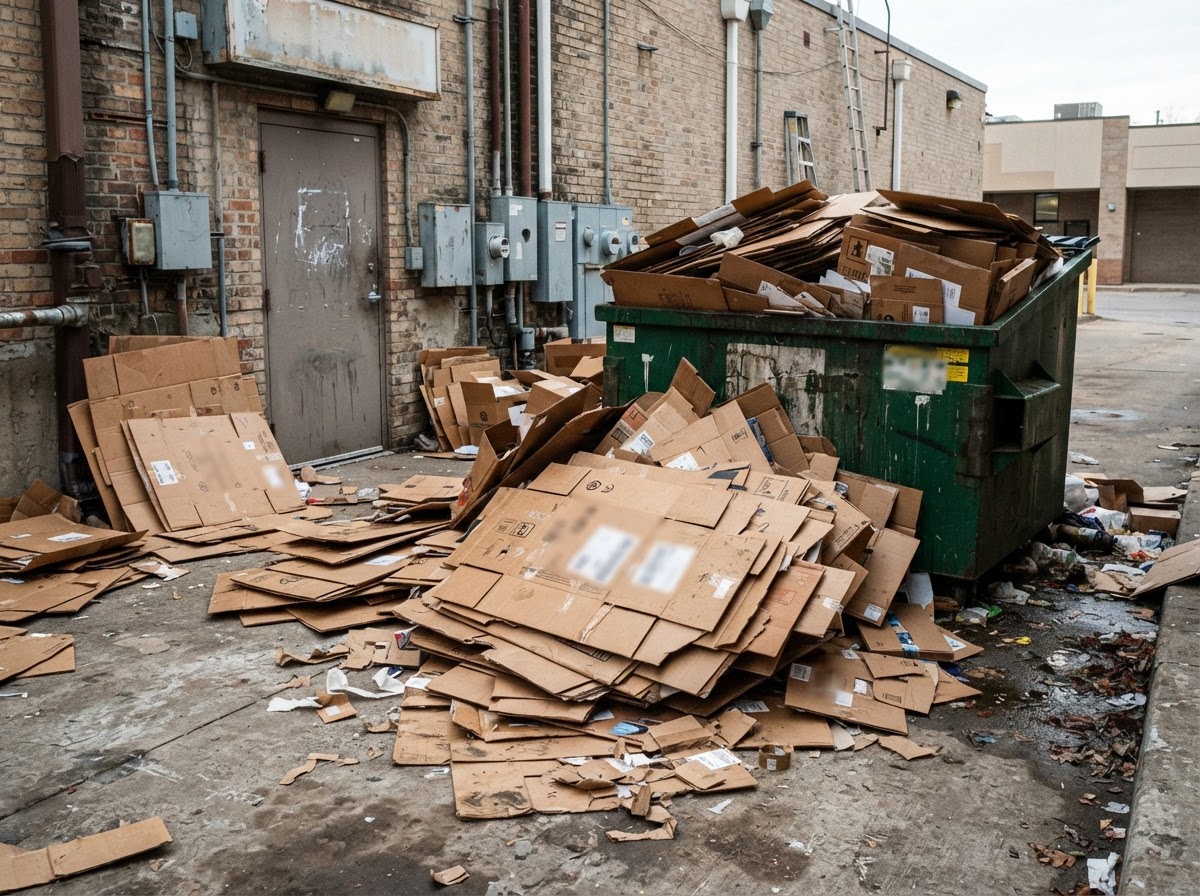
Retail waste is the lightest material in commercial hauling and the fastest to consume space. A single delivery day turns into a stack of corrugated, a roll of film, foam inserts, hangers, plastic banding and broken display cartons. None of it weighs anything. All of it takes the room.
That pattern repeats down Centerville's commercial corridor and through the businesses near the Watson Boulevard area, and it comes with a set of constraints that industrial sites never deal with:
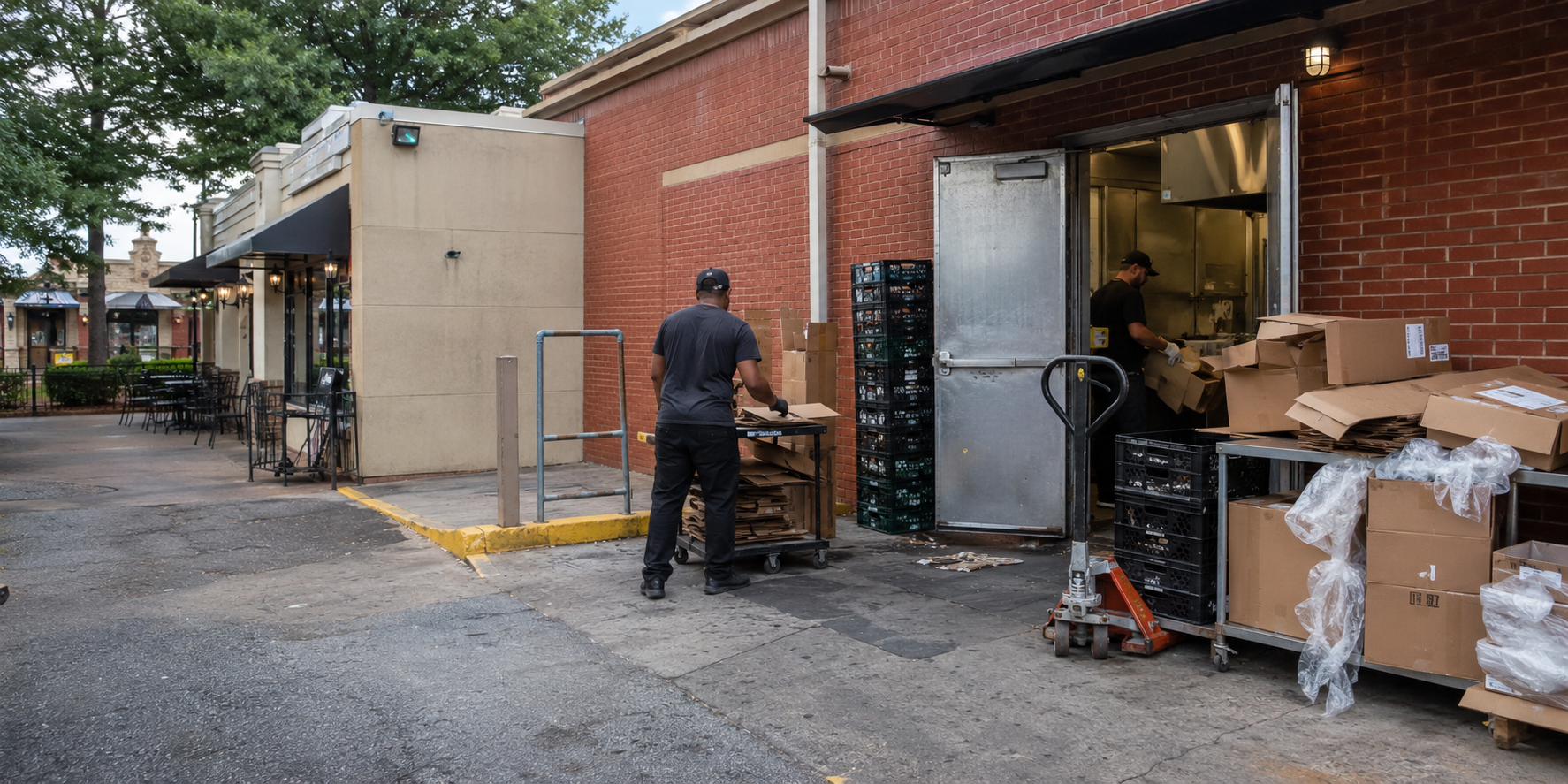
- The container is visible. It sits behind a storefront, beside a customer entrance, or in a shared service lane. Overflow is not just an operational problem here — it is something a customer sees on the way in.
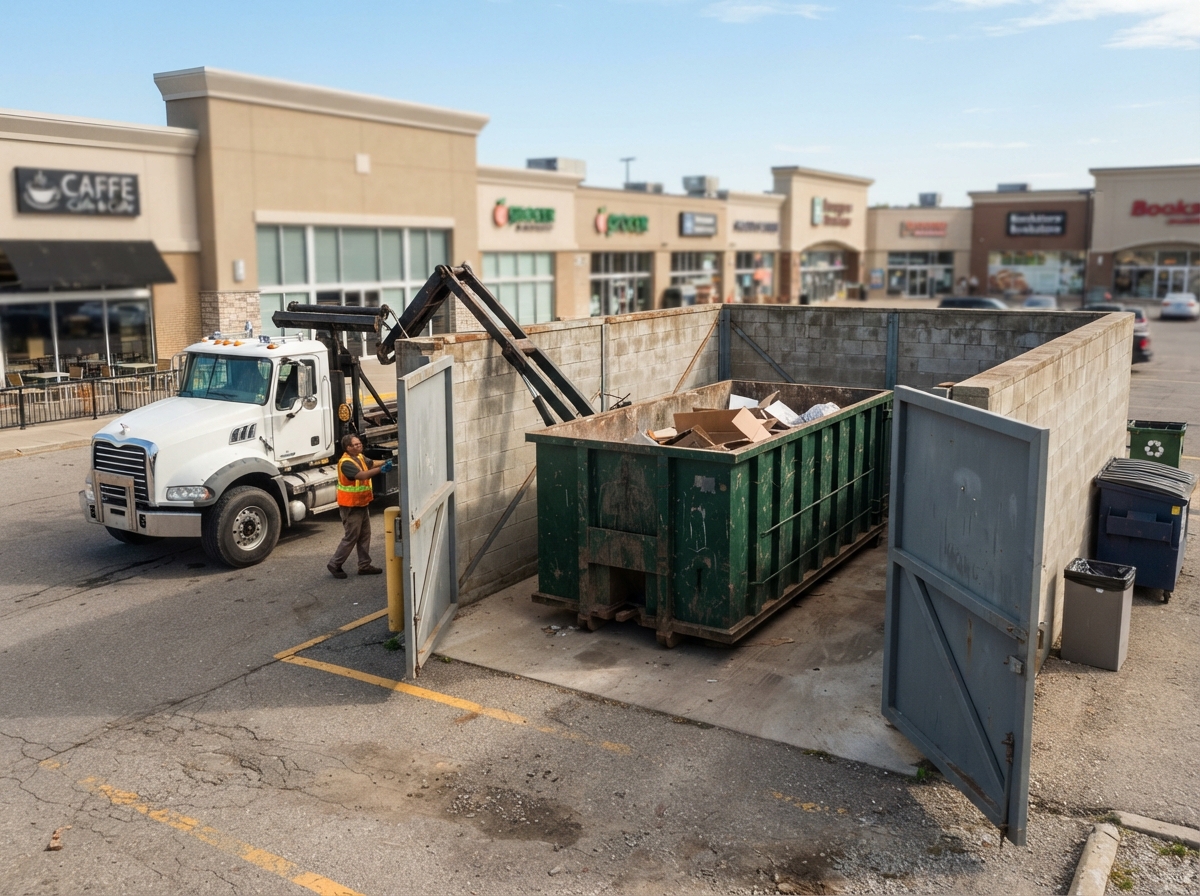
- The enclosure is fixed. Multi-tenant plazas put the box in a walled pad or a marked square, and the box cannot grow past it. When volume rises, the space does not.
- Volume is uneven. A delivery week, a season change, a promotional reset and a slow stretch produce four different fill rates from the same building.
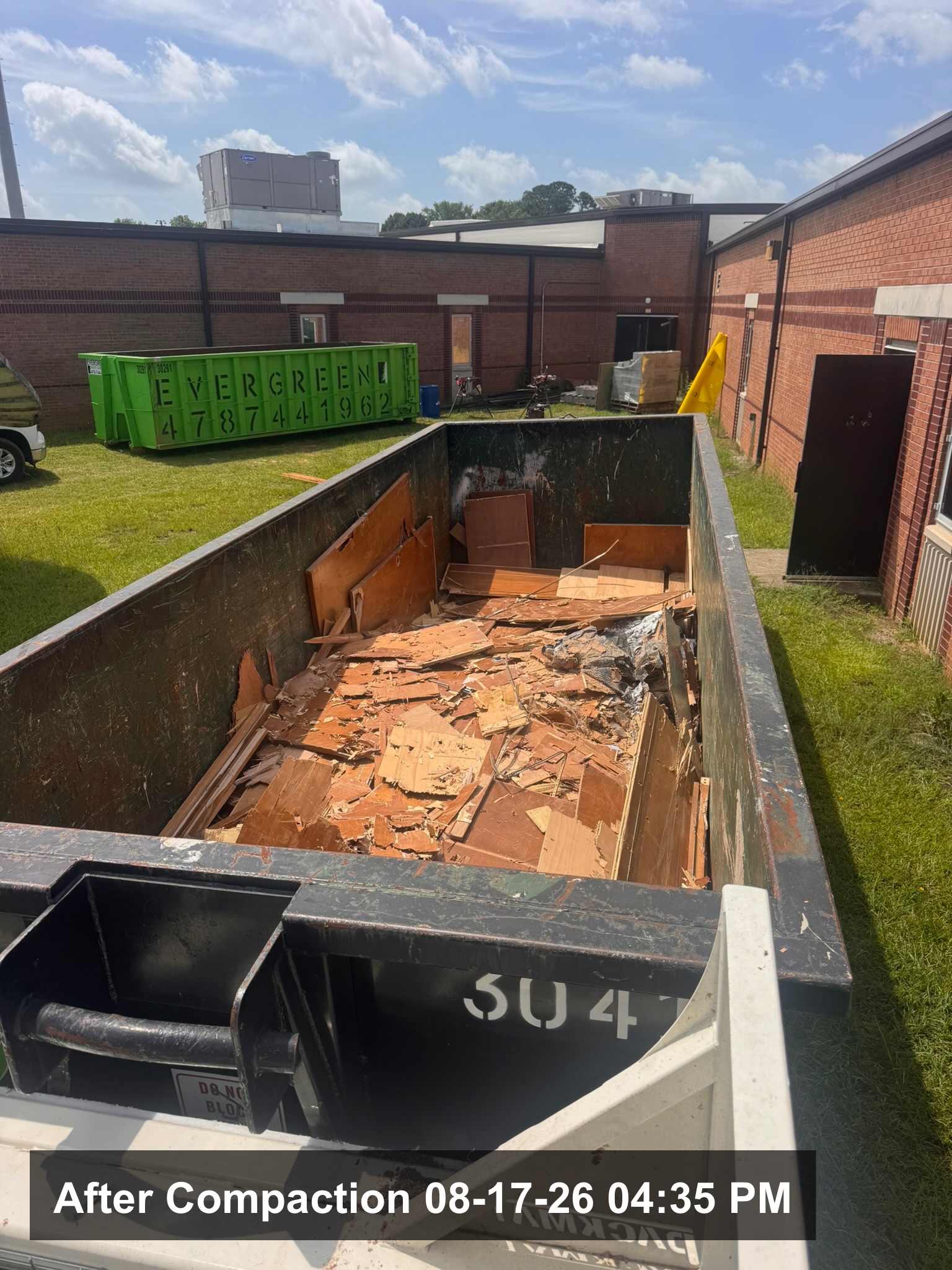
- Renovation lands on top of ongoing service. A suite turns over or a storefront gets refreshed, and now there is project debris competing with the everyday stream for the same pad.
Max Compacx plans Centerville accounts around those four facts rather than around a container size chosen once and left alone.
Commercial Dumpster Rental in Centerville, GA: How the Account Gets Built
Max Compacx starts with what the box holds and how often it leaves today. From that, a container size gets matched to the site — including whether it physically fits the enclosure it has to live in — and compaction visits get scheduled between pulls so the container reaches its real capacity instead of its visible one.
There are two ways to begin. The first changes nothing about your current setup: your container stays, your approved local hauler stays, your disposal terms stay exactly as negotiated, and we simply work the load down where it sits so the box goes out less often. The second is that the container and the compaction come from us together, on one account and one schedule.
Either way it opens with the free on-site demo — about ten minutes, at your building, on your own material in your own box. The number you end up looking at came off your waste, not out of a brochure.
Accounts are commercial and industrial only.
Container Work Across Centerville Businesses
Four kinds of work make up most of what Max Compacx runs in Centerville, and each one behaves differently once the container is on the ground.
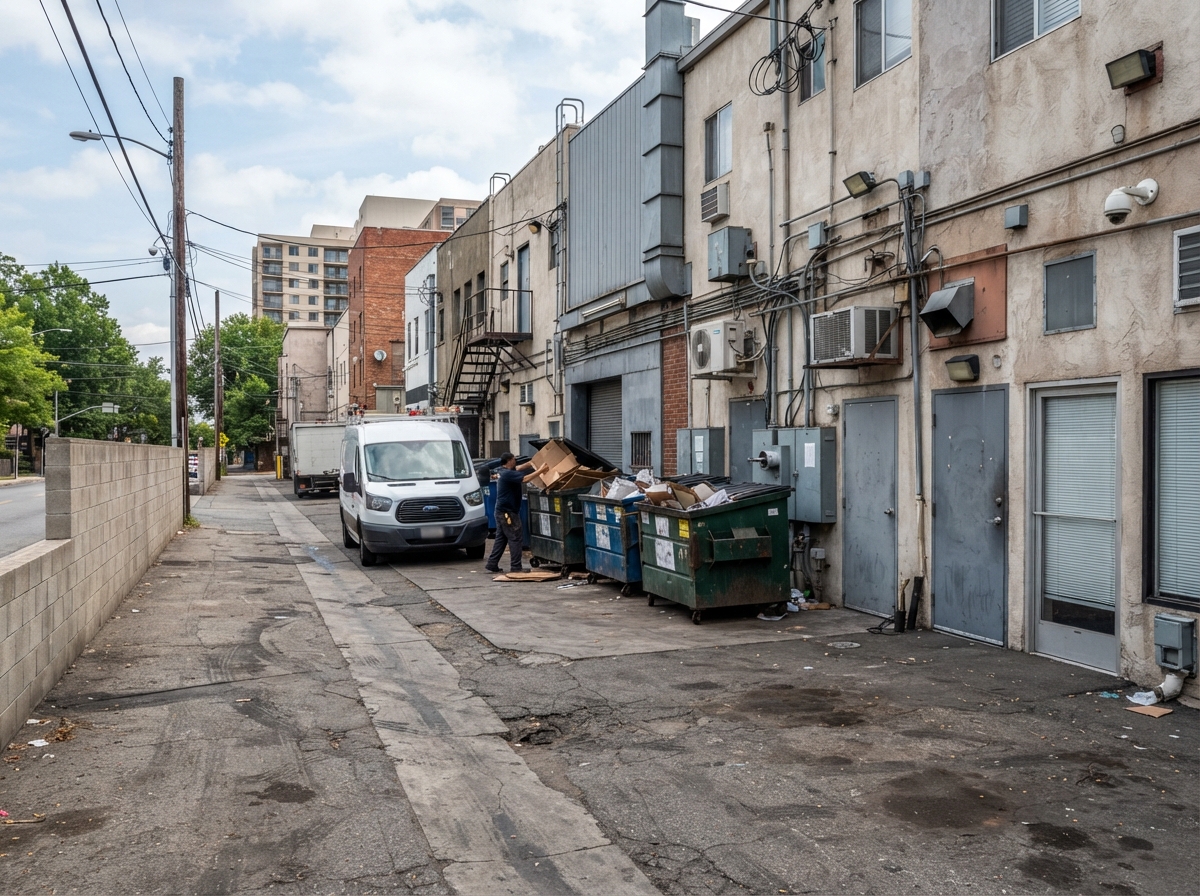
Storefront Retail and Multi-Tenant Plazas
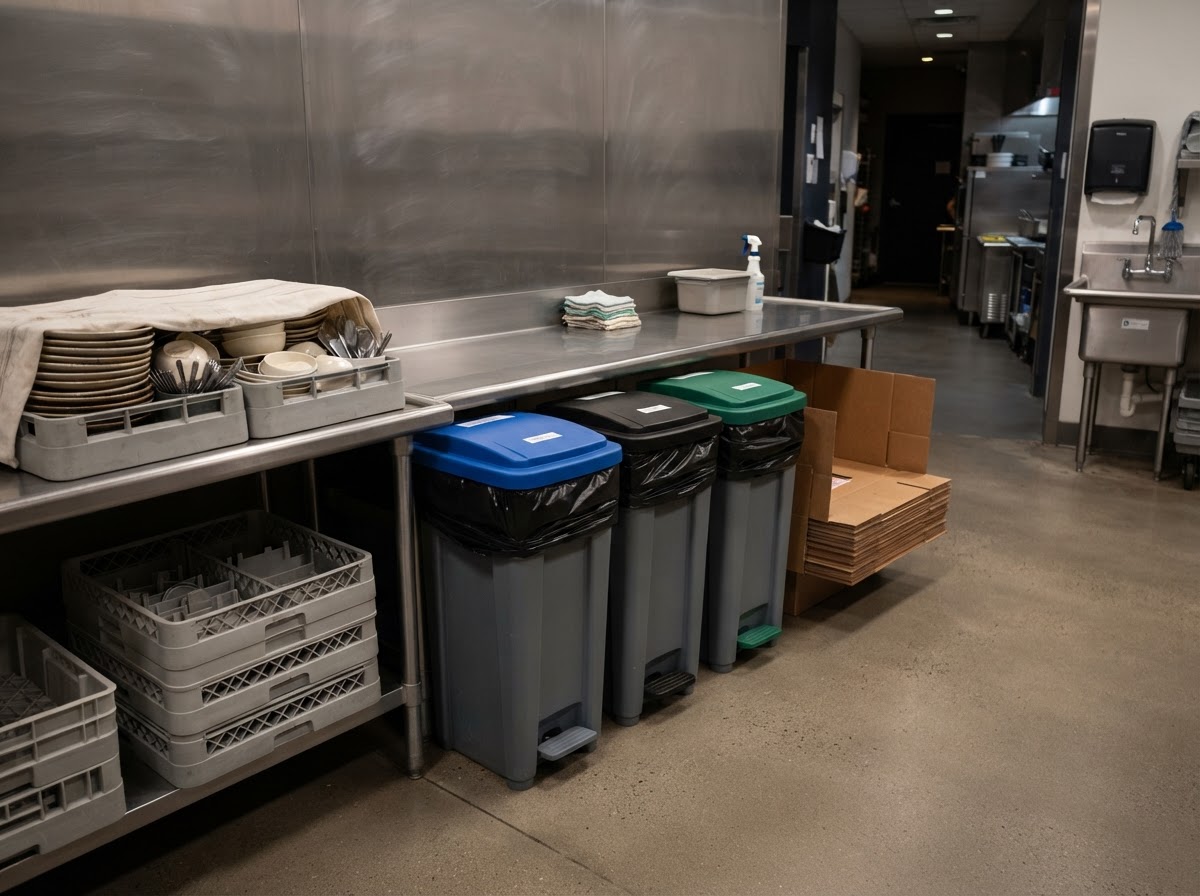
Restaurants and Food Service
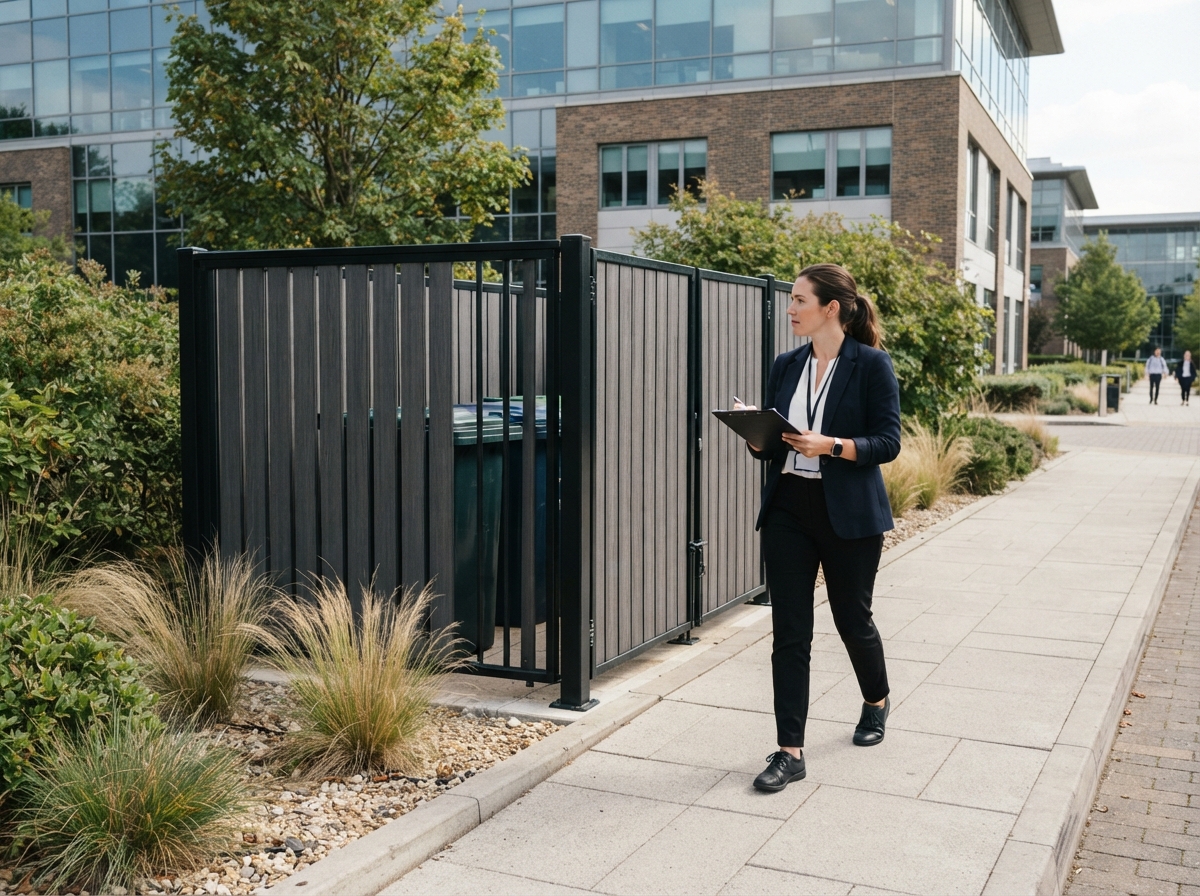
Commercial Property Management
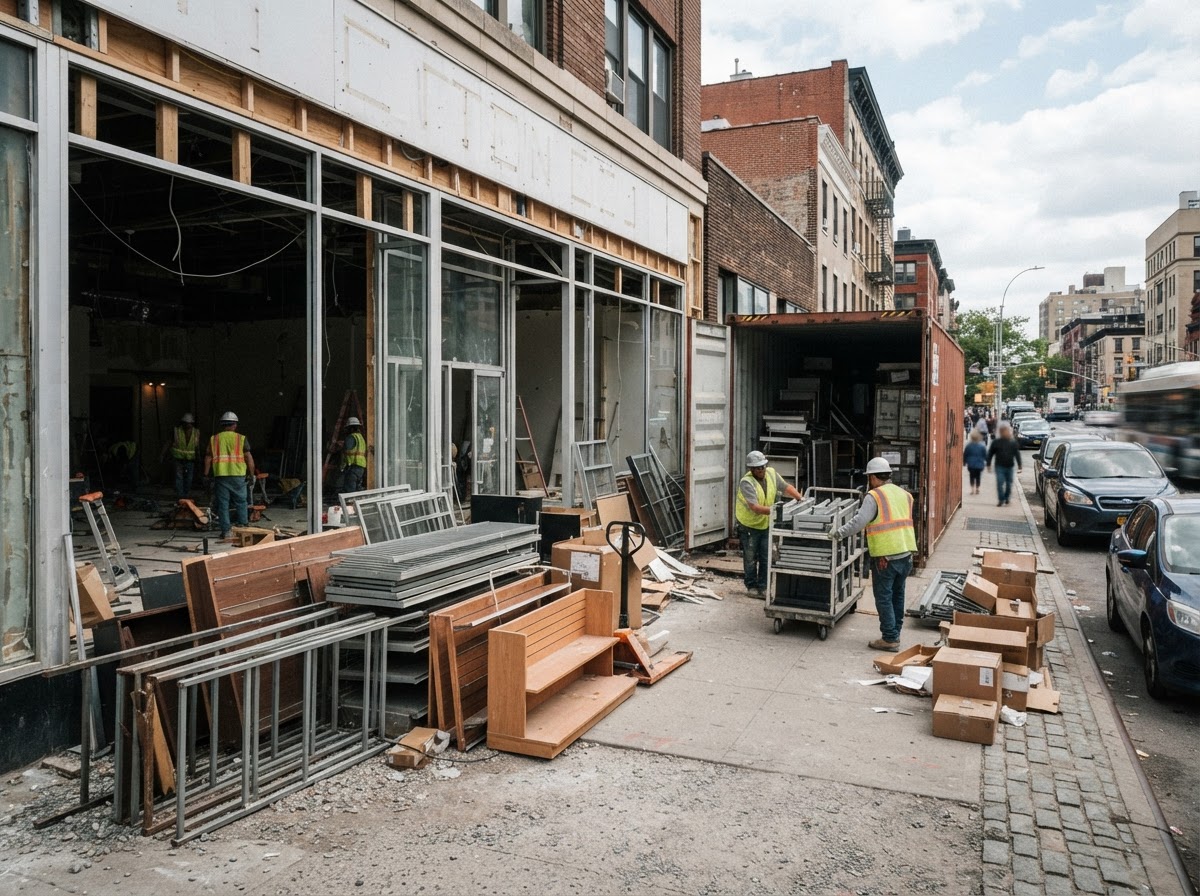
Storefront Remodels, Fit-Out and Re-Tenanting
Sizing is the same conversation across all four. Capacity, footprint and weight detail live on the dumpster sizes page, and roll-off dumpster rental covers how a commercial container account runs from delivery through pull.
Cardboard Is Why the Container Leaves Half Empty
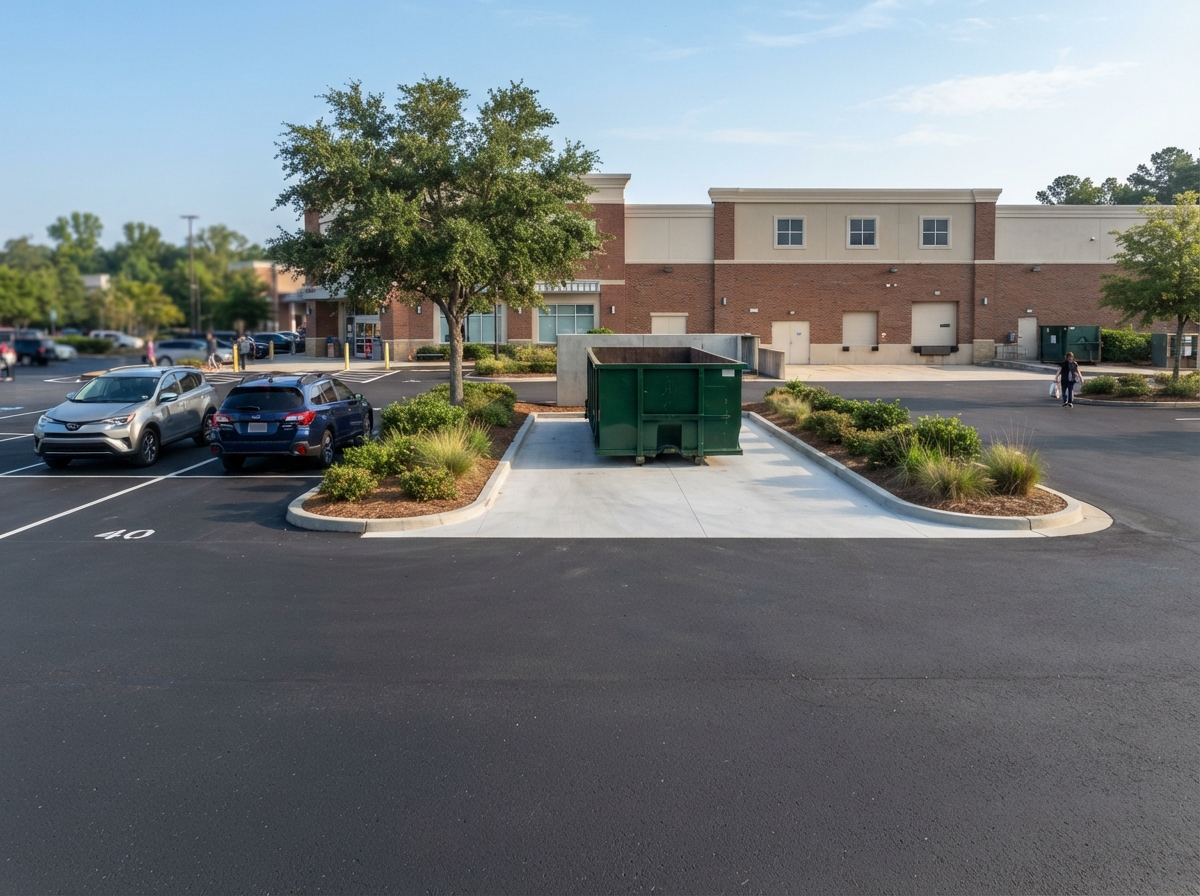
Max Compacx does the compaction at your building. A mobile unit arrives, the load gets worked down inside the container already sitting on the pad, the top of the box opens back up, and nothing comes out onto the pavement. No second container is staged, and the enclosure gate closes behind us the way it was found.
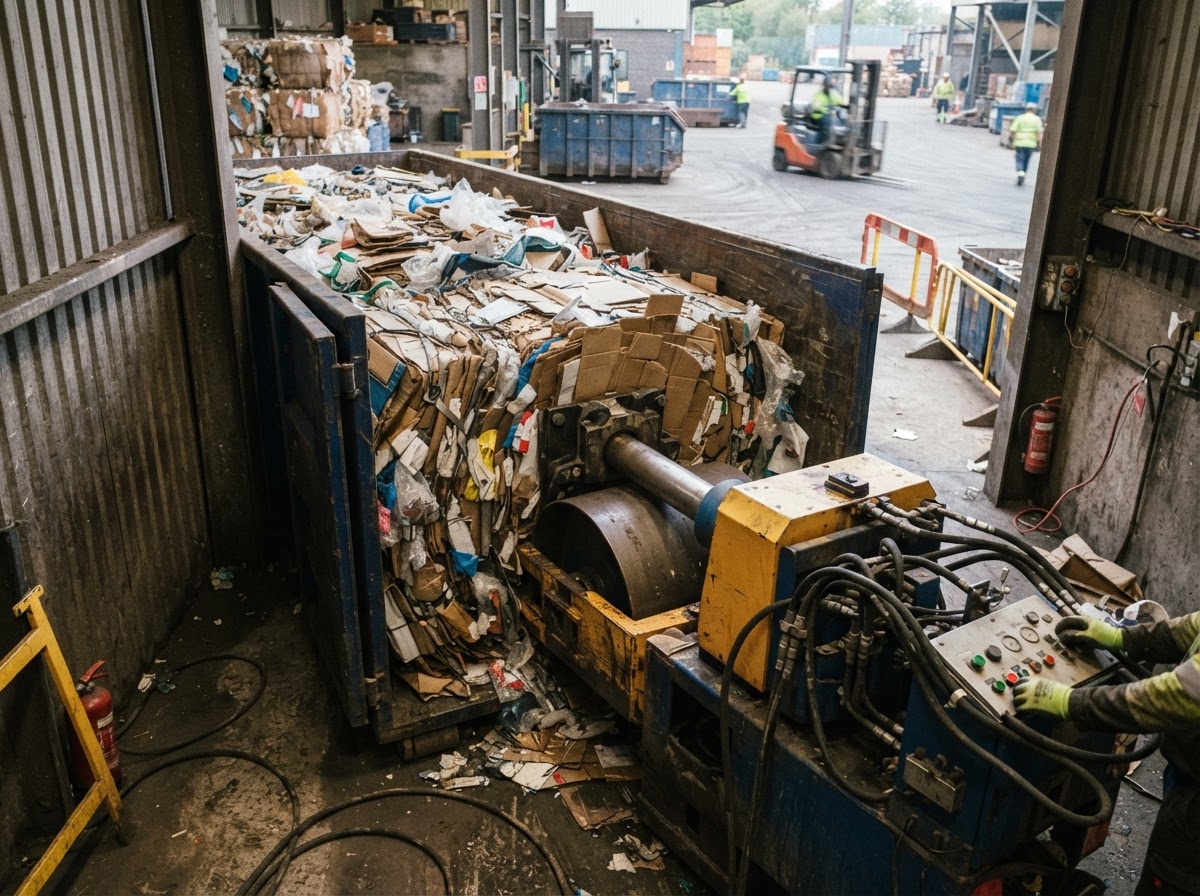
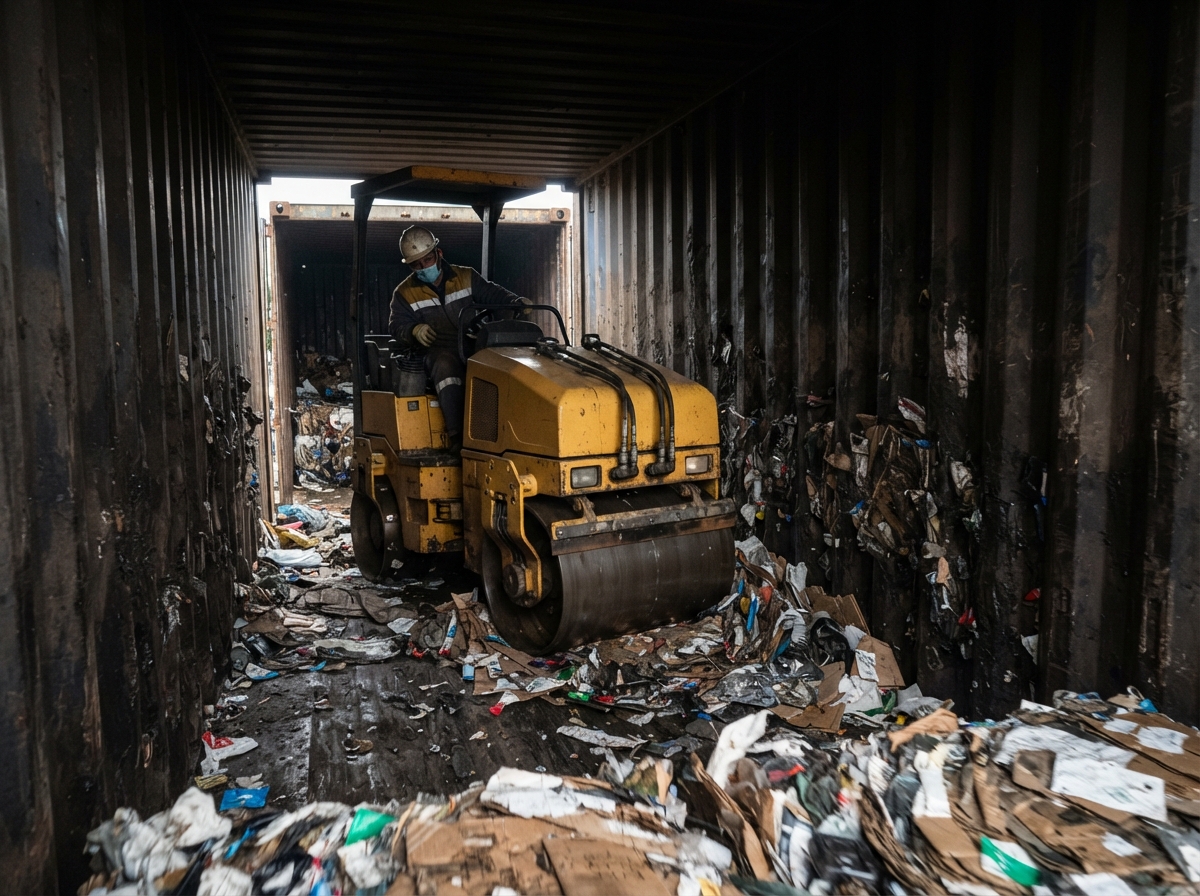
How much room comes back depends on what is in the box, not on the equipment. Volume reduction can run up to 70%, always material-dependent:
| Material stream | Typical volume reduction |
|---|---|
| Cardboard, packaging, recyclables | 60–70% |
| Compost and organics | 50–60% |
| C&D debris, wood and pallets, mixed metals | 40–50% |
A Centerville retail container spends most of its life on the top row. Plan around roughly 2:1 on a mixed commercial stream, expect a cardboard-heavy load to approach 3:1, and count on fitting one or two compaction visits into the gap before each pull. Restaurant containers carrying organics alongside cartons sit in the middle band. Remodel debris belongs on the bottom row, where the gain is real but noticeably smaller.
Weight tells the same story from the other side. A loose retail container can read as completely full at two to three tons, while a properly worked load can approach eight to twelve tons — near the legal DOT payload ceiling at roughly 95% of the truck's permitted capacity. The result shows up in trip count. On one representative mixed-waste container, twelve monthly haul-offs became four: 96 fewer truck trips across a year, from the same building, on the same material.
Where this stops matters as much as where it works. Compaction reduces haul-offs. It does not eliminate them, and it is no substitute for the hauler performing them. A site running genuinely dense material has no air to give back, and a business that needs a container only occasionally does not generate enough trips in a month for the reduction to show up. Max Compacx tells you which of those you are at the demo, before there is anything to sign.
What Goes In, and What Stays Out
Accepted
Accepted: corrugated, cartons and retail packaging · film, wrap and banding · foam inserts, hangers and display material · general commercial and back-of-house waste · office and break-room waste from the same building · fixtures, shelving, signage and display units from a reset or turnover · non-hazardous remodel debris · mixed commercial waste.
Not accepted
Not accepted: liquids of any kind · dirt, soil, aggregate and other dense no-air material · hazardous or regulated waste · sealed drums and pressurized vessels · anything the receiving hauler will not take.
Two things trip up retail and restaurant sites specifically. The first is cleaning chemicals and floor-care product from a stockroom, which are easy to sweep into a cleanout load without anyone thinking about it. The second is fluorescent tubes and ballasts pulled during a lighting change — common in a storefront refresh, and not ordinary container waste. Ask before the container is loaded rather than after, and Max Compacx will tell you plainly whether it goes in the box or needs a separate route.
Broken-down cardboard is worth one note of its own. Flattened cartons compact better than anything else on the pad, and the difference between flattened and tossed-in-whole is large enough to change the pull schedule by itself.
A Representative Centerville Retail Account
Described as a pattern, not as a named customer.
A multi-tenant retail property along the commercial corridor runs one 30-yard container in a walled enclosure behind the building. The stream is corrugated and packaging from four or five tenants, plus back-of-house waste and the occasional pile from a seasonal reset. Before any compaction, the box is visually full in about five days, gets pulled on a standing weekly schedule, and overflows into the enclosure whenever two tenants take large deliveries in the same week.
Max Compacx puts a compaction visit into the middle of that week. The load comes down, the container absorbs the rest of the cycle, and the pull cadence gets rebuilt around when the box is genuinely full rather than when it looks it. Nobody in a tenant suite changes how they take out waste. The container never leaves its enclosure except to be hauled, and the pad stays clear on a heavy delivery week.
Then a suite in the same plaza turns over. That job gets its own container on its own timeline, sized for fixtures and ceiling grid coming out fast at the front end, sitting on the lot rather than in the shared enclosure so the standing service is not disrupted. Same account, same contact, two completely different schedules running at once — which is the ordinary shape of commercial waste work in a town like this.
Serving Centerville
Max Compacx dispatches from 5900 Hawkinsville Rd in Macon and runs Centerville as a scheduled stop on a planned Houston County route, not as an errand at the end of a Bibb County day. Deliveries, swaps and compaction visits get built into the schedule, which is what makes a firm service window possible on an out-of-county account. Nothing here asks you to come to us — the container arrives on a truck and the compaction unit arrives the same way.
Placement is the first conversation, not the last.
Behind a storefront the constraint is almost never the pad itself. It is whether the truck can line up straight with the enclosure gate, whether there is clearance overhead, and whether a parked vehicle in the service lane will be there at delivery time. Tell us the gate, the side of the building and the hours the lane clears, and the run gets planned around it.
Shared service lanes need a named time.
Where several tenants use one drive, a delivery or swap booked into a known window keeps the box from arriving in the middle of somebody else's receiving. Standing service beats calling when the container is already overflowing, every time.
Surfaces are usually paved and generally fine.
Retail lots and enclosure pads carry a loaded container without trouble. The place to be careful is landscaped edges, drainage grates and fresh sealcoat — mention it and the placement gets adjusted or boards come with the delivery.
Presentation counts on a customer-facing site.
Containers get set square in the enclosure, the gate gets closed behind every visit, and each compaction visit is documented with before-and-after photos. The drum runs narrower than the container and never contacts the walls, no hydraulic downforce is driven against the box, wheel and end guards hold the unit off the container structure, and our operators keep hands off everything else on your property. That last point earns its keep when the container belongs to your hauler rather than to us.
Service runs Monday through Friday, 7am to 5pm, across Macon and Middle Georgia — Centerville, Byron, Perry, Gray, Forsyth and Lizella included.
Max Compacx
5900 Hawkinsville Rd, Macon, GA 31216
478-722-3852
office@MaxCompacx.com
Monday – Friday, 7am – 5pm
Commercial Dumpster Rental in Centerville, GA: Common Questions
What Centerville Businesses Say
REVIEW PLACEHOLDER — retail business or multi-tenant plaza, Centerville commercial corridor
REVIEW PLACEHOLDER — commercial property management account, Houston County
REVIEW PLACEHOLDER — storefront remodel or fit-out contractor, Centerville
Related Pages and Nearby Service Areas
Property Management Dumpster Rental
Standing multi-property accounts, tenant overflow and turnover containers.
Contractor Dumpster Rental
Swap timing, phase planning and material limits on remodel and fit-out work.
Roll-Off Dumpster Rental
How a commercial container account runs from delivery through pull.
Choosing a Container Size
Capacity, footprint and weight detail on the 20-, 30- and 40-yard boxes.
On-Site Waste Compaction
The mechanics of the mobile unit and the material-by-material read on what compresses.
Nearby: Byron
Warehouse and distribution coverage along the I-75 corridor in Peach County.
Nearby: Lizella
West of Macon in Bibb County, one of the shortest runs we make.

All Service Areas
Every area Max Compacx runs containers into.
Home
Max Compacx — roll-off containers and on-site compaction.
Start Commercial Dumpster Rental in Centerville, GA
Start with the material. Describe what fills the box, how fast it stacks up, where the container has to sit, and how often it leaves today. What comes back from Max Compacx is a container size that fits the pad, an opening cadence, and an honest verdict on whether compaction moves the trip count on that particular stream. The demo takes about ten minutes and runs on the container already sitting behind your building.
Max Compacx
5900 Hawkinsville Rd, Macon, GA 31216
478-722-3852
office@MaxCompacx.com
Monday – Friday, 7am – 5pm