
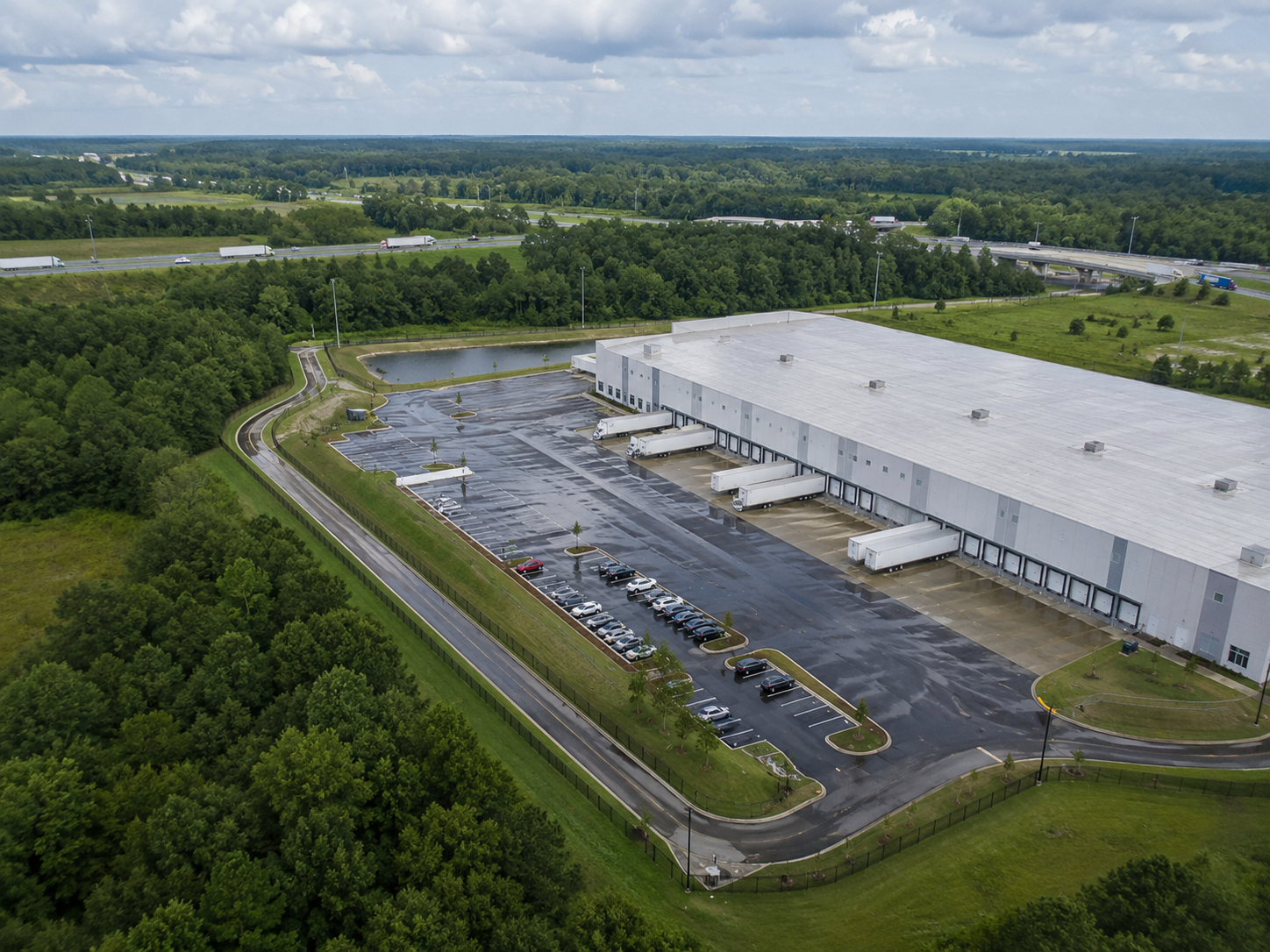
East Macon, GA — I-16 Corridor
Commercial Dumpster Rental in East Macon, GA
Roll-off containers and mobile on-site compaction for distribution yards, industrial sites, and demolition work along the I-16 corridor in Bibb County.
Max Compacx provides commercial dumpster rental in East Macon, GA for the operations that work the freight and heavy-material side of Bibb County: distribution and transport yards along the I-16 corridor, the east Macon industrial areas, and the construction and demolition crews working the east side of the Ocmulgee River. Containers get sized for what the material actually weighs, and service gets scheduled around dock hours and phase plans rather than around a fixed route sheet.
East Macon is unusual in that the two things it throws away behave nothing alike. Packaging from a distribution dock is bulky and full of trapped air. Debris from a teardown is dense and heavy long before the container looks full. One of those responds well to compaction and one of them barely responds at all, and the plan has to start from that difference instead of ignoring it.
What East Macon Businesses Are Filling Containers With
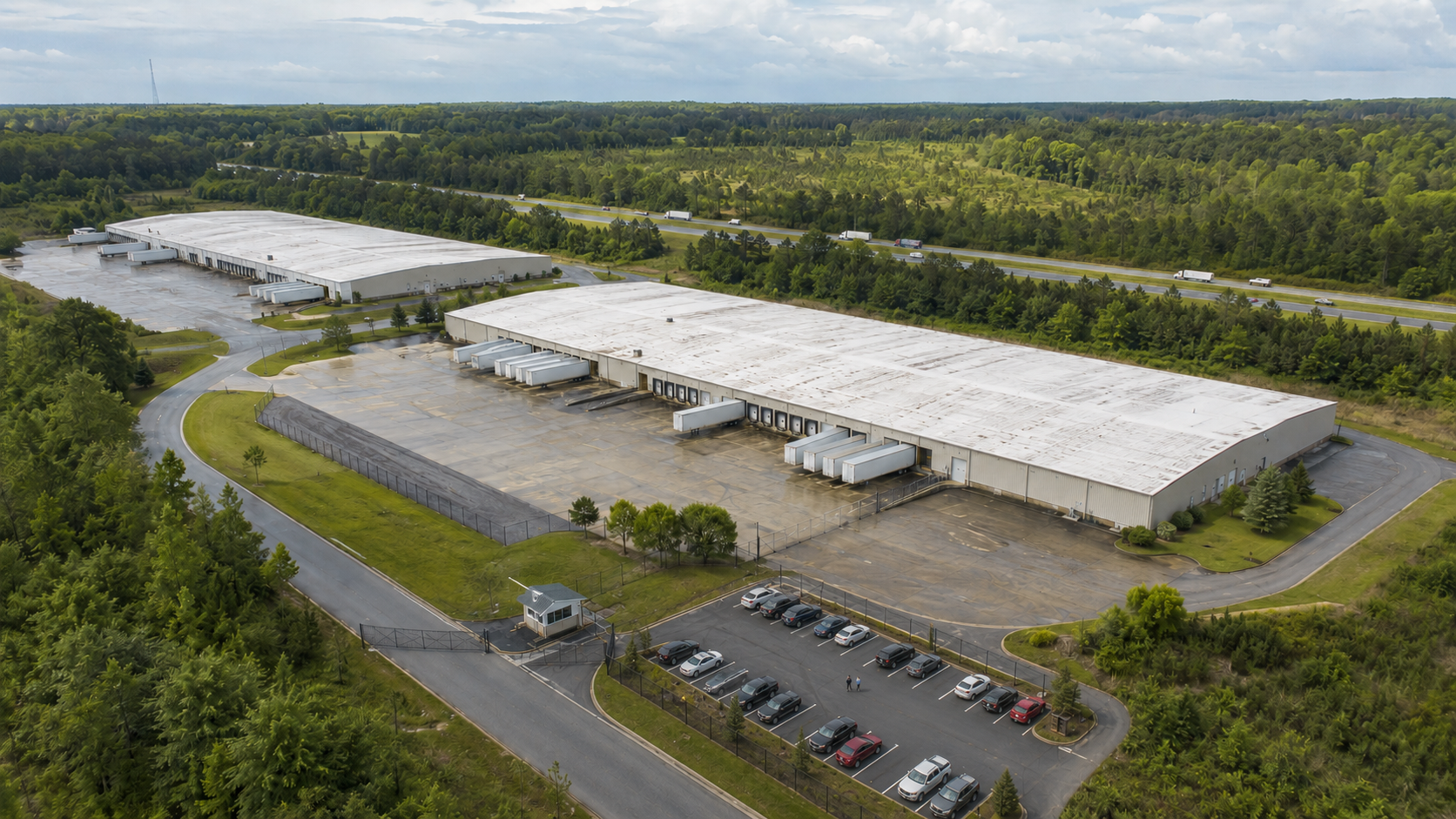
The I-16 corridor is the freight side of Macon. Warehousing, cross-dock, and transport operations sitting near the interchanges move material in and out all day, and what stays behind is corrugated, stretch wrap, banding, damaged pallets, and packaging from inbound freight. That volume arrives on a rhythm you can plan against, with spikes whenever a large shipment breaks down at the dock.
The east Macon industrial areas add a second kind of load. Processing and production waste, packaging from raw material, line scrap, and periodic clearance when equipment changes over. It is heavier than dock waste and less predictable in timing, and it often needs to be kept separate from the packaging stream because the receiving hauler treats the two differently.
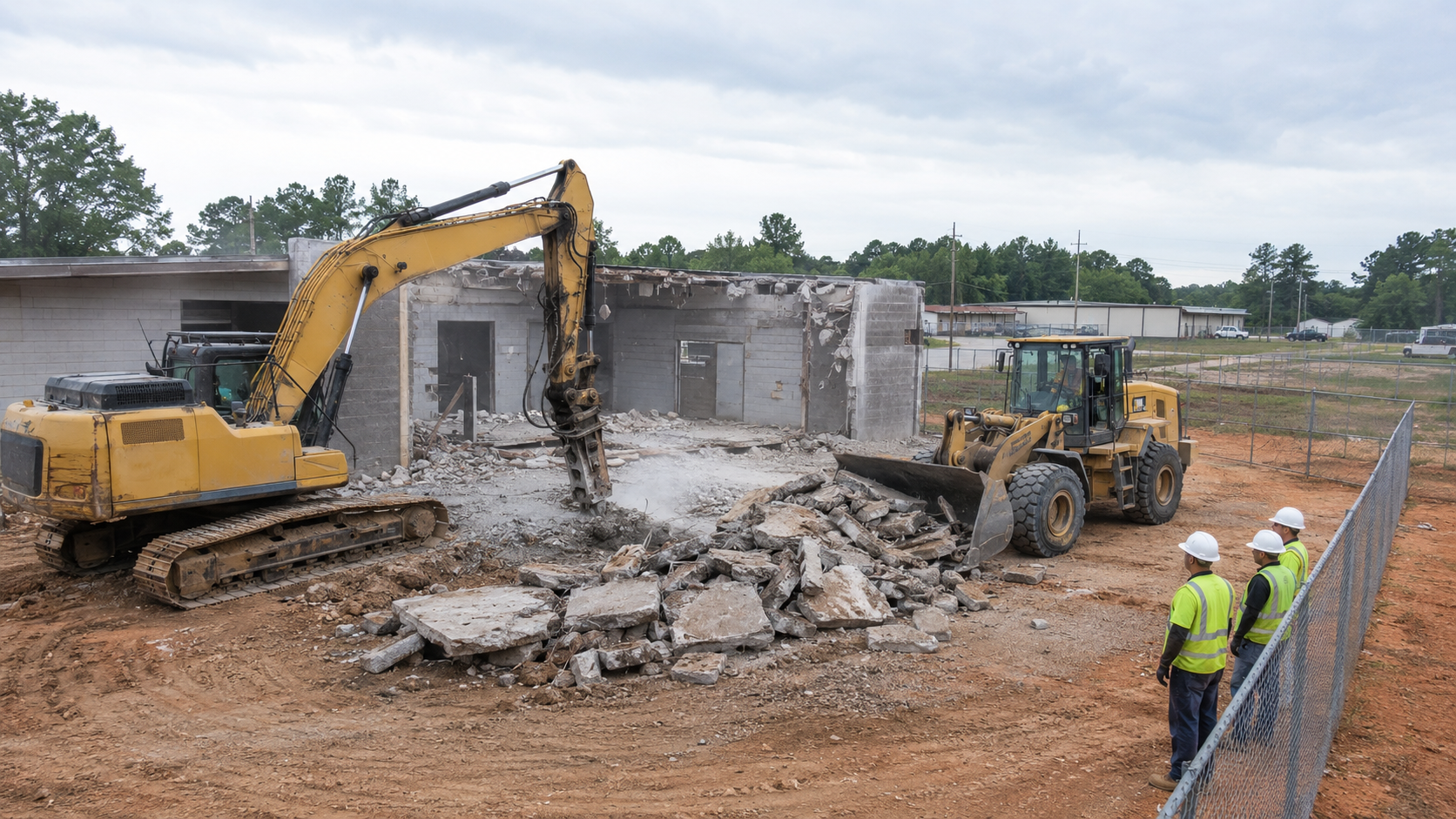
The third stream is the heavy one. Commercial construction, renovation, and demolition work on the east side of the Ocmulgee River produces mixed construction and demolition debris — broken masonry, structural material, roofing, framing lumber, and the general contents of a building being taken apart. That material hits the legal road weight ceiling with the container visibly nowhere near full, which changes almost every decision about size and schedule.
Each of those three streams needs its own container plan. Sending the same box to all three is the most common way an East Macon site ends up hauling air on one container and getting a truck turned away at the scale on another.
Commercial Dumpster Rental in East Macon, GA: How the Service Is Set Up
Max Compacx runs 20-, 30-, and 40-yard roll-off containers for commercial and industrial accounts, delivered and serviced on a schedule built around the site instead of a route. On the I-16 corridor that usually means working around dock traffic and shift changes, because a truck in the wrong place at the wrong hour shuts down a yard. On active demolition and construction sites it means staging containers so the machine never waits on a box, with swaps booked ahead against the phase plan.
There are two ways to start, and both are common on this side of town. Keep the container and the hauler you already have, and Max Compacx compacts what is sitting on your pad — nothing else about the arrangement changes. Or we supply the container and the compaction together as a single service. The on-site demo is free, takes about ten minutes, and runs on material your own operation already generated.
Service covers commercial and industrial accounts only, across Macon and Middle Georgia. Residential work is outside what we do.
Container Service for East Macon Operations
Most of what comes through this corridor falls into three categories. Each one has its own page with the full detail; here is how each behaves on an East Macon site.
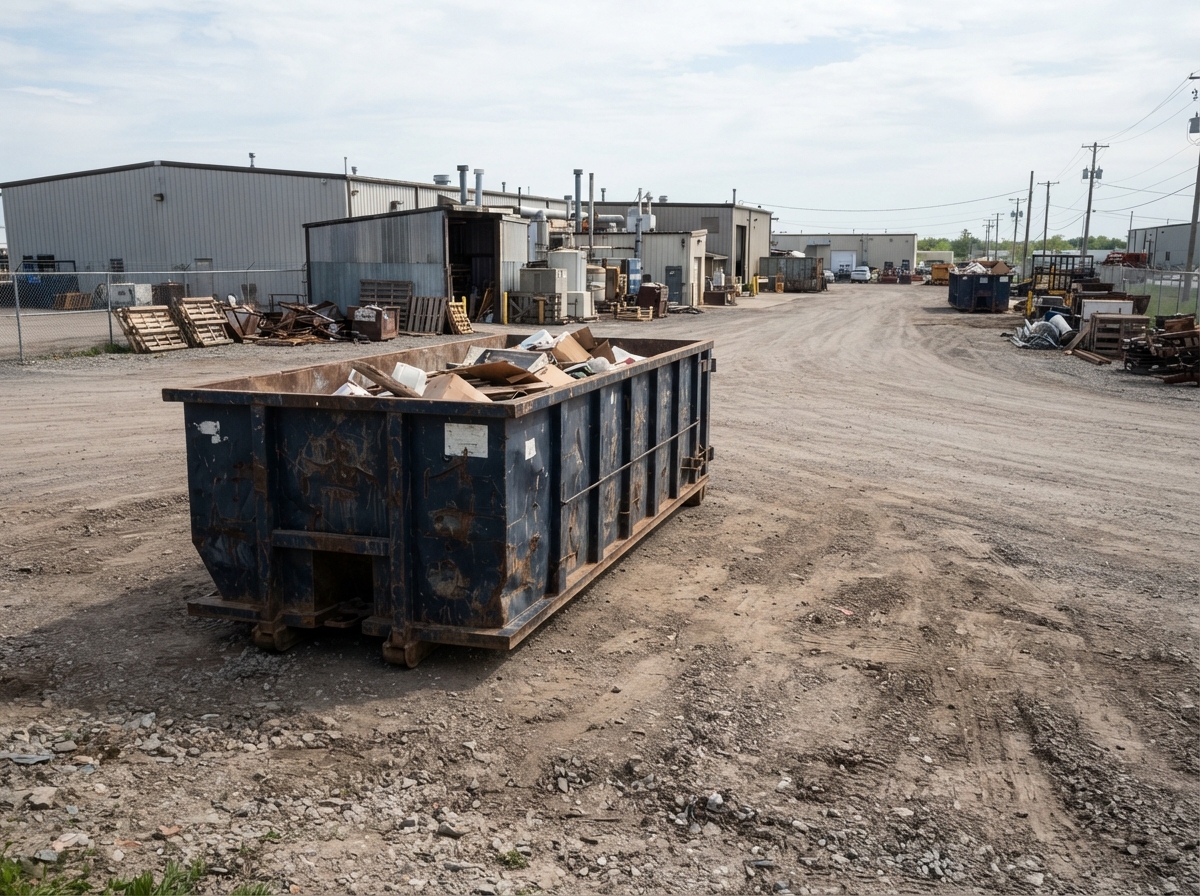
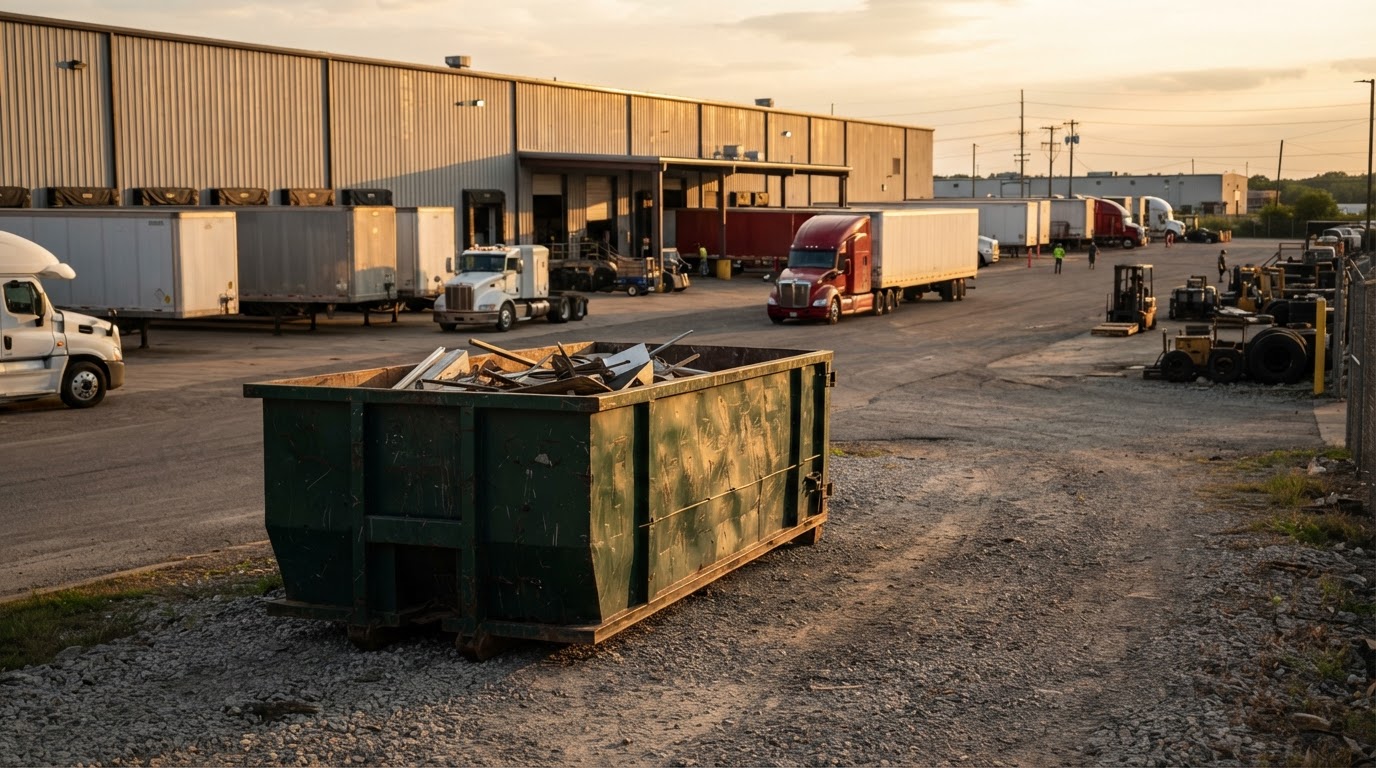
A distribution warehouse dumpster on the I-16 corridor is usually a volume problem rather than a weight problem. Corrugated, wrap, pallets, and banding fill a box fast and weigh very little, which means the container leaves the yard mostly full of air unless something is done about it. These are also the sites where placement is tightest, since the box competes with trailers for dock apron. Full detail is on the industrial dumpster rental page.
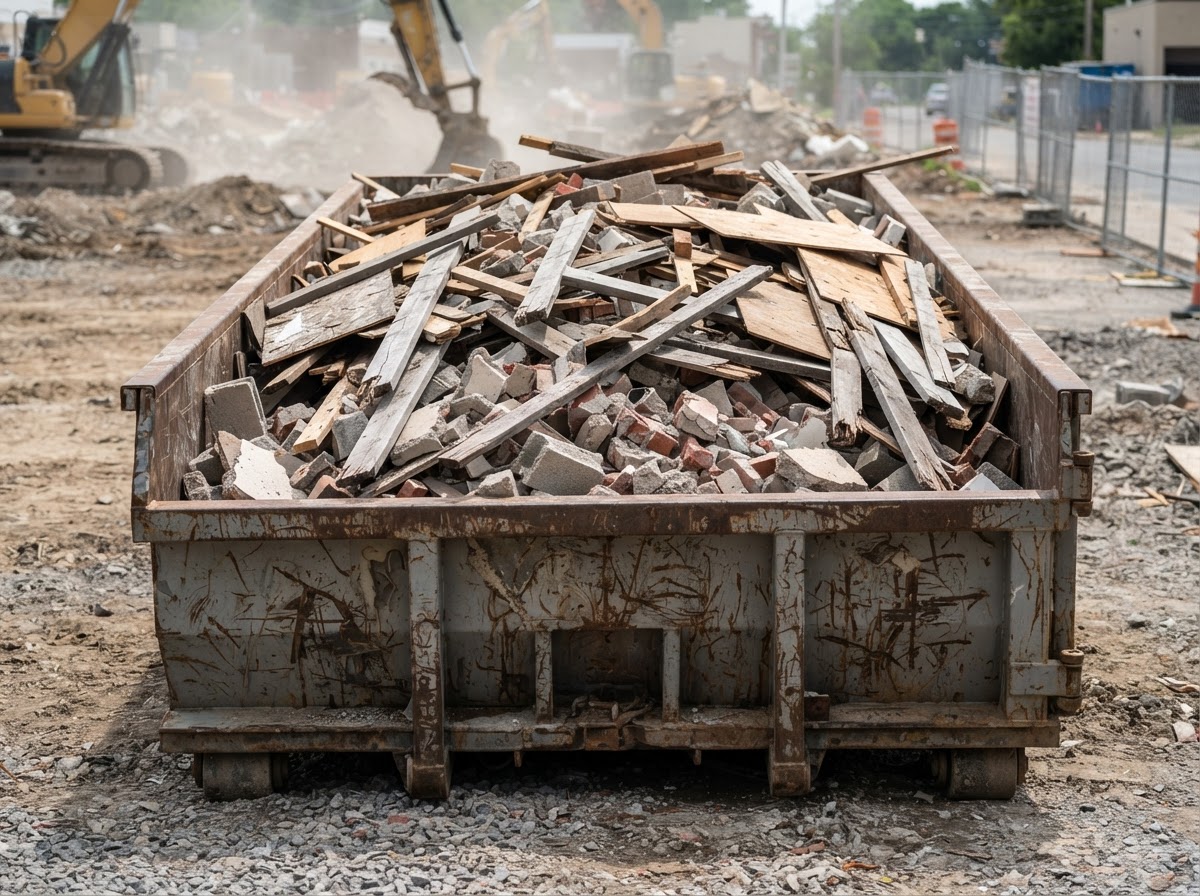
Teardowns, strip-outs, and equipment clearance across the east Macon industrial areas. Mixed C&D debris carries real density, so containers get sized for payload rather than capacity and the schedule runs on swaps rather than a calendar. Material limits matter more here than anywhere else on the corridor. The demolition dumpster rental page covers what can and cannot go in.
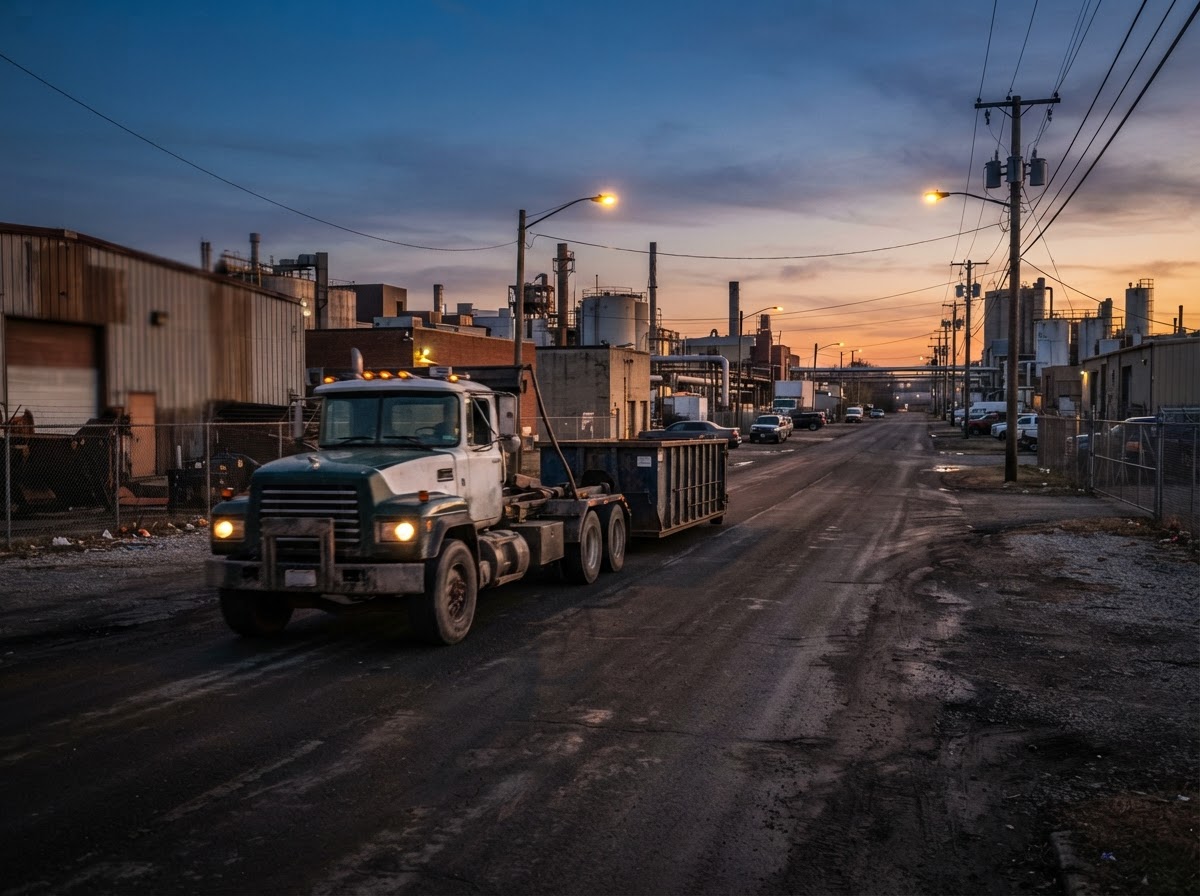
A construction dumpster east Macon crews can actually work out of is one matched to the phase. Framing and rough-in waste is bulky and light, finish-phase waste is mixed and steadier, and sitework debris is heavy enough to change the container size on its own. See construction dumpster rental for phase-by-phase planning.
Dense material takes a smaller container, bulky material takes a larger one, and on a mixed East Macon site the honest answer is often two boxes rather than one big one. The dumpster sizes page has dimensions, footprints, and material matching, and roll-off dumpster rental covers how commercial container service runs from delivery through pull.
On-Site Compaction on the I-16 Corridor
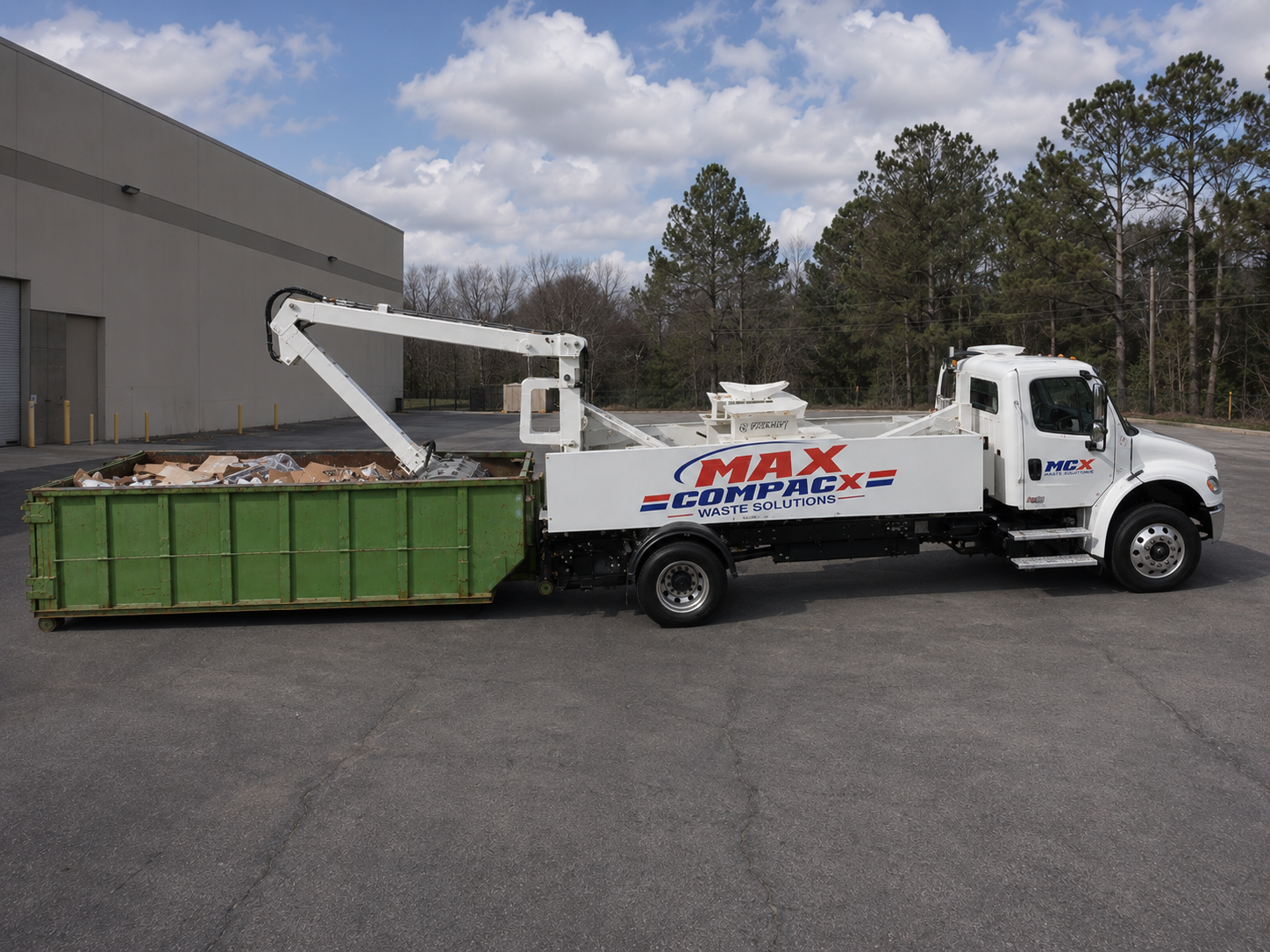
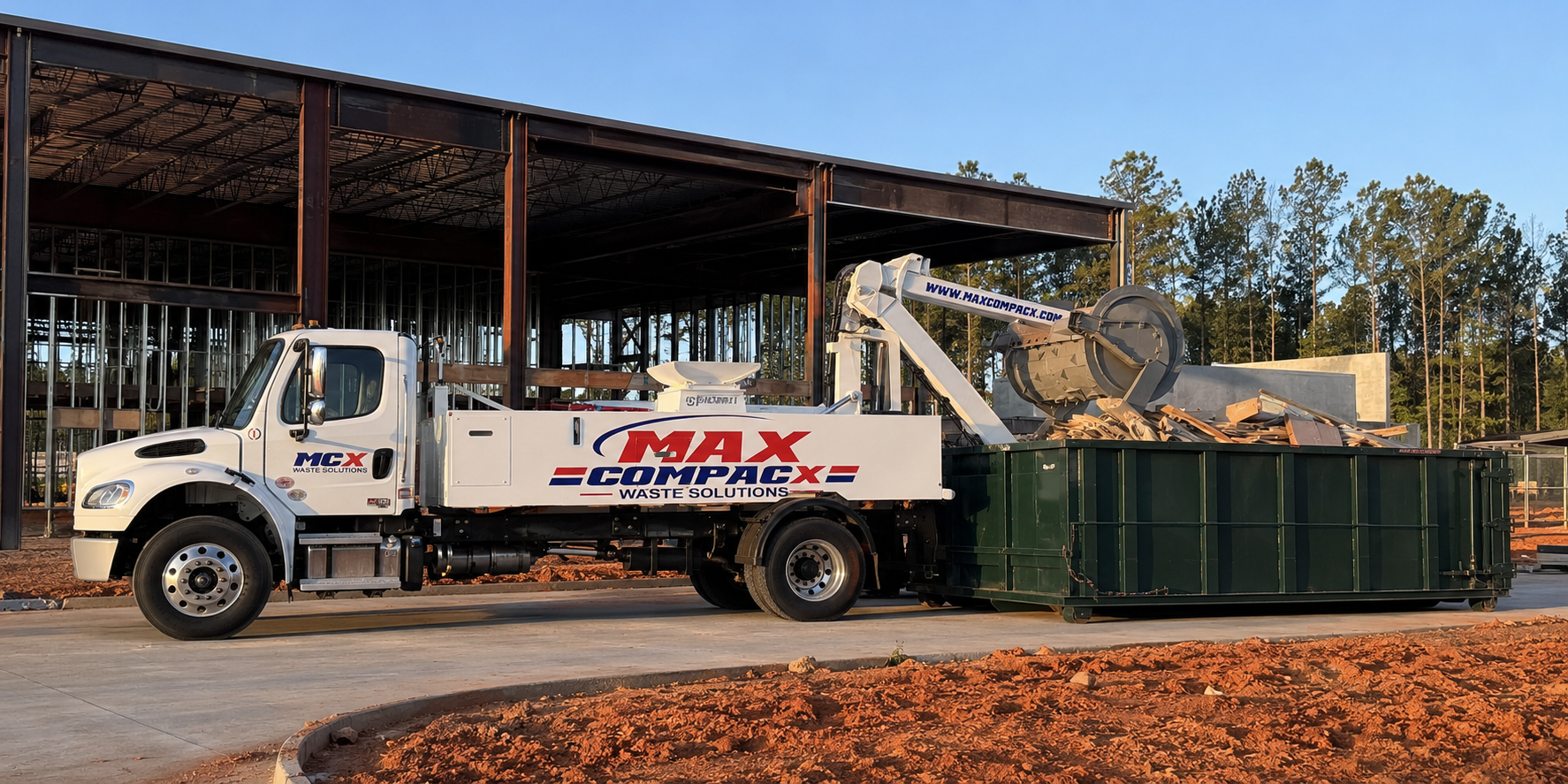
On-site waste compaction means a mobile unit comes to the container where it already sits and works the load down, so the same box keeps accepting material instead of leaving half full of air. Nothing gets transferred to another vehicle, and the container never moves off its pad.
How much room comes back depends entirely on what is in the box:
| Material stream | Typical volume reduction |
|---|---|
| Cardboard, packaging, recyclables | 60–70% |
| Compost and organics | 50–60% |
| C&D debris, wood and pallets, mixed metals | 40–50% |

That table is worth reading closely on this side of Macon, because East Macon's work sits at both ends of it. Distribution and warehouse accounts sit on the top row: packaging-heavy waste carries a great deal of trapped air, so plan around roughly 2:1 on mixed streams and closer to 3:1 where the load is cardboard-heavy, with one or two compaction visits between pulls. A loose commercial load often weighs around two to three tons when the container looks full, while a well-compacted load of compressible material can approach eight to twelve tons, near the legal DOT payload ceiling.
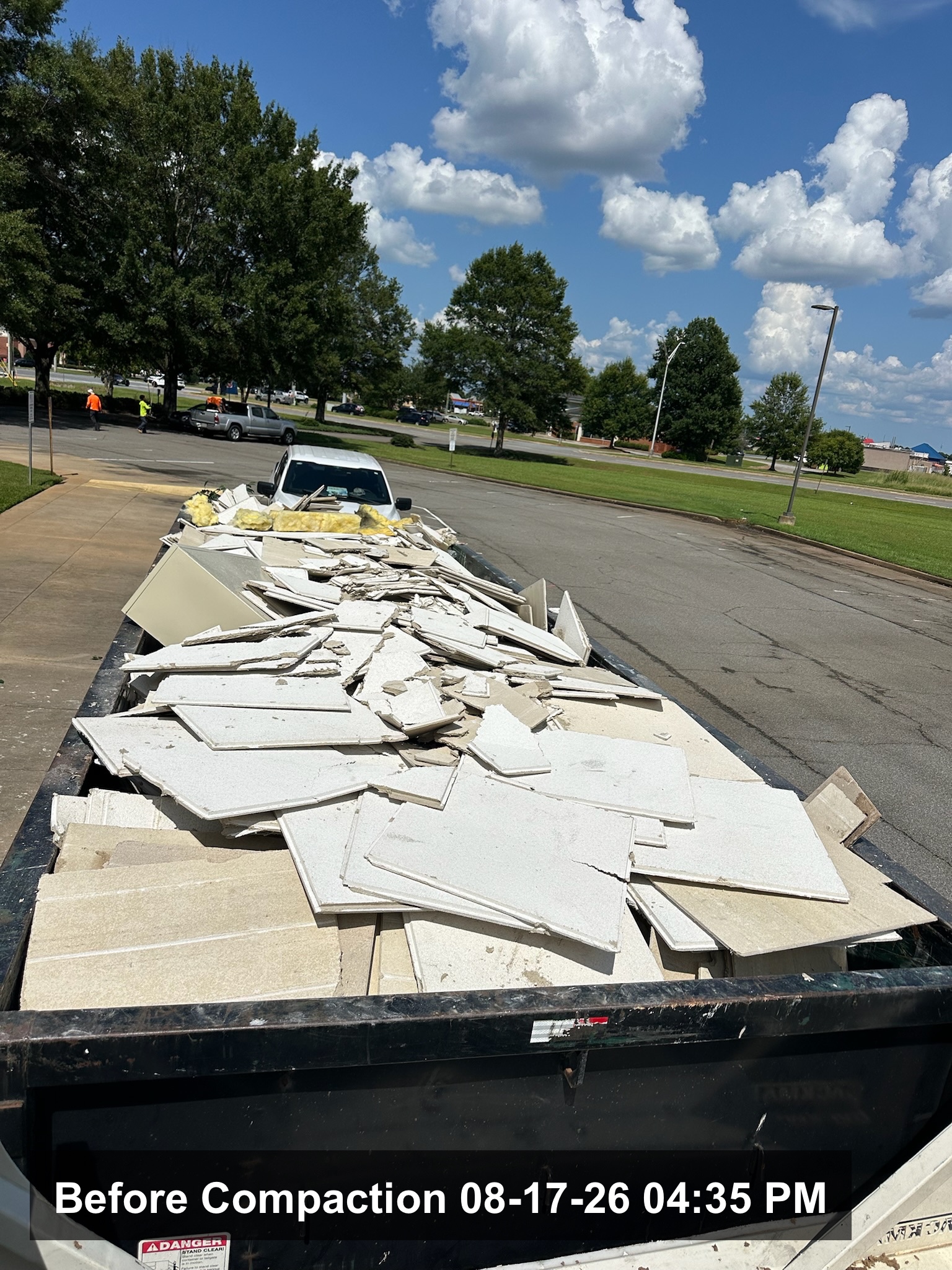
Construction and demolition debris sits on the bottom row at 40–50%, and genuinely dense loads come in under even that. Broken masonry and concrete rubble are already all material and no air, and there is nothing left in them for a compaction visit to take out. On those loads Max Compacx declares them dense at the start and skips the compaction rather than booking a visit that accomplishes nothing. Where compaction does earn its place on a teardown is the bulky interior fraction — cardboard, insulation, packaging, light framing scrap — which behaves much more like dock waste than like rubble.
Reduction is stated as up to 70%, it is always material-dependent, and it is never guaranteed. Compaction reduces haul-offs; it does not eliminate them. On one mixed-waste container we have seen monthly haul-offs drop from twelve to four, which works out to 96 fewer truck trips across a year. Dense or infrequent waste streams may not benefit much, and Max Compacx says so before an agreement rather than after one.
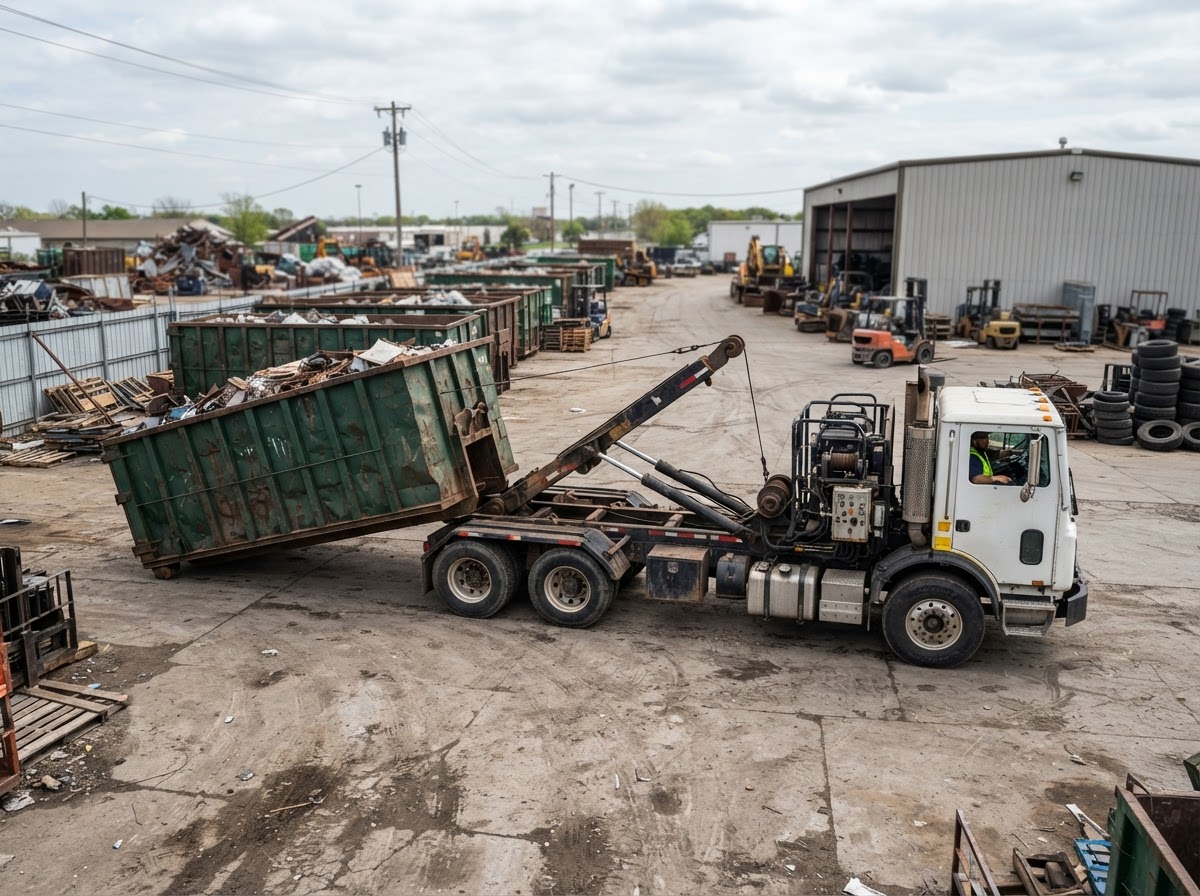
A typical corridor site looks like this. A distribution operation near an I-16 interchange keeps one 40-yard container at the back of the dock. It fills with corrugated and wrap from inbound freight, spikes whenever a large shipment breaks down, and gets pulled on a fixed schedule whether it is full or not. During spike weeks it overflows before the truck is due, and the overflow ends up staged on the apron where the trailers need to be.
Max Compacx sets a compaction rhythm instead of a pull rhythm. The unit visits between pulls, works the load down, and the container leaves only when it is genuinely full. That means fewer trips, fuller loads, and no overflow stacked on the dock apron waiting on a truck.
The same property later runs a demolition project on an adjacent building. That container is smaller, sized for weight instead of volume, and it runs on swaps against the teardown phases. The bulky interior material gets compacted and the masonry does not, and that is said out loud at the start rather than discovered later. One site ends up running two containers on two completely different plans.
(Representative example of typical corridor work, not a named past job.)
Serving East Macon: Delivery, Placement, and Access

Max Compacx works out of 5900 Hawkinsville Rd in Macon, which puts the I-16 corridor, the east Macon industrial areas, and sites across the Ocmulgee River on a direct run. Customers do not come to us — the container and the compaction unit come to the site. A few things are worth confirming before the first delivery on this corridor.
Dock-adjacent placement
Most distribution and warehouse containers end up at or beside a dock, competing with trailers for space. Tell us which door, which side, and which hours the apron is clear, and the delivery gets planned around your traffic instead of into it.
Truck approach and overhead clearance
A roll-off truck needs roughly sixty feet of straight-line approach to set and retrieve a container, plus clear space overhead with no lines, canopies, or dock awnings in the way. A yard that handles tractor-trailers all day does not automatically handle a roll-off, so it is worth a look before the first drop.
Access on active demolition sites
The approach lane on a teardown changes as the work moves. Confirming access before each swap takes a minute and beats sending a truck that cannot reach the box.
Surface
Concrete pads and compacted gravel carry a loaded container without trouble. Asphalt can mark under sustained weight in Georgia summer heat, and soft ground after a wet stretch is a real risk on unpaved industrial lots. Say the word and we will bring boards.
More than one container
Common on East Macon sites, and usually the right call when a heavy stream and a bulky stream are running at the same time, so each box reaches its own ceiling correctly.
Service runs Monday – Friday, 7am – 5pm, across Macon and Middle Georgia.
You describe the operation. What the waste is made of, roughly how fast it accumulates, where a container can sit, and what the access hours look like.
We size it honestly. Dense material gets a smaller box, bulky material gets a larger one, and if compaction will not move the needle on your stream we say so at this stage.
Free on-site demo. About ten minutes, on your own material, on your own property, so you see the actual reduction on your waste rather than a claim about someone else's.
Delivery and placement. The container goes where your equipment and your traffic can both live with it.
Compaction visits between pulls. Typically one or two, timed so the box leaves full instead of leaving on a date.
Pull or swap. The container goes when it hits its real ceiling — payload on C&D debris, volume on packaging.
Every compaction visit includes a before-and-after inspection with photo documentation. The drum is narrower than the container, so it works the load without contacting the walls. There is no hydraulic downforce driving against the box, and safeguard wheels and end guards keep the unit off the container structure. Operators run a zero-touch policy on your equipment, which matters most when the container belongs to your existing hauler rather than to us.
FAQ
Common Questions from East Macon Businesses
The limit is legal road payload, not the strength of the box. A 40-yard container is rated well over fifteen tons of static load, but a loaded truck can only legally carry a payload in the range of eight to twelve tons. Broken masonry and structural material from a teardown east of the Ocmulgee River reach that ceiling with the container looking half empty, which is exactly why heavy demolition streams get smaller containers and more swaps.
Yes. This is the material compaction helps most. A distribution warehouse dumpster along the I-16 corridor is mostly corrugated, wrap, and pallets, which sits in the 60–70% row of the reduction table and often supports roughly 2:1 on mixed loads or closer to 3:1 when the stream is cardboard-heavy. It is still material-dependent, so the free demo on your own dock is the honest test rather than the table.
Yes, on the part of the load that still has air in it, and we will tell you which part that is. C&D debris sits at the bottom of the reduction band at 40–50%, and dense loads of masonry or concrete rubble come in below that — those get declared as dense and left alone rather than compacted, because there is no trapped air left to take out. The bulky interior fraction of a teardown is a different story and often compacts well.
Yes. Staging is normal on the corridor, and it works best when placement is agreed in advance: which pad the box sits on, how a roll-off truck approaches it without crossing active trailer lanes, and which hours are clear. Long-term placement at east Macon industrial sites and transport yards is a standard arrangement, and service intervals get set against how fast the yard actually fills the box.
No liquids of any kind. No dirt, soil, aggregate, or other dense no-air material. No hazardous or regulated waste, no sealed drums or pressurized vessels, and nothing the receiving hauler will not accept. Ask about a specific stream before the container is delivered rather than at the scale — the demolition dumpster rental page carries the fuller material guidance.
No. One of the two ways to start is keeping your existing container and your existing hauler and having Max Compacx compact what is already sitting on your pad, with nothing else about that arrangement changing. The other is that we provide the container and the compaction together as one service. Both are used by accounts across Bibb County.
[REVIEW PLACEHOLDER — distribution / warehouse account, I-16 corridor]
[REVIEW PLACEHOLDER — demolition or clearance contractor, east Macon industrial area]
[REVIEW PLACEHOLDER — industrial site east of the Ocmulgee River]
Start Commercial Dumpster Rental in East Macon, GA
Tell us what the site is generating and where a container can sit. Max Compacx will size the box for the material, set the service rhythm around your dock or your phase plan, and give you a straight read on whether compaction changes anything on your stream. The on-site demo is free and takes about ten minutes. Send the details through the request form or call the office.
Max Compacx
5900 Hawkinsville Rd, Macon, GA 31216
478-722-3852
office@MaxCompacx.com
Monday – Friday, 7am – 5pm
Nearby service areas: Downtown Macon · South Macon · All service areas · Home