
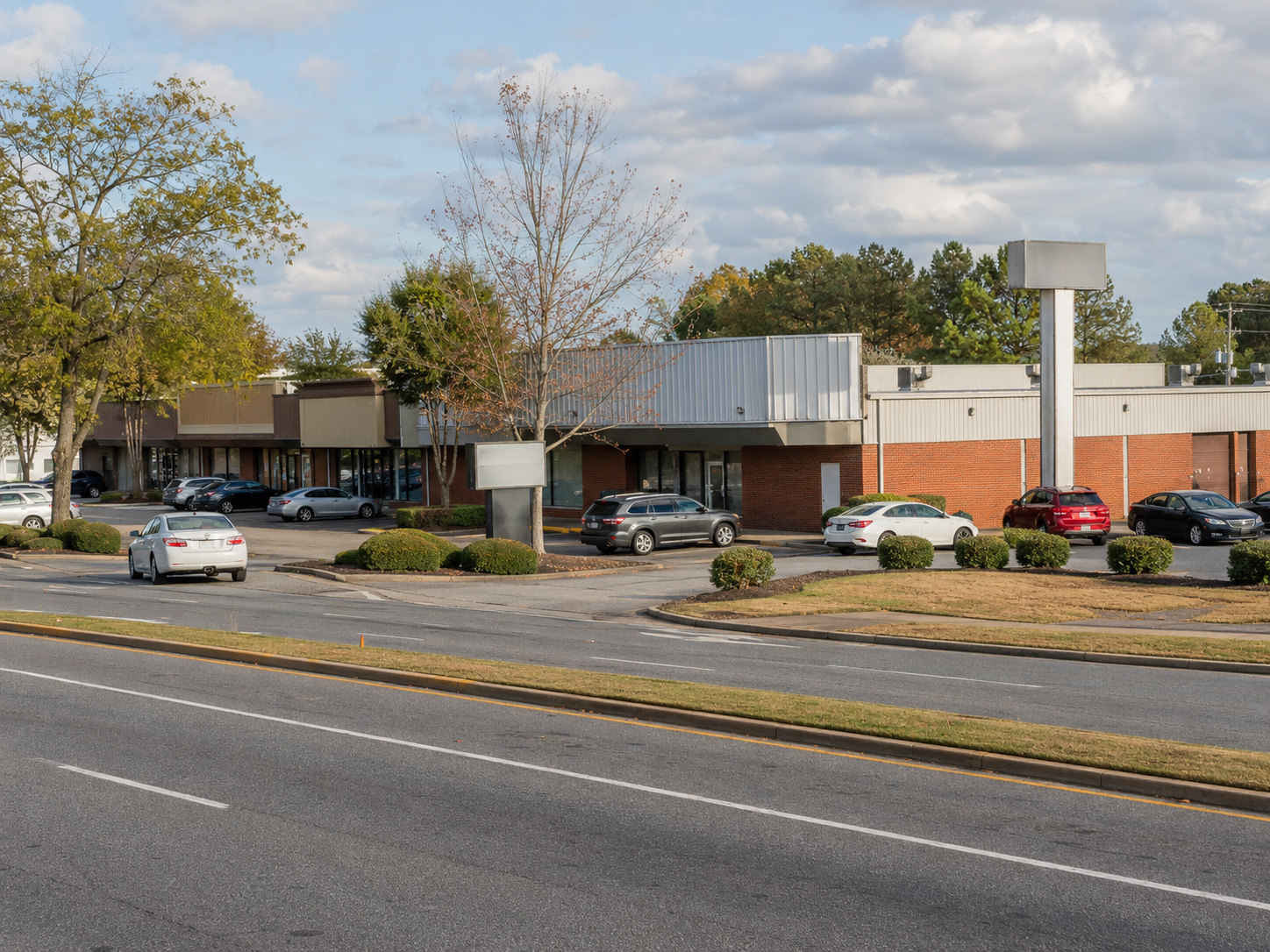
West Macon, GA — Eisenhower Parkway & Bloomfield
Commercial Dumpster Rental in West Macon, GA
Roll-off containers and mobile on-site waste compaction for the Eisenhower Parkway corridor, Bloomfield, and the retail centers and warehouses across west Bibb County.
Max Compacx provides commercial dumpster rental in West Macon, GA for retail centers, restaurants, multifamily communities, warehouses, and the contractors who work on all of them. West Macon runs on boxes. Freight arrives, gets unpacked, and the corrugated goes out the back door — every day a store is open, in every strip center along Eisenhower Parkway. That is a volume problem, not a weight problem, and it is the one thing on-site compaction solves better than anything else.
What West Macon Puts in a Container
The Eisenhower Parkway corridor is the commercial spine of this side of town. Retail centers, restaurants, service businesses, and the back-of-house operations behind them line it, and the I-475 access at the west end of the corridor keeps freight moving in and out of the warehouses and distribution space that sit off the main road. Bloomfield adds an older, denser commercial fabric — long-tenured businesses, tighter lots, and rear service areas that were laid out before anybody planned for a 40-yard container.
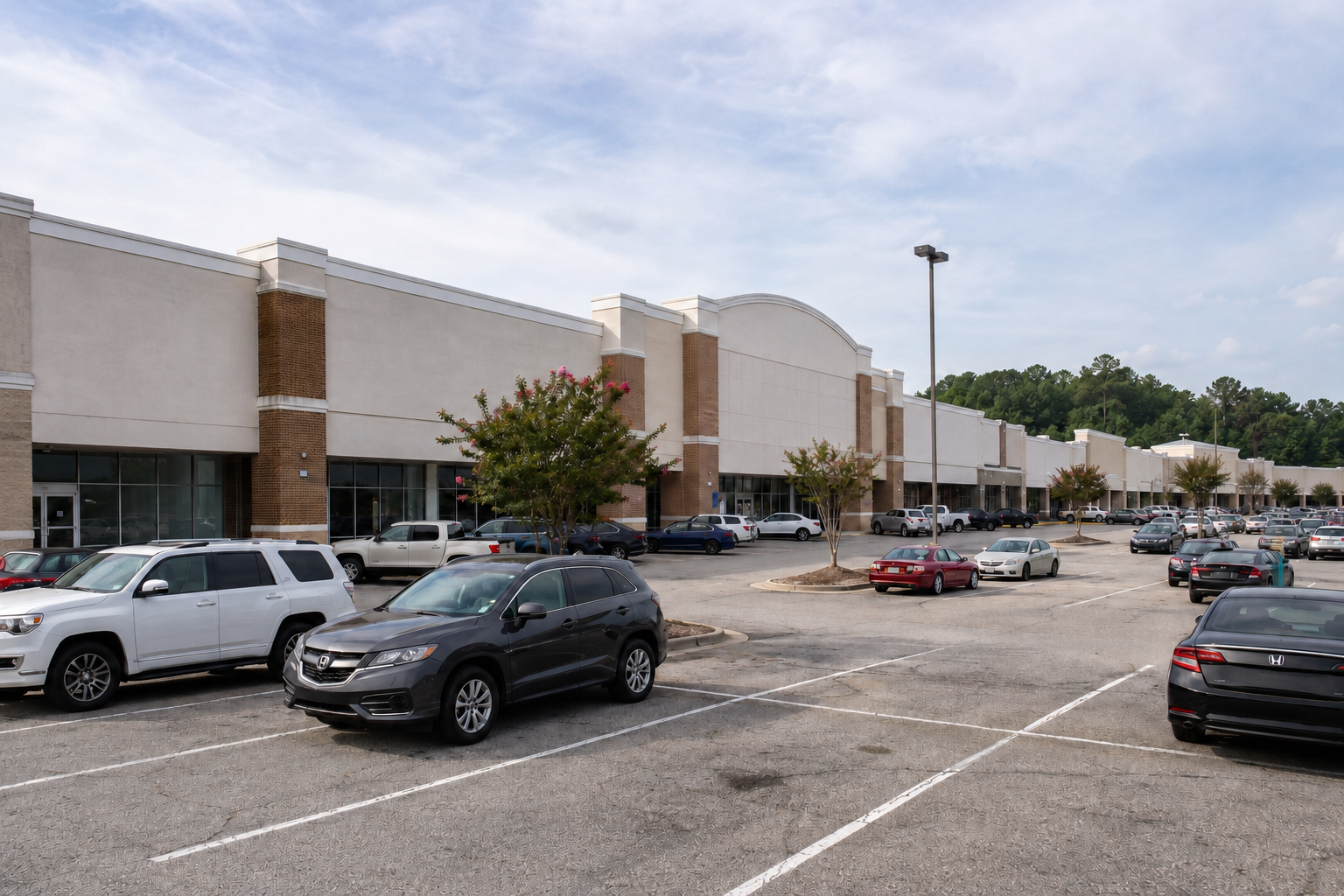
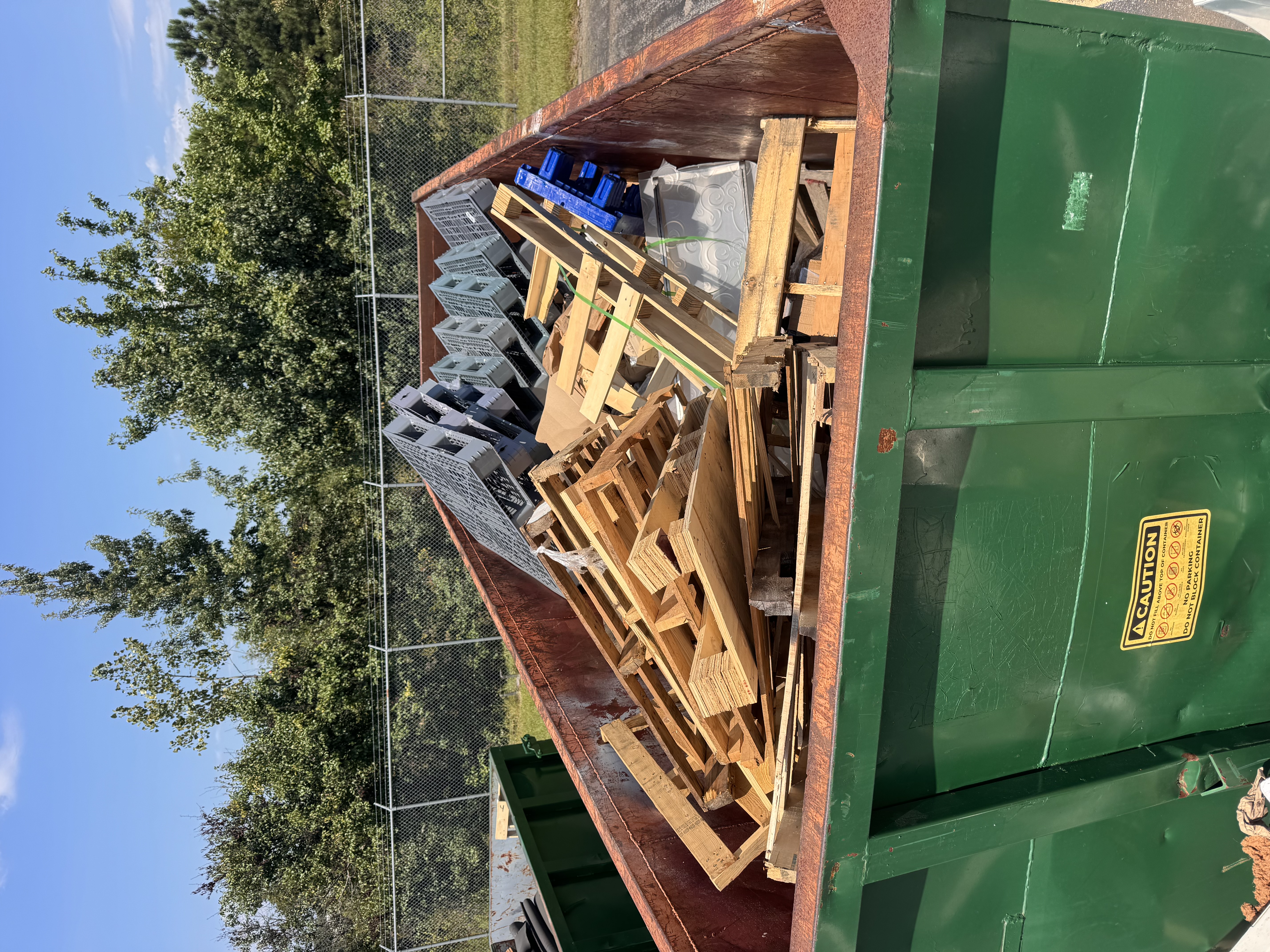
The waste that comes out of all of it is remarkably consistent. Corrugated cardboard, shrink wrap, pallets, display cartons, and packing paper make up the daily stream. It fills a container in days and weighs close to nothing. Restaurants add food packaging and back-of-house waste on a faster clock. Multifamily communities in the area generate a different rhythm entirely: quiet weeks, then a turnover cycle that produces more debris in four days than the property produced in the previous two months.
What ties these together is that most West Macon businesses are paying to haul air. A container gets pulled because it looks full, not because it is heavy — and on a corridor where the material is packaging, "looks full" arrives long before the truck is carrying a real load.
Commercial Dumpster Rental in West Macon, GA: How the Service Works
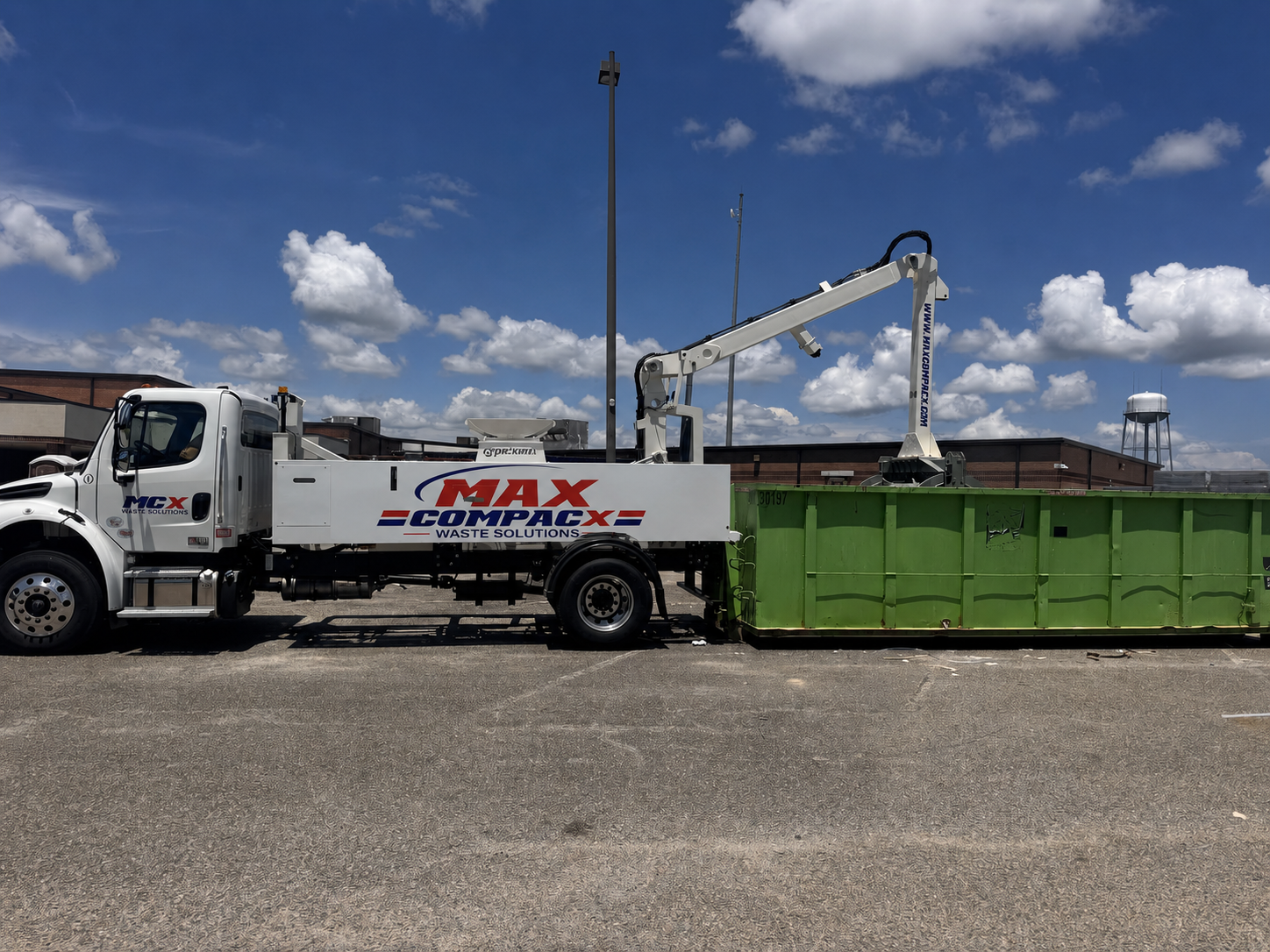
Max Compacx delivers 20-, 30-, and 40-yard roll-off containers to commercial sites across West Macon and then does something most container companies do not: we come back and work the load in place with a mobile compaction unit, so the container holds substantially more before it has to leave.
There are two ways to start, and either one works on this corridor. You can keep the dumpster and the hauler you already have, and Max Compacx compacts what is sitting on your property — your service agreement does not change, only how often the box needs pulling. Or we supply the container and the compaction together on one schedule, built around your delivery days and your trading hours.
Accounts are commercial and industrial only. We work with store operators, restaurant groups, property owners and managers, warehouse operations, and contractors. We do not serve homeowners.
The Work We Do Across West Macon
Four kinds of jobs account for most of what Max Compacx runs on this side of Macon. Most accounts here are some combination of two of them.
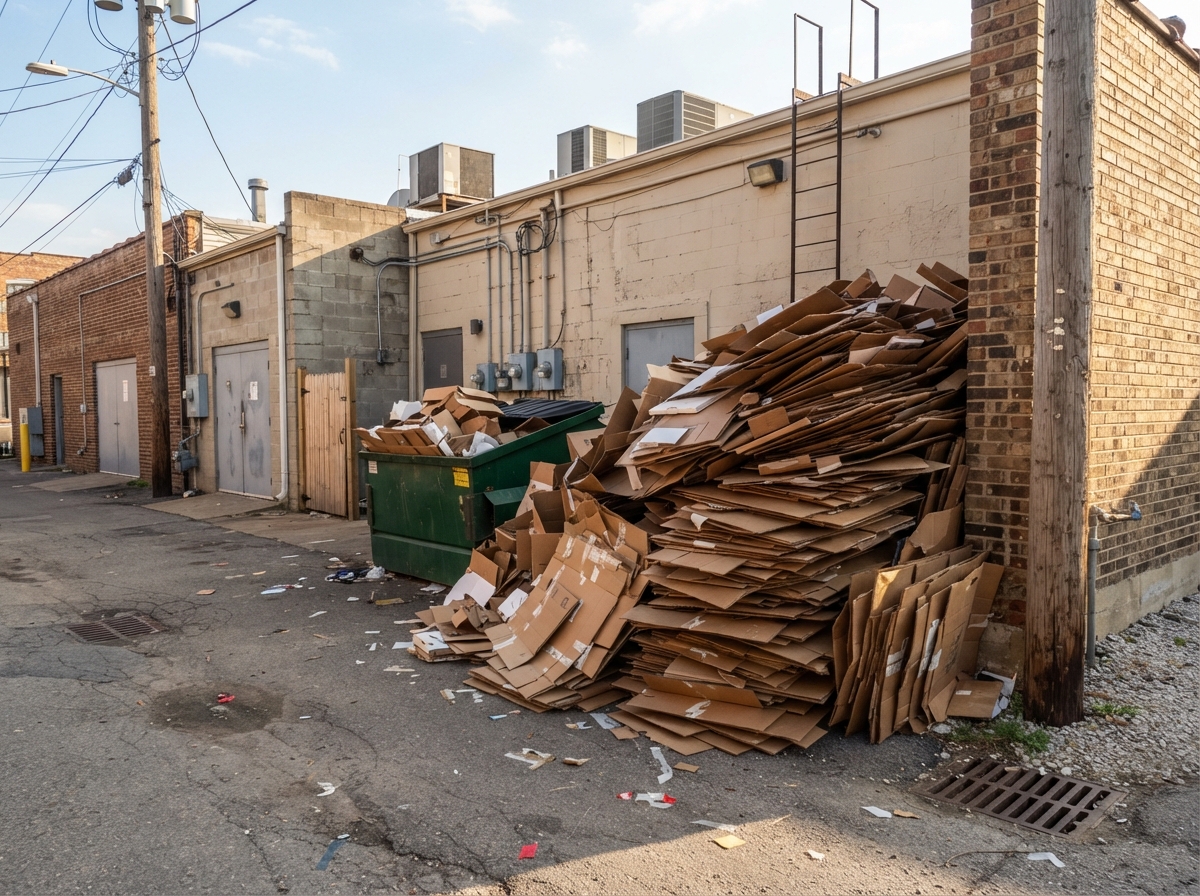
Standing containers in rear service areas along Eisenhower Parkway and the surrounding west Macon retail centers, sized to how much freight a store actually takes in. Cardboard is the dominant material, which means the container runs out of room long before it runs out of weight capacity. These accounts work best on a fixed cadence with compaction visits between pulls.
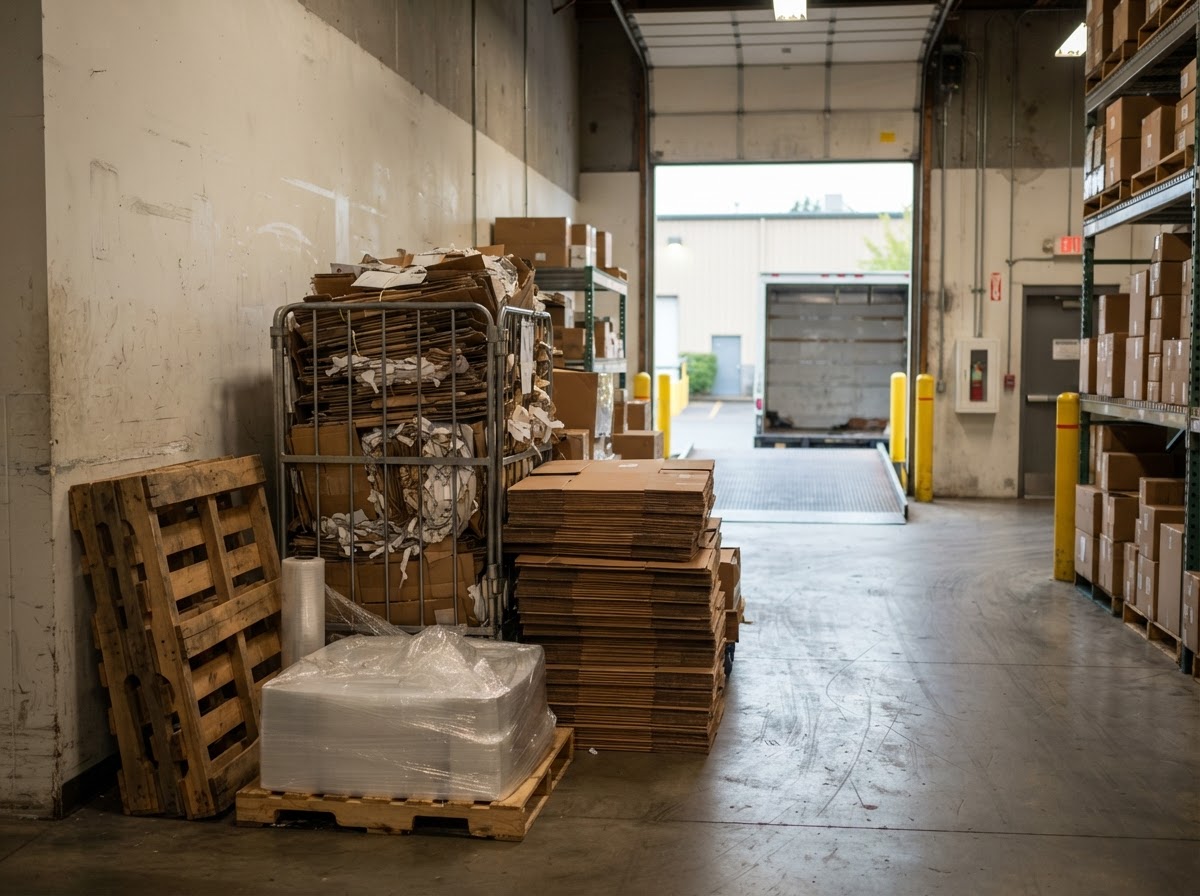
Distribution rooms, stockrooms, and the warehouse operations working off the I-475 access at the corridor's west end. Pallets, wrap, banding, damaged freight, and returns packaging, produced continuously and stacked in a dock area that was never sized to store it. Dock-adjacent placement and a service window that misses your inbound trucks matter more here than anything else. Heavier production and industrial waste streams are covered on the industrial dumpster rental page.
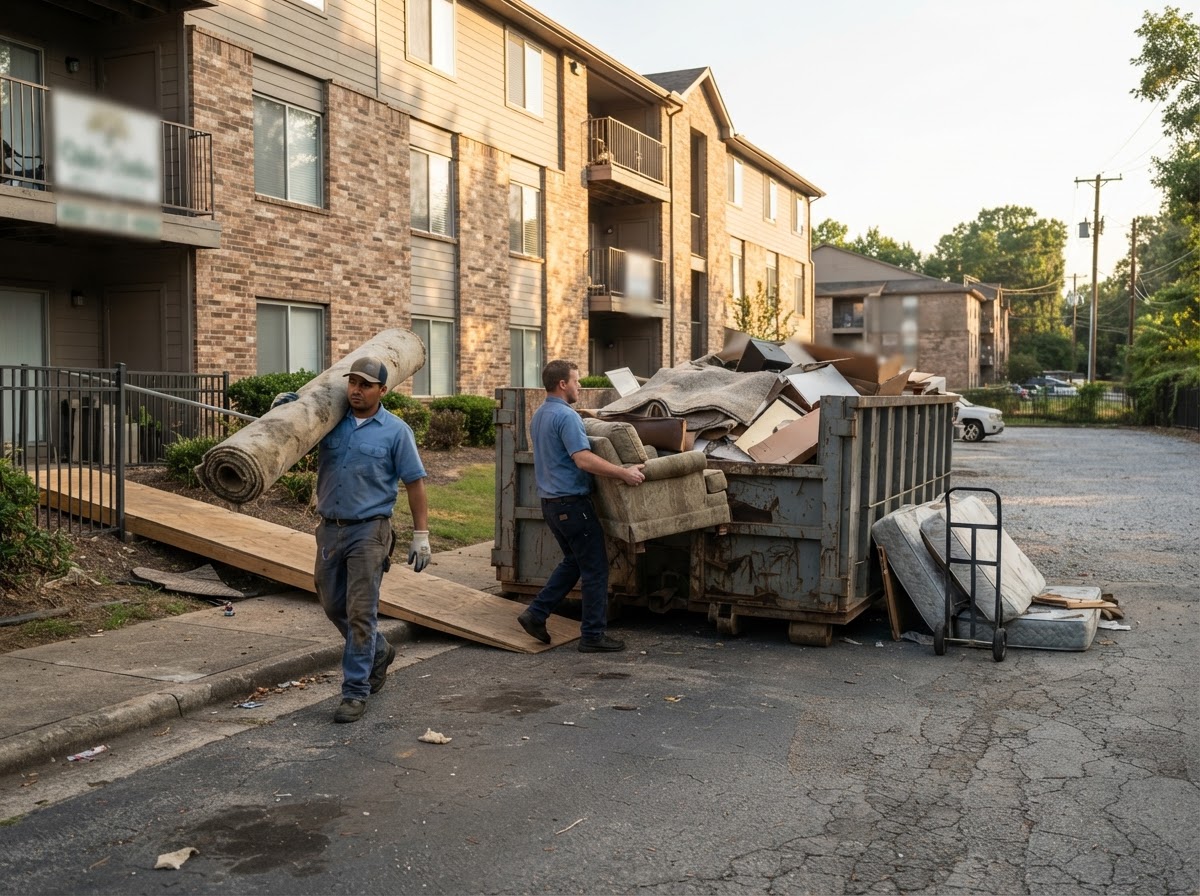
Apartment communities and commercial properties around Bloomfield and the corridor run in bursts — a block of units turning at the same time, or a suite handed back with fixtures, carpet, and stockroom contents still in it. These are date-driven jobs where the container has to be on site before the crew and the swaps have to be scheduled against the phases of the work. Portfolio-level programs across several properties belong on the property management dumpster rental page.
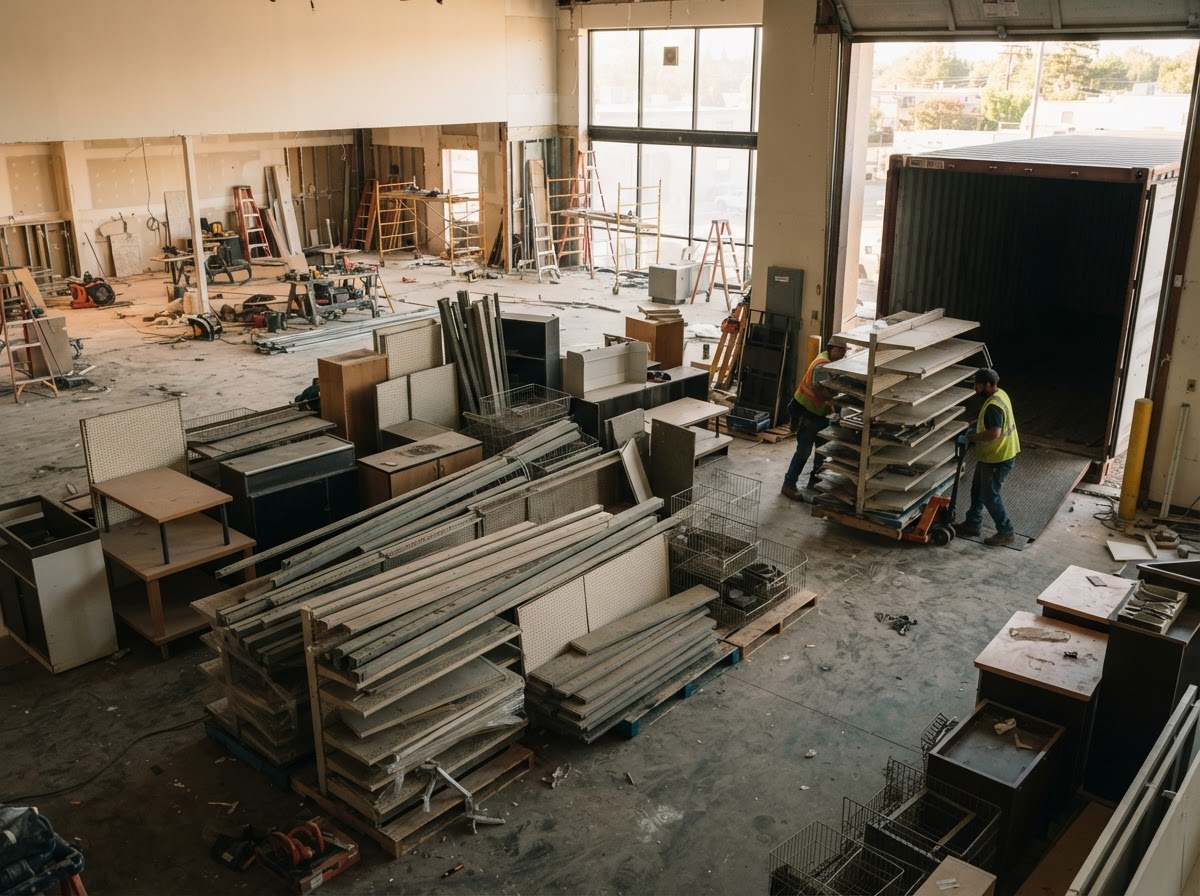
When a space changes hands, the debris changes character partway through: gondola shelving and counters first, then flooring, ceiling grid, and millwork, then the packaging that arrives with every new fixture. That shift is usually the point where the right container size changes too. If a general contractor is running the job across multiple sites, that account is better handled through the contractor dumpster rental page.
On-Site Compaction and West Macon's Cardboard Problem
A container behind a West Macon retail center is mostly air by midweek. On-site compaction is how you get that space back without renting a bigger box or adding another haul-off.
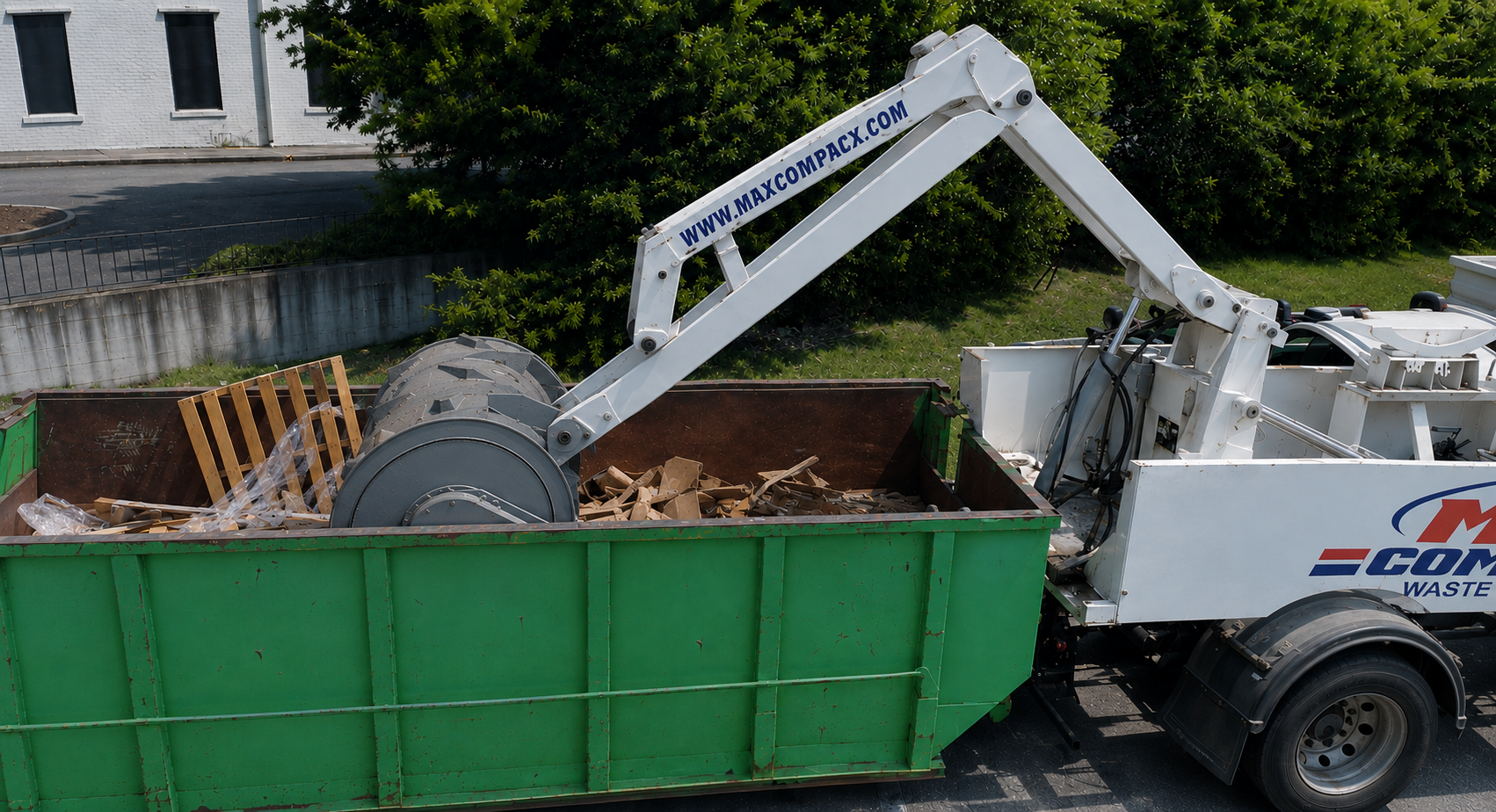
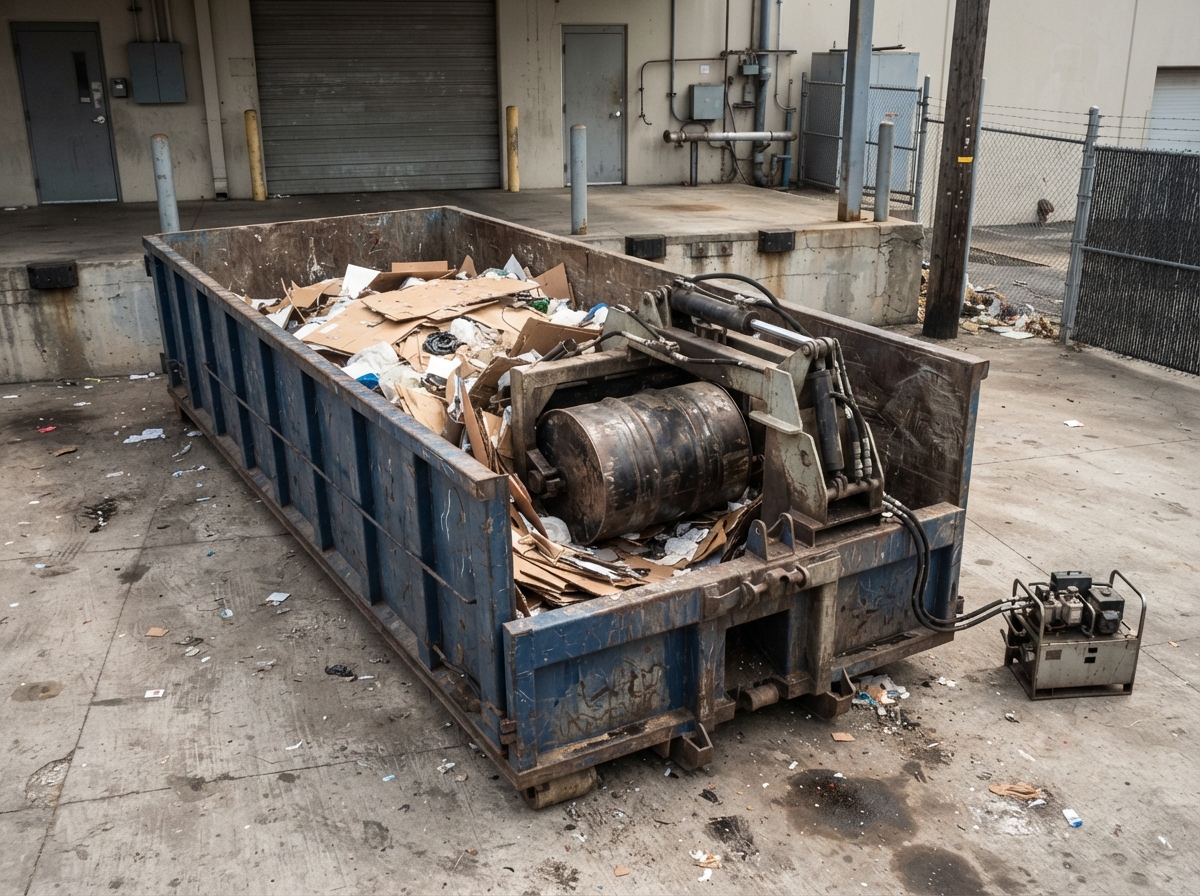
Max Compacx brings a mobile unit to the container where it already sits, works the load in place, and leaves. Nothing gets transferred to a second container, nothing is dumped on the ground, and the box never moves off your property. The visit runs about ten minutes.
Volume reduction can reach up to 70%, and it is always material-dependent:
| Material stream | Typical volume reduction |
|---|---|
| Cardboard, packaging, recyclables | 60–70% |
| Compost and organics | 50–60% |
| C&D debris, wood and pallets, mixed metals | 40–50% |
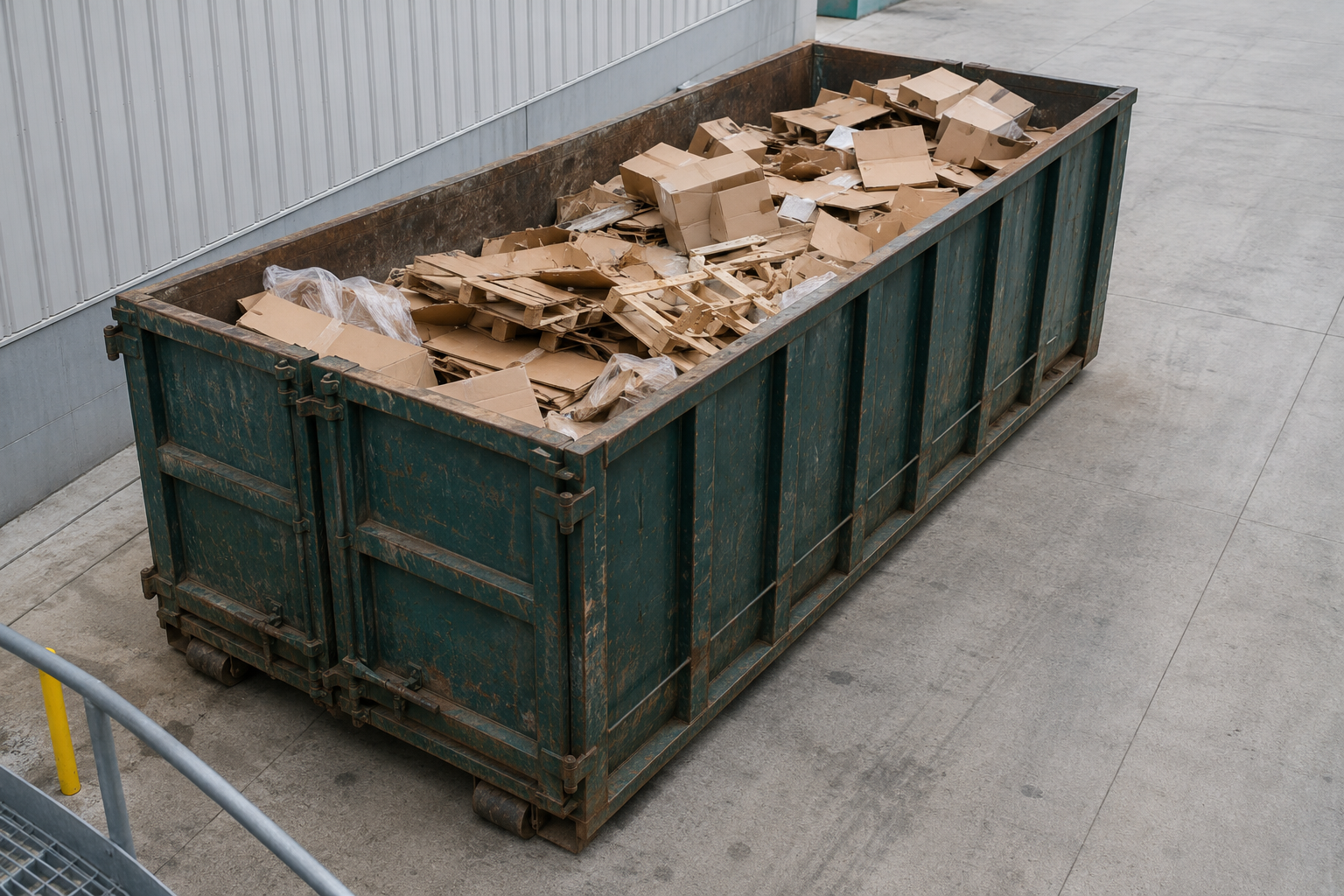
West Macon sits at the top of that table more often than most areas, because so much of what goes in the box here is corrugated. Plan around roughly 2:1 on mixed commercial loads, and expect a cardboard-heavy container to approach 3:1. Most accounts run one or two compaction visits between pulls.
Weight tells the other half of it. A loose container often carries only two to three tons when it appears completely full. A properly compacted load can reach eight to twelve tons — close to roughly 95% of the legal DOT payload the truck can legally carry. Same box, same trip, far more material leaving the site.
The honest version: compaction reduces haul-offs. It does not eliminate them, and it does not replace your hauler. It also does very little for a dense waste stream with no air in it, and it does not help a site that only pulls a container occasionally, because there are not enough trips to reduce. Max Compacx will tell you which situation you are in before you commit to anything. That is the whole point of the free on-site demo.
Container Sizes for West Macon Sites
Three sizes cover almost everything on this corridor. Full dimensions and weight detail live on the sizes page; this is the planning version.
20-yard
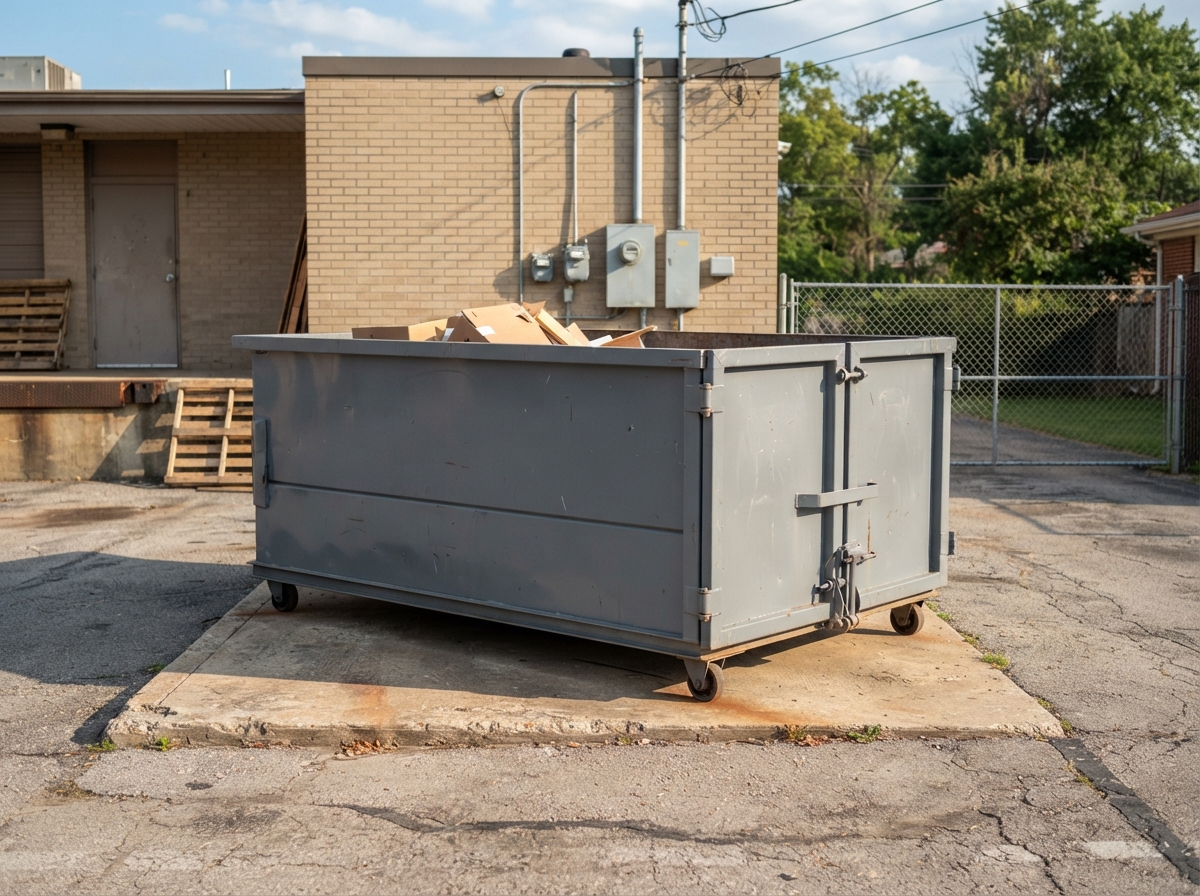
The one that fits behind an older Bloomfield building, in a shared rear service corral, or on a pad boxed in by parking. Also the right call when material is dense enough to hit weight before it fills the space.
30-yard
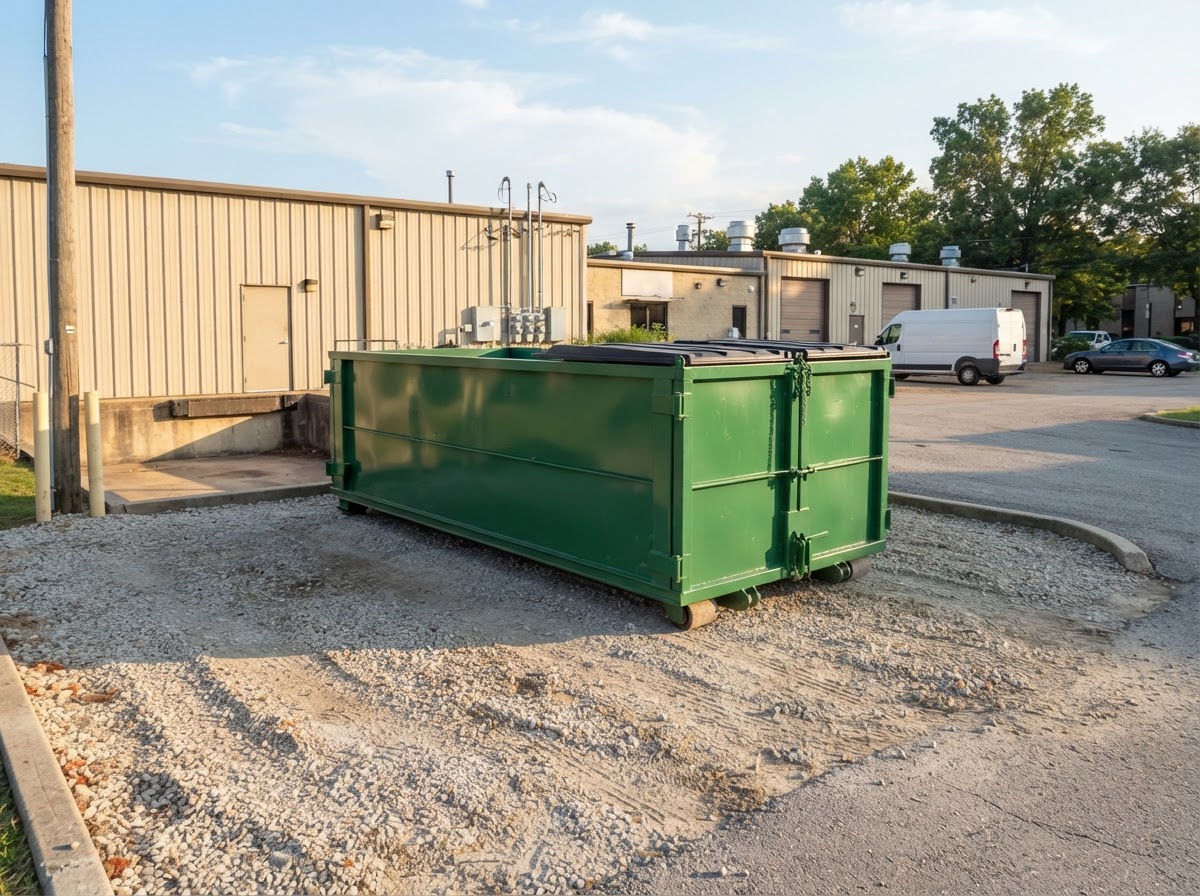
The working default for retail packaging streams, restaurant back-of-house, and mid-size cleanouts — real capacity without a footprint the property cannot give up.
40-yard
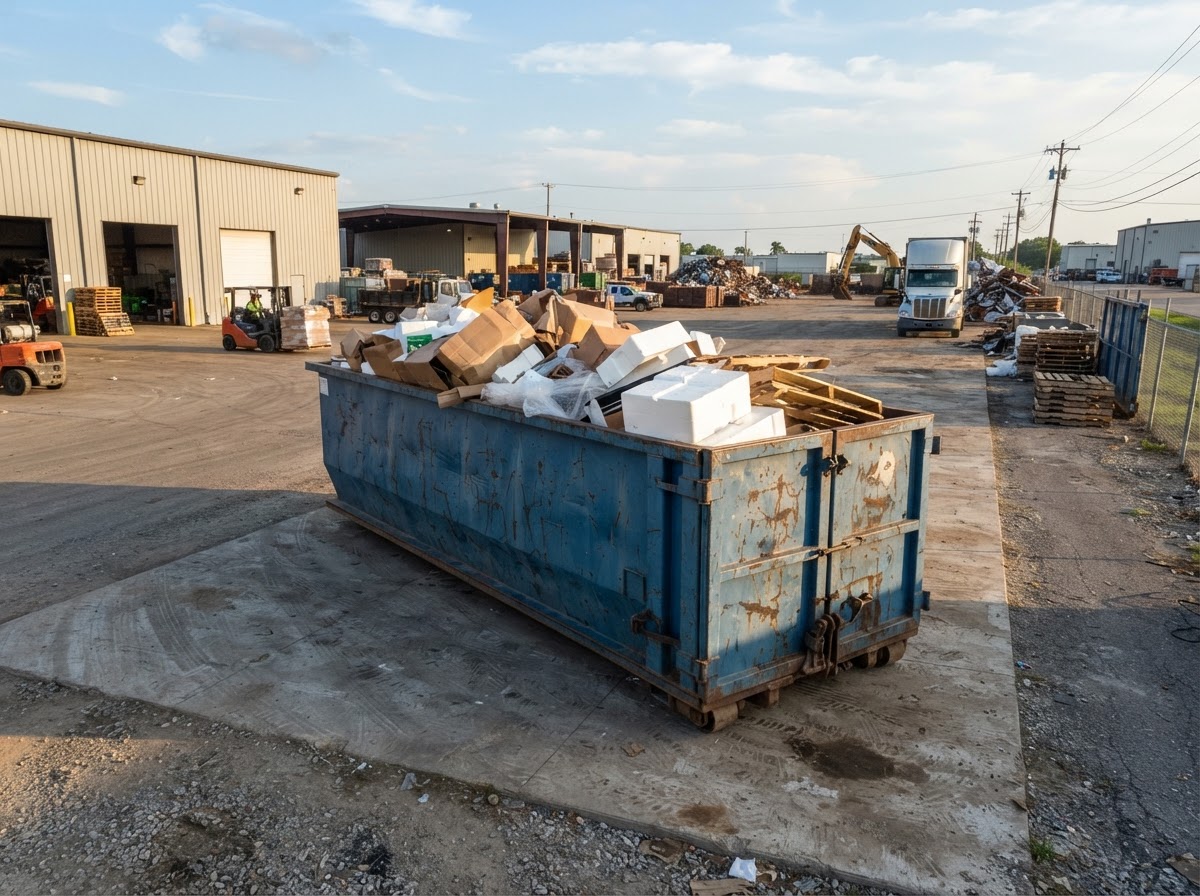
For warehouse packaging volume, full-suite cleanouts, and multifamily turnover surges. It is also where compaction earns the most, because there is the most air in it to remove. A 40-yard container is rated well over fifteen tons of static load.
If you are between sizes, tell us the material, the space, and where a truck can line up, and we will size it for you.
What We Take and What We Do Not
Getting this settled before delivery keeps a rejected load from landing in the middle of your schedule.
Accepted
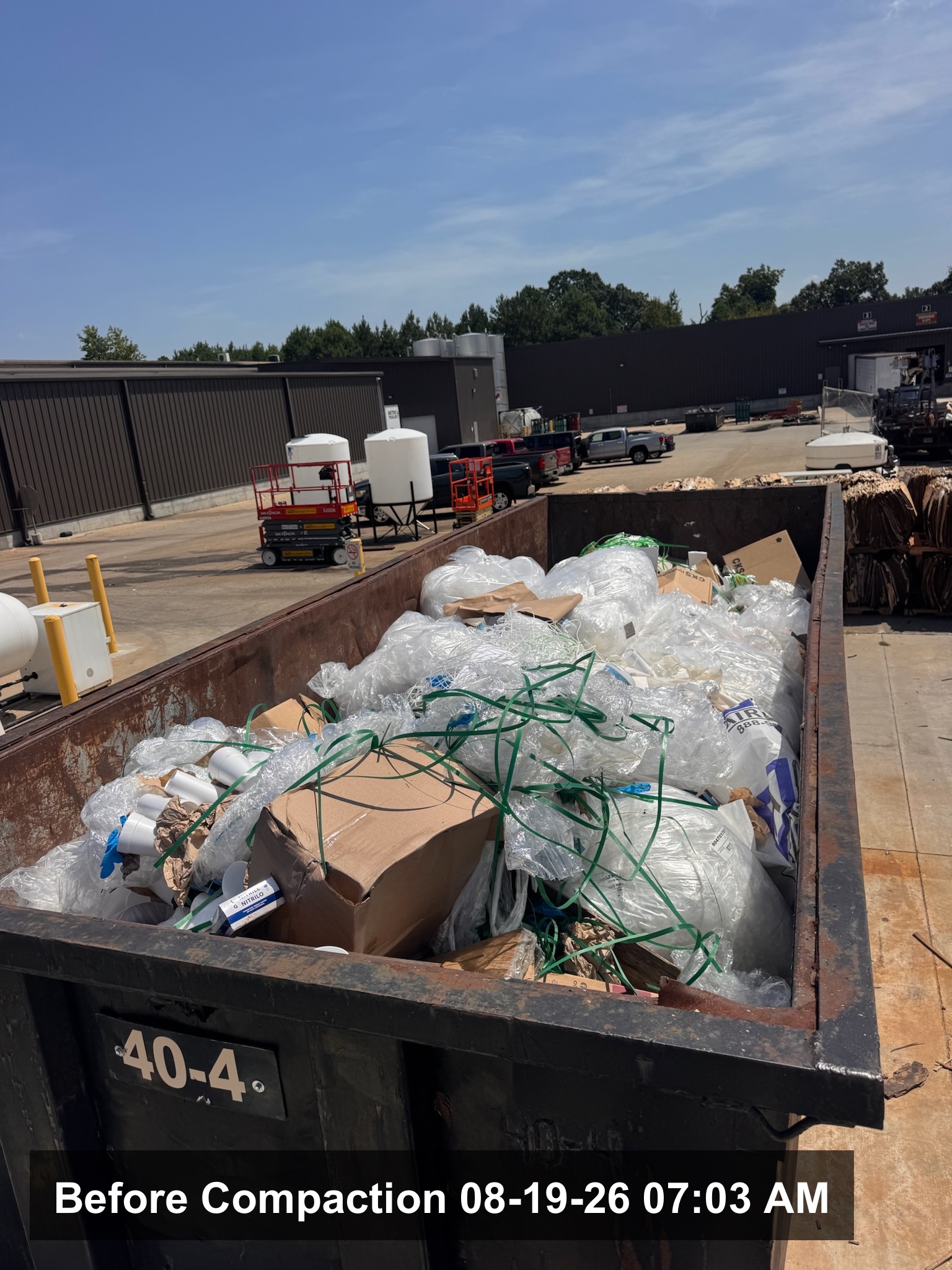
cardboard, packaging, and paper · pallets, wrap, and banding · retail fixtures, shelving, and display units · counters, casework, and millwork · flooring, carpet, and ceiling grid · general commercial and back-of-house waste · non-hazardous cleanout contents · mixed remodel and buildout debris.
Not accepted
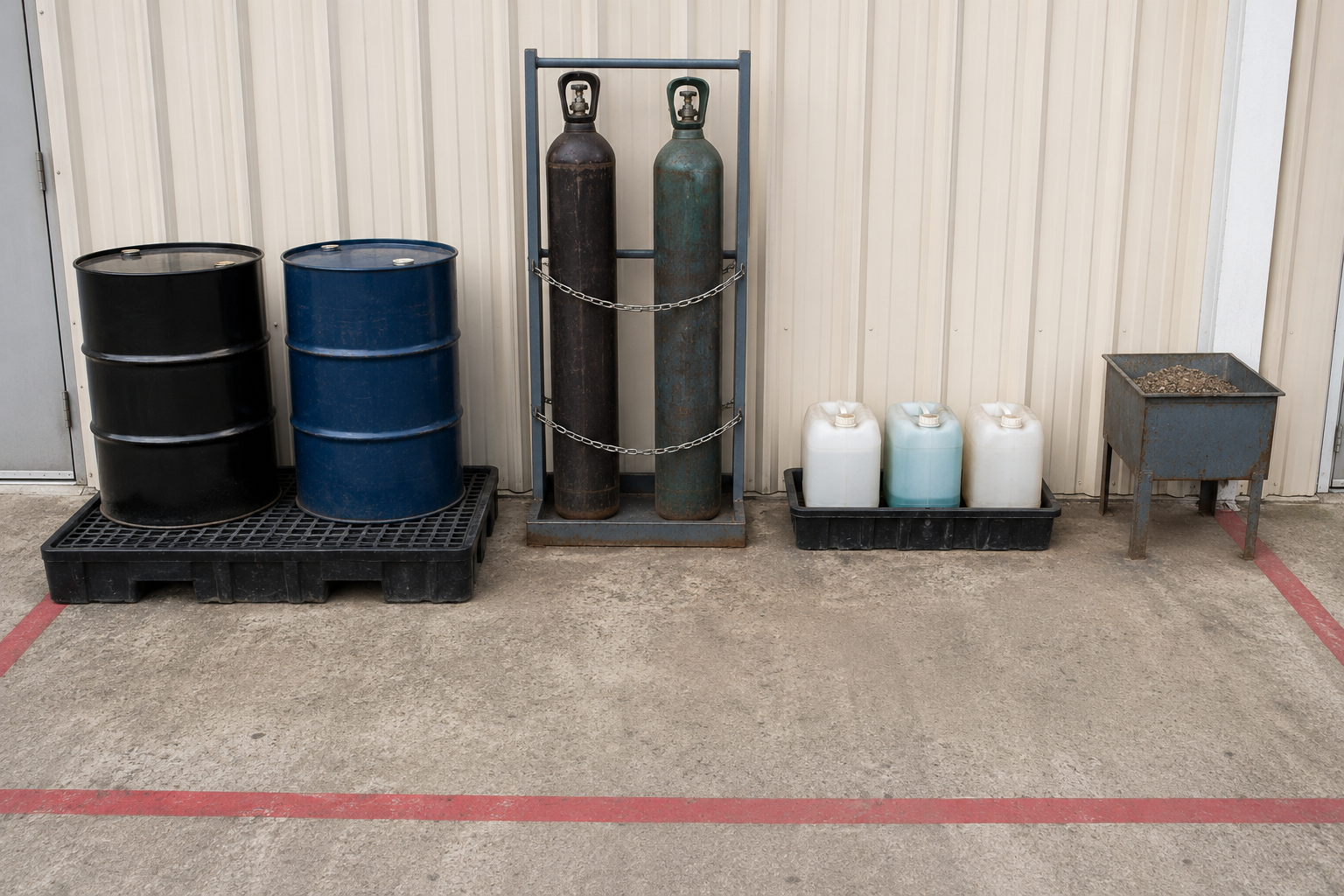
liquids of any kind · dirt, soil, aggregate, and other dense no-air material · hazardous or regulated waste · sealed drums and pressurized vessels · anything the receiving hauler will not accept.
Two of those are worth explaining. Dense fill is out partly because there is no air in it to remove and partly because it reaches weight limits well before it fills a container. Sealed drums and pressurized vessels are a hard safety exclusion — nothing under pressure goes into a container that is going to be worked.
The items that most often turn up by accident in a West Macon cleanout are floor-care chemicals, fluorescent tubes and ballasts, refrigerant-charged coolers pulled from a back room, and half-used paint. Flag them before the pull, not after.
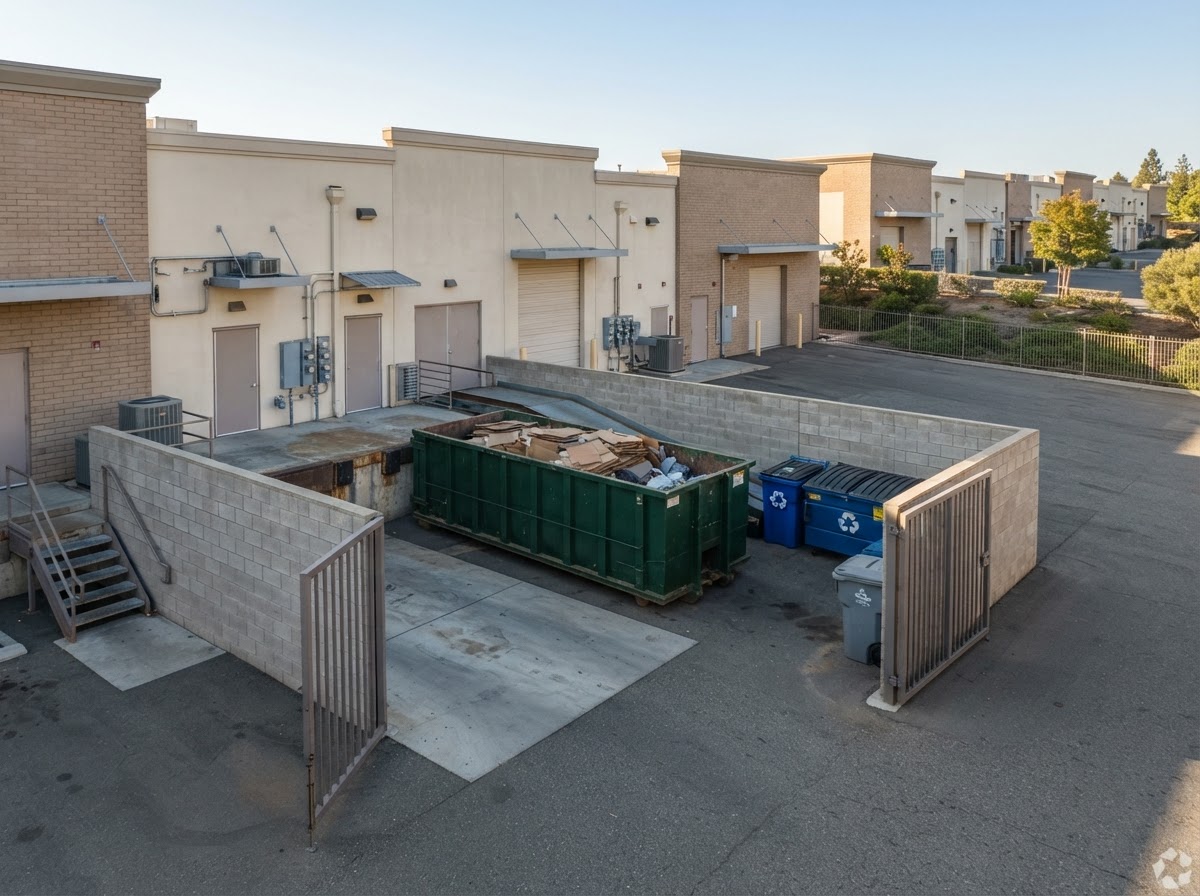
This is a composite of the work this corridor generates, not a specific past customer.
A property manager runs a multi-tenant retail center off Eisenhower Parkway with one shared 30-yard container in the rear service area. The complaint is always the same: the box is full by Thursday, two tenants are stacking flattened boxes beside it, and the Friday pull cannot come early enough. The material is almost entirely corrugated and film — bulky, clean, and light.
Max Compacx runs a free demo on the container already there. The load drops enough to reset the box without moving it, and the cadence gets rebuilt around one compaction visit mid-week instead of a second weekly pull. The container stops overflowing on the weekend, the corral gate closes again, and the property stops paying to move air across town.
Then a tenant vacates. The same rear area takes a 40-yard for the cleanout — fixtures and stockroom contents first, compacted once when it fills with bulky light material, then flooring and ceiling debris after that, when the load starts filling by weight instead of volume. The turnover finishes on fewer haul-offs than the volume suggested, with no second container occupying customer parking.
Whether it plays out that cleanly depends on the material, the access, and the schedule — which is exactly why we ask about all three before quoting anything.
Serving West Macon: Access, Placement, and Scheduling
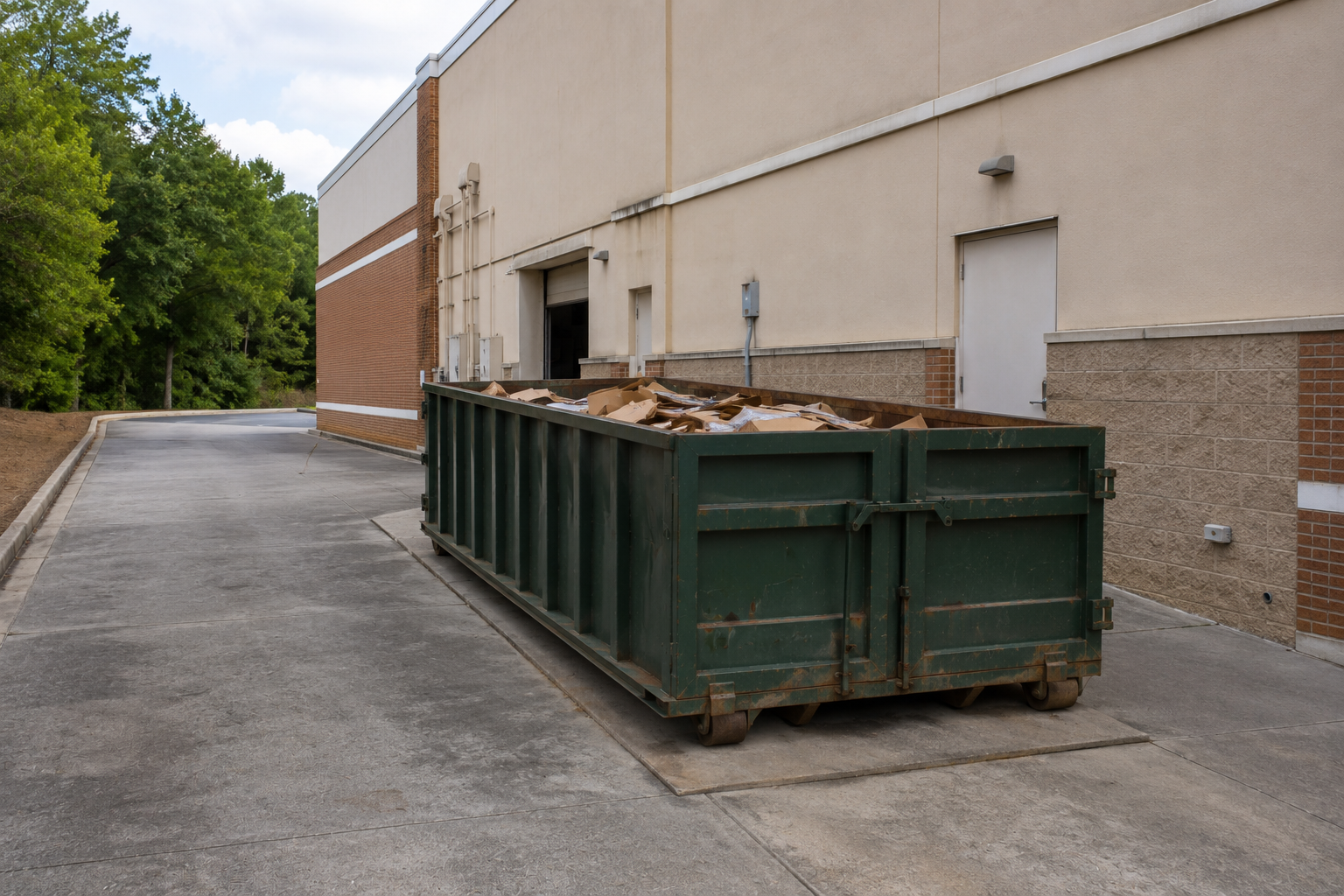
Max Compacx works from a Hawkinsville Rd base in Macon, and West Macon is a routine run across town. Customers do not come to us — containers and compaction visits come to your site, so what matters is what the truck finds when it gets there.
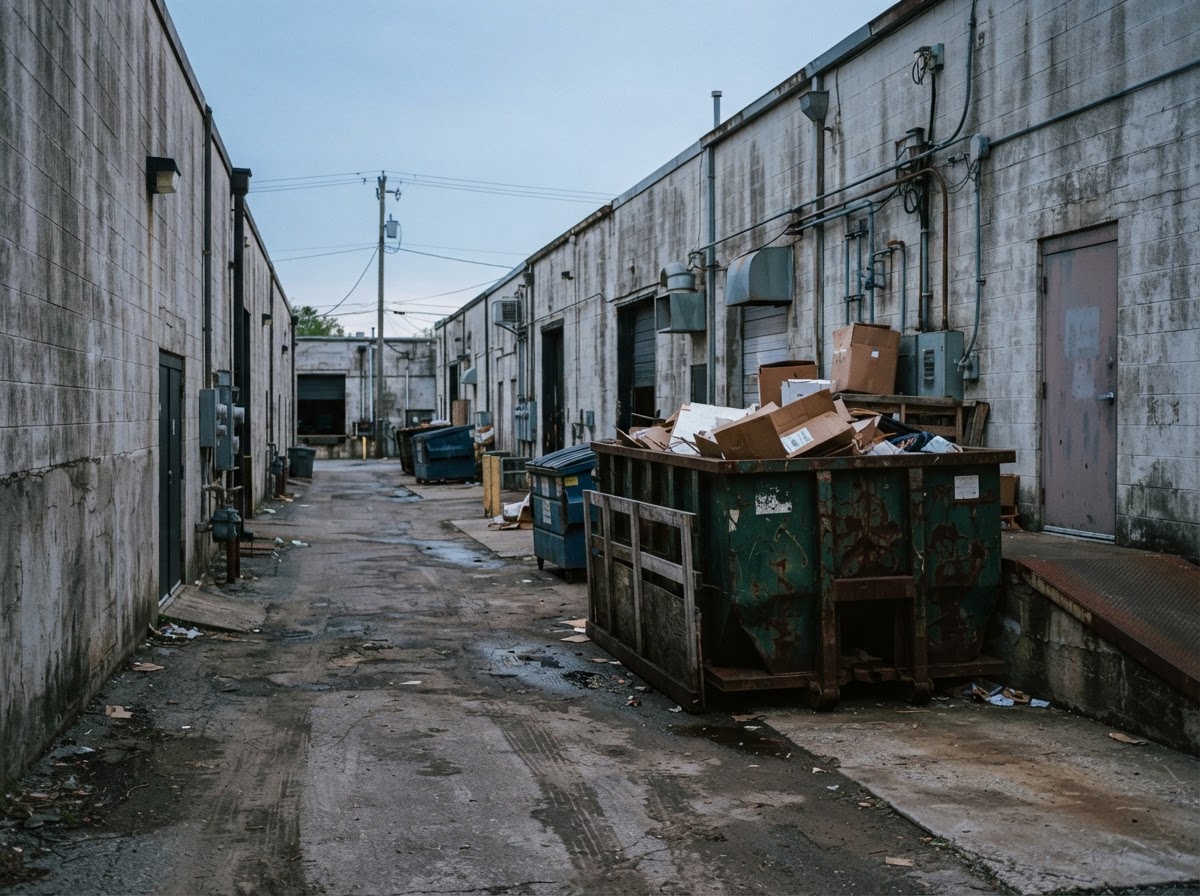
Rear service areas here are tight, and shared.
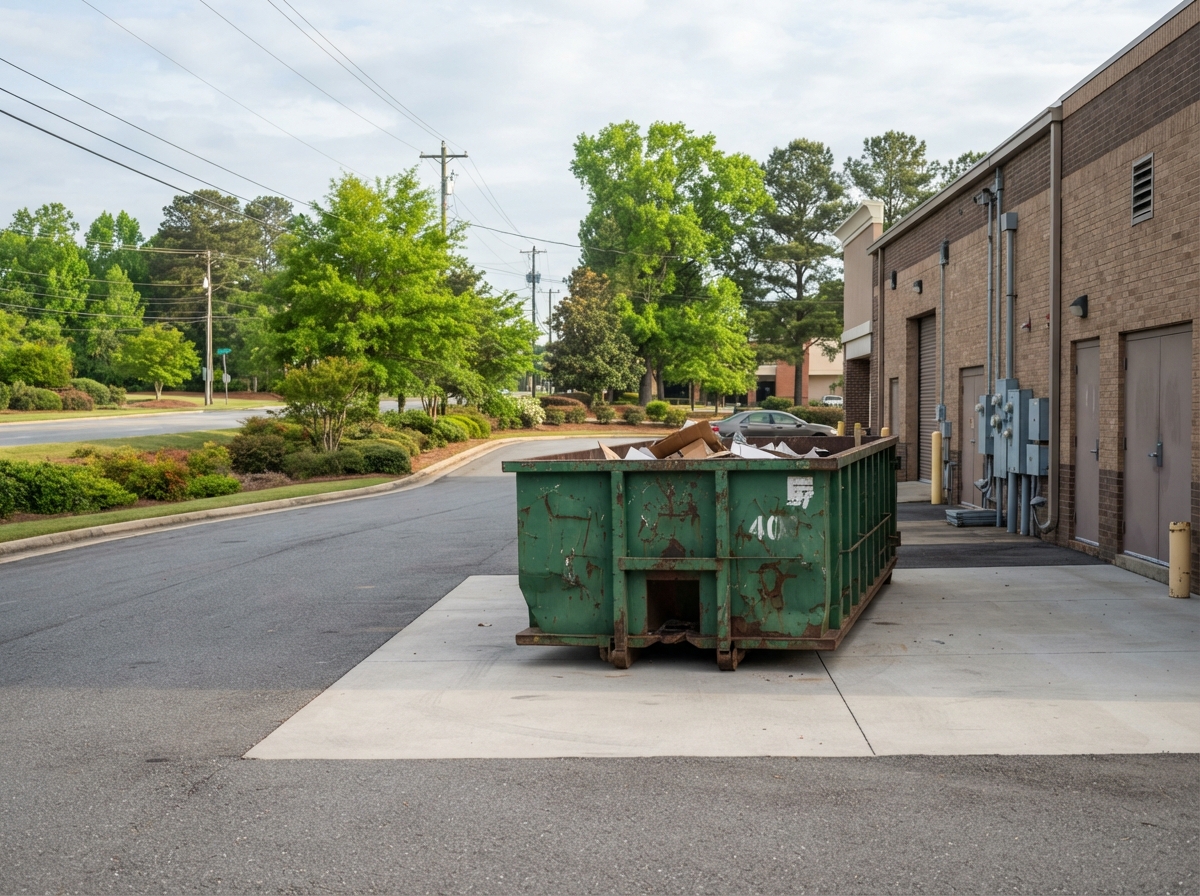
Strip-center back lots along the corridor have drive lanes, dock aprons, corral gates, other tenants' containers, and parked trailers competing for the same concrete. We confirm the placement spot before the first delivery and put the container back in the same position every time. A roll-off truck needs a straight approach, overhead clearance, and a surface that will hold a loaded box — low canopies and corral gates are the usual constraints on this side of town.
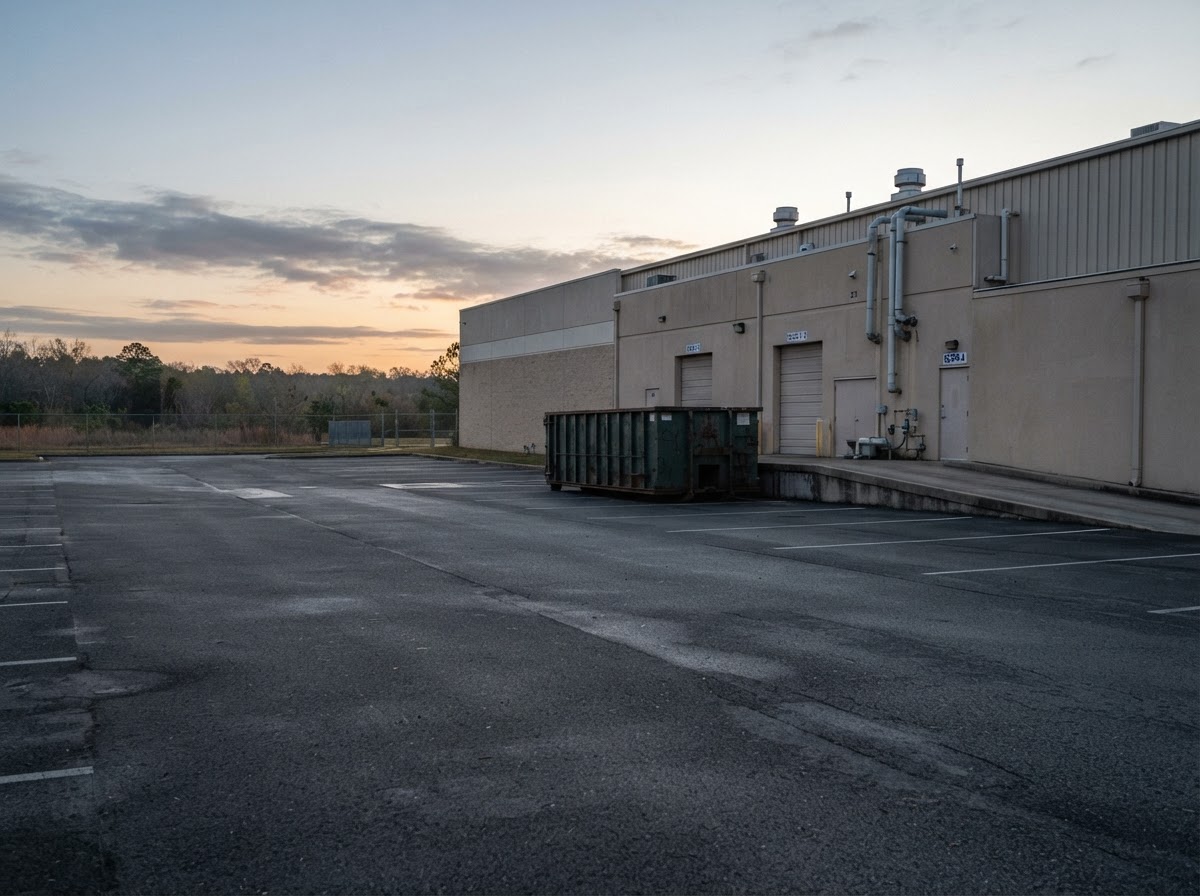
Retail and restaurant hours get respected.
Early mornings before opening and the quieter weekend windows are what usually works along Eisenhower Parkway. Tell us the hours that cannot be touched — peak trading, your inbound delivery windows, the times the lot has to stay open — and service is scheduled around them where the route allows.
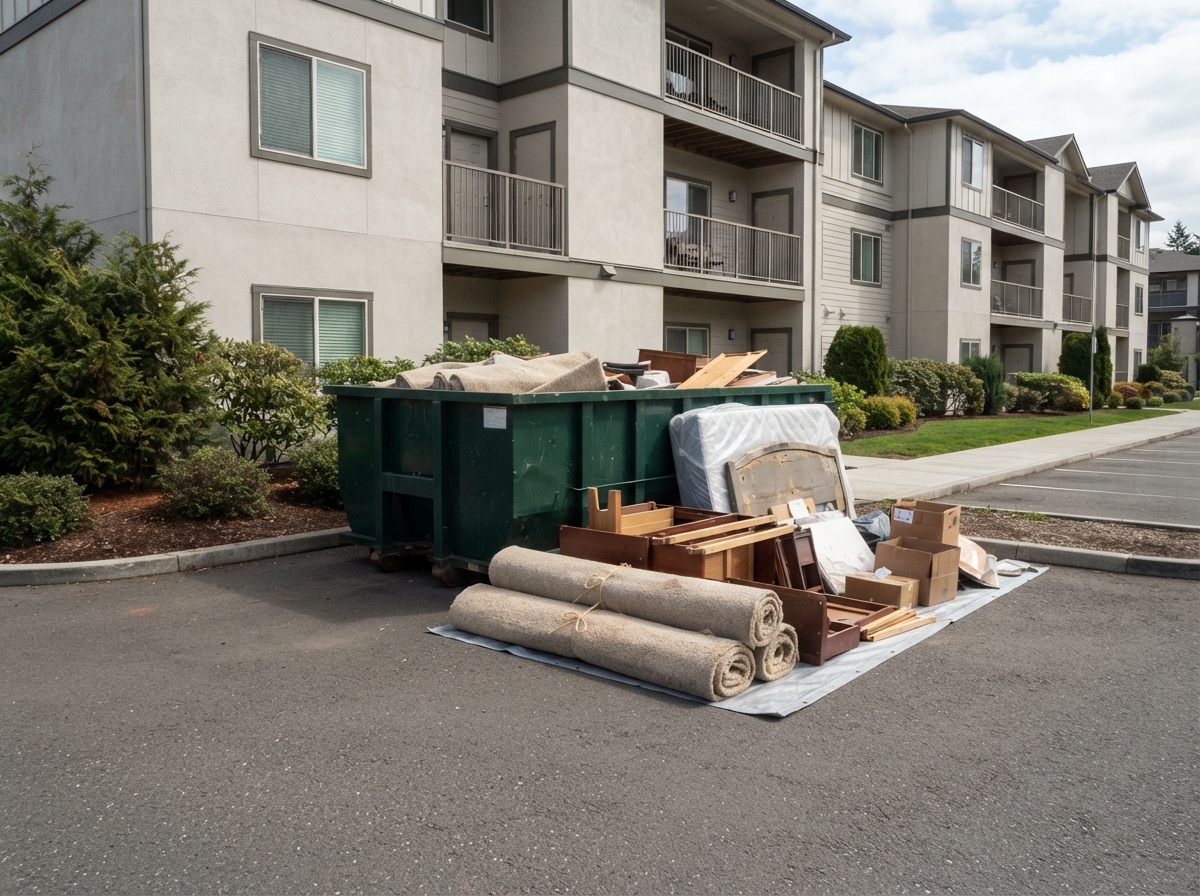
Turnovers get planned, not reacted to.
On a date-driven multifamily or retail turnover, the container goes on site before the crew and the swaps are scheduled against the phases of the job. Give us the deadline when you call, not after the first box fills.
Compaction visits are short, and they do not touch your equipment.
The drum is narrower than the container, so it works the load without contacting the walls. There is no hydraulic downforce driving against the box, and safeguard wheels and end guards keep the unit off the container structure. Our operators run a zero-touch policy, with before-and-after inspection and photo documentation on every visit. That matters most when the container is not ours — if you are keeping your existing box and hauler, we are working somebody else's equipment, and it goes back the way it came.
Not accepted
liquids of any kind · dirt, soil, aggregate, and other dense no-air material · hazardous or regulated waste · sealed drums and pressurized vessels · anything the receiving hauler will not take.
We do not publish a guaranteed turnaround window, because a promise that cannot be kept on a busy afternoon is worse than no promise at all. Call and you will get a real one.
Commercial Dumpster Rental in West Macon, GA: Common Questions
For cardboard, packaging, and recyclables, volume reduction typically runs 60–70%, which is the top of the range and exactly what most Eisenhower Parkway businesses are putting in a box. It is always material-dependent, though — the same unit may only reach 40–50% on C&D debris, wood, and pallets, and the number can land lower if the load is already dense. Plan around roughly 2:1 on mixed commercial waste and closer to 3:1 when the container is mostly corrugated. The free ten-minute demo runs on your own container, so you can see the real number for your material rather than take ours.
Yes. Most west Macon retail centers run best on a fixed pull cadence with one or two compaction visits scheduled in between, because packaging volume is predictable week to week. If the center has multiple tenants sharing one container, we set the cadence to the combined volume and revisit it when a tenant changes, since that is what usually shifts the load. Shared-container programs across several properties are covered on the property management dumpster rental page.
Yes. Cleanouts across Bloomfield and the corridor are a regular part of the work — fixtures, shelving, counters, flooring, ceiling grid, signage, and general stockroom contents all go in one commercial container. The exclusions are the standard ones: liquids, dense fill like dirt and aggregate, hazardous or regulated waste, sealed drums and pressurized vessels, and anything the receiving hauler will not take. Older Bloomfield lots are tighter than the newer centers, so describe the rear access when you call and we will tell you what size can actually be set there.
Yes, provided we know the dates. A block of units turning at once produces a large volume of bulky, light debris in a short window, which is the profile compaction handles well — a 40-yard on site with a compaction visit mid-cycle usually beats swapping containers twice. What causes problems is a surge we hear about after the first container is already full. Give Max Compacx the turnover schedule up front and the swaps get planned into the route.
That is a real constraint on this corridor, and it is part of why compaction helps. A container that stays under its rim does not overflow onto the pavement, the corral gate closes, and tenants stop stacking boxes beside it on a Saturday. We also place the container in the same agreed spot every visit rather than wherever the truck can reach that day. We cannot make a roll-off invisible, but we can keep it closed and keep the area around it clear.
For most warehouse and distribution operations off the I-475 access, a 40-yard is the right call, because pallets, wrap, and freight packaging are bulky and light — volume runs out well before weight does. A 30-yard makes sense when the dock apron cannot give up the footprint, and a 20-yard is for genuinely dense material or a very constrained pad. Heavier production streams have different rules, and those are laid out on the industrial dumpster rental page.
[REVIEW PLACEHOLDER]
[REVIEW PLACEHOLDER]
[REVIEW PLACEHOLDER]
Start Commercial Dumpster Rental in West Macon, GA
Tell us what the site produces, where a container can sit, and what your hours look like. Max Compacx will size the container, build a cadence around your trading and delivery windows, and tell you honestly whether compaction changes anything for your material. The on-site demo is free, takes about ten minutes, and runs on a container you already have.
Max Compacx
5900 Hawkinsville Rd, Macon, GA 31216
478-722-3852
office@MaxCompacx.com
Monday – Friday, 7am – 5pm